D14A3 Engine
- Engine
- 1396 cm3
- Aspiration
- Naturally aspirated engine
- Fuel
- Petrol (Gasoline)
- Fuel injection system
- Multi-port manifold injection
- Power
- 75 hp @ 5700 rpm
- Torque
- 112 Nm @ 3000 rpm
- Cylinders
- 4
- Valves
- 16, 4 per cylinder
- Cylinders position
- Inline
- Valvetrain
- OHC
- Oil capacity
- 3.3 l
# Vehicles powered by this engine
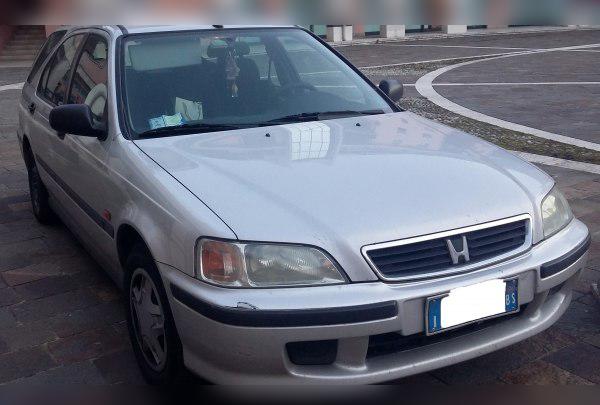
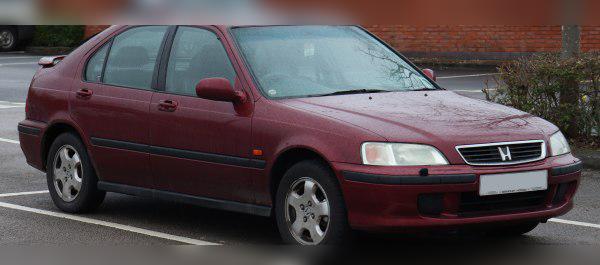
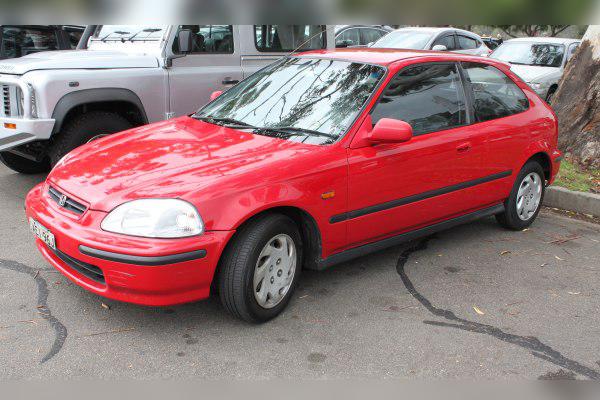
Honda D14A3 (1.4i) – Experiences, problems, fuel consumption and buying used
In short (TL;DR)
- Reliability: Extremely reliable “bulletproof” engine, capable of covering huge mileage with basic maintenance.
- Hidden power: The 75 hp version is factory “choked” with a gasket on the intake. It can be very easily and cheaply unlocked to 90 hp.
- Maintenance: Parts are cheap and widely available, with no expensive components like a dual-mass flywheel or turbocharger.
- Corrosion: The engine will probably outlive the body. Bodywork is the weak point of Civic models from these years.
- LPG: Handles LPG very well, but requires regular mechanical valve adjustment.
- Performance: In the stock 75 hp version it is sluggish, especially in the wagon (Aerodeck/Wagon) version.
- Recommendation: Ideal for beginner drivers or those who just want cheap transport from point A to point B.
Contents
- Introduction and application
- Technical specifications
- Reliability and maintenance
- Specific parts (expensive failures)
- Fuel consumption and performance
- Additional options and modifications
- Gearbox
- Buying used and conclusion
Introduction and application
The Honda D14A3 is one of those engines that built Honda’s reputation as a manufacturer of “indestructible” petrol engines during the 1990s. It was installed in the sixth generation Honda Civic (the popular “Japanese” and “English” Civics), covering the period from the mid to late 90s. It is a classic D-series engine.
This 1.4‑liter 16‑valve (SOHC) unit is specific because it served as the entry-level model into the world of Honda, especially on the European market where taxes and insurance depended on engine power. Although it looks weak on paper with its 75 hp, this engine hides a simple secret that makes it legendary among enthusiasts – it is mechanically identical to the more powerful 90 hp version (D14A4), and the difference is only in one piece of metal (a gasket).
Technical specifications
| Specification | Data |
|---|---|
| Engine code | D14A3 |
| Displacement | 1396 cc (1.4 L) |
| Power | 55 kW (75 hp) at 6000 rpm |
| Torque | 112 Nm at 3000 rpm |
| Fuel injection type | PGM-FI (Multipoint injection) |
| Air induction | Naturally aspirated |
| Valve configuration | SOHC (single camshaft), 16 valves |
Reliability and maintenance
Timing belt or chain?
The D14A3 engine uses a timing belt. This is Honda’s classic design from that period. It is very important to note that this is an “interference” engine in most cases, which means that a snapped belt can lead to piston-to-valve contact and catastrophic damage. That’s why the replacement interval must be strictly followed.
Major service
The recommended interval for a major service (replacement of timing belt, tensioner and water pump) is every 100,000 km or 5 years, whichever comes first. Considering the age of these vehicles today, many owners proactively shorten this interval to 80,000 km. The price of parts for the major service is affordable (falls into the “not expensive” category).
Oil: quantity, grade and consumption
The sump of this engine holds about 3.3 to 3.5 liters of oil (including the filter). The factory recommendation is usually 10W-40 semi-synthetic, although well-preserved engines can also use 5W-40 or 5W-30.
As for oil consumption, Honda engines tend to “drink” some oil if driven at high revs (VTEC zone – even though this engine has no VTEC, it loves revs). Consumption of up to 0.5 liters per 10,000 km is perfectly acceptable. However, on examples with over 250,000 km, valve stem seals often harden or oil control rings get stuck, which can drastically increase oil consumption (blue smoke from the exhaust). This is not a failure that will immediately stop the car, but it does require topping up.
Spark plugs and ignition
Spark plugs should be replaced every 20,000 to 30,000 km if you use standard copper plugs (NGK or Denso are a must for Honda). The ignition system uses a distributor, not individual coil-on-plug units (COP) like newer cars.
Most common issues
Although the engine is mechanically robust, peripheral components can cause problems:
- Distributor: The most common weak point. The bearing, ignition module or coil inside the distributor can fail. Symptoms include hard starting, misfiring/jerking or complete engine shutdown.
- Main relay: A classic issue on 90s Hondas. Cold solder joints in the fuel pump relay crack, so the car won’t start when the cabin is hot (in summer). As soon as it cools down, it starts normally. The fix is to resolder the contacts.
- Thermostat: If it gets stuck open, the engine struggles to reach operating temperature, which increases fuel consumption and wear.
Specific parts (costs)
Dual-mass flywheel and clutch
Good news: the D14A3 does NOT have a dual-mass flywheel. It uses a conventional solid flywheel which is practically lifetime. The clutch kit (pressure plate, disc, release bearing) is very cheap to replace and is among the most affordable on the market.
Fuel injection system
It uses Honda’s PGM-FI system with multipoint injection (four injectors). The injectors are extremely reliable and rarely cause problems, unless extremely dirty fuel is used. There are no expensive overhauls like on diesels.
Turbo, DPF, EGR
This engine is “old school”. It has no turbocharger, no intercooler, no DPF filter, and no AdBlue system. There is an EGR valve on some markets/versions, but on the D14A3 it rarely causes issues because petrol combustion does not create soot like diesel. This drastically reduces maintenance costs because there is simply nothing expensive to fail.
Fuel consumption and performance
City driving
Real-world city consumption is between 8 and 9 liters per 100 km. In winter or in heavy traffic jams it can reach 10 liters. Although the engine is small in displacement, the body (especially on Aerodeck/Wagon versions) is not light, so the engine has to be “pushed” to keep up with traffic.
Is the engine “lazy”?
In the stock 75 hp version – YES, it is quite lazy. The modest 112 Nm of torque is only available at 3000 rpm. Switching on the air conditioning is immediately felt as a loss of power. Overtaking requires downshifting (often from fifth to third) and high revs.
Highway
The engine spins at fairly high revs at highway speeds. At 130 km/h in fifth gear, the tachometer will show around 3500 to 4000 rpm (depending on the gearbox). This means cabin noise is more pronounced, and fuel consumption on the open road is around 6.5–7.5 liters.
Additional options and modifications
LPG installation
This engine is an ideal candidate for LPG. It handles it very well and with a sequential system the power loss is barely noticeable.
IMPORTANT WARNING: The D14A3 does not have hydraulic lifters. The valves are adjusted mechanically (screw and locknut). When running on LPG, exhaust valve clearances close up faster (“valve seat recession”). It is mandatory to check and adjust the valves every 20,000 to 30,000 km. If this is neglected, the valves will burn and you will be facing an expensive cylinder head repair.
Chipping and “unlocking” power
Classic software “chiptuning” doesn’t bring much here, BUT there is a mechanical modification that is a must for every D14A3 owner.
The difference between this engine (75 hp) and the stronger D14A4 (90 hp) is the gasket under the throttle body. On the 75 hp version, the gasket has a narrowed opening that physically restricts airflow.
Solution: Buy a gasket for the D14A4 (or cut out the existing one) and replace it. This costs only a few euros (depending on the market), and the engine instantly gains 90 hp. That is the cheapest 15 hp you will ever get. The engine then becomes much livelier and easier to drive.
Gearbox
Manual gearbox
It usually comes with a 5‑speed manual gearbox (code S40). These gearboxes are precise, with a short throw and very durable.
Failures: The most common issue is the input shaft bearing. The symptom is a rustling or grinding noise when the gearbox is in neutral with the clutch RELEASED. When you press the clutch, the noise disappears. The replacement parts are not expensive, but the gearbox has to be removed.
The oil in the gearbox (Honda MTF – Manual Transmission Fluid) should be changed every 60,000 to 80,000 km. Always use genuine Honda oil or a proper equivalent, never generic 75W-90 gear oil, as it can make shifting harder.
Automatic gearbox
Rarer, it is a conventional 4‑speed automatic with a torque converter. It is very reliable if the oil is changed regularly, but it makes an already weak engine even slower and increases fuel consumption by about 1–1.5 liters.
Buying used and conclusion
When buying a Honda with the D14A3 engine, the focus should be less on the engine and more on the bodywork. Still, check the following:
- Cold start: Do you hear valve ticking? (A little ticking is normal until it warms up; loud knocking means the valves are out of adjustment).
- Exhaust smoke: Rev the engine at operating temperature. Blue smoke when you lift off the throttle or at high revs indicates oil consumption.
- Test drive: Does the car “hesitate” under acceleration? (Possible ignition/distributor problems).
- Bodywork: Rear wheel arches and sills are the Achilles’ heel of these models.
Conclusion
The Honda D14A3 is a fantastic example of 90s engineering. Simple, cheap to maintain and capable of covering 300,000+ km without opening the engine. If you find an example that hasn’t been “eaten” by rust, you will get one of the most dependable cars for everyday use. It is recommended to immediately do the 90 hp “de-restriction” so that driving is safer and more pleasant.
Was this content useful to you?
Your opinion helps us to improve the quality of the content.