D14A4. D14A8 Engine
- Engine
- 1396 cm3
- Aspiration
- Naturally aspirated engine
- Fuel
- Petrol (Gasoline)
- Fuel injection system
- Multi-port manifold injection
- Power
- 90 hp @ 6400 rpm
- Torque
- 120 Nm @ 4800 rpm
- Cylinders
- 4
- Valves
- 16, 4 per cylinder
- Cylinders position
- Inline
- Valvetrain
- OHC
- Oil capacity
- 3.3 l
# Vehicles powered by this engine
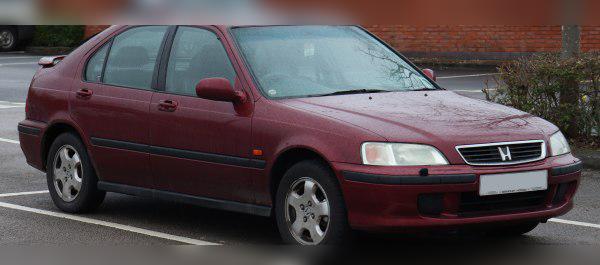
Honda 1.4i (D14A4 / D14A8) – Experiences, problems, fuel consumption and buying used
If you’re looking for the definition of the phrase “beat it and forget it”, Honda’s D-series engines are probably the first picture in the encyclopedia. The D14A4 and D14A8 engines are the heart of the sixth-generation Honda Civic (especially the popular “English” – Fastback model). Although 90 horsepower on paper doesn’t sound impressive by today’s standards, these are powerplants that built Honda’s reputation as an indestructible brand. In this text, as someone who has spent years under the hood of Japanese cars, I’ll give you a detailed, no-sugar-coating analysis of what to expect from this engine.
Key points in short (TL;DR)
- Reliability: Exceptional. With minimal maintenance these engines easily go over 400,000+ km.
- Major service: Uses a timing belt. Cheap and simple to replace.
- Main weakness: Oil leaks on gaskets and issues with the distributor.
- Performance: Needs high revs to really “pull”. It’s not a racer, but it’s tough.
- LPG: Handles LPG very well, but requires regular valve adjustment.
- Costs: Maintenance is very cheap (depends on the market).
- Recommendation: An ideal engine for beginner drivers or those who just want cheap transport from point A to point B.
Contents
- Technical specifications
- Reliability and maintenance
- Specific parts (costs)
- Fuel consumption and performance
- Additional options and modifications
- Gearbox
- Buying used and conclusion
Technical specifications
| Parameter | Value |
|---|---|
| Engine code | D14A4, D14A8 |
| Displacement | 1396 cc (1.4 L) |
| Power | 66 kW (90 hp) at 6300–6400 rpm |
| Torque | 120–124 Nm at 4500 rpm |
| Configuration | Inline 4-cylinder, SOHC (single cam), 16 valves |
| Injection type | MPI (Multi-Point Injection) |
| Induction | Naturally aspirated |
Reliability and maintenance
When we talk about D14 engines, we’re talking about an era when engines were built to outlast the bodywork. The D14A4 and A8 are very similar technically, with the A8 more often found in Civic “Fastback” (MB2) versions and featuring a plastic intake manifold, while the A4 is more common in hatchbacks (EJ9).
Timing belt or chain?
This engine uses a timing belt. That’s good news because the system is simple and quiet. A major service is nowhere near as scary as on modern diesels.
At what mileage is the major service done?
The recommendation is to do a major service every 100,000 km or 5 years, whichever comes first. When replacing the belt, you must also replace the tensioner and the water pump. If the belt snaps, pistons and valves can collide (it’s an interference engine), so don’t postpone this service. Parts prices fall into the “not expensive” category (depends on the market).
Most common failures
Even though the engine is reliable, age takes its toll:
- Distributor: The Achilles’ heel of this engine. The bearing inside the distributor can seize, or the electronics (igniter) can fail. Symptoms include stalling while driving, no-start condition, or strange scraping noises from the area where the spark plug wires come out.
- Valve cover and oil pan gaskets: ’90s Japanese cars often “mark their territory”. Oil leaks from the valve cover gasket are standard and easy to fix. Leaks from the crankshaft oil seal are more expensive to repair because of labor, even though the part itself is cheap.
- Main fuel pump relay: Cold solder joints on the relay can cause the car not to start when the cabin is hot (in summer).
Oil: quantity, grade and consumption
The engine takes approximately 3.3 to 3.6 liters of oil (with filter). The recommended grade is 10W-40 semi-synthetic for higher-mileage engines, or 5W-40 if the engine is in perfect condition and driven in colder climates.
Does it burn oil? Up to 150,000 km it shouldn’t have any noticeable consumption. At higher mileage, consumption of 0.5 to 1 liter per 10,000 km is considered acceptable. If it burns more than that (e.g. a liter per 2000 km), the usual culprits are valve stem seals or stuck oil control rings. Blueish smoke from the exhaust at high revs or on first cold start in the morning points to this problem.
Spark plugs
Spark plugs should be replaced every 20,000 to 30,000 km if you use standard (copper) NGK or Denso plugs. This is a negligible cost but crucial for the health of the distributor.
Specific parts (costs)
Dual-mass flywheel and clutch
Good news: This engine does NOT have a dual-mass flywheel. It uses a classic solid flywheel that practically never needs replacement. A clutch kit (pressure plate, disc, release bearing) is relatively cheap and replacement is straightforward.
Injection system and injectors
The engine uses a classic MPI (Multi-Point Injection) system. The injectors are extremely robust and rarely cause issues. They’re not as sensitive to poor-quality fuel as modern GDI engines. There are no high-pressure pumps that cost a fortune.
Turbo, DPF, EGR, AdBlue?
- Turbo: None. This is a pure naturally aspirated petrol engine. That means fewer parts to fail, but also that you need to rev it to make it go.
- DPF: None (it’s a petrol engine).
- EGR valve: Some D14 engines (depending on market and year) have an EGR system, but it’s mechanically simple. It rarely clogs badly enough to cause serious problems; usually it just needs cleaning if the “Check Engine” light comes on.
- AdBlue: None.
Fuel consumption and performance
City driving and real-world consumption
In city driving, the Honda Civic Fastback 1.4 uses a realistic 8 to 9 liters of petrol per 100 km. In winter or heavy traffic this can go up to 10 liters. On the open road, consumption drops to a nice 6 to 6.5 l/100 km.
Is the engine “lazy”?
With 120 Nm of torque, the engine can feel lazy if you drive it like a diesel (at low revs). Honda engines really “breathe” only above 3500–4000 rpm. For the Fastback body, which is heavier than the hatchback, this engine is adequate for normal driving, but when overtaking or driving uphill with a full car, you’ll have to shift down and floor the throttle.
Behavior on the motorway
This is not an Autobahn cruiser. Due to short gearbox ratios (to compensate for the lack of power), at 130 km/h the engine spins at about 3800 to 4000 rpm (depending on the gearbox). That means it’s quite noisy in the cabin and fuel consumption goes up. The engine can handle this all day long, but the passengers might not enjoy it.
Additional options and modifications
LPG conversion
D14 engines are excellent candidates for LPG. They handle it great. However, there is one CRITICAL NOTE: This engine does not have hydraulic lifters. The valves are adjusted mechanically (screw and locknut).
If you drive on petrol, adjustment is done every 40,000 km. If you drive on LPG, you must check and adjust the valves every 15,000 to 20,000 km! If you ignore this, the exhaust valves will tighten up and burn, which leads to an expensive cylinder head overhaul.
Chiptuning (Stage 1)
Don’t waste your money. A small-displacement naturally aspirated engine cannot be effectively tuned with just a remap. You might gain 2–3 hp that you won’t feel. The only real “tuning” for this car is proper regular maintenance or a full engine swap to a more powerful B-series or H-series, which is popular among enthusiasts.
Gearbox
Manual gearbox
The D14A4/A8 usually comes with S40 or 1M 5-speed gearboxes. They are precise and durable.
Most common failure: Input shaft bearing. If you hear a rustling or grinding noise while the car is idling in neutral, and the sound disappears when you press the clutch – that’s the bearing. The part isn’t expensive, but the gearbox has to be removed and opened.
Gearbox oil (Honda MTF recommended) should be changed every 60,000–80,000 km. In the absence of the original, 10W-40 engine oil was sometimes used (according to old manuals), but dedicated gearbox oils are a better option.
Automatic gearbox
There was an option of a classic 4-speed automatic. It’s very reliable if the oil is changed regularly, but it drastically “kills” the performance of this small engine and increases fuel consumption by 1–2 liters. The recommendation is to avoid it unless you absolutely need an automatic.
Buying used and conclusion
When buying a Honda with this engine, focus on the following:
- Bodywork (most important): These engines outlive the body. Check the wheel arches, sills and floor. If the car is rotten, a perfect engine means nothing.
- Cold start: Watch the exhaust. Blue smoke means the engine burns oil.
- Engine sound: Light valve ticking when cold is normal. But loud metallic knocking or banging from the bottom end is a sign to walk away.
- Test drive: The gearbox must not crunch when shifting, and the clutch should be light. If you hear a whine in neutral that disappears when you press the clutch, factor in a gearbox overhaul (input shaft bearing).
Conclusion:
A Honda Civic with the D14A4 or D14A8 engine is a fantastic choice for drivers who value economy and simplicity over luxury and speed. Maintenance is laughably cheap compared to modern cars. If you find a car that hasn’t been eaten by rust and whose owner changed the oil regularly, buy it. It will serve you faithfully for as long as there’s fuel in the tank.
Was this content useful to you?
Your opinion helps us to improve the quality of the content.