D15Z6 Engine
- Engine
- 1493 cm3
- Aspiration
- Naturally aspirated engine
- Fuel
- Petrol (Gasoline)
- Fuel injection system
- Multi-port manifold injection
- Power
- 114 hp @ 6500 rpm
- Torque
- 134 Nm @ 5500 rpm
- Cylinders
- 4
- Valves
- 16, 4 per cylinder
- Cylinders position
- Inline
- Valvetrain
- SOHC
- Oil capacity
- 3.3 l
# Vehicles powered by this engine
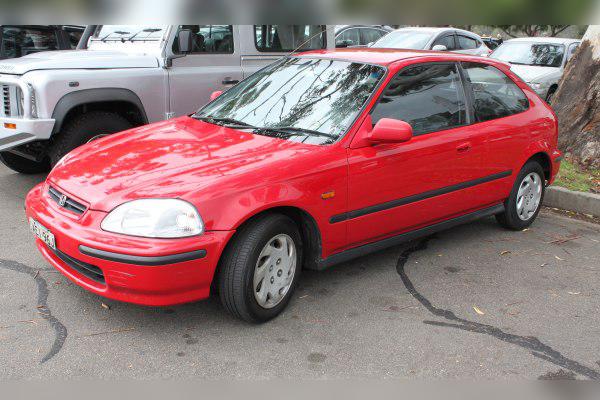
Honda D15Z6 1.5 VTEC-E: Experiences, problems, fuel consumption and buying tips
Key points (TL;DR)
- Exceptional fuel economy: The VTEC-E system is designed primarily to save fuel, allowing the engine to run on a lean mixture ("lean burn").
- Reliability: Like most Honda D-series engines, it is mechanically very durable and easily covers high mileage with basic maintenance.
- Oil consumption: On older units, oil consumption due to valve stem seals and piston rings is a common issue.
- Long gear ratios: The gearbox is designed for economy, so the engine can feel "sleepy" until it revs higher.
- Low maintenance costs: Parts are available, and there are no complicated systems like a dual-mass flywheel or expensive injectors.
- Body corrosion: Although the engine is excellent, the sixth-generation Honda Civic in which it is installed is notorious for rusting rear arches and sills.
Contents
- Introduction and applications
- Technical specifications
- Reliability and maintenance
- Specific parts and costs
- Fuel consumption and performance
- Additional options and modifications
- Gearbox and drivetrain
- Buying used and conclusion
Introduction: The 90s fuel economy champion
The D15Z6 engine is one of the most interesting units from Honda’s D-series, used primarily in the sixth-generation Honda Civic (EK3 chassis). What sets it apart is the VTEC-E designation. Unlike performance-oriented VTEC engines focused on maximum power, the "E" here stands for "Economy".
This engine works so that at low revs (below approx. 2500–2800 rpm) it practically uses only one intake valve per cylinder (the other opens only minimally), creating a swirl effect in the mixture and allowing the engine to run on a very lean air-fuel mixture. When you press the throttle harder, all 16 valves are activated and the engine behaves like a standard 1.5 petrol with 114 hp. This is an engine for drivers who want reliability and low fuel consumption, but also need enough power for overtaking.
Technical specifications
| Parameter | Value |
|---|---|
| Displacement | 1493 cc (1.5 L) |
| Power | 84 kW (114 hp) at 6500 rpm |
| Torque | 134 Nm at 5400 rpm |
| Engine code | D15Z6 |
| Fuel injection system | Multipoint (Honda PGM-FI) |
| Engine type | SOHC VTEC-E (Naturally aspirated) |
| Number of valves | 16 (SOHC – single overhead camshaft) |
Reliability and maintenance
Timing belt or chain?
The D15Z6 engine uses a timing belt. This is classic Honda engineering from that era. It is very important to respect the replacement intervals, because a snapped belt can cause piston-to-valve contact (interference engine), which means an expensive failure.
Most common failures
Although the engine is mechanically "indestructible", time takes its toll. The most common issues are:
- Distributor: This is the Achilles’ heel of D-series engines. The bearing in the distributor can seize, or the ignition module (igniter) and coil can fail. Symptoms include stalling while driving, hard starting, or the engine not starting at all.
- Main fuel pump relay (Main Relay): Cold solder joints in the relay crack with age and heat. Symptom: the engine cranks but won’t start when the cabin is hot (e.g. in summer), yet starts normally once it cools down.
- Oil leaks: The valve cover gasket, VTEC solenoid gasket and distributor O-ring are common oil leak points.
Major service
It is recommended to replace the timing belt kit, tensioner and water pump every 80,000 to 100,000 km or every 5 years, whichever comes first. Given the age of these cars, a visual inspection of the belt is advisable at every minor service.
Oil: Capacity and consumption
The engine takes approximately 3.3 to 3.5 litres of oil (with filter). The recommended grades are 5W-30 or 10W-40. For higher-mileage engines in warmer climates, a good 10W-40 semi-synthetic oil is the most common choice.
Does it burn oil? Yes. Honda engines from this era are known to "drink" some oil if driven at high revs (in the VTEC zone). Consumption of up to 0.5 litres per 1,000 km is often considered acceptable on old engines, but a healthy engine should not consume more than 1–1.5 litres between services (10,000 km). The main causes of increased consumption are valve stem seals (they harden with age) and oil control rings.
Spark plugs and valves
Standard copper spark plugs should be replaced every 20,000 to 30,000 km (NGK or Denso are a must for Honda). Iridium plugs last longer (up to 60,000 km).
Important: This engine does not have hydraulic lifters. Valve clearance must be adjusted manually (with feeler gauges) every 40,000 km. If you hear a "ticking" noise from the engine, it’s time for an adjustment.
Specific parts (Costs)
Dual-mass flywheel and clutch
Good news: the D15Z6 does not have a dual-mass flywheel. It uses a conventional solid flywheel that practically never needs replacing. A clutch kit is relatively cheap (varies by market) and straightforward to replace.
Fuel injection system and turbo
The engine is naturally aspirated, so it does not have a turbocharger, eliminating one of the most expensive failures on modern cars. The fuel system is electronic multipoint injection (injectors). The injectors are extremely durable and rarely cause problems. If they do, ultrasonic cleaning usually solves it.
DPF, EGR and AdBlue
The engine does not have a DPF filter and does not use AdBlue fluid (these are newer diesel technologies). However, the D15Z6 does have an EGR valve (exhaust gas recirculation), which is there because of its specific lean-burn combustion strategy to reduce NOx emissions. The EGR passages in the intake manifold can clog with soot after many kilometres, which can lead to rough running or a lit "Check Engine" light (error code P0401).
Fuel consumption and performance
Real-world fuel consumption
This is the engine’s strongest card. Thanks to the VTEC-E system:
- City driving: Expect between 7 and 8.5 l/100 km. If you drive very gently and pay attention to the "ECO" light on the dashboard, it is possible to get below 7 litres, which is a phenomenal result for a 90s petrol engine.
- Highway / open road: Consumption can drop to an impressive 5.5 to 6 l/100 km at speeds up to 100 km/h.
Is the engine "lazy"?
It depends on your expectations. Up to 3000 rpm, the engine is tuned for economy and can feel somewhat "lazy" due to the long gear ratios. However, the sixth-generation Civic body is light (around 1000–1100 kg). When you press the throttle and go past 3500–4000 rpm, the engine wakes up and with 114 hp delivers perfectly adequate performance for dynamic driving and even some fun.
Behaviour on the motorway
The gearbox has a "long" fifth gear. At 130 km/h the engine spins at around 3500–3800 rpm (depending on tyre size), which is acceptable for a Honda of that era. Cabin noise is present (weaker sound insulation), but the engine has no problem maintaining cruising speeds of 130–140 km/h.
Additional options and modifications
LPG conversion
This engine is suitable for LPG, but it requires a quality sequential system and an experienced installer. Due to the lean-burn operating mode, the LPG map must be tuned precisely to avoid overheating the valves. It is also recommended to install a valve lubrication system ("valve saver") as an extra precaution, because Honda valves can be sensitive to "dry" fuels like LPG over long distances.
Chiptuning (Stage 1)
On small-displacement naturally aspirated petrol engines, chiptuning makes virtually no sense. Gains are minimal (maybe 2–3 hp), and you risk upsetting the VTEC-E system. It’s better to invest the money in proper maintenance, good tyres and refreshing the suspension. Enthusiasts often do a "Mini-Me" swap (fitting a cylinder head from a more powerful VTEC engine), but that is already a serious mechanical modification.
Gearbox
Types of gearboxes
- Manual: Most commonly a 5-speed gearbox (code S40). Precise, with a short throw shifter – a real pleasure to use.
- Automatic: There were versions with a 4-speed conventional automatic or early CVT (Multimatic) gearboxes (more common on the Japanese market, but also found in Europe).
Gearbox failures
Manual gearbox: Very reliable. The most common issue is the input shaft bearing. Symptom: a rustling/grinding noise while idling in neutral with the clutch released, which disappears when you press the clutch. Replacement requires removing and opening the gearbox. The bearing itself is not expensive, but labour is (varies by market).
Automatic gearbox (CVT): Early Honda CVT gearboxes are sensitive. They require only genuine Honda CVT fluid and regular changes. If the car "jerks" when setting off, it is a sign of a serious problem with the start clutch inside the gearbox. In general, they are more expensive to repair and a riskier purchase on an old car.
Gearbox service
For the manual gearbox, Honda recommends MTF (Manual Transmission Fluid). Replacement is recommended every 60,000 to 80,000 km. This gearbox takes about 2 litres of oil.
Buying used and conclusion
When buying a Honda with the D15Z6 engine, pay attention to the following:
- Cold start: Watch the exhaust. Bluish smoke immediately on startup indicates worn valve stem seals. Blue smoke at high revs points to worn oil control rings.
- Test drive: Drive gently in 3rd or 4th gear at around 2000 rpm. If the green "ECO" light on the dashboard comes on, the VTEC-E system is working and saving fuel.
- Noise: Listen to the gearbox at idle (input shaft bearing) and to the valves (ticking).
- Bodywork: This is more important than the engine. Check the rear arches, sills and the boot floor. If the car is rotten, a perfect engine means nothing.
Conclusion: The D15Z6 engine is a brilliant example of 90s engineering. It offers a perfect balance between laughably low fuel consumption and enough power for everyday driving. It is ideal for students, beginners, or enthusiasts who want a reliable daily driver. Maintenance is cheap (varies by market), parts are available, and the driving feel is typically "Honda-like" – direct and mechanical. If you find a car that hasn’t been eaten by rust and doesn’t burn excessive oil, buy it without hesitation.
Was this content useful to you?
Your opinion helps us to improve the quality of the content.