D14 Engine
- Engine
- 1396 cm3
- Aspiration
- Naturally aspirated engine
- Fuel
- Petrol (Gasoline)
- Fuel injection system
- Multi-port manifold injection
- Power
- 90 hp @ 6400 rpm
- Torque
- 120 Nm @ 4800 rpm
- Cylinders
- 4
- Valves
- 16, 4 per cylinder
- Cylinders position
- Inline
- Valvetrain
- OHC
- Oil capacity
- 3.3 l
- Coolant
- 3.8 l
# Vehicles powered by this engine
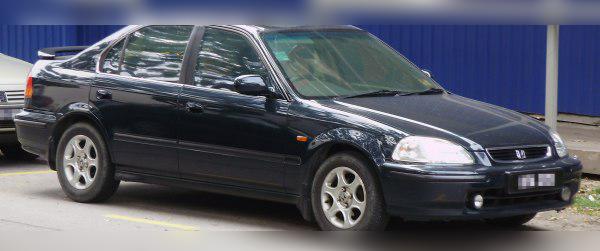
Honda D14 1.4i (90 hp) – Experiences, problems, fuel consumption and buying used
Key points (TL;DR)
- Reliability: One of the most reliable petrol engines from the 90s. With regular maintenance, this engine is practically indestructible.
- Performance: Loves high revs. Up to 3,000 rpm it is quite calm (even sluggish), but it really “comes alive” only above 4,000 rpm.
- Maintenance: Extremely cheap. No expensive components like a dual-mass flywheel, turbo or direct injection.
- Most common issue: Ignition distributor and oil leaks from the valve cover gasket.
- Bodywork: Although the engine is excellent, the body of the Honda Civic VI in which it is installed is prone to rust (arches and sills).
- Ideal use: Perfect for beginner drivers, city driving and those who want low running costs.
Contents
- Introduction and applications
- Technical specifications
- Reliability and maintenance
- Specific parts and costs
- Fuel consumption and performance
- Additional options and modifications (LPG & tuning)
- Gearbox and drivetrain
- Buying used and conclusion
Introduction: A Japanese classic for the masses
The engine designated as D14 (most commonly D14A3, D14A4 or D14Z2 in later years) is the heart of the European version of the Honda Civic VI generation (the so‑called “English” or hatchback variants). It is a classic representative of Honda’s “golden era” – a simple, lightweight aluminium engine with a single overhead camshaft (SOHC) and 16 valves.
Although 90 horsepower doesn’t sound like much today, in the light Civic body this engine provides perfectly adequate performance, along with that recognizable Honda mechanical feel and sound. Its greatest strength is not raw power, but incredible durability and tolerance to different operating conditions.
Technical specifications
| Engine displacement | 1396 cc (1.4 l) |
| Power | 66 kW (90 hp) @ 6300 rpm |
| Torque | 120 Nm @ 4500 rpm |
| Engine codes | D14A4, D14Z2, D14A8 (depending on model year and market) |
| Injection type | MPI (Multi-Point Injection) – indirect |
| Configuration | Inline 4-cylinder, SOHC, 16v |
| Induction | Naturally aspirated (no turbo) |
Reliability and maintenance
Timing system: Belt or chain?
The Honda D14 engine uses a timing belt to drive the camshaft. This was a standard solution for that era. The replacement interval is usually specified at 100,000 km or 5 years, whichever comes first. When replacing the belt, the tensioner must also be replaced, and it is recommended to replace the water pump as well, since it is driven by the same belt. If the pump seizes later, you risk serious engine damage.
Most common failures and symptoms
This engine rarely fails catastrophically, but age takes its toll. Here’s what most often bothers owners:
- Ignition distributor: The Achilles’ heel of this engine. The bearing inside the distributor can fail (you hear a squealing noise), or more often the ignition module (igniter) or coil inside the housing fails. Symptoms are stalling while driving, failure to start, or rough running.
- Main fuel pump relay: A known issue on older Hondas. Cold solder joints in the relay crack, so when the cabin is hot (in summer), the car won’t start until it cools down. It’s fixed by resoldering the contacts.
- Thermostat: If the car warms up slowly or overheats, the thermostat is a common culprit. It’s cheap and easy to replace.
- Valve cover gasket: Oil often leaks at the joint between the cover and the head, and it can also fill the spark plug wells with oil, which leads to poor engine operation.
Oil and service intervals
The sump of this engine holds relatively little oil – about 3.3 to 3.5 litres with the filter (always check exactly with the dipstick). The recommended grade is 10W-40 (semi-synthetic) for higher-mileage engines, or 5W-40/5W-30 for those in better condition.
Oil consumption: A healthy D14 engine should not consume a significant amount of oil. However, due to age, consumption of up to 0.5 litres per 1,000 km can be tolerated with more aggressive driving. If it consumes more, the usual problem is valve stem seals (blue smoke at startup or after engine braking) or stuck oil control rings. A minor service is done every 10,000 km or once a year.
Spark plugs
The spark plugs are standard nickel plugs (NGK or Denso were factory fitment). They are replaced every 20,000 to 30,000 km (for “copper” plugs) or longer if you use iridium ones, but for this engine regular plugs are perfectly sufficient and cheap.
Specific parts and costs (Is it expensive?)
Maintaining a Honda Civic with this engine falls into the category: Very affordable (it depends on the market, but in general parts are cheap).
Dual-mass flywheel and clutch
Good news: This engine does not have a dual-mass flywheel. It uses a classic solid flywheel that practically never needs replacing. The clutch kit (pressure plate, disc, release bearing) is relatively cheap and straightforward to replace.
Injection system and turbo
The engine does not have a turbocharger, which means one (expensive) worry less. Injection is indirect (MPI) via 4 petrol injectors. These injectors are extremely durable and rarely cause problems. If an issue does arise, ultrasonic cleaning is usually enough.
EGR, DPF and emissions
Since this is an older-generation petrol engine, it does not have a DPF filter or complex exhaust after-treatment systems. There is no AdBlue fluid either. There is a catalytic converter which can fail due to age or poor fuel, but aftermarket replacements are available. An EGR valve exists on some variants (usually VTEC-E models for fuel economy), but on the standard 1.4i 90 hp engine the system is very simple and rarely clogs.
Fuel consumption and performance
Is the engine “lazy”?
With 120 Nm of torque, the engine can feel “lazy” to drivers used to modern diesels. You have to rev it. Below 3,000 rpm, throttle response is mild. To overtake someone, you need to drop one or even two gears. However, thanks to the Civic’s low weight (often around 1000–1100 kg), 90 hp is quite enough for lively driving if you know how to use the gearbox.
Real-world fuel consumption
- City driving: Expect between 8 and 9 l/100 km. In winter or heavy traffic it can go up to 10 litres.
- Open road: At 80–90 km/h, consumption drops to about 6–6.5 l/100 km.
- Motorway (130 km/h): Here consumption rises to around 7.5–8 l/100 km.
Motorway and noise
The gearbox on this model is “short”. This means that at 130 km/h the engine spins close to 4,000 rpm in fifth gear. This results in more noise in the cabin, so this car is not ideal for long motorway journeys, but it can handle them mechanically without any problems.
Additional options and modifications
LPG conversion
Yes, absolutely. Honda D14 engines work very well with LPG systems. Since they have a metal intake manifold (on older versions) or a plastic one (on newer ones), a sequential LPG system is mandatory. One note: Honda engines do not have hydraulic tappets. This means you need to check and adjust valve clearances every 20,000 to 30,000 km if you run on LPG (every 40,000 km on petrol), to prevent valve seat recession.
Chiptuning (Stage 1)
On a naturally aspirated petrol engine of this displacement, classic “chip tuning” is basically a waste of money. The gain is negligible (maybe 2–3 hp). However, if you have the 75 hp version (D14A3), it is mechanically identical to the 90 hp version, and the difference is only in the intake manifold gasket which physically restricts airflow. By replacing that gasket (which costs just a few euros), you get the factory 90 hp. That is the only “tuning” that really makes sense.
Gearbox
Manual gearbox (S40)
This engine is most commonly paired with a 5-speed manual gearbox. These gearboxes are precise and a real pleasure to use.
Most common issue: Whining of the input shaft bearing. The symptom is a grinding/whining noise when the car is idling in neutral with the clutch released. When you press the clutch, the noise disappears. Repair requires removing and opening the gearbox.
Automatic gearbox
They are rarer, but they do exist. It is a classic 4-speed automatic with a torque converter. They are very reliable if the oil is changed regularly, but they further hurt the performance of an already small engine and increase fuel consumption.
Gearbox maintenance
The oil in the manual gearbox is changed every 60,000 to 80,000 km. This gearbox should be filled only with Honda MTF (Manual Transmission Fluid) or 10W-40 engine oil (as a temporary solution according to old manuals, but MTF is far better for the synchros). The gearbox takes about 2 litres of oil.
Buying used and conclusion
If you are considering buying a Honda Civic with the 1.4i engine, focus on the following:
- Bodywork, bodywork, bodywork: The engine will probably outlive the body. Check the rear arches, sills and the boot floor.
- Cold start: Listen to the engine when it’s cold. There should be no metallic knocking until it warms up (pistons).
- Idle: When warm, the tachometer needle must sit steadily (around 750–800 rpm). If it “hunts” up and down, the IACV (idle air control valve) is probably dirty.
- Smoke: Rev it while stationary. Blue smoke = oil consumption. White smoke (with a hot engine) = head gasket.
Conclusion: The Honda D14 (90 hp) is a legendary engine for beginners and for those who value simplicity. It’s not a race car, it’s noisy on the motorway, but it offers cheap motoring and will rarely leave you stranded. If you find an example that isn’t a rust bucket, you can buy it without overthinking.
Was this content useful to you?
Your opinion helps us to improve the quality of the content.