D16Z6 Engine
- Engine
- 1590 cm3
- Aspiration
- Naturally aspirated engine
- Fuel
- Petrol (Gasoline)
- Fuel injection system
- Multi-port manifold injection
- Power
- 125 hp @ 6600 rpm
- Torque
- 144 Nm @ 4700 rpm
- Cylinders
- 4
- Valves
- 16, 4 per cylinder
- Cylinders position
- Inline
- Valvetrain
- OHC
- Oil capacity
- 3.3 l
- Coolant
- 4.5 l
# Vehicles powered by this engine
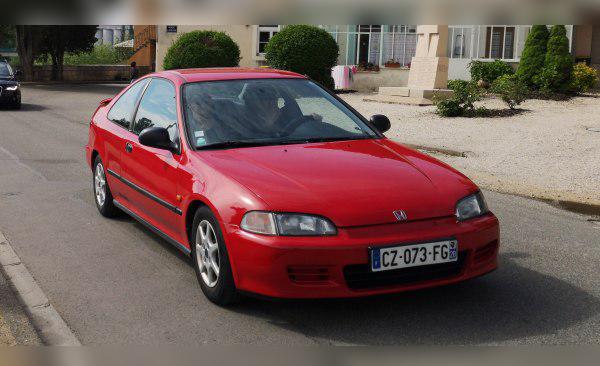
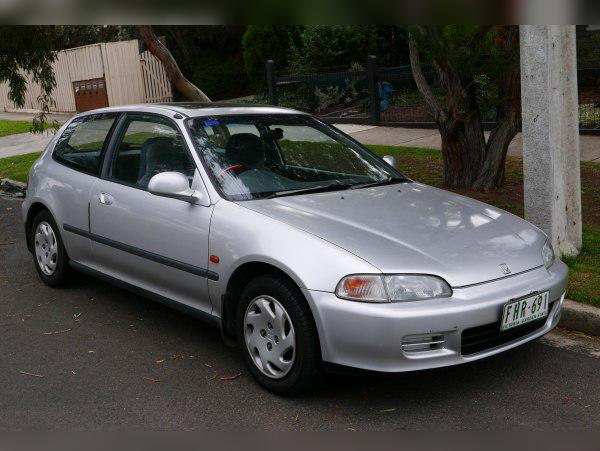
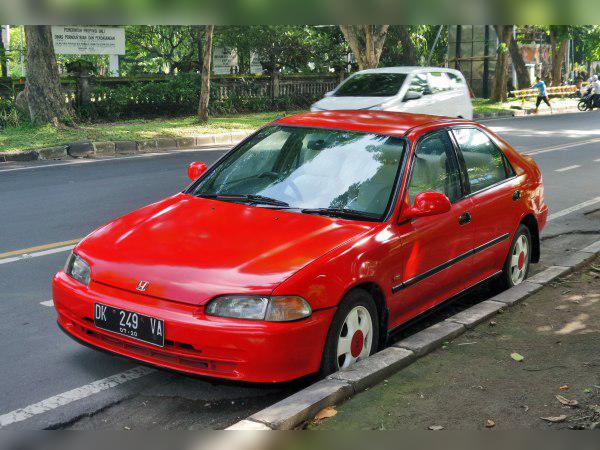

Honda D16Z6 (1.6 VTEC) – Experiences, problems, fuel consumption and used car buying tips
Key points (TL;DR)
- SOHC VTEC legend: One of the best “single-cam” VTEC engines ever made, offering an excellent balance between efficiency and performance.
- Oil consumption: On higher-mileage examples, oil consumption is common, especially if the car is driven in VTEC mode (over 5000 rpm).
- Electronics: The ignition distributor and the main fuel pump relay are the “Achilles’ heel” of this engine.
- Performance: Although it has “only” 125 hp, in light chassis (Civic, CRX) it feels like a much more powerful car.
- Gearbox: Short gear ratios make it lively in the city, but noisy on the highway.
- Maintenance: Parts are relatively cheap and available, but good mechanics for old Hondas are becoming rare.
- Recommendation: An ideal engine for enthusiasts and beginners in the tuning world.
Contents
- Introduction and applications
- Technical specifications
- Reliability and maintenance
- Specific parts and systems
- Fuel consumption and performance
- Additional options and modifications
- Gearbox and drivetrain
- Buying used and conclusion
Introduction and applications
The Honda D16Z6 is an iconic engine from the 1990s that represents the heart of Honda’s “golden era”. It is a 1.6-liter SOHC (single overhead cam) engine equipped with the famous VTEC variable valve timing system. This engine made models like the “egg-shaped” Civic (EG generation) and the CRX Del Sol famous.
Its importance lies in the fact that it brought sporty performance into the class of affordable cars. Unlike the more powerful B16 engines (DOHC VTEC), the D16Z6 was cheaper to maintain, lighter, and still capable of putting a smile on any driver’s face once the tach needle passes 4,800 rpm.
Technical specifications
| Specification | Data |
|---|---|
| Engine code | D16Z6 |
| Displacement | 1590 cc (1.6 L) |
| Power | 92 kW (125 hp) @ 6600 rpm |
| Torque | 144 Nm @ 5200 rpm |
| Configuration | Inline 4-cylinder, SOHC VTEC, 16 valves |
| Fuel injection system | PGM-FI (Multipoint injection) – OBD1 |
| Induction type | Naturally aspirated |
| Compression ratio | 9.2:1 |
Reliability and maintenance
Timing belt or chain?
The D16Z6 uses a timing belt to drive the camshaft. This is an interference engine, which means that if the belt snaps, the pistons will hit the valves, causing severe engine damage. Regular replacement is therefore imperative.
Major service and intervals
It is recommended to replace the timing belt kit, tensioner and water pump every 80,000 to 100,000 km or every 5 years, whichever comes first. Considering the age of these cars, many owners proactively shorten this interval. The cost of parts for the major service falls into the category: affordable (depends on the market).
Oil: capacity and consumption
The engine takes approximately 3.3 to 3.5 liters of engine oil with filter. The factory recommendation for new engines was 5W-30 or 10W-30, but given today’s mileage and climate conditions, semi-synthetic 10W-40 is most commonly used.
Does it burn oil? Yes. Honda engines from this era, especially those with VTEC, are prone to oil consumption. Consumption of up to 0.5 liters per 1,000 km is often considered “acceptable” if the car is driven aggressively in the VTEC zone. The main causes are hardened valve stem seals (visible blue smoke at startup or after engine braking) and stuck oil control rings.
Spark plugs and ignition coils
This is an old-school petrol engine. Spark plugs are replaced every 20,000 to 30,000 km (standard copper plugs, recommended NGK ZFR5F-11 or ZFR6F-11 for more spirited driving). There are no individual coil-on-plug units (COP); instead it uses a traditional distributor with a single coil inside.
Most common failures
- Distributor: This is the most common issue. The bearing inside the distributor can seize (you’ll hear a squealing noise) or the ignition module (igniter) can fail from heat, causing the engine to stall or refuse to start.
- Main relay: A well-known problem on 90s Hondas. The solder joints inside the relay crack, so the car won’t start when the cabin is hot (e.g. in summer). The fix is to resolder the contacts.
- IACV (idle air control valve): Due to dirt, idle can fluctuate (hunting up and down). Cleaning usually solves the problem.
- Rust: Although not part of the engine, the rear wheel arches on the bodies that use this engine are notorious for rusting out.
Specific parts (costs)
Flywheel and clutch
Good news: This engine does NOT have a dual-mass flywheel. It uses a classic solid flywheel that is practically indestructible. The clutch kit (disc, pressure plate, release bearing) is very cheap and easy to replace. Replacement cost falls into the category: not expensive.
Fuel injection system
The engine uses a reliable PGM-FI system with port fuel injection into the intake manifold (4 injectors). The injectors are extremely durable and rarely cause problems. If an issue does arise, an ultrasonic cleaning is usually all that’s needed.
Turbo, DPF, EGR, AdBlue?
- Turbo: From the factory it has no turbocharger. This is a pure naturally aspirated engine.
- EGR/DPF/AdBlue: None of the above. This is a Euro 1 / Euro 2 engine. There are no expensive emissions systems that get clogged, which significantly reduces maintenance costs.
Fuel consumption and performance
Real-world fuel consumption
Despite its sporty character, the D16Z6 can be economical if driven below the VTEC zone (under 4,800 rpm).
- City driving: Expect between 8 and 10 l/100 km. Aggressive driving (stoplight to stoplight) easily pushes this to 11–12 liters.
- Open road: It can go down to around 6 – 6.5 l/100 km.
- Combined: A realistic average is about 7.5 – 8.5 l/100 km.
Is the engine “lazy”?
Absolutely not. Although 125 hp doesn’t sound like much today, the cars it powers (Civic EG, CRX) weigh only about 950 to 1050 kg. Thanks to the low weight, the car is very quick off the line and agile. Throttle response is instant, typical of naturally aspirated engines.
Behavior on the highway
Here we come to a drawback. The gearbox (most often S20) has short ratios for better acceleration. This means that at 130 km/h the engine spins at around 4,000 rpm (or even more, depending on the final drive). This creates cabin noise and increases fuel consumption on long trips. It’s not an ideal cruiser, but it can handle highway journeys.
Additional options and modifications
LPG (autogas) conversion
Yes, the D16Z6 can run on LPG, but with great caution. Honda engines have sensitive valve seats. If you install LPG, it is essential to:
- Use a high-quality sequential LPG system.
- Check and adjust valve clearances more frequently – every 15,000 to 20,000 km. On this engine, valves are adjusted mechanically (screwdriver and wrench), there are no hydraulic lifters. If this is neglected, the valves will recess into the seats and the cylinder head will be damaged.
ECU remap (Stage 1)
On a naturally aspirated petrol engine of this displacement, a Stage 1 remap is a waste of money. The gain is negligible (maybe 3–5 hp) and you won’t feel it in real driving. However, this engine is extremely popular for turbo conversions. With forged pistons and rods, the block can handle over 300 hp, but that is a serious and expensive project.
Gearbox
Types of gearboxes
- Manual (S20/S40): 5-speed manual. This is the one you want. Precise, short throw, a real joy to use.
- Automatic: 4-speed conventional automatic. Rare in Europe. It is reliable, but it kills the performance and fun of this engine.
Gearbox failures
The manual gearboxes are robust, but they have one weak point: the input shaft bearings (ISB – Input Shaft Bearing). The symptom is a whooshing or grinding noise when the gearbox is in neutral and the clutch is released. When you press the clutch, the noise disappears. Replacing the bearings solves the problem.
Gearbox oil should be changed every 60,000 km. In Honda manual gearboxes of this era you should ONLY use Honda MTF (Manual Transmission Fluid) or, as a temporary solution according to old manuals, 10W-40 engine oil, but MTF is far better for the synchros.
Buying used and conclusion
If you are buying a Honda with a D16Z6 engine, check the following:
- Cold start: Watch the exhaust. Blue smoke immediately after starting indicates worn valve stem seals.
- VTEC test: Warm the engine up to operating temperature, then in second gear go full throttle past 5,000 rpm. You must feel (and hear) a change in sound and a sudden surge in power. If there is no “kick”, the VTEC solenoid may be clogged or there may not be enough oil pressure.
- Smoke at high rpm: Have someone drive behind you while you test VTEC. Black smoke means a rich mixture (a smaller issue), but thick blue smoke at high rpm means worn oil control rings (an expensive repair).
- Idle: When warm, the engine should idle smoothly at around 750–800 rpm.
Conclusion: The Honda D16Z6 is a fantastic engine for driving enthusiasts who don’t have the budget for more expensive Type R models. It is simple, fun, and if you find an example that hasn’t been abused, it will serve you for years with minimal investment. It’s not for those who seek the silence and comfort of a modern sedan, but for those who want to feel every revolution of the crankshaft.
Was this content useful to you?
Your opinion helps us to improve the quality of the content.