D15Z1 Engine
- Engine
- 1493 cm3
- Aspiration
- Naturally aspirated engine
- Fuel
- Petrol (Gasoline)
- Fuel injection system
- Multi-port manifold injection
- Power
- 90 hp @ 5500 rpm
- Torque
- 129 Nm @ 4500 rpm
- Cylinders
- 4
- Valves
- 16, 4 per cylinder
- Cylinders position
- Inline
- Valvetrain
- OHC
- Oil capacity
- 3.3 l
- Coolant
- 3.5 l
# Vehicles powered by this engine

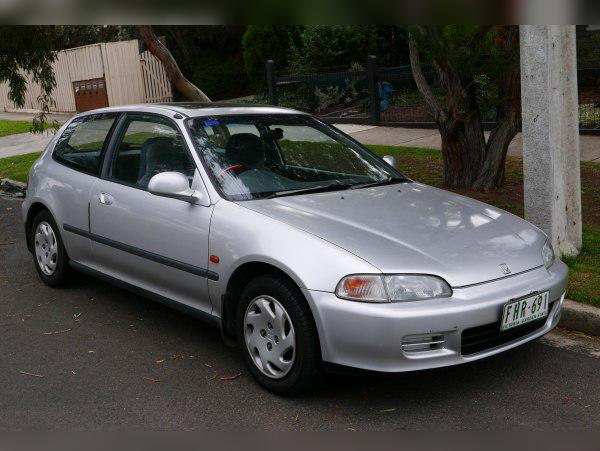
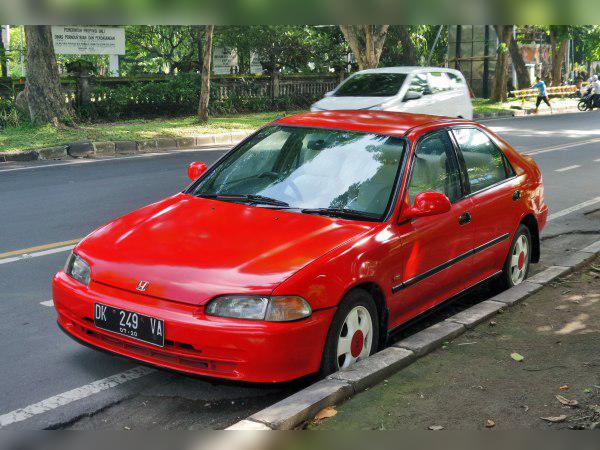
Honda Civic 1.5 i-VTEC-E (D15Z1): Experiences, problems, fuel consumption and buying tips
Key points (TL;DR)
- Exceptional fuel economy: This is a VTEC-E (Economy) engine, designed to consume fuel like a diesel, but drive like a petrol.
- Reliability: It belongs to Honda’s legendary D-series engines, known for “doing half a million” kilometers with basic maintenance.
- No expensive failures: No dual-mass flywheel, no turbo, no DPF, and no complicated injection systems.
- Specific part: The 5-wire lambda sensor (LAF sensor) is expensive and crucial for “lean burn” operation.
- Body corrosion: The engine will likely outlive the bodywork of the car it’s installed in.
- Performance: With 90 hp it’s no racer, and the long gear ratios “kill” acceleration in favor of lower fuel consumption.
Contents
Introduction: An engine ahead of its time
The Honda D15Z1 engine is one of the most technically interesting powerplants from the 1990s. It was primarily installed in the fifth-generation Honda Civic (the popular “egg” or EG series). The VTEC-E designation often confuses buyers. Unlike the sporty VTEC engines focused on high revs and power, here the “E” stands for Economy.
This engine uses a system where at low revs (below 2500 rpm) it practically operates as a 12-valve engine, using a very lean air-fuel mixture (“lean burn”). Only at higher revs are all valves activated and the engine “breathes” fully like a classic 16V petrol. The result is a car that, for its time, offered revolutionary fuel economy and today represents a cheap entry ticket into the world of reliable Japanese cars.
Technical specifications
| Parameter | Data |
|---|---|
| Engine code | D15Z1 |
| Displacement | 1493 cc (1.5 L) |
| Power | 66 kW (90 hp) @ 5500 rpm |
| Torque | 129 Nm @ 4500 rpm |
| Configuration | Inline 4-cylinder, SOHC (single camshaft), 16 valves |
| Injection type | PGM-FI (multi-point injection with lean burn mode) |
| Aspiration | Naturally aspirated |
| Camshaft drive | Timing belt |
Reliability and maintenance
Belt or chain?
The D15Z1 engine uses a timing belt to drive the camshaft. Although Honda engines can take a lot of abuse, a snapped belt can lead to piston-to-valve contact (it’s an interference engine), although with the D-series it often happens that the engine just stops without catastrophic damage, but it’s not a risk you should take.
Service intervals
The major service is recommended every 80,000 to 100,000 km or every 5 years, whichever comes first. The timing belt kit usually includes the belt, tensioner and water pump.
Oil and oil consumption
The sump of this engine holds about 3.3 to 3.5 liters of oil (including the filter). The recommended grade is 10W-40 (semi-synthetic) for older engines, or 5W-30/5W-40 if the engine has been overhauled and is in good condition.
Does it burn oil? On old Hondas, oil consumption is common, but not because of bad design – it’s due to age and hardened valve stem seals or stuck oil control rings. Consumption up to 0.5 liters per 1,000 km is tolerated on older examples, but a healthy D15Z1 shouldn’t use more than a couple of deciliters between oil changes.
Most common failures
Even though the mechanicals are “bulletproof”, time takes its toll:
- Distributor: This is the weakest point. The bearing inside the distributor can fail, or the ignition module can die, which leads to stalling or a no-start condition.
- Main relay: The famous old-Honda problem. When the cabin is hot (in summer), cold solder joints in the relay lose contact and the fuel pump doesn’t turn on. Symptom: the engine cranks but won’t start until the cabin cools down.
- EGR valve: Since this is an eco-oriented engine, it has an EGR valve that gets clogged with soot over time, causing rough running.
Spark plugs
Spark plugs should be replaced every 20,000 to 30,000 km if you use standard copper plugs (NGK recommended), or at longer intervals if you use iridium plugs. Due to the specific lean-burn combustion, correct plugs are crucial for smooth operation.
Specific parts and costs
The D15Z1 is generally cheap to maintain, but there is one “landmine”.
Injection system and lambda sensor
This engine uses the PGM-FI system, but the key component is the wideband lambda sensor (LAF sensor – 5 wires). This is NOT a regular lambda sensor that costs a few dozen euros. It allows the engine to run on a very lean mixture.
The problem: When this sensor fails (symptoms: higher fuel consumption, check engine light, loss of the “Economy” light on the dash), the replacement is very expensive (price depends on the market, but it’s many times more expensive than a regular one) and it’s hard to find a quality aftermarket unit.
Turbo, dual-mass flywheel, DPF
- Dual-mass flywheel: NONE. It uses a classic solid flywheel that practically never needs replacing.
- Turbo: NONE. This is a naturally aspirated engine.
- DPF / AdBlue: NONE. This is an old-school petrol engine.
Fuel consumption and performance
Real-world fuel consumption
This is where the D15Z1 shines. It’s one of the rare petrol engines from the 1990s that can rival diesels.
- City driving: Expect between 7 and 8.5 l/100 km, depending on traffic.
- Highway / open road: With careful driving (below 2500 rpm, when the green ECO light is on), fuel consumption can drop to an incredible 5 to 6 l/100 km.
Performance: Is it “sluggish”?
With 90 hp in a body weighing around 1000 kg, the car isn’t slow, but the gearbox is very long for the sake of fuel economy. This means weaker in-gear acceleration. In the city it’s agile enough, but overtaking on country roads requires dropping to third gear and revving it hard.
Motorway driving
On the motorway this engine behaves atypically for a small-displacement petrol. Thanks to the long gearing, at 130 km/h the engine spins at relatively low revs (often below 3500 rpm, depending on the exact gearbox version), which reduces noise and fuel consumption.
Additional options and modifications
Can it run on LPG?
Yes, but with caution. The D15Z1 is sensitive to a poorly tuned LPG system because of its lean-burn operating mode. If you install a sequential LPG system, the map must be perfectly tuned to avoid overheating the valves or triggering the check engine light due to the lambda sensor. A simple venturi system is not recommended.
Chip tuning (Stage 1)
Not worth it. On a naturally aspirated 1.5-liter engine, “chipping” won’t give you noticeable power gains (maybe 2–3 hp). A better investment is proper maintenance of the intake and exhaust. Enthusiasts often do a “Mini-Me” swap (installing a head from a stronger VTEC engine, e.g. D16Z6), but that’s already a serious mechanical job.
Gearbox
This engine is most commonly paired with a 5-speed manual gearbox (codes S20 or S40).
- Reliability: The gearboxes are extremely precise and durable.
- Most common issue: Input shaft bearings. The symptom is a “whirring” or “grinding” noise when the car is idling in neutral, which disappears when you press the clutch. It’s not an urgent failure, but it’s annoying.
- Maintenance: Gearbox oil (Honda MTF or 10W-40 engine oil on older models, although MTF is better) should be changed every 60,000–80,000 km.
- Clutch: The clutch kit is cheap (depends on the market, but it falls into the “not expensive” category) and there is no dual-mass flywheel to drive up the cost.
Buying used and conclusion
When buying a Honda with the D15Z1 engine, the engine is often the least of your worries. Still, pay attention to the following:
- Green ECO light: Drive the car gently in fifth gear at around 90 km/h. The light should be on. If it doesn’t light up, either the bulb is burned out or the system isn’t entering VTEC-E mode (an issue with sensors, thermostat or the lambda sensor).
- Exhaust smoke: Rev the warmed-up engine. Blue smoke means it’s burning oil (rings/seals). White smoke (and it’s not cold outside) can indicate a blown head gasket.
- Bodywork: Rear arches and sills are notorious weak spots on Civics of this generation. Check carefully for rust.
Conclusion: The Honda Civic with the D15Z1 engine is an excellent choice for students, beginner drivers or enthusiasts who want a “JDM” icon that’s cheap to run. If you find an example that isn’t rotten, buy it. This is the kind of mechanical engineering that’s no longer being made – simple yet brilliant.
Was this content useful to you?
Your opinion helps us to improve the quality of the content.