D13B2 Engine
- Engine
- 1343 cm3
- Aspiration
- Naturally aspirated engine
- Fuel
- Petrol (Gasoline)
- Fuel injection system
- Single-point injection
- Power
- 75 hp @ 6300 rpm
- Torque
- 102 Nm @ 3100 rpm
- Cylinders
- 4
- Valves
- 16, 4 per cylinder
- Cylinders position
- Inline
- Valvetrain
- OHC
- Oil capacity
- 3.3 l
- Coolant
- 3.6 l
# Vehicles powered by this engine
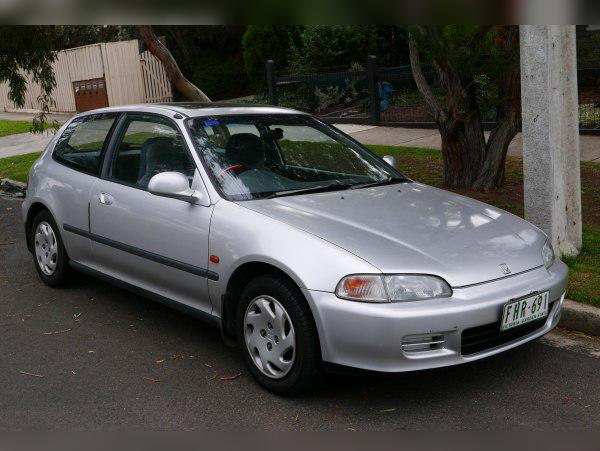
Honda D13B2 1.3 16V: Experiences, problems, fuel consumption and maintenance of a legend
1. The most important in short (TL;DR)
- Old-school mechanics: The D13B2 is a 1.3-liter engine with 16 valves, but it uses an electronically controlled carburetor, not fuel injection.
- Reliability: Mechanically, it is almost indestructible with regular oil changes. The engine block can withstand high stress.
- Achilles' heel: The system of vacuum hoses around the carburetor. If one cracks, the engine runs rough and diagnostics are difficult.
- Cheap maintenance: No dual-mass flywheel, no turbo, no DPF, no expensive injectors. Parts are available and affordable (depends on the market).
- Fuel consumption: Low in the city thanks to the light Civic body, but rises on the highway due to the short gearbox.
- Ideal use: Perfect for city driving, beginners, or fans of JDM culture who want a base for modifications.
- Recommendation: Buy only if the carburetor system is in good condition and the bodywork is not rotten.
Contents
- Introduction and Models
- Technical Specifications
- Reliability and Maintenance
- Specific Parts and Costs
- Fuel Consumption and Performance
- Additional Options and Modifications
- Gearbox
- Buying Used and Conclusion
Introduction
The Honda D13B2 is an engine that sparks nostalgia among many enthusiasts. It was primarily installed in the fifth-generation Honda Civic (popularly called the "egg" or EG) from 1991 to 1995. Although it was the base engine offered for the European market, it is far from being "ordinary".
This is an engine that connects two eras: it has a modern 16-valve SOHC head, but relies on a complex Keihin carburetor for fuel delivery instead of a fuel injection system. Thanks to its small displacement and high specific output for its time (75 hp from 1.3 liters), it became synonymous with efficiency and Japanese durability. For many drivers, this was the entry point into the world of Honda.
Technical Specifications
| Specification | Data |
|---|---|
| Engine code | D13B2 |
| Displacement | 1343 cc (1.3 L) |
| Power | 55 kW (75 hp) at 6300 rpm |
| Torque | 102 Nm at 3100 rpm |
| Configuration | Inline 4-cylinder, SOHC, 16 valves |
| Fuel system | Carburetor (Keihin, electronically controlled) |
| Induction | Naturally aspirated |
| Camshaft drive | Timing belt |
Reliability and Maintenance
Timing belt or chain?
The D13B2 uses a timing belt. In the D-series engines Honda used belts that are quite reliable. However, this is an interference engine in most operating conditions, which means that a broken belt can cause the pistons and valves to collide, resulting in catastrophic damage.
The major service is recommended every 100,000 km or 5 years (whichever comes first). Along with the belt, the tensioner and the water pump must be replaced, since they are driven by the same belt. The price of parts is generally low (depends on the market).
Most common failures
Although it is mechanically bulletproof, time takes its toll. The biggest enemy of this engine is the vacuum hose system. The carburetor is controlled by a maze of small rubber hoses that become brittle and crack over time. Symptoms include rough idle, stalling when stopping, or increased fuel consumption.
Another common problem is the distributor. The bearing inside the distributor can seize, or the ignition module can fail due to overheating, which leads to the engine cranking but not starting. Also, the Main Relay is a well-known weak point on older Hondas – cold solder joints crack, so the car will not start when the cabin is hot (e.g. in summer).
Oil and spark plugs
The oil pan of this engine holds about 3.3 to 3.5 liters of oil. Considering the age and design, the ideal viscosity is 10W-40 semi-synthetic. If you live in very cold regions, 5W-40 is an acceptable option.
As for oil consumption, D-series engines are known to "drink" a bit of oil if driven at high revs (VTEC territory – even though this engine has no VTEC, it loves revs). Consumption up to 0.5 liters per 10,000 km is negligible. If it uses more than 1 liter per 2,000 km, the valve stem seals are probably worn (a common issue due to aging rubber) or the oil control rings are stuck.
Spark plugs should be replaced every 20,000 to 30,000 km because this is a carbureted engine and combustion is not always as clean as in modern engines. Use standard NGK or Denso copper plugs – this engine does not require expensive iridium plugs.
Specific Parts (Costs)
Dual-mass flywheel and clutch
Good news: the D13B2 does not have a dual-mass flywheel. It uses a classic solid flywheel that is practically everlasting. A clutch kit (pressure plate, disc, release bearing) is very affordable and falls into the category of cheaper parts.
Fuel system (carburetor)
This is the key point. The engine does not have injectors in the conventional sense. It uses a twin-barrel Keihin carburetor. It is extremely reliable while it works properly, but once it starts causing issues (clogged jets inside the carburetor, faulty automatic choke), very few mechanics today know how to adjust it correctly. Rebuilding the carburetor can be expensive because it requires specific knowledge.
Turbo, DPF, EGR, AdBlue
This engine is a relic of simpler times:
- Turbo: None. The engine is naturally aspirated.
- DPF filter: None.
- EGR valve: Some versions for specific markets (e.g. Switzerland or California) had a primitive EGR system, but most European models either do not have it or use a simple mechanical system that is easy to clean.
- AdBlue: Absolutely does not exist.
Fuel Consumption and Performance
Real-world fuel consumption
Despite the small displacement, do not expect miracles if you have a heavy right foot.
City driving: Expect between 7.5 and 9.0 l/100 km. In winter, due to the automatic choke that keeps the revs high until the engine warms up, consumption can reach 10 liters on short trips.
Open road: Here it is economical and can go down to about 5.5 - 6.5 l/100 km at speeds up to 90 km/h.
Is the engine "lazy"?
On paper, 75 hp sounds modest. However, the fifth-generation Honda Civic weighs only about 900 kg. Because of that, the car is surprisingly lively and nippy around town. Throttle response is instant (a typical carburetor trait). Still, as soon as you load the car with passengers or turn on the A/C (if equipped), you will feel the lack of torque.
Behavior on the highway
This is not the natural habitat for the D13B2. The gearbox is geared short for better acceleration. At 130 km/h in fifth gear, the engine spins at about 3800–4000 rpm. That creates noise in the cabin and increases fuel consumption. Overtaking on the highway requires planning and definitely shifting down to fourth, or even third gear.
Additional Options and Modifications
LPG installation
Yes, it is possible, but with a big "BUT". Due to the carburetor, you cannot install a modern sequential LPG system; instead, you must use an older venturi (mixer) system.
The problem: These systems are prone to "backfires" in the intake manifold if the ignition system (wires, plugs) is not perfect. A backfire can destroy the air filter box or disturb the carburetor. Also, the air intake on the D13B2 has a hot/cold air flap that often causes problems for LPG installers when tuning.
Chipping (tuning)
This engine cannot be chipped. It does not have an ECU that controls fuel injection in the way modern cars do.
Tuning potential: A popular modification is removing the carburetor and installing the complete intake manifold and fuel injection system from a more powerful model (D15B7 or D16Z6), along with replacing the fuel tank and adding an ECU. This raises power to around 90–100 hp, but is a technically demanding project.
Gearbox
The D13B2 engine usually comes with a 5-speed S20 manual gearbox. Automatic gearboxes were rare on European 1.3 models (a classic 4-speed automatic).
Gearbox failures
The manual gearboxes are durable, but they have one characteristic weakness: the input shaft bearing.
Symptom: You can hear a rustling or grinding noise while the car is idling and the clutch is not pressed. As soon as you press the clutch, the noise disappears. This is not an urgent failure, but it is annoying and requires opening the gearbox.
Gearbox oil: Honda strictly recommends Honda MTF (Manual Transmission Fluid). Many people use 10W-40 engine oil (which Honda allowed in the 90s as a temporary solution), but for the best shift feel, use MTF. It should be changed every 60,000–80,000 km or when shifting becomes difficult.
Buying Used and Conclusion
When buying a Honda with this engine, pay attention to the following:
- Cold start: The engine should start immediately and raise the revs (choke) to about 1500–2000 rpm, then gradually lower them as it warms up. If it stalls or misfires, the carburetor needs servicing.
- Exhaust smoke: Blue smoke when accelerating or after engine braking indicates oil consumption (rings or valve stem seals).
- Temperature: Honda engines do not tolerate overheating. Check whether the radiator fan turns on and whether there are traces of oil in the coolant reservoir (head gasket).
- Rust: This is not related to the engine, but Civics of this generation rust badly on the rear arches and sills. That is a bigger expense than any engine repair.
Conclusion
The D13B2 is a working-class hero of the 90s. It is not fast, it is not a technological marvel by today's standards, but it is extremely reliable if basic maintenance is done. It is intended for drivers who want cheap transport from point A to point B, students, or enthusiasts who want to learn the basics of mechanics on a simple engine. If you find a car with solid bodywork and a healthy carburetor, it will serve you for years with minimal investment.
Was this content useful to you?
Your opinion helps us to improve the quality of the content.