K20C1 Engine
- Engine
- 1996 cm3
- Aspiration
- Turbocharger, Intercooler
- Fuel
- Petrol (Gasoline)
- Fuel injection system
- Direct injection
- Power
- 329 hp @ 6500 rpm
- Torque
- 420 Nm
- Cylinders
- 4
- Valves
- 16, 4 per cylinder
- Cylinders position
- Inline
- Max engine speed
- 7000 rpm
- Valvetrain
- DOHC VTEC
- Oil capacity
- 5.4 l
- Coolant
- 6.65 l
- Systems
- Particulate filter
# Vehicles powered by this engine
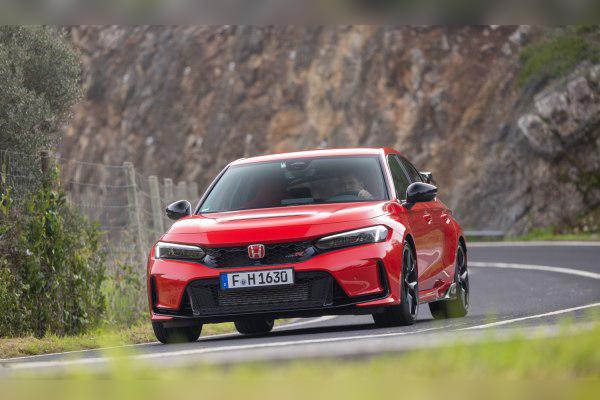
Honda K20C1 (Civic Type R FL5) – Experiences, issues, fuel consumption and used-buying tips
Key points in short (TL;DR)
- Timing chain drive: This engine uses a timing chain which is extremely reliable and does not require regular replacement if the oil is changed on time.
- Manual gearbox only: The K20C1 in the FL5 body comes exclusively with a superb 6-speed manual transmission.
- Direct injection: Like all modern engines, it is prone to carbon buildup on intake valves at higher mileage.
- Cooling sorted: Unlike its predecessor (FK8), the FL5 model has drastically improved engine cooling for track driving.
- GPF filter: It has a gasoline particulate filter (GPF), which means it requires oil of a specific grade and occasional longer drives on open roads.
- High performance: With 329 hp from 2.0 liters, this is one of the most powerful mass-produced four-cylinder engines in the world.
- Recommendation: The engine is “bulletproof” when properly maintained, ideal for enthusiasts who know what they’re buying.
Contents
Introduction and applications
The engine designated as K20C1 represents the very pinnacle of Honda’s engineering philosophy when it comes to four-cylinder turbo engines. Although it traces its roots back to earlier generations of the Civic Type R (FK2 and FK8), the version installed in the Honda Civic Type R (FL5) is the most refined and most powerful iteration so far.
Unlike the old naturally aspirated “VTEC” engines that needed high revs to really “breathe”, the K20C1 combines variable valve timing with a turbocharger, delivering explosive power across the entire rev range. This is not a regular engine for going to the grocery store; this is a powerplant designed to withstand torture on a race track and still take you to work the next day. However, high performance comes with specific maintenance requirements that every owner must be aware of.
Technical specifications
| Characteristic | Data |
|---|---|
| Engine code | K20C1 |
| Displacement | 1996 cc (2.0 L) |
| Power | 242 kW (329 hp) @ 6500 rpm |
| Torque | 420 Nm @ 2600–4000 rpm |
| Number of cylinders / valves | 4 / 16 (DOHC VTEC) |
| Charging method | Mono-scroll turbocharger with electronic wastegate |
| Injection type | Direct injection |
| Camshaft drive | Chain |
Reliability and maintenance
When we talk about Honda, we expect flawless reliability, and the K20C1 largely lives up to that expectation, provided it is not treated like an ordinary engine.
Chain or belt?
This engine uses a timing chain to drive the camshafts. The chain is of very high quality and is not prone to stretching like on some European competitors. There is no prescribed replacement interval (it is considered a lifetime component), but it is recommended to check chain tension and the condition of the guides at around 200,000 km, or earlier if you hear rattling on cold start.
Minor and major service
Since the engine has a chain, the classic “major service” (belt replacement) is not done in the same scope. However, the auxiliary (serpentine) belt and water pump should be inspected and replaced as needed, usually around 100,000–120,000 km.
Oil is crucial: The engine takes approximately 5.4 liters of oil (with filter). Honda officially recommends 0W-20 grade (API SN+ or SP) to meet emissions and fuel economy standards. However, experienced tuners and owners who track the car often switch to high-quality 5W-30 or even 0W-30, as it provides better protection at high temperatures.
Oil consumption and spark plugs
The K20C1 is a modern high-performance engine with direct injection. Oil consumption of up to 0.5 liters per 5,000 km can be considered acceptable if the car is driven aggressively (often “in the red”). In normal city driving it should not consume a noticeable amount of oil. If it uses a liter per 1,000 km, the engine is due for an overhaul (piston rings or turbo).
The spark plugs are iridium and, according to Honda’s schedule, can last up to 100,000 km. Still, I recommend replacing them every 40,000 to 60,000 km, especially if you like to drive hard. A faulty spark plug on such a highly stressed engine can lead to detonation and catastrophic failure.
Most common issues
Cooling was an issue on the previous model (FK8), where the engine would overheat on track. On the FL5, Honda increased the air intakes and fitted a larger radiator and fan. Overheating problems are now rare, except in extreme conditions. Another potential issue is carbon buildup on intake valves due to direct injection – “walnut blasting” of the intake is recommended every 80–100k km.
Specific parts (costs)
Injection system and turbo
The system uses high-pressure direct injection. The injectors are generally reliable but sensitive to poor fuel quality. Using 98 or 100 octane gasoline is mandatory to achieve the rated power and preserve engine health.
The engine uses a single MHI (Mitsubishi Heavy Industries) mono-scroll turbocharger. These turbochargers are very durable. Their service life is often equal to the life of the engine, provided that the turbo cool-down rule is respected (let the engine idle for a minute after hard driving) and that the oil is changed regularly. Turbo repair or replacement falls into the category of very expensive (depends on the market).
Emissions: GPF and EGR
The FL5 model meets strict Euro standards and is equipped with a GPF (Gasoline Particulate Filter), the gasoline equivalent of a DPF on diesels. Unlike diesels, gasoline engines reach higher exhaust temperatures, so the GPF regenerates more easily and quickly in passive mode. Clogging is rare, unless the car is driven exclusively on very short trips (cold engine) for years. AdBlue is not used on this engine.
Fuel consumption and performance
Is this engine “lazy”? Absolutely not. With 420 Nm available from just 2600 rpm, the FL5 really “rips” the tarmac. Throttle response is fantastic for a turbo engine, and turbo lag is minimal.
Real-world fuel consumption
- City driving: Expect between 11 and 14 l/100 km. In heavy stop-and-go traffic and with a heavy right foot, this can easily go above 15 liters.
- Open road: With calm driving on country roads, it is possible to get down to around 7.5–8.5 l/100 km.
- Motorway (130 km/h): Due to relatively short gearing for better acceleration, at 130 km/h the engine spins at somewhat higher revs (around 3,000 rpm in 6th gear). Fuel consumption is then around 8.5–9.5 l/100 km.
Additional options and modifications
LPG
Is it suitable for LPG? No. Although it is technically possible to install a liquid direct-injection LPG system (such as Vialle or Prins), the price of such a setup is astronomical (over 1500–2000 EUR), and the cost-effectiveness is questionable. Also, fitting LPG to a limited-run sports car like the Type R drastically reduces its resale value and ruins the vehicle’s balance.
Chiptuning (Stage 1)
The K20C1 is a favorite among tuners. The engine has large power reserves. A safe Stage 1 (software only) can raise power to about 360–370 hp and torque to around 480–500 Nm. However, keep in mind that the clutch will be under greater stress. Anything beyond that requires upgrades to the intake (intercooler) and exhaust (downpipe).
Gearbox
The K20C1 in the FL5 comes with a 6-speed manual gearbox only. There is no automatic option. This is one of the best gearboxes in the world – the throws are short and mechanically precise (a real “click-clack” feel). The gearbox features a rev-matching system that automatically blips the throttle on downshifts, making every driver feel like a pro.
Clutch and flywheel
Yes, this model has a dual-mass flywheel. Its role is to reduce four-cylinder vibrations and make driving more pleasant. Although gasoline dual-mass flywheels are lighter and longer-lasting than diesel ones, they are still a wear item.
- Replacement cost: A clutch kit with flywheel is expensive (depends on the market, but expect a “premium” price).
- Gearbox failures: On earlier versions (FK8) there were occasional issues with grinding when quickly shifting from 1st to 2nd gear. On the FL5, Honda revised the mechanism and strengthened certain components, so these problems are now rare.
- Gearbox service: It is recommended to change the gearbox oil (Honda MTF-3) every 40,000 to 60,000 km. If you drive on track, halve this interval.
Buying used and conclusion
Buying a used Type R with this engine requires caution, not because of poor quality, but because of how the previous owner used the car.
What to check:
- Modifications: Avoid cars with unknown maps or poorly installed “cold air intakes”. Stock condition is always the best purchase.
- Gearbox: On the test drive, once the gearbox oil is warm, try fast shifts at high revs. If it grinds, the synchros are worn.
- Brakes and tires: These are consumables that are extremely expensive on this car. Check the condition of the discs.
- Service history: Oil must have been changed at a maximum of every 10,000 km or once a year.
Conclusion: The Honda Civic Type R with the K20C1 engine is a future classic. The engine is robust, offers the performance of a supercar from 10 years ago, and can still serve as a daily driver. Maintenance is more expensive than on a regular Civic (tires, brakes, clutch), but compared to German premium rivals with similar performance it is often cheaper and more reliable. If you are looking for pure driver’s nirvana, this is the engine for you.
Was this content useful to you?
Your opinion helps us to improve the quality of the content.