K20Z4 Engine
- Engine
- 1998 cm3
- Aspiration
- Naturally aspirated engine
- Fuel
- Petrol (Gasoline)
- Fuel injection system
- Multi-port manifold injection
- Power
- 201 hp @ 7800 rpm
- Torque
- 193 Nm @ 5600 rpm
- Cylinders
- 4
- Valves
- 16, 4 per cylinder
- Cylinders position
- Inline
- Valvetrain
- DOHC, i-VTEC
- Oil capacity
- 4.4 l
- Coolant
- 4.4 l
# Vehicles powered by this engine
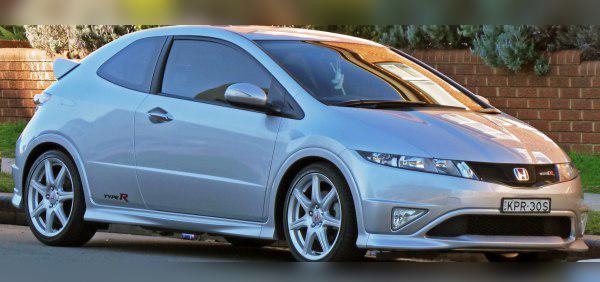
Honda K20Z4 (Civic Type R FN2) – Experiences, issues, fuel consumption and buying used
In short (TL;DR)
- The Last of the Mohicans: This is one of the last true high-revving naturally aspirated engines before the turbo era. There’s no turbo lag, but it needs high revs to make power.
- Timing chain reliability: It’s chain-driven, and the chain is generally durable, but sensitive to low oil level.
- Oil consumption: These engines like to “drink” oil, especially in VTEC mode. That’s not necessarily a fault, but a characteristic, so regularly checking the dipstick is mandatory.
- Valve adjustment required: There are no hydraulic lifters. The valves must be adjusted mechanically every 40,000 km.
- The gearbox is great, but...: The 3rd gear synchro is a common weak point under aggressive driving.
- Not for everyone: Below 5,500 rpm it behaves like an ordinary car; only above that does it turn into a “beast”.
Contents
- Introduction: The heart of the spaceship
- Technical specifications
- Reliability and maintenance
- Specific parts and costs
- Fuel consumption and performance
- Additional options and modifications
- Gearbox and drivetrain
- Buying used and conclusion
Introduction: The heart of the spaceship
The Honda K20Z4 is an engine that defined a very specific era of hot hatch vehicles. It was installed exclusively in the European version of the Honda Civic Type R (FN2 chassis), produced from 2007 to 2011. Unlike its predecessor (EP3) which had the cult K20A2, this engine was slightly modified to meet stricter emission standards and to provide a somewhat “smoother” operation thanks to balance shafts. Still, it kept what matters most – the i-VTEC system that changes the engine’s character at high revs and a redline that starts only at 8,000 rpm. This is an engine for enthusiasts who understand that with a naturally aspirated engine you don’t get power by flooring it at low revs, but by “wringing out” every gear to the limiter.
Technical specifications
| Parameter | Value |
|---|---|
| Engine code | K20Z4 |
| Displacement | 1998 ccm (2.0 L) |
| Power | 148 kW (201 hp) at 7800 rpm |
| Torque | 193 Nm at 5600 rpm |
| Fuel type | Petrol (Recommended 98+ octane) |
| Aspiration | Naturally aspirated |
| Injection system | Multipoint (indirect) |
| Camshaft drive | Chain |
Reliability and maintenance
When we talk about the K20 series of engines, we’re talking about some of the most reliable powerplants ever made, provided they are not neglected. Still, the K20Z4 has its specifics.
Timing belt or chain?
This engine uses a timing chain. It is extremely durable and designed to last as long as the engine itself. However, the chain can stretch if the oil is not changed regularly or if the oil level is chronically low. Symptoms of a stretched chain are rattling on cold start or the “Check Engine” light coming on due to desynchronisation between the camshaft and crankshaft sensors.
Most common issues
Although robust, the engine is not immune to problems:
- VTC actuator (variable cam gear): A nasty “grinding” noise is often heard on cold start, lasting 1–2 seconds. This is a sign that the mechanism is not holding oil properly. Although it sounds scary, many people drive like this for years, but replacement is recommended.
- Oil consumption: Due to high revs and ring design, oil consumption is common.
- Valve adjustment: This is not a fault, but an obligation many forget, which leads to rough running or burnt valves.
Major service
A classic “major service” like on belt-driven engines doesn’t really exist here. Instead, at around 100,000–120,000 km you should check the condition of the chain and tensioner. The auxiliary (serpentine) belt and water pump are replaced as needed or on inspection, usually at that mileage.
Oil: quantity and grade
The engine takes approximately 4.2 to 4.5 litres of oil with the filter. Honda recommends 0W-30, 5W-30 or 5W-40 grades. For more aggressive driving and warmer climates, a high-quality fully synthetic 5W-40 has proven to be the best choice for protection at high revs.
Oil consumption
Does it consume oil? Yes, absolutely. If you often drive in the VTEC range (above 5400 rpm), consumption of 0.5 up to even 1 litre per 1000–2000 km can be considered acceptable for this type of engine, even though Honda’s manual allows for even higher values. If you drive gently, consumption should be minimal. Symptom of a problem: Blue smoke from the exhaust during engine braking or sudden throttle application indicates worn piston rings or valve stem seals.
Spark plugs
Iridium spark plugs are used (NGK or Denso are OEM). Replacement interval is 100,000 km, although enthusiasts tend to replace them earlier (at 60–80k km) for optimal performance.
Specific parts (costs)
Maintaining a Honda Civic Type R FN2 is not as cheap as a regular 1.8 Civic, but it’s also not astronomically expensive like some German competitors.
Flywheel and clutch
The K20Z4 engine comes from the factory with a single-mass (solid) flywheel, which is great news because there is no expensive dual-mass flywheel to fail. However, the clutch kit wears out faster than on an average car due to the driving style. Clutch replacement is a mid-range expense (depends on the market).
Fuel injection system
It uses a classic indirect fuel injection system. The injectors are very reliable and rarely cause issues. There are no problems with carbon build-up on intake valves like on direct-injection engines.
Turbo, DPF, EGR, AdBlue
This is “old school”.
- Turbocharger: None. (One less thing to worry about).
- DPF filter: None.
- AdBlue: None.
- EGR valve: Honda uses valve overlap (via VTEC/VTC) to achieve the effect of exhaust gas recirculation, so the typical troublesome EGR valve is not an issue here.
Fuel consumption and performance
The K20Z4 is an engine with a split personality, and that shows in fuel consumption as well.
City driving
In the city, this engine is no fuel economy champion. Expect real-world consumption between 11 and 14 litres per 100 km. If you’re stuck in rush hour and like hard acceleration, the figure easily goes higher.
Is the engine “lazy”?
Because it has only 193 Nm of torque, available high in the rev range, the engine feels “lazy” at low revs (below 3000 rpm) by modern turbo-diesel or turbo-petrol standards. In everyday driving you have to use the gearbox more often. However, that’s not a flaw, it’s a characteristic – the engine needs revs to “breathe”.
Highway driving
At 130 km/h in 6th gear, the engine spins at a fairly high 3800–4000 rpm. That means it’s noisy in the cabin and fuel consumption is not low – it’s around 8.5 to 9.5 litres per 100 km. This is not an ideal car for long motorway cruising, mainly due to the short gearbox ratios.
Additional options and modifications
LPG conversion
Theoretically – possible. In practice – not recommended for a Type R. Honda engines have sensitive valve seats that don’t tolerate the higher combustion temperatures of LPG well without proper lubrication (Flashlube). Also, these engines are bought for their performance, and LPG often complicates VTEC operation and mapping. If you absolutely must, the system has to be top-notch (very expensive), with OBD connection and valve lube, and valve clearance checks must be twice as frequent (every 20,000 km).
Remap (Stage 1)
On a naturally aspirated engine, a remap doesn’t bring a dramatic increase in peak power (maybe 5–10 hp). However, on the K20Z4, remapping (for example using a Hondata FlashPro device) is extremely popular.
Why? From the factory, VTEC engages at 5400 rpm. With a good map, that point is lowered to about 3800–4000 rpm (with appropriate intake/exhaust), which drastically fills in the “hole” in the mid-range and makes the car much faster in real-world driving, even though peak power remains similar.
Gearbox
The K20Z4 was paired exclusively with a 6-speed manual gearbox. There is no automatic gearbox in the Type R version.
Most common gearbox issues
The gearbox is precise with a short throw, a real joy to use. Still, it has a weakness:
- 3rd gear synchro: It often fails due to fast shifting from 2nd to 3rd near the redline. The symptom is grinding when engaging 3rd or the gear popping out.
- Clutch cylinders: The master or slave clutch cylinder can squeak or start leaking. The pedal may become stiff or bite very low.
Gearbox maintenance
Honda MTF-3 (Manual Transmission Fluid) is the way to go. It is recommended to change the gearbox oil every 40,000 to 60,000 km, or more often if the car is driven on track. The gearbox takes about 2 litres of oil.
Buying used and conclusion
If you’re buying a Honda Civic Type R with the K20Z4 engine, be prepared for a thorough inspection. These cars are rarely bought just for grocery runs – they’ve usually been driven hard.
What to check before buying?
1. Cold start: Listen for chain rattle or VTC actuator grinding in the first few seconds.
2. VTEC test: Once the engine is warm, on full throttle check whether at around 5400 rpm you feel a clear “kick” (change in sound and acceleration) and whether the engine pulls linearly up to 8000 rpm without hesitation.
3. Gearbox: At higher revs, shift quickly from 2nd to 3rd gear. If it grinds, the synchro is done (an expensive repair).
4. Smoke: Have someone drive behind you while you accelerate. Blue smoke is a sign that the engine is burning too much oil (rings).
5. Oil: Check the oil level. If the owner arrived with the oil at minimum or below, that’s a red flag.
Conclusion
The K20Z4 engine is a fantastic old-school engineering achievement. It is intended for drivers who enjoy the very act of driving, the sound of high revs and a direct mechanical feel. It’s not for those who want low fuel consumption, silence or diesel-like torque. Maintenance costs are reasonable (not as high as premium brands), but it demands discipline, especially regarding oil level and valve adjustment. If you find a good example, you’ll have a smile on your face every time the needle goes past 5500 rpm.
Was this content useful to you?
Your opinion helps us to improve the quality of the content.