B16B Engine
- Engine
- 1595 cm3
- Aspiration
- Naturally aspirated engine
- Fuel
- Petrol (Gasoline)
- Fuel injection system
- Multi-port manifold injection
- Power
- 185 hp @ 8200 rpm
- Torque
- 160 Nm @ 7500 rpm
- Cylinders
- 4
- Valves
- 16, 4 per cylinder
- Cylinders position
- Inline
- Valvetrain
- DOHC, VTEC
- Oil capacity
- 4 l
# Vehicles powered by this engine
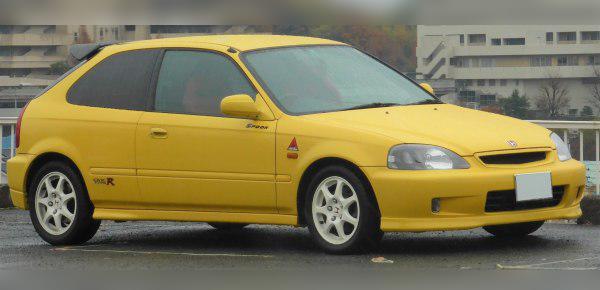
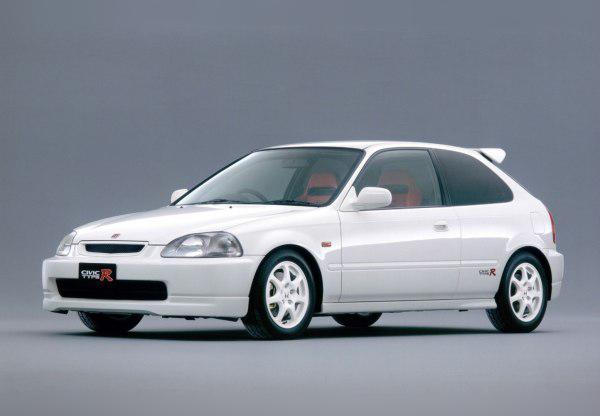
Honda B16B 1.6 VTEC (Civic Type R EK9): Experiences, problems, fuel consumption and buying tips
Key points in short (TL;DR)
- Performance per liter: This is one of the most technically advanced naturally aspirated engines ever made. With 185 hp from 1.6 liters, it offers incredible throttle response.
- Oil consumption: Due to the high revs (redline at 9,000 rpm), oil consumption is common and somewhat expected, but visible exhaust smoke is not.
- VTEC system: The heart of this engine. If VTEC doesn’t “hit” hard and clean, there is a problem with oil pressure or the solenoid.
- Maintenance: Requires top-quality synthetic oil and regular changes. This is not an engine for people who cut corners on servicing.
- Parts: Although Honda is reliable, specific parts for the B16B (which differs from the more common B16A2) can be expensive and harder to source because the engine was originally made for the Japanese market (JDM).
- Gearbox: Comes exclusively with the fantastic S4C manual gearbox with a limited-slip differential (LSD), which is durable but very short-geared.
- Conclusion: An engine for enthusiasts and collectors, not recommended as a daily city commuter from point A to point B.
Contents
Introduction: The legend of the “Type R” badge
The Honda B16B is not an ordinary engine. It is the heart of the first-generation Civic Type R (EK9 chassis), a model that redefined what “hot hatch” means. It was produced in the late 90s (1997–2000) and was originally intended exclusively for the Japanese market (JDM), but was massively imported into Europe and the rest of the world because of its incredible characteristics.
Unlike the standard B16A engine found in VTi models, the B16B was hand-polished at the factory, has more aggressive camshafts, lighter pistons, and actually uses the block from the larger 1.8L (B18C) engine to achieve better rod geometry at high revs. This is a racing engine adapted for the street.
Technical Specifications
| Characteristic | Data |
|---|---|
| Engine code | B16B |
| Displacement | 1595 cc |
| Power | 136 kW (185 hp) @ 8200 rpm |
| Torque | 160 Nm @ 7500 rpm |
| Fuel type | Petrol (98+ octane recommended) |
| Injection system | PGM-FI (Multi-point fuel injection) |
| Aspiration | Naturally aspirated with VTEC system |
| Compression ratio | 10.8:1 |
Reliability and Maintenance
Timing belt or chain?
The Honda B16B uses a timing belt. This is a key maintenance point. Since this engine revs up to a stratospheric 9,000 rpm, a snapped belt leads to catastrophic failure (piston-to-valve contact).
Most common failures and symptoms
Although it is mechanically “indestructible” if properly cared for, age and high revs take their toll:
- Distributor: A common weak point of Hondas from this period. Symptoms include hard starting, jerking while driving, or the engine cutting out. The bearing inside the distributor can seize.
- VTEC solenoid: If the solenoid screen/gasket gets clogged by dirty oil, VTEC will not engage. The symptom is that the engine “hits a wall” at around 6,000 rpm and doesn’t want to rev further, or you don’t feel a change in sound and power.
- Oil leaks: Often leaks from the VTEC solenoid, camshaft seal (near the distributor), and the oil pan gasket.
- MAP sensor: Can cause issues with idle and fuel mixture.
Service intervals
Minor service: Recommended every 5,000 to 7,000 km. Due to high-rev driving, the oil loses its properties quickly.
Major service: Timing belt, tensioner and water pump should be replaced every 80,000 to 100,000 km or every 5 years, whichever comes first. With this engine, do not risk extending the interval.
Oil: capacity, grade and consumption
The engine takes about 4.0 liters of oil (with filter). Honda originally recommends 5W-30 or 10W-30, but for European climates and older engines, most owners and specialists switch to high-quality fully synthetic 5W-40 or even 10W-50/10W-60 if the car is used exclusively on track.
Does it consume oil? Yes. VTEC engines are designed to consume a bit of oil when frequently operated at high revs. Consumption of around 0.5 liters per 1,000 km can be considered acceptable if the car is constantly driven in the “red”. However, if it uses a liter per 1,000 km under normal driving, that points to worn piston rings or valve stem seals (a common issue on older examples). Blue smoke from the exhaust when lifting off the throttle (engine braking) points to valve stem seals, and under acceleration to piston rings.
Spark plugs
Use only NGK or Denso spark plugs according to factory specification (usually platinum or iridium for the B16B). Replacement interval is 20,000–30,000 km for copper plugs, or up to 100,000 km for iridium (but more frequent gap checks are recommended).
Specific Parts (Costs)
Flywheel and clutch
Good news: This engine DOES NOT have a dual-mass flywheel. It uses a classic solid flywheel. The factory flywheel on the B16B is already lightened compared to standard models for better throttle response. A clutch kit is not excessively expensive (depends on the market), and it is durable.
Fuel injection system and injectors
The system is classic indirect injection (into the intake manifold). The injectors are extremely reliable and rarely cause problems. If they do, ultrasonic cleaning usually solves it. There are no expensive high-pressure pumps like on modern direct-injection systems.
Turbo, DPF, EGR, AdBlue?
- Turbo: None. This is a pure naturally aspirated engine. Its long service life is largely due to the absence of turbo thermal stress, provided the oil is changed regularly.
- DPF / AdBlue: None. The engine is from the 90s (Euro 2/3 standards depending on market).
- EGR valve: Most of these sporty Honda engines do not have the typical troublesome EGR valve that clogs with soot and chokes the engine, but instead use a PCV system to recirculate oil vapors. The PCV valve should be replaced periodically, because if it clogs, crankcase pressure rises and the engine starts “pushing” oil out through the seals.
Fuel Consumption and Performance
City driving and real-world consumption
Don’t expect miracles. Even though it’s “only a 1.6 engine”, it is mapped for performance.
City: 10–12 l/100 km (normal driving). Spirited driving easily pushes this to 14+ liters.
Highway / country roads: 7–8 l/100 km (at 80–90 km/h).
Average: Expect around 10 l/100 km in mixed driving.
Is the engine “lazy”?
This is where the “Jekyll & Hyde” character appears. Up to 5,500 rpm, the engine behaves like a completely ordinary 1.6 petrol – usable, but with 160 Nm of torque it’s not a traffic-light racer without revving it. The feeling of “laziness” exists if you’re used to modern turbo diesels with lots of torque.
However, when VTEC engages (usually around 6,100 rpm), the engine changes sound and character, and pulls strongly all the way to the rev limiter at almost 9,000 rpm. In the light EK9 Civic body (under 1,100 kg), the performance is explosive.
Behavior on the motorway
This is its weakest point in terms of comfort. Due to the short gearbox ratios (to keep the engine in the VTEC zone), at 130 km/h the engine spins at a very high 4,000 to 4,500 rpm in fifth gear. This means cabin noise and higher fuel consumption. It is not a cruiser for long highway trips, but a machine built for twisty roads.
Additional Options and Modifications
LPG conversion
Technically possible, but heresy and risky for this particular engine. The B16B is a rare collector’s item. High revs combined with LPG (which has a higher combustion temperature) can lead to faster wear of valves and valve seats. If you absolutely have to save on fuel, this engine is not for you. Recommendation: NO.
Chip tuning (Stage 1)
On naturally aspirated engines, “chipping” does not bring large horsepower gains (maybe 5–8 hp). However, real improvement comes from ECU remapping (e.g. Hondata) in order to: 1. Lower the VTEC engagement point (e.g. to 5,000 rpm) to “smooth out” the power transition. 2. Improve throttle response. For serious power gains, physical modifications are needed (intake, exhaust, cams).
Gearbox
Type of gearbox
The B16B in the EK9 Civic comes exclusively with the legendary S4C 5-speed manual gearbox. This gearbox is factory-equipped with a helical LSD (limited-slip differential), which is crucial for putting power down out of corners. There is no automatic gearbox option in this Type R configuration.
Gearbox issues and maintenance
- Synchros: Due to frequent fast shifting at high revs, the synchros (especially 3rd gear, and sometimes 2nd and 4th) tend to wear. If the gearbox grinds when shifting quickly, the synchros need replacement.
- Gearbox oil: Honda is specific – use only Honda MTF (Manual Transmission Fluid). Replacement is recommended every 40,000–60,000 km. Capacity is about 2.2–2.5 liters.
- Clutch replacement: The cost is moderate (market-dependent), but labor can be more expensive. It is recommended to install a quality kit (Exedy is often used as an OEM replacement).
Buying used and Conclusion
What to check before buying?
- Cold start: Listen for knocking noises from the top of the engine (valves/LMA springs) or from the bottom (rod bearings).
- Smoke: Have someone drive behind you. When VTEC engages, a bit of black smoke is acceptable (rich mixture), but blue smoke is a sign that the engine is “tired” and burning oil. White smoke from a warm engine may indicate a head gasket issue.
- Engine code: Check that the block is actually stamped B16B. It’s easy to fool a buyer by swapping in a cheaper B16A2 and fitting a red valve cover.
- Gearbox: Check if it grinds when shifting from 3rd to 2nd gear at high revs.
Final conclusion
The Honda B16B is a masterpiece of 90s engineering. It is an engine that pushes you to drive hard and rewards you with a sound and emotion that modern turbo engines simply cannot provide.
Who is it for? Driving enthusiasts, collectors, and those who want a weekend car for the track or pure driving enjoyment.
Who is it NOT for? Drivers looking for comfort, quiet motorway cruising, low fuel consumption, and cheap maintenance with parts from the local corner shop.
Was this content useful to you?
Your opinion helps us to improve the quality of the content.