LFA1 Engine
- Engine
- 1993 cm3
- Aspiration
- Naturally aspirated engine
- Fuel
- Petrol (Gasoline)
- Fuel injection system
- Direct injection
- Power
- 145 hp @ 6200 rpm
- Torque
- 175 Nm @ 4000 rpm
- Cylinders
- 4
- Valves
- 16, 4 per cylinder
- Cylinders position
- Inline
- Valvetrain
- DOHC, i-VTEC
- Oil capacity
- 4.1 l
- Coolant
- 5.53 l
- Systems
- Start & Stop System, Particulate filter
# Vehicles powered by this engine

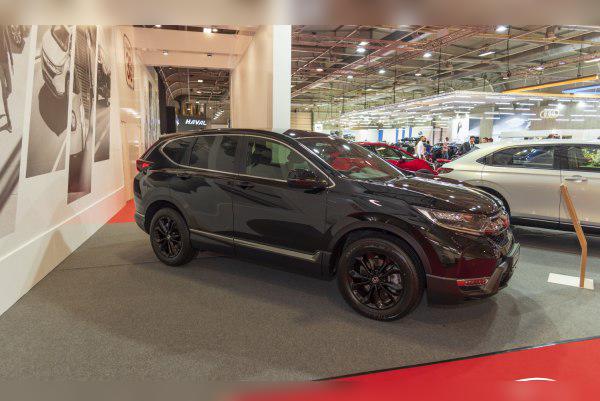
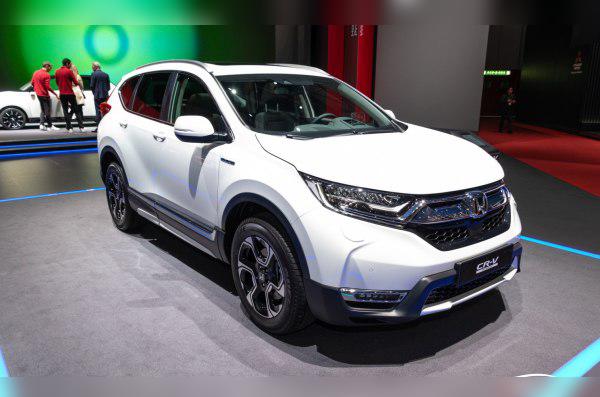
Honda 2.0 i-MMD (LFA1) Hybrid – Experiences, Issues, Fuel Consumption and Maintenance
Key points in short (TL;DR)
- Exceptional reliability: The LFA1 is a naturally aspirated engine operating on the Atkinson cycle, lightly stressed and designed to last a long time.
- No conventional gearbox: It uses an e-CVT system without gears and belts, eliminating many of the expensive failures typical of traditional automatics.
- City driving is its home turf: In the city it consumes as little as a diesel or even less, but on open motorways fuel consumption increases.
- Specific sound: Because it often works as a generator, engine rpm is frequently not in sync with vehicle speed (the “scooter effect” during hard acceleration).
- No “expensive” parts: No turbocharger, no conventional dual-mass flywheel, no alternator or starter motor (it uses high-voltage electric motors).
- Recommendation: Ideal for drivers who spend most of their time in city and suburban driving and want Honda-level reliability.
Contents
Introduction and application
The engine with the code LFA1 is the heart of Honda’s hybrid system (i-MMD, later renamed e:HEV) in the fifth-generation CR-V. Unlike conventional petrol engines, this 2.0‑liter naturally aspirated four‑cylinder is not primarily responsible for driving the wheels. Its main role is to drive a generator that produces electricity for the electric motor or charges the battery. Only at higher speeds (usually above 80 km/h), the clutch locks up and the engine directly drives the wheels.
This engine operates on the Atkinson cycle, which means power is sacrificed in favor of excellent thermal efficiency. As a result, it produces a relatively modest 145 hp from 2.0 liters of displacement, but combined with the electric motor the system delivers a strong 184 hp (or 215 hp in certain specifications, depending on the market and how system power is measured).
Technical specifications
| Parameter | Value |
|---|---|
| Engine code | LFA1 |
| Displacement | 1993 cc (2.0 L) |
| Power (petrol engine) | 107 kW (145 hp) at 6200 rpm |
| Torque (petrol engine) | 175 Nm at 4000 rpm |
| Power (drive electric motor) | 135 kW (184 hp) |
| Torque (electric motor) | 315 Nm (available immediately) |
| Fuel type | Petrol (Hybrid) |
| Aspiration | Naturally aspirated |
| Fuel injection | PGM-FI (multi-point indirect injection) |
| Valve timing drive | Chain (DOHC i-VTEC) |
Reliability and maintenance
Does this engine have a timing belt or a chain?
The LFA1 engine uses a timing chain to drive the camshafts. Honda chains on 2.0 engines have traditionally been very durable and are not considered consumable items. Preventive replacement is not required; the chain is replaced only if symptoms appear (rattling on cold start), which is rare before 250,000–300,000 km with regular maintenance.
What are the most common issues with this engine?
This is one of the most reliable modern powertrains. The petrol engine itself is “overbuilt” and runs under low load. Still, there are some specifics:
- 12V battery discharge: The most common issue on CR-V hybrids is not the engine but the small 12V battery. If the car sits for more than a week, it can discharge and prevent the system from starting (even if the high-voltage traction battery is full).
- Noise under load: This is not a fault, but owners often complain. On long climbs the engine runs at high rpm to generate electricity, which creates a “drone” noise.
- Cabin temperature sensors: They can occasionally cause issues with the A/C operation, which indirectly affects engine operation (because the engine runs to drive the A/C compressor or to heat the cabin).
At what mileage is the major service due?
Since the engine has a chain, there is no classic major service in the sense of scheduled belt replacement at a certain mileage. The auxiliary (serpentine) belt that drives the water pump and other accessories should be checked at every minor service and replaced as needed (typically around 100,000 km or every 5–7 years).
Oil: quantity, grade and consumption
The engine takes approximately 3.7 to 4.0 liters of oil (always check the dipstick). The recommended viscosity is strictly 0W-20. Due to frequent start-stop cycles and operation at lower temperatures, a low-viscosity oil is crucial for proper lubrication.
Oil consumption: LFA1 engines are not known for oil consumption. If the engine uses more than 0.5 liters per 10,000 km, this may indicate an issue with piston rings or the PCV valve, but this is extremely rare at low mileage.
Spark plugs and replacement interval
The engine uses iridium spark plugs (NGK or Denso). The recommended replacement interval is usually 100,000 to 120,000 km. Do not experiment with standard plugs, as access can sometimes be difficult and the hybrid operating mode requires a reliable spark.
Specific parts (costs)
Does the engine have a dual-mass flywheel?
Not in the conventional sense. This system does not have a traditional flywheel connecting the engine to a gearbox, because there is no gearbox. There is a torsional vibration damper between the engine and the generator, but it fails extremely rarely and is not a “consumable” part like a dual-mass flywheel on diesels.
Fuel injection system and injectors
The LFA1 uses indirect (multi-point) fuel injection. This is a big advantage for a used car! Unlike direct injection (as on Honda’s 1.5 Turbo), there are no issues with carbon build-up on intake valves. Injectors are simple, cheaper to replace and very durable.
Turbocharger, EGR and DPF/GPF
- Turbo: None. The engine is naturally aspirated, which eliminates one of the most expensive potential failures.
- EGR valve: There is an EGR valve for emissions and efficiency. It can get dirty at high mileage, but it is usually easy to clean.
- GPF (petrol particulate filter): Models for the European market (CR-V from 2019 onwards) likely have a GPF filter (Gasoline Particulate Filter) to meet Euro 6d‑TEMP standards. However, due to the high exhaust gas temperatures of petrol engines, GPF clogging is much rarer than DPF issues on diesels.
- AdBlue: None. This is a petrol engine.
Fuel consumption and performance
What is the real-world city fuel consumption?
This is where this engine shines. Thanks to regenerative braking and frequent electric-only driving, real-world city consumption (even in heavy stop‑and‑go traffic) is between 5.0 and 6.5 liters per 100 km. This is an impressive result for an SUV weighing over 1.6 tons.
Is this engine “sluggish”?
Absolutely not. Although 145 hp on paper sounds modest, you are actually driving on a 184 hp electric motor with 315 Nm of torque available from zero rpm. Throttle response in the city is instant, better than on a turbo diesel. It accelerates from 0 to 100 km/h in about 8.6 to 9.2 seconds (depending on AWD/FWD), which is perfectly adequate.
Behavior on the motorway and cruising at 130 km/h
On the motorway, physics cannot be cheated. At 130 km/h the system often engages the clutch (“Direct Drive”) and the petrol engine directly drives the wheels because that is the most efficient mode at that speed.
- Consumption at 130 km/h: Expect between 8.0 and 9.5 l/100 km. The SUV’s aerodynamics and the limited assistance from the battery (which discharges quickly at constant high speed) increase consumption.
- Noise: On flat sections it is quiet. On inclines at 130 km/h, the transmission will disengage direct drive, the engine will rev high to generate electricity for the electric motor, and then it becomes noisy.
Additional options and modifications
LPG (autogas) conversion
Although the engine has indirect injection (which is suitable for LPG), an LPG conversion is strongly not recommended. Reasons:
- The engine operates on the Atkinson cycle with specific valve timing.
- The engine starts and stops hundreds of times during a drive. An LPG system would struggle to follow these cycles and maintain optimal vaporizer temperature, and switching between petrol and gas would be constant.
- The luggage space is already reduced due to the battery (on the hybrid there is no space for a spare wheel where the LPG tank would usually go).
Chip tuning (Stage 1)
It makes no sense. Naturally aspirated engines gain very little from remapping (at most 5–10 hp), and here the engine’s operation is controlled by a complex hybrid ECU that balances the battery and the electric motor. Any attempt to modify the map would likely disrupt the hybrid system.
Transmission: e-CVT
Which transmission is used?
This engine is paired exclusively with an e-CVT. It is important to understand: This is not a conventional CVT with a belt and pulleys!
Technically, it is a fixed‑ratio transmission (single speed) with two electric motor/generators. There are no gears that shift, no belt that can snap, no clutch that wears out. This is probably the most reliable type of transmission on the market today.
Transmission maintenance
Although Honda states that the transmission fluid is “long‑life”, real‑world experience and mechanics’ advice suggest replacing the special Honda transmission fluid every 40,000 to 60,000 km. This is a relatively inexpensive procedure (around 3–4 liters of fluid) and is crucial for cooling the electric motors inside the transmission housing. The cost is low (depends on the market, but it is not expensive).
e‑CVT failures are extremely rare and usually the result of neglected maintenance (old fluid) or physical damage to the housing.
Buying used and conclusion
What to check before buying?
- Service history: Check whether engine oil was changed on time (0W‑20) and whether the differential/transmission oil has ever been changed.
- Hybrid battery: Although Honda batteries are durable, diagnostics can show the cells’ “health” (SOH – State of Health).
- Test drive: Listen to whether the engine starts and stops smoothly. Jerks when switching from electric to petrol are not normal.
- Drivetrain (AWD models): If you are buying an AWD version, check whether the rear wheels are actually getting power (Honda’s Real Time AWD is mechanically connected via a driveshaft, unlike Toyota which uses a rear electric motor).
Conclusion
The Honda CR‑V with the 2.0 i‑MMD (LFA1) engine is a technological gem for people who want a “fill up and drive” car. All the weak points of modern diesels (turbo, DPF, dual‑mass flywheel, fuel‑sensitive injectors) are eliminated.
Who is it for? Families, taxi drivers and anyone who drives mainly in the city and surrounding suburbs. In that environment, comfort and efficiency are unmatched.
Who is it not for? Drivers who cover hundreds of motorway kilometers daily at speeds of 150+ km/h. In that case, fuel consumption will be high and engine noise tiring.
Was this content useful to you?
Your opinion helps us to improve the quality of the content.