N16A2 Engine
- Engine
- 1597 cm3
- Aspiration
- Turbocharger, Intercooler
- Fuel
- Diesel
- Fuel injection system
- Diesel Commonrail
- Power
- 120 hp @ 4000 rpm
- Torque
- 300 Nm @ 2000 rpm
- Cylinders
- 4
- Valves
- 16, 4 per cylinder
- Cylinders position
- Inline
- Valvetrain
- i-DTEC
- Oil capacity
- 4.7 l
- Coolant
- 5.7 l
- Systems
- Particulate filter
# Vehicles powered by this engine
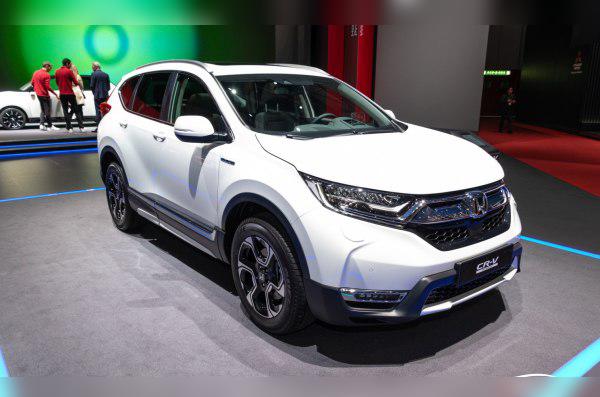


Honda 1.6 i-DTEC (N16A2) – Experiences, issues, fuel consumption and used car buying guide
Key points (TL;DR)
- Exceptional fuel economy: This is one of the most economical engines in the SUV class, with real-world consumption that rarely exceeds 7 liters.
- Reliable timing chain: It uses a timing chain which has proven to be very durable and does not require frequent replacement like some competitors (e.g. BMW N47).
- Enough power for normal driving: Although it has "only" 120 hp, the 300 Nm of torque makes it perfectly adequate for everyday use, but don’t expect sporty performance.
- DPF sensitivity: Like any modern diesel, it does not tolerate exclusively city driving. The DPF filter requires regular trips on open roads.
- Expensive OEM parts: Although it rarely breaks down, when it does (e.g. sensors, injectors), parts can be more expensive compared to European competitors (depends on the market).
- Gearbox: The manual gearbox is precise and durable, while the 9-speed automatic requires strict maintenance.
Contents
- Introduction and applications
- Technical specifications
- Reliability and maintenance
- Specific parts and costs
- Fuel consumption and performance
- Additional options and modifications
- Gearbox (manual and automatic)
- Buying used and conclusion
Introduction and applications
Honda has long been known for its petrol engines, but when they decided to make a diesel, they did it properly. The engine we’re talking about today carries the code N16A2 and belongs to Honda’s "Earth Dreams" technology. This is an aluminium diesel engine, extremely light, designed to replace the older and heavier 2.2 i-DTEC block.
It was primarily installed in the fourth-generation (facelift) and fifth-generation Honda CR-V. Its introduction was a response to stricter emission standards and the need to reduce fuel consumption. Although on paper 1.6 litres seems small for a massive SUV like the CR-V, in practice this engine has proven to be surprisingly capable, mainly thanks to cleverly distributed torque.
Technical specifications
| Engine code | N16A2 |
| Displacement | 1597 cc (1.6 L) |
| Power | 88 kW (120 hp) at 4000 rpm |
| Torque | 300 Nm at 2000 rpm |
| Configuration | Inline 4-cylinder, DOHC, 16 valves |
| Injection system | Common Rail (Bosch solenoid or piezo, depending on revision) |
| Turbocharger | Single variable-geometry turbo (VGT) |
| Engine block | Aluminium (open-deck design) |
| Emission standard | Euro 5 / Euro 6 (depending on model year and version) |
Reliability and maintenance
Does this engine have a timing belt or a chain?
The N16A2 engine uses a timing chain for valve timing. This is great news for owners because Honda’s chain in this engine is extremely durable. Unlike some German competitors where the chain is replaced preventively at 150,000 km, on the Honda 1.6 i-DTEC it is designed to last the life of the engine, provided that the oil is changed regularly. There are no frequent reports of chain stretching or breaking.
What are the most common issues with this engine?
This engine is considered one of the most reliable modern diesels, but it is not immune to problems:
- MAF sensor (mass air flow): It can sometimes give incorrect readings, resulting in loss of power or a "check engine" light.
- Exhaust gas pressure sensor: This is a common weak point. When it fails, the ECU doesn’t know when to start DPF regeneration, which can lead to a clogged filter.
- Fuel quality: It is sensitive to poor diesel fuel. Water in the fuel can quickly damage the high-pressure pump.
At what mileage is the major service due?
Since the engine has a chain, the classic "major service" (timing belt replacement) does not exist in that form. However, it is necessary to replace the auxiliary (serpentine) belt that drives the alternator and A/C. It is recommended to check the serpentine belt kit with tensioners every 100,000 km and replace it as needed. The water pump is also replaced if it starts leaking or develops play, but it is not critically tied to the timing set as with belt-driven engines.
How many litres of oil does this engine take and which grade is recommended?
The engine takes approximately 4.7 litres of engine oil (with filter). Honda’s recommendation is strict: use 0W-30 oil that meets ACEA C2/C3 standards (because of the DPF filter). In some warmer climates or for older engines, 5W-30 can be used, but for optimal chain and turbocharger life, stick to high-quality 0W-30 synthetic oil.
Does it consume oil between services?
In general, the 1.6 i-DTEC does not consume oil in noticeable quantities. If the engine uses more than 0.5 litres per 10,000 km, this may indicate a problem with the turbo or piston rings, although this is rare. It is normal for the oil level to drop slightly before the next service, but topping up between intervals is usually not necessary.
How long do the injectors last and how reliable are they?
The injectors are made by Bosch and have proven to be very durable. The expected service life is over 200,000–250,000 km with good-quality fuel. Symptoms of bad injectors include rough idle (especially on cold start), increased fuel consumption and black smoke under hard acceleration. Refurbishment is possible, but the price of new OEM injectors is high (depends on the market).
Specific parts (costs)
Does this engine have a dual-mass flywheel?
Yes, models with a manual gearbox have a dual-mass flywheel (DMF). Its role is to dampen diesel engine vibrations. Its lifespan is usually between 150,000 and 200,000 km, depending on driving style. Symptoms of failure include rattling when switching off the engine and vibrations in the clutch pedal.
Does this engine have a turbocharger (or two)?
The 120 hp version (N16A2) has a single turbocharger with variable geometry (VGT). This is a simpler and cheaper solution to maintain compared to the more powerful 160 hp version which has two turbos. The turbo’s service life is long and often matches that of the engine, provided the engine is not switched off immediately after hard driving and that quality oil is used.
Does this model have a DPF filter or an EGR valve that often clogs?
Yes, it has both a DPF (diesel particulate filter) and an EGR valve.
- EGR valve: Prone to soot build-up, which can cause it to stick. Cleaning is possible and often solves the problem.
- DPF filter: Honda has a relatively good regeneration system, but if you drive the CR-V exclusively in the city (stop-and-go), the DPF will inevitably clog. The symptom is a warning light and the car going into "safe mode" (limited revs).
Does this engine use AdBlue?
This depends on the generation:
- Honda CR-V IV (facelift): Most 1.6 i-DTEC (120 hp) models in this generation do not have an AdBlue system, but use an LNT (Lean NOx Trap) catalyst to meet regulations. This is a big advantage because you have one less system to maintain.
- Honda CR-V V: The fifth generation (from 2017/2018) mostly uses an AdBlue (SCR) system to meet stricter Euro 6d-TEMP standards. Maintenance involves topping up the fluid. Problems can occur if the fluid crystallises (if the car sits for a long time), which can block the AdBlue injector or pump.
Fuel consumption and performance
What is the real fuel consumption in city driving?
Despite the CR-V’s weight (around 1600 kg), this engine is a fuel economy champion. In heavy city traffic you can realistically expect between 6.5 and 7.5 l/100 km. If traffic is flowing smoothly, it can drop to around 6.0 litres. These are excellent figures for an SUV of this size.
Is this engine “sluggish” for the weight of the car?
With 120 hp and 300 Nm, the engine is not a "sports car", but it is not dangerously slow either. It takes about 11.2 seconds to reach 100 km/h. The driving feel is better than the numbers suggest because of the turbo’s immediate response at low revs. It is perfectly adequate for city and country-road driving. However, if the car is fully loaded with passengers and luggage, you will have to use the gearbox more often and downshift on uphill sections. It’s not sluggish, but it is moderate.
What is the engine like on the motorway and at what revs does it cruise at 130 km/h?
On the motorway it behaves smoothly and refined. At 130 km/h in 6th gear (manual gearbox) the engine spins at about 2200–2300 rpm. This means the cabin is quiet and fuel consumption is around 5.5 to 6.0 l/100 km. Overtaking at higher speeds requires a bit of patience, as the engine runs out of breath above 3500 rpm.
Additional options and modifications
How far can this engine be safely remapped (Stage 1)?
The N16A2 engine has some power reserve. A safe Stage 1 remap can raise power to about 145–150 hp and torque to 360–380 Nm. This significantly improves the "sluggishness" when overtaking. However, keep in mind that increasing power puts additional stress on the clutch and dual-mass flywheel, so it is recommended only if those components are in good condition.
Gearbox
Which manual and automatic gearboxes are paired with this engine?
- Manual: 6-speed gearbox. Typical for Honda, the throws are short and precise. It is a pleasure to use.
- Automatic: In the fifth-generation CR-V (and rarely in late fourth-gen models), the 1.6 i-DTEC is paired with a modern ZF 9-speed automatic gearbox (9HP). This is a conventional automatic with a torque converter, not a CVT or dual-clutch.
What are the most common issues with the manual and with the automatic gearbox?
Manual: Almost indestructible. The only "failure" is wear items – the clutch kit and flywheel.
Automatic (ZF 9HP): This gearbox is complex. Early models had software issues that caused hesitation when selecting gears or harsh shifts (jerking). A software update at an authorised service centre often solves the problem. Also, the transmission oil cooler can be a weak point at high mileages.
Does this model have a dual-mass flywheel and how much does a clutch replacement cost?
As mentioned, the manual version has a dual-mass flywheel. Replacing the clutch kit together with the flywheel is an expensive job (expensive / depends on the market). Expect this to be one of the largest one-off maintenance costs on this vehicle.
At what mileage should the gearbox be serviced and the oil changed?
- Manual: It is recommended to change the oil every 60,000–80,000 km. It uses specific Honda MTF oil (about 2 litres).
- Automatic (ZF 9HP): ZF recommends changing the oil at 80,000 to 100,000 km, even though car manufacturers often claim it is "lifetime fill". Do not believe in "fill for life". The change is expensive because it requires specific oil and the procedure is complex, but it is essential for the gearbox’s longevity.
Buying used and conclusion
What should you check before buying?
- Cold start: Listen to the chain. You may hear it for the first 2–3 seconds, but if the rattling continues longer, the chain or tensioner needs replacing.
- Clutch (manual): Try starting uphill. If there are vibrations or the clutch "bites" very high, prepare money for replacement.
- DPF diagnostics: Be sure to check the DPF saturation level and when the last regeneration was performed.
- Air conditioning: On CR-V models the A/C compressor can be a weak point, check whether it cools properly.
Final verdict
The Honda CR-V with the 1.6 i-DTEC (120 hp) engine is an ideal family car for sensible drivers. It is not intended for those who want to race on the motorway, but for those who value reliability, practicality and low fuel consumption.
If you are choosing between this engine and the older 2.2, the 1.6 is cheaper to register and uses less fuel, while offering similar agility in urban conditions. For heavy towing (trailers), 120 hp may be a bit on the low side, but for everything else – this is one of the best diesel engines in its class.
Was this content useful to you?
Your opinion helps us to improve the quality of the content.