L15 Engine
- Engine
- 1498 cm3
- Aspiration
- Turbocharger, Intercooler
- Fuel
- Petrol (Gasoline)
- Fuel injection system
- Direct injection
- Power
- 193 hp @ 5600 rpm
- Torque
- 243 Nm
- Cylinders
- 4
- Valves
- 16, 4 per cylinder
- Cylinders position
- Inline
- Valvetrain
- VTEC
- Oil capacity
- 3.5 l
- Coolant
- 6.2 l
# Vehicles powered by this engine
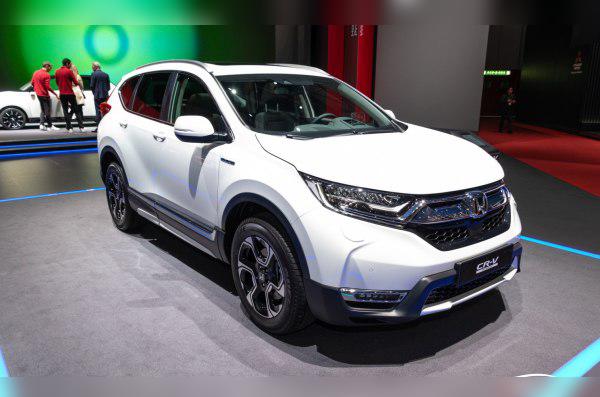
Honda 1.5 VTEC TURBO (L15) – Experiences, issues, fuel consumption and used car buying guide
Key points (TL;DR)
- Fuel and oil mixing issue (Oil Dilution): The most well-known weakness of this engine, especially in cold climates and with short trips. Fuel ends up in the oil pan and dilutes the oil.
- Timing chain drive: The engine uses a chain which is generally reliable and does not require frequent replacement like a belt.
- CVT transmission: Specific driving feel (“scooter effect”). Requires regular fluid changes every 40,000 km (recommended) to ensure longevity.
- Performance: With 193 hp, this is the most powerful 1.5T version in the CR-V. It offers an excellent power-to-economy ratio and is not “lazy”.
- Direct injection: Prone to carbon buildup on intake valves at higher mileage.
- Recommendation: An excellent choice for those who want a petrol engine with diesel-like power, but it requires strict maintenance and avoiding exclusively short city trips in winter.
Contents
Introduction: About the L15 VTEC TURBO engine
Honda’s L15 engine, specifically the variant installed in the fifth-generation CR-V, represents a significant step by the Japanese manufacturer towards the “downsizing” philosophy. Although Honda has a long tradition of high-revving naturally aspirated engines, this 1.5-liter turbo petrol unit was designed to replace the larger 2.0 and 2.4 naturally aspirated engines. The 193 hp (142 kW) version is specifically tuned for models with a CVT transmission and all-wheel drive (AWD) to compensate for the SUV’s weight. This is a modern powerplant that offers impressive power from a small displacement, but it also comes with certain technical challenges specific to direct injection and turbocharged engines.
Technical specifications
| Specification | Value |
|---|---|
| Displacement | 1498 cc (1.5 L) |
| Configuration | Inline, 4 cylinders |
| Power | 142 kW / 193 hp at 5600 rpm |
| Torque | 243 Nm at 2000–5000 rpm |
| Engine code | L15BE / L15B7 (variations depend on market) |
| Injection type | Direct injection (GDI) |
| Charging | Mono-scroll turbocharger + intercooler |
| Camshaft drive | Chain (DOHC, VTEC on exhaust side) |
Reliability, maintenance and failures
Timing system: Chain or belt?
This engine uses a timing chain (silent chain) to drive the camshafts. Historically, Honda chains have proven to be very reliable and on this engine they are not intended for regular replacement. Unlike some European competitors where chains fail at low mileage, here the system is robust. However, regular oil changes are crucial for the longevity of the chain and tensioner. The expected service life of the chain is often over 200,000–250,000 km, unless the engine is neglected.
“Oil Dilution” issue (oil and fuel mixing)
The most serious and most frequently discussed issue with this engine is fuel entering the engine oil pan. This is particularly pronounced in cold climates and with short city trips where the engine does not reach operating temperature.
Cause: The engine is very efficient and warms up slowly. To warm up, the system injects a rich mixture. Excess fuel condenses on the cold cylinder walls, the piston rings cannot scrape all of it off, and fuel seeps into the oil pan.
Symptoms: The oil level on the dipstick rises above the maximum and the oil smells strongly of fuel.
Solution: Honda has issued software updates (which change the operation of the climate control and injection timing for faster warm-up) and extended the warranty in some markets. Advice: Avoid exclusively short trips in winter and change the oil more frequently (every 7,000–8,000 km) if you mainly drive in the city.
Service intervals and oil
Minor service: Although the manufacturer may specify longer intervals (20,000 km), given the turbocharger and the oil dilution issue, a strict recommendation is to change oil and filter every 10,000 km or 12 months (whichever comes first).
Which oil and how much? The engine takes approximately 3.5 to 3.7 liters of oil with the filter. You must use 0W-20 grade oil. This thin oil is necessary due to tight tolerances and fast turbo lubrication, as well as for the VTEC system. Using thicker oil can cause issues with the variable cam phaser.
Oil consumption: In general, this engine does not consume oil to the extent that topping up is needed between services, provided it is in good condition. An increase in oil level due to fuel is more common than oil loss. If the level is dropping, check the turbocharger or seals for leaks.
Spark plugs and ignition
This turbo petrol engine uses iridium spark plugs (NGK or Denso). The recommended replacement interval is usually 100,000 km. However, due to the high temperatures and pressures in the combustion chamber of turbo engines, enthusiasts and experienced mechanics recommend inspection and possible replacement at 60,000–80,000 km to protect the ignition coils (which are expensive – depends on market) and ensure optimal combustion.
Specific parts (costs)
Dual-mass flywheel
Since this model comes with a CVT transmission, the car does not have a conventional dual-mass flywheel, which is a common problem on diesels with manual gearboxes or DSG. The CVT uses a torque converter and a flex plate. This is good news, as it eliminates one of the most expensive failures typical of modern cars.
Injection system and injectors
The L15 uses high-pressure direct fuel injection (GDI). The injectors are precise and expensive (very expensive – depends on market). Injector problems are not common, but they are sensitive to poor fuel quality.
Specific issue: Carbon buildup on the intake valves. Since fuel does not “wash” the valves (it is injected directly into the cylinder), after 100,000+ km deposits can form that restrict airflow. The solution is mechanical cleaning (“walnut blasting” or chemical cleaning).
Turbocharger
The engine uses a single small-inertia mono-scroll turbocharger. With proper maintenance, the turbo’s service life is generally equal to the engine’s life. Critical points include the electronic wastegate actuator, which can sometimes cause boost pressure issues (symptoms: loss of power, check engine light). Repair is possible, but replacing the actuator is often the solution.
DPF, GPF and EGR
This petrol engine does not have a DPF (reserved for diesels) nor an AdBlue system. However, newer models (Euro 6d-TEMP, roughly from 2018 onwards for the European market) are equipped with a GPF (Gasoline Particulate Filter). GPF regenerates much faster and easier than a diesel DPF because petrol exhaust gas temperatures are higher. GPF clogging is extremely rare, unless the car is driven exclusively on extremely short trips (under 3 km) for years.
Fuel consumption and performance
City driving
The Honda CR-V is a heavy SUV with all-wheel drive. Factory figures are optimistic. In real-world city driving with stop-and-go traffic, you can expect consumption between 9.5 and 11.5 l/100 km. In winter, with the aforementioned slow warm-up, consumption can go up to 12 liters.
Is the engine “lazy”?
Absolutely not. With 193 hp and 243 Nm available from just 2000 rpm, this engine moves the CR-V’s body surprisingly well. 0–100 km/h takes about 9.5 to 10 seconds (depending on conditions), which is perfectly acceptable for a family SUV. The power delivery is linear and turbo lag is minimal. It’s not a sports car, but there is more than enough power in reserve for overtaking.
Highway
On the highway, the engine behaves in a civilized manner. Thanks to the CVT transmission, which keeps revs optimally low, at 130 km/h the engine runs at about 2200–2400 rpm (depending on gradient and wind). This contributes to cabin quietness. Fuel consumption on open roads at 120–130 km/h is around 7.5 to 8.5 l/100 km.
Additional options and modifications
LPG conversion
Since this is an engine with direct injection, LPG conversion is technically demanding and expensive (expensive – depends on market). A special system is required that either injects liquid gas directly through the petrol injectors (the most expensive option) or a system that injects gas into the intake manifold but simultaneously uses about 10–15% petrol to cool the petrol injectors. Given the engine’s complexity and injector sensitivity, conversion is generally not recommended unless you cover very high mileage (over 30,000 km per year), as the payback period is long.
Chip tuning (Stage 1)
The engine has potential, but the CVT transmission is the limiting factor. A safe Stage 1 tune can raise power to about 210–220 hp and torque to around 280–300 Nm. However, the CVT is sensitive to a sudden increase in torque. Overly aggressive tuning can lead to belt slip in the transmission and permanent damage. If a remap is done, a conservative map that smooths the power curve rather than chasing peak numbers is recommended.
Transmission: CVT experiences
Type of transmission and behavior
The 193 hp version always comes with a CVT (Continuously Variable Transmission). This is not a conventional automatic with gears, but a system with pulleys and a steel belt.
Failures: CVT transmissions are generally reliable IF maintained properly, but they are expensive to repair (very expensive). The most common issues are overheating during prolonged high-speed driving or towing, as well as belt slip if the fluid is not changed.
Symptoms of problems: Jerking when setting off, whining noise from the transmission, delay in “shifting” (although there are no gears, the software simulates shifts), or a warning light on the dashboard.
Transmission maintenance
This is the most important point. Honda recommends changing the CVT fluid at certain intervals, but in practice it should be done more often.
Recommendation: Change the CVT fluid (only use genuine Honda HCF-2 fluid) every 40,000 km to 60,000 km. This drastically extends the life of the transmission. A regular drain-and-fill takes about 4 liters (although the total capacity is higher, not all fluid drains out).
Used car buying tips and conclusion
When buying a used Honda CR-V with this engine, make sure to do the following:
- Check the oil level: Pull out the dipstick. If the oil level is well above the maximum and there is a strong smell of fuel, the engine is suffering from the oil dilution issue. Check whether the recall/software update has been carried out.
- Cold start: Listen to the chain at first start-up. Rattling for longer than 2–3 seconds may indicate a tensioner problem.
- Test drive (CVT): The transmission must operate smoothly, without jerks when moving off and without “howling” at a constant speed.
- Service history: Insist on proof of regular oil changes (maximum 15k km, ideally 10k km) and CVT fluid changes.
Final verdict
The Honda 1.5 VTEC TURBO (193 hp) in the CR-V is an excellent powerplant for the modern family buyer. It offers a balance of power and efficiency that few competitors can match. However, it requires a change of mindset from owners: this is not an old naturally aspirated Honda that tolerates neglect. It demands quality fuel, regular (frequent) oil changes and attention to oil level in winter. If you are ready for meticulous maintenance, this engine will serve you for hundreds of thousands of kilometers. If you are looking for a “just fill up and drive” car for short city trips with minimal maintenance, consider the hybrid version (2.0 i-MMD).
Was this content useful to you?
Your opinion helps us to improve the quality of the content.