K24A1 Engine
- Engine
- 2354 cm3
- Aspiration
- Naturally aspirated engine
- Fuel
- Petrol (Gasoline)
- Fuel injection system
- Multi-port manifold injection
- Power
- 162 hp @ 5500 rpm
- Torque
- 220 Nm @ 4500 rpm
- Cylinders
- 4
- Valves
- 16, 4 per cylinder
- Cylinders position
- Inline
- Valvetrain
- DOHC
- Oil capacity
- 4.2 l
- Coolant
- 5.5 l
# Vehicles powered by this engine
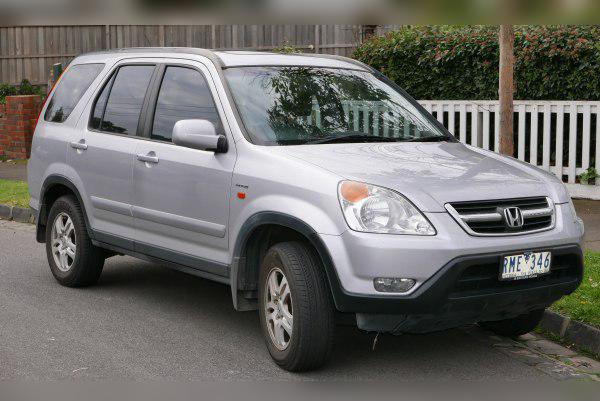
Honda 2.4 i-VTEC (K24A1) – Experiences, Issues, Fuel Consumption and Maintenance
Key points in short (TL;DR)
- Timing chain: The engine uses a chain, which is generally reliable, but its lifespan depends on oil quality and regular servicing.
- Camshaft wear: A specific issue for the K24A1 series is exhaust camshaft damage (pitting), which requires an expensive replacement.
- Oil consumption: With age and mileage, oil consumption is common due to valve stem seals or piston rings.
- Valve adjustment: This is not a "fill up and drive forever" engine; it requires mechanical valve clearance adjustment every 40,000 - 50,000 km.
- Fuel consumption: It’s fairly thirsty, especially in city driving and when paired with an automatic transmission (expect double-digit numbers).
- LPG (Autogas): It can run on LPG, but it requires very strict monitoring of valve clearances to avoid valve seat recession.
Contents
- Introduction and Models
- Technical Specifications
- Reliability and Maintenance
- Specific Parts and Systems
- Consumption and Performance
- Additional Options (LPG and Tuning)
- Gearbox and Drivetrain
- Buying Used and Conclusion
Introduction
The Honda K24A1 is an engine from Honda’s legendary K-series, known for engineering precision and performance. Specifically, this 2.4-liter variant is a “workhorse” designed primarily for the second-generation Honda CR-V. Unlike the sportier K-series variants (such as those in the Accord Type S or Civic Type R), the K24A1 is tuned for low-end torque and fuel efficiency (as much as that’s possible for a 2.4 engine), rather than high-rev power.
This engine is important because it represents the “heart” of one of the most popular compact SUVs in the world. It offers better throttle response than the smaller 2.0 engine, but it also comes with certain specific mechanical challenges that buyers should be aware of before purchasing.
Technical Specifications
| Parameter | Data |
|---|---|
| Engine code | K24A1 |
| Displacement | 2354 cc (2.4 L) |
| Power | 119 kW (162 hp) at 6000 rpm |
| Torque | 220 Nm at 3600 rpm |
| Number of cylinders / Valves | I4 / 16V (DOHC i-VTEC) |
| Injection system | Multipoint (Port fuel injection) |
| Induction type | Naturally aspirated |
| Engine block | Aluminum |
Reliability and Maintenance
Timing belt or chain?
The K24A1 engine uses a timing chain for valve timing. In theory, this chain is designed to last the lifetime of the engine, but in practice it is often replaced between 200,000 and 250,000 km. Chain stretch can occur earlier if the oil is not changed regularly. Symptoms of a stretched chain include rattling on cold start and the “Check Engine” light coming on (camshaft/crankshaft correlation error).
Most common failures
Although Honda is synonymous with quality, the K24A1 has one serious Achilles’ heel:
- Exhaust camshaft wear (Galling/Pitting): This is the most serious issue. Material on the lobes of the exhaust camshaft can start to flake off. This leads to power loss and a characteristic rattling noise from the cylinder head. The cause is often a combination of poor material quality in early production runs and irregular oil changes.
- VTEC solenoid: The gasket/seal on the VTEC solenoid often fails, causing oil leaks. Also, the mesh filter inside the solenoid can get clogged with sludge if the oil is dirty, which prevents proper activation of the VTEC system.
- Oil leaks: Besides the VTEC solenoid, common leak points are the front crankshaft seal and the valve cover gasket.
Major service and Oil
Since the engine has a chain, a classic “major timing service” is done only when needed (when the chain becomes noisy). However, the serpentine belt (accessory belt) and its tensioner/pulley must be checked and replaced regularly, usually around 100,000 - 120,000 km.
Oil: The sump holds about 4.2 to 4.5 liters of oil (with filter).
Recommendation: Honda often recommends 0W-20 or 5W-20 for fuel economy, but for higher-mileage engines in European climate conditions, 5W-30 or even 5W-40 (fully synthetic) is a better choice for camshaft protection, especially in summer.
Oil consumption
K24 engines are known to “drink” some oil, especially if driven at high rpm (in the VTEC zone). Consumption of up to 0.5 liters per 1,000 km is often considered “acceptable” by factory standards for older engines, but realistically, a healthy engine should not consume more than 1–1.5 liters between services (over 10,000 km). If it uses more, the problem is usually piston rings (stuck due to carbon buildup) or valve stem seals.
Spark plugs and Valves
This engine uses iridium spark plugs. Replacement intervals are long, usually around 100,000 to 120,000 km. Do not cheap out on spark plugs (use NGK or Denso).
Important: The valves are not hydraulically adjusted! They require manual valve clearance adjustment every 40,000 - 50,000 km. If you hear a “ticking” noise while the engine is running, it’s time for an adjustment. If you run the engine on LPG, this interval should be halved.
Specific Parts (Costs)
Dual-mass flywheel
On models with a manual gearbox, the K24A1 in the CR-V II can have a dual-mass flywheel, but often (especially on US-market versions, which are common) it uses a conventional solid flywheel. This depends on the target market for which the car was built. In any case, petrol flywheels are under less stress than diesel ones and rarely fail before 200,000 km. (Replacement cost ranges from moderate to high, depending on the type.)
Injection system, Turbo, DPF
- Injection: Classic multipoint port injection into the intake manifold. The injectors are extremely reliable, rarely fail, and are not as sensitive to fuel quality as direct injection systems. Injector cleaning is cheap and simple.
- Turbo: This engine does not have a turbocharger. It is a classic naturally aspirated engine, which means fewer parts that can fail.
- EGR / DPF / AdBlue: As a petrol engine of that era, it does not have a DPF and does not use AdBlue fluid. It may have an EGR valve, but on petrol engines it rarely clogs badly enough to cause major issues (cleaning is usually sufficient). The catalytic converter is present and can fail if the engine burns a lot of oil or has poor combustion.
Consumption and Performance
City driving and Highway
Let’s be honest – this is not an economical engine in a heavy body like the CR-V (which also has all-wheel drive and poor aerodynamics).
- City driving: Expect fuel consumption of 11 to 14 liters/100 km, depending on traffic and how heavy your right foot is. In winter it can be even higher.
- Open road: It can drop to around 8 - 9 liters/100 km with moderate driving (80–100 km/h).
- Highway (130 km/h): Due to the boxy shape and (often) a gearbox with only 5 gears (or 4 on the automatic), the engine revs higher. At 130 km/h, revs are close to or above 3000–3500 rpm, and consumption is around 10–11 liters.
Is the engine “sluggish”?
With 162 hp and 220 Nm, the engine is not sluggish, but it’s not explosive either. It is powerful enough to pull the CR-V uphill and overtake safely, but it requires you to rev it because it’s a Honda – the power is in the upper rev range. At low rpm it is flexible thanks to the larger displacement (2.4L), which makes it more pleasant to drive than the 2.0 variant.
Additional Options and Modifications
LPG Conversion (Autogas)
Yes, the engine is suitable, but with CAUTION. Honda engines have somewhat “softer” valve seats. LPG conversion pays off due to the high petrol consumption, but it is mandatory to:
- Install a quality sequential LPG system with OBD connection.
- Consider a valve lubrication system (“valve saver” kit).
- Most important: Check valve clearances every 20,000 - 25,000 km. If you ignore this, the cylinder head will fail very quickly.
Chiptuning (Stage 1)
Since this is a naturally aspirated engine, “chiptuning” (remap) doesn’t make much sense. The gains are negligible (maybe 5–8 hp and slightly better throttle response), while fuel consumption remains the same. It’s better to invest that money in quality maintenance or good tires.
Gearbox
Variants and Issues
The K24A1 is most commonly paired with:
- Manual (5-speed): Very precise and reliable. Failures are rare, mostly related to the clutch kit or synchros if the car has been abused. Gearbox oil should be changed every 60,000 km (use Honda MTF oil only).
- Automatic (4-speed, less often 5-speed): An older type of hydraulic automatic. It is reliable, but it “steals” power and increases fuel consumption. The most common issue is overheating if towing or driven aggressively, as well as harsh shifting if the oil has not been changed.
Gearbox Costs and Maintenance
Automatic transmission fluid should be changed every 40,000 to 60,000 km. Never perform a high-pressure “machine flush” on older Honda transmissions; use only the “drain & fill” method. Clutch replacement (on the manual) is mid-range in cost, but if there is a dual-mass flywheel, the price rises significantly (depending on the market, a kit with flywheel can be very expensive).
Note for 4x4: The CR-V uses a “Dual Pump” system for the rear drive. The oil in the rear differential (Honda DPS-F) must be changed regularly. If you hear groaning or squeaking from the rear when turning the steering wheel to full lock, it’s a sign that the differential oil is old.
Buying Used and Conclusion
When buying a Honda CR-V with the K24A1 engine, do the following:
- Listen to a cold start: Timing chain rattle or metallic noise from the top of the engine (camshaft area) are red flags.
- Remove the oil cap: While the engine is running, look inside (as much as you can see). Heavy black sludge deposits mean the oil was not changed on time – walk away from such a car, as the VTEC oil passages are likely clogged.
- Check VTEC operation: Warm up the engine and, while driving, rev it above 4500–5000 rpm. It should pull linearly and strongly, without hesitation.
- Check the A/C: A/C compressors on the CR-V II are a known weak point (the so-called “black death” of the compressor).
Conclusion
The K24A1 engine is an excellent choice for those who want reliability and simplicity and are willing to pay the price in higher fuel consumption. It is more durable than many modern turbo engines and has no expensive injectors or DPF filters. If you find an example with a healthy camshaft and a quiet chain, with regular maintenance (and valve checks!), this engine can easily exceed 400,000 km without being opened.
Recommendation: Ideal for families who drive moderately and need a reliable SUV, and who either don’t cover huge annual mileages or are willing to install an LPG system.
Was this content useful to you?
Your opinion helps us to improve the quality of the content.