B20Z1 Engine
- Engine
- 1973 cm3
- Aspiration
- Naturally aspirated engine
- Fuel
- Petrol (Gasoline)
- Fuel injection system
- Multi-port manifold injection
- Power
- 147 hp @ 5500 rpm
- Torque
- 182 Nm @ 4200 rpm
- Cylinders
- 4
- Valves
- 16, 4 per cylinder
- Cylinders position
- Inline
- Oil capacity
- 3.8 l
- Coolant
- 3.9 l
# Vehicles powered by this engine
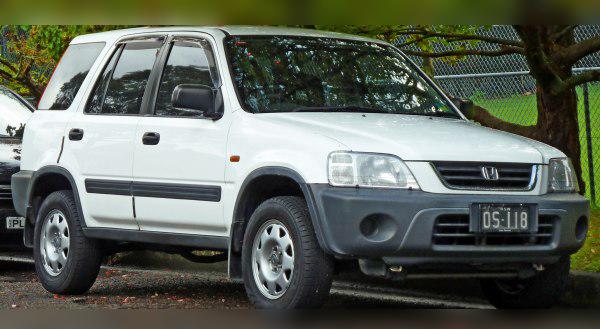
Honda B20Z1 (2.0 16V) – Experiences, problems, fuel consumption and used-buying tips
If you’re looking for the definition of “old-school” Japanese engineering, the Honda B20Z1 is one of the best examples. This engine is the heart of the facelifted first-generation Honda CR-V (1999–2001) and represents a significant improvement over its predecessor (the 128 hp B20B). With its 147 hp, this unit gave the CR-V the liveliness it needed.
Although it doesn’t have the famous VTEC system on the intake camshaft (which is a common misconception), this engine is appreciated for its simplicity, durability and relatively easy maintenance. Still, time takes its toll, so buying a used car with this engine requires some specific knowledge.
Key points (TL;DR)
- Reliability: Extremely high, provided that the oil is changed regularly and the valves are adjusted on time.
- Maintenance: It has a timing belt (not a chain) and requires mechanical valve adjustment.
- Fuel consumption: Quite “thirsty”, especially in city driving and when paired with an automatic gearbox.
- LPG (Autogas): Installation is possible, but caution is needed due to “soft” valve seats (it is MANDATORY to check valve clearances more frequently).
- Gearbox: Both manual and automatic are durable, but the automatic “steals” power and increases fuel consumption.
- Biggest downside: Body corrosion around the engine bay and the need for frequent valve adjustments.
Contents
- Technical specifications
- Reliability and maintenance
- Specific parts and costs
- Fuel consumption and performance
- Additional options and modifications (LPG & tuning)
- Gearbox
- Buying used and conclusion
Technical specifications
| Specification | Data |
|---|---|
| Engine code | B20Z1 |
| Displacement | 1973 cc (2.0 L) |
| Power | 108 kW (147 hp) at 6300 rpm |
| Torque | 182 Nm at 4500 rpm |
| Configuration | Inline 4-cylinder, DOHC (twin-cam), 16 valves |
| Injection type | Multi-point fuel injection (PGM-FI) |
| Induction | Naturally aspirated |
| Camshaft drive | Timing belt |
Reliability and maintenance
The B20Z1 belongs to Honda’s famous B-series engines, widely regarded as some of the best four-cylinder engines ever made. However, that doesn’t mean it’s flawless, especially after more than 20 years of use.
Does this engine have a timing belt or a chain?
This engine uses a timing belt. This is a critical maintenance item. If the belt snaps, the engine will suffer catastrophic damage (pistons hitting valves). It’s recommended to do a major service every 100,000 km or 5 years, whichever comes first. Along with the belt, you should always replace the tensioner and the water pump.
Most common faults and issues
- Valve clearance: This is not a fault, but a characteristic. This engine does not have hydraulic lifters. The valves must be adjusted mechanically every 40,000 km. The symptom of bad valve adjustment is not “ticking” (that usually means they’re loose, which is less dangerous), but silence or unstable idle when hot – that means the valves are “too tight”, which can lead to burnt valves.
- Distributor: A common weak point on older Hondas. The bearing inside the distributor can fail, or the ignition module can die, causing the engine to stall or fail to start.
- Radiator: Original radiators often crack at the plastic top tank due to age and repeated heat cycles.
- Main relay: If the engine cranks but won’t start when the cabin is hot (e.g. in summer), the usual culprit is cracked solder joints in the main fuel pump relay.
Oil: quantity, grade and consumption
The engine takes approximately 3.8 to 4.0 liters of oil (with filter). Honda recommends 5W-30 or 10W-40 for this engine (10W-40 is more common for higher-mileage engines in Europe).
Does it burn oil? Yes, older examples often do. Consumption of up to 0.5 liters per 1000 km is often listed by Honda as “acceptable” in the manuals, but in practice, a healthy B20Z1 shouldn’t use more than 1–1.5 liters between services (over 10,000 km). If it uses more, the usual culprits are valve stem seals (visible blue smoke on cold start or when engine braking) or oil control rings (smoke at full throttle).
Spark plugs
Spark plugs should be replaced every 20,000 to 30,000 km if you use standard copper plugs (NGK ZFR5F-11 or similar), which is recommended as they are cheap and work very well. Iridium plugs last longer (up to 80,000 km), but they are not necessary for this type of engine.
Specific parts (costs)
The good news is that the B20Z1 is mechanically simple, so it doesn’t have most of the expensive components that plague modern diesels.
- Dual-mass flywheel: NONE. This engine uses a conventional solid flywheel. A clutch kit is relatively cheap and straightforward to replace.
- Fuel injection system: Uses standard PGM-FI (port injection). Injectors are extremely durable and rarely cause problems. If they do, ultrasonic cleaning usually solves it. Used injectors are also inexpensive.
- Turbocharger: NONE. The engine is naturally aspirated, which means one less thing to worry about.
- EGR / DPF / AdBlue: NONE. This engine was designed before strict Euro emissions standards that required DPF or AdBlue systems. Some markets got an EGR valve, but it rarely clogs because petrol engines don’t produce soot like diesels. There is a catalytic converter, which can fail if the engine burns a lot of oil.
Fuel consumption and performance
This is where you feel the age of the design and the boxy shape of the Honda CR-V.
Real-world fuel consumption
- City driving: Expect between 11 and 13 l/100 km. In winter or with an automatic gearbox, this can easily go up to 14–15 l/100 km.
- Country roads: With a light right foot, you can get it down to around 8.5–9.5 l/100 km.
- Motorway (130 km/h): Due to poor aerodynamics and short gearbox ratios, consumption is around 10–11 l/100 km.
Is the engine “sluggish”?
With 147 hp, the B20Z1 is not sluggish, but it does need revs. This is a typical Honda – “dead” at low revs (below 3000 rpm), and it wakes up only above 4000 rpm. For the CR-V’s body weight (around 1450 kg), the engine is adequate for normal driving and overtaking, but don’t expect sports-car performance, especially with a full load.
Behaviour on the motorway
At 130 km/h in fifth gear (manual), the engine spins at around 3800–4000 rpm. This means it’s quite noisy in the cabin. The engine doesn’t mind – it likes to rev – but it can be tiring for passengers on long trips.
Additional options and modifications
Is it suitable for LPG (autogas)?
Yes and no. The engine runs well on LPG and idles smoothly, BUT Honda engines from this era have sensitive (soft) valve seats. LPG burns at a higher temperature and doesn’t have the lubricating properties of petrol.
If you install LPG:
- Be sure to install a valve lubrication system (“dripper” or electronic additive system).
- Shorten the valve adjustment interval to every 15,000–20,000 km! This is crucial. If you don’t, the valves will “sink” into the cylinder head, you’ll lose compression and face an expensive cylinder head rebuild.
Remapping (Stage 1)
Not worth it. This is a naturally aspirated petrol engine. A remap might give you 3–5 hp at best, which you won’t feel in real driving. Your money is better spent on quality tyres or refreshing the suspension.
Gearbox
Two gearbox options were available with this engine in the Honda CR-V:
- 5-speed manual: Precise, with a short throw and very durable. The clutch is light. The most common issues are not with the gearbox itself, but with the clutch cylinders (master or slave) which can start leaking. Replacing the clutch kit is reasonably priced (varies by market).
- 4-speed automatic: A classic hydraulic automatic. It’s reliable, but it “steals” performance and increases fuel consumption. Shifts are relatively slow compared to modern gearboxes.
Gearbox maintenance:
- Manual: Change the oil every 60,000–80,000 km. Use only Honda MTF (Manual Transmission Fluid) or 10W-40 engine oil (as a temporary substitute, but genuine MTF is preferable).
- Automatic: Oil changes are mandatory every 40,000–60,000 km. Use ATF-DW1 (the successor to the old ATF-Z1). Do not use universal ATF fluids unless they are specifically approved for Honda.
Note on the 4x4 system: The CR-V uses “Real Time 4WD”. If you hear a strange “grinding” or “howling” noise from the rear of the car when turning the steering wheel at full lock, you urgently need to change the oil in the rear differential (use only Honda DPS-F fluid). The differential takes about 1 liter of oil.
Buying used and conclusion
When buying a Honda with the B20Z1 engine, pay attention to the following:
- Cold start: Watch the exhaust. Blue smoke? The engine is burning oil. White smoke after warming up? Possible head gasket failure.
- Engine noise: It should run smoothly like a clock. If you hear loud metallic knocking, walk away. A slight “ticking” from the injectors is normal.
- Test drive: Accelerate at high revs. The engine should pull linearly all the way to the redline without hesitation or “flat spots”.
- Suspension and rust: Although not part of the engine, the rear wheel arches on first-generation CR-Vs are notorious for rusting. Also check if the prop shaft vibrates.
Conclusion: The Honda B20Z1 is a fantastic engine for people who value simplicity and durability over low fuel consumption. It’s not economical, but with proper maintenance (oil and valves!), it will take you to the end of the world and back. It’s an ideal choice for those who want low running costs and aren’t afraid of older cars. If you plan to cover high mileage, LPG is an option, but only with disciplined valve maintenance.
Was this content useful to you?
Your opinion helps us to improve the quality of the content.