LEB-H5 Engine
- Engine
- 1496 cm3
- Aspiration
- Naturally aspirated engine
- Fuel
- Petrol (Gasoline)
- Fuel injection system
- Direct injection
- Power
- 98 hp
- Torque
- 127 Nm
- Cylinders
- 4
- Valves
- 16, 4 per cylinder
- Cylinders position
- Inline
- Valvetrain
- DOHC
- Oil capacity
- 3.6 l
- Coolant
- 3.85 l
# Vehicles powered by this engine
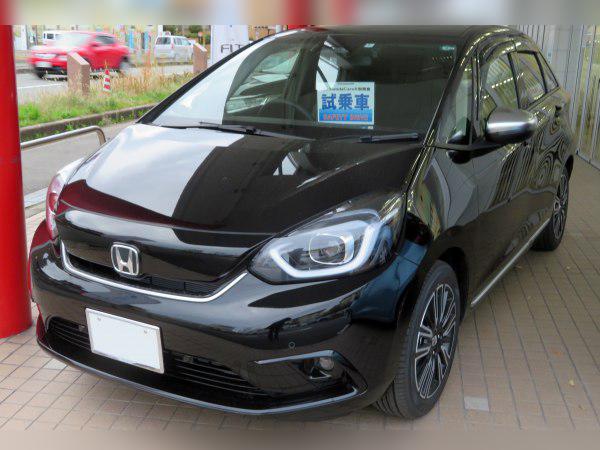
Honda LEB-H5 (1.5 i-MMD e:HEV) – Experiences, issues, fuel consumption and buying tips
Key points (TL;DR)
- Exceptional reliability: Like most Honda petrol engines, this unit is mechanically very robust and long-lasting.
- Hybrid system (e:HEV): The engine primarily works as a generator, and does not drive the wheels directly (except on the highway), which reduces mechanical stress.
- City driving: This is its natural habitat. Urban fuel consumption is ridiculously low, often below 4 l/100 km.
- Noise on open road: Under hard acceleration or on long highway climbs, the engine can become noisy (“hairdryer effect”) because it runs at high rpm to generate electricity.
- No conventional gearbox: It uses an e-CVT transmission without belts and pulleys, which means fewer moving parts that can fail.
- Maintenance: Regular maintenance costs are average, but specific hybrid system components can be expensive if they fail out of warranty.
Contents
Introduction and engine application
The engine designated as LEB-H5 (often listed as 1.5 i-MMD) is the heart of Honda’s new generation of hybrid vehicles, primarily the fourth-generation Honda Fit/Jazz (GR1). This is not a “regular” engine. It operates on the Atkinson cycle, which means it sacrifices raw power in favor of maximum thermal efficiency.
The key thing to understand: in 90% of situations in city driving, this petrol engine does not drive the wheels. It drives a generator that produces electricity, and that electricity is used by the electric motor to move the car. Only at higher speeds (usually above 80 km/h) does a clutch lock up and the petrol engine takes over direct drive of the wheels. Because of this, the engine is under less mechanical stress than conventional petrol engines.
Technical specifications
| Parameter | Data |
|---|---|
| Displacement | 1496 cc (1.5 L) |
| Power (Petrol engine) | 72 kW (98 hp) |
| Power (System – electric) | 80 kW (109 hp) – This is the power you feel at the pedal |
| Torque (Petrol engine) | 127 Nm |
| Torque (Electric motor) | 253 Nm – Available from 0 rpm |
| Engine code | LEB-H5 |
| Injection type | PGM-FI (Indirect/Multi-point injection) |
| Aspiration | Naturally aspirated |
| Number of cylinders/valves | 4 cylinders / 16 valves (DOHC i-VTEC) |
Reliability and maintenance
Does this engine have a timing belt or chain?
The LEB-H5 uses a timing chain. Honda chains have historically proven to be very reliable. In this hybrid system, since the engine runs in an optimal rpm range and without sudden jolts (because there are no conventional gear changes), the chain is under less stress. Chain replacement is not part of the regular service schedule and usually lasts the entire service life of the engine, unless rattling appears at very high mileage (over 250,000 km).
What are the most common failures on this engine?
This is one of the most reliable powertrains on the market. Serious mechanical failures of the petrol engine itself are extremely rare. However, owners should pay attention to:
- 12V battery: The small auxiliary battery often fails if the car sits for more than two weeks, because the hybrid system draws current. The symptom is that the car cannot “start” (boot the system), even though the main high-voltage battery is full.
- Oil dilution with fuel: In extremely cold climates and on very short trips, the engine often starts and stops before it reaches operating temperature. This can lead to a small amount of petrol entering the sump. This is not as critical as on the 1.5 Turbo engines, but you should check the oil level – if it rises, that’s a sign you need an immediate oil change.
Service intervals and oil
A major service (chain replacement) is not done preventively. The auxiliary (serpentine) belt (for the water pump and other accessories) is inspected and replaced as needed, usually around 100,000 km or every 5–6 years.
Minor service: Recommended every 10,000 to 15,000 km or once a year (whichever comes first). Due to the specific operating pattern (frequent starts and stops), extended intervals of 20–30k km are not advisable.
Oil quantity and type: The engine takes approximately 3.6 to 4.0 liters of oil (with filter). Honda strictly recommends 0W-20 viscosity (Honda Green Oil or an equivalent with API SN/SP, ILSAC GF-6 specification). This thin oil is crucial for hybrid efficiency and protection during cold starts.
Oil consumption and spark plugs
A healthy LEB-H5 engine should not consume a noticeable amount of oil between services. Consumption up to 0.5 liters per 10,000 km can be considered acceptable, but anything above that requires inspection.
Spark plugs: It uses more expensive iridium spark plugs (NGK or Denso). Replacement interval is long, usually at around 100,000 km. Do not experiment with cheap copper plugs.
Specific components (Costs)
Dual-mass flywheel and clutch
Good news: This engine does NOT have a dual-mass flywheel in the conventional sense that often fails on diesels. Instead, it has a damper flywheel that absorbs vibrations between the engine and the generator. It is very durable. Also, there is no conventional clutch kit (pressure plate/disc) that wears out, because the car sets off on electric power. There is only a “lock-up” clutch inside the e-CVT that connects the engine to the wheels at higher speeds, and it is designed to last the life of the car.
Injection system, turbo and EGR
Injection: It uses the proven PGM-FI (indirect port injection). This is a big advantage for a used car! Why? Because, unlike direct injection (GDI), the fuel “washes” the intake valves and prevents carbon buildup, which is a common problem on modern engines. Injectors are long-lasting and not prone to failure.
Turbo: The engine does not have a turbocharger. That’s one expensive component less to worry about.
EGR and emissions: It has an EGR valve, but due to the clean combustion of petrol it rarely clogs. However, models for the European market (Euro 6d-TEMP and newer) are equipped with a GPF filter (Gasoline Particulate Filter – the petrol equivalent of a diesel DPF). Although GPF filters are less problematic than DPFs (because petrol exhaust gases are hotter), prolonged city driving in winter can theoretically lead to saturation. Still, issues are rare so far.
Fuel consumption and performance
Fuel consumption
This is where this engine shines.
City driving: Real-world consumption is between 3.5 and 4.5 l/100 km. In heavy stop-and-go traffic, the system maximizes energy recuperation and electric drive, so consumption is minimal.
Open road (up to 90 km/h): Around 4.0–5.0 l/100 km.
Performance and highway driving
Is the engine sluggish? No, quite the opposite. Thanks to the 253 Nm electric motor that delivers torque instantly (like in an EV), acceleration from 0 to 60 km/h is excellent. The car feels much stronger than the specs suggest.
However, on the highway (130 km/h) the story changes. At that point the petrol engine is directly connected to the wheels (because that’s more efficient at high speeds). At 130 km/h the engine runs at a relatively optimal rpm, but if you hit an incline or want to overtake, the e-CVT will raise the engine speed very high (often over 4000–5000 rpm) to generate enough electricity for extra power. This creates noise that can be tiring. Fuel consumption at 130 km/h rises to about 6.5–7.5 l/100 km.
Additional options and modifications
Is it suitable for LPG?
Although the engine has indirect injection, which theoretically makes installation easier, installing LPG is absolutely not recommended and makes no real sense. First, the engine is already extremely economical. Second, the spare wheel well is usually occupied by the high-voltage battery or repair kit, so there’s nowhere to put the tank. Third, the complex hybrid electronics can be confused by LPG operation. The savings would be minimal and the risk high.
Remapping (Stage 1)
This engine is not suitable for remapping. Firstly, because it is naturally aspirated (gains are negligible, 2–3 hp). Secondly, and more importantly, the actual output is dictated by the electric motor and battery capacity, all controlled by a very complex ECU that balances the operation of the two power sources. Any “tinkering” with maps can disrupt the hybrid system and lead to expensive inverter failures.
Transmission: e-CVT
How it works and what can fail?
This engine is paired exclusively with an e-CVT transmission. Important to know: this is NOT a conventional CVT with a belt and pulleys (which many people dislike because of the “rubber band” feel).
Technically, it’s not even a gearbox in the traditional sense. It’s a set of gears connecting the petrol engine, two electric motors (one drive motor, one generator) and the differential. There are no gear ratios.
Failures: Mechanical failures of this transmission are extremely rare. There is no belt that can snap, no mechatronics unit like in a DSG. The most expensive potential failure is the power electronics (inverter), but that is not part of the transmission itself.
Transmission maintenance
Although Honda sometimes states that the oil is “fill for life” or to be changed at very long intervals, experience suggests changing the transmission fluid every 40,000 to 60,000 km. Use only genuine Honda ATF DW-1 or the specific e-CVT fluid (check the owner’s manual, as specs change). The change is simple (drain-and-fill) and not expensive (about 3–4 liters of fluid). This is crucial for cooling the electric motor windings inside the housing.
Used car buying guide and conclusion
Before buying a Honda Jazz/Fit with the LEB-H5 engine, make sure to check:
- Service history: If the car has been serviced at an authorized dealer, Honda often provides extended warranty on the hybrid battery (up to 8 or 10 years). This is a huge plus.
- Test drive: The transition from electric to petrol drive should be almost imperceptible (no jerks). If you feel a strong jolt when the petrol engine starts, it may indicate an issue with engine mounts or the damper.
- Noise on cold start: Listen to the chain for a few seconds. There should be no metallic rattling.
Final verdict
The LEB-H5 engine is an engineering gem for those who need a city car. It offers the reliability of old Honda engines wrapped in modern low-consumption technology. It’s not for racers, nor for people who spend 10 hours a day on the German Autobahn at 160 km/h. But for the average driver who wants to fill up, change oil and forget about mechanics – this is one of the best used-car buys on the market. Parts are available, although specific hybrid components can be expensive (depending on the market), but they rarely fail.
Was this content useful to you?
Your opinion helps us to improve the quality of the content.