L13B Engine
- Engine
- 1317 cm3
- Aspiration
- Naturally aspirated engine
- Fuel
- Petrol (Gasoline)
- Fuel injection system
- Direct injection
- Power
- 98 hp @ 6000 rpm
- Torque
- 118 Nm @ 5000 rpm
- Cylinders
- 4
- Valves
- 16, 4 per cylinder
- Cylinders position
- Inline
- Valvetrain
- DOHC, VVT
- Oil capacity
- 3.3 l
- Systems
- Start & Stop System
# Vehicles powered by this engine
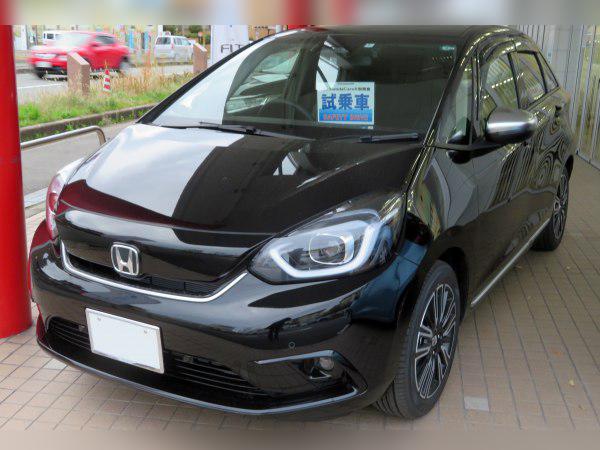
Honda L13B (1.3 i-VTEC) experiences, problems, fuel consumption and used car buying guide
Key points (TL;DR)
- Exceptional reliability: This is a classic Japanese naturally aspirated engine which, with regular maintenance, easily covers high mileage without serious failures.
- Timing chain: It uses a timing chain that is not prone to stretching, which reduces major service costs.
- CVT transmission: Most models (Honda Fit GR1) come with a CVT transmission that requires a specific driving style and regular fluid changes.
- Lack of torque: With only 118 Nm, the engine needs high revs for overtaking and uphill driving, which increases noise.
- Low fuel consumption: Very economical in the city, often comparable to small-displacement diesels.
- Low maintenance costs: No turbo, no dual-mass flywheel, no complex high-pressure injection systems.
- Recommendation: Ideal for city driving and calm drivers; not for those who often drive on the motorway with a fully loaded car.
Contents
- Introduction and engine applications
- Technical specifications
- Reliability, maintenance and service intervals
- Specific parts and costs
- Fuel consumption and performance
- LPG and tuning
- Transmission: Experiences and maintenance
- Buying used and conclusion
Introduction and engine applications
The engine designated as L13B belongs to Honda’s famous "L-series" family of engines, known for their compactness and efficiency. Specifically, this unit is the heart of the fourth generation Honda Fit (or Jazz in some markets), namely the GR1 chassis. Unlike the European versions which in this generation switched exclusively to hybrid drive (e:HEV), this pure 1.3-liter petrol engine is still offered in many world markets (Japan, Asia, parts of Eastern Europe via import).
This is an "old-school" engine in a modern package – it uses i-VTEC valve control technology and operates on the Atkinson cycle under low loads to save fuel, while switching to the standard Otto cycle when power is demanded. Its simplicity is its biggest advantage.
Technical specifications
| Parameter | Value |
|---|---|
| Engine displacement | 1317 cc (1.3 L) |
| Power | 72 kW (98 hp) at 6000 rpm |
| Torque | 118 Nm at 5000 rpm |
| Engine code | L13B |
| Injection type | Multipoint (PGM-FI) – Indirect |
| Induction | Naturally aspirated |
| Number of cylinders / valves | 4 / 16 (DOHC i-VTEC) |
Reliability, maintenance and service intervals
Timing system: Chain or belt?
The L13B engine uses a timing chain. Honda’s chains on the L-series engines have proven to be very durable. Unlike some European manufacturers where the chain is considered a "consumable", here it generally lasts as long as the engine itself, provided the oil is changed regularly. There is no prescribed replacement interval; it is replaced only if rattling is heard, which is rare before 200,000–250,000 km.
Most common faults and issues
Overall, this is one of the most reliable engines in its class. Still, owners should pay attention to:
- Carbon build-up on the EGR valve: As with any modern petrol engine that is driven a lot in the city, the EGR passages can clog, leading to rough running or illumination of the "Check Engine" light.
- Need for valve adjustment: Although of modern design, this engine does not have hydraulic lifters. It is recommended to check valve clearance every 40,000 to 60,000 km. If you hear "ticking" when the engine is cold or warm, that’s a sign that adjustment is needed. Ignoring this can lead to burnt valves.
- Start-stop system: Sometimes the starter or battery can fail earlier due to frequent use of this system in heavy city traffic.
Service intervals and oil
A minor service is recommended every 10,000 km to 12,000 km or once a year. Japanese engines like fresh oil.
- Oil capacity: The engine takes approximately 3.3 to 3.6 liters of oil (with filter).
- Viscosity grade: Honda strictly recommends 0W-20 for efficiency and cold-start protection, especially for this newer-generation engine. 5W-30 can be used as an alternative, but 0W-20 is the factory standard ("Honda Green Oil").
- Oil consumption: The L13B is not known as an oil burner. The level should not drop significantly between services. Consumption up to 0.5 liters per 10,000 km is acceptable; anything above that indicates a problem (often the PCV valve or valve stem seals at high mileage).
Spark plugs
This petrol engine uses iridium spark plugs. The factory replacement interval is long, usually around 100,000 km. Still, it is recommended to check them at 60,000 km. Do not skimp on spark plugs (NGK or Denso are OEM), because bad plugs can damage the ignition coils, which are expensive.
Specific parts and costs
Dual-mass flywheel: Good news – this engine in combination with the CVT transmission (and even with the manual in this power output) does not have a dual-mass flywheel. It uses a conventional solid flywheel, which significantly reduces clutch maintenance costs (for the manual) and eliminates this expense for automatics.
Fuel injection system: The L13B uses indirect (multipoint) injection into the intake manifold. This is excellent for longevity because the injectors are simple, inexpensive and less sensitive to poor fuel quality compared to direct injection. It also prevents carbon build-up on the intake valves.
Turbocharger: The engine does not have a turbocharger. This means there is no risk of turbo, intercooler or oil leak failures on those components. However, it also means there is no low-end "punch" of power.
Emissions equipment (DPF/GPF/EGR):
- GPF (Gasoline Particulate Filter): Depends on the market. Models for strict markets (Euro 6d-TEMP) may have a GPF. It rarely clogs because petrol engines reach high exhaust temperatures, but it requires appropriate (Low SAPS) oil. Models for Asian markets often do not have a GPF.
- AdBlue: Petrol engines do not use AdBlue.
- EGR: There is an EGR valve, which can occasionally get dirty, but it can usually be cleaned without replacement.
Fuel consumption and performance
City driving and motorway
Fuel consumption: This is where the L13B shines.
- City: Expect real-world consumption between 5.5 and 7.0 l/100 km, depending on traffic and how heavy your right foot is. The CVT helps here by keeping the engine in its optimal range.
- Open road (rural / highways): It can go down to 4.5–5.0 l/100 km.
- Motorway (130 km/h): Here physics takes over. Due to the lack of power and the aerodynamics of the body (the Fit/Crosstar are tall), consumption rises to around 6.5 to 7.5 l/100 km.
Is the engine "sluggish"?
Objectively – yes, by today’s standards it is a bit sluggish. With 118 Nm of torque available only at a high 5000 rpm, you will not experience any "pinned to the seat" feeling. In the city the engine is lively (quick off the line up to 50 km/h) thanks to the gear ratios, but overtaking on open roads requires planning and revving the engine close to the redline. The Honda Fit Crosstar is somewhat heavier, so the lack of power is even more noticeable there.
At 130 km/h the engine runs at relatively high revs (often around 3000–3500 rpm with the CVT), which creates noise in the cabin.
Additional options and modifications
LPG conversion:
Since the L13B uses indirect injection, it is an excellent candidate for LPG installation. The system is simpler and cheaper than for engines with direct injection. However, Honda engines have sensitive valve seats. If you install LPG, it is mandatory to install a valve lubrication system ("valve saver") and strictly check valve clearance every 30,000 km. If this is followed, the engine can cover hundreds of thousands of kilometers on LPG.
Chip tuning (Stage 1):
For small-displacement naturally aspirated petrol engines, remapping is basically a waste of money. You might gain 3–5 hp at best, which you will not feel in everyday driving. It is better to invest the money in quality tyres and regular maintenance.
Transmission: Manual and CVT
This engine most commonly comes with a CVT (Continuously Variable Transmission), and less often with a 6-speed manual gearbox.
CVT transmission
Honda’s CVT is one of the better ones on the market, but it has its specifics. There are no fixed gears; instead, it constantly changes the gear ratio. Under hard acceleration, the engine "flares" to high revs while the car accelerates (the "rubber band effect").
- Failures: The CVT is sensitive to dirty fluid. If the fluid is not changed, the internal belt can start slipping or the valve body can fail. Symptoms include jerking when setting off or delayed response.
- Maintenance: The fluid in the CVT (Honda-specific HCF-2 fluid) must be changed every 40,000 km to 60,000 km (or every 2 years). This is crucial for longevity. The change is not excessively expensive (depends on the market), but it is mandatory.
Manual transmission
Extremely precise and reliable. Failures are rare. The clutch kit is relatively cheap because, as mentioned, there is no dual-mass flywheel. The oil in the manual gearbox (MTF) is changed at around 60,000–80,000 km.
Buying used and conclusion
If you are considering a Honda Fit/Jazz with the L13B engine, make sure to check the following before buying:
- Cold start: Listen for any chain rattling in the first 3–5 seconds (a sign of a bad tensioner or stretched chain, although rare).
- CVT behaviour: The car should start moving smoothly as soon as you release the brake. There should be no jerks, knocks or slipping during acceleration.
- Service history: Check whether the transmission fluid has been changed. If the car has over 100,000 km and the CVT fluid has never been changed – avoid that example.
- Valve noise: If the engine sounds like a "diesel" (clattering), a valve clearance check is needed.
Conclusion:
The L13B (98 hp) engine is a champion of rationality. It is not built to impress with performance, but to last forever and use little fuel. It is ideal for drivers who spend most of their time in city and suburban driving and want a car that will not break down. If you are looking for driving excitement or often travel on the motorway with a fully loaded car, this engine will feel underpowered and noisy.
Was this content useful to you?
Your opinion helps us to improve the quality of the content.