LEB-H1 Engine
- Engine
- 1496 cm3
- Aspiration
- Naturally aspirated engine
- Fuel
- Petrol (Gasoline)
- Fuel injection system
- Multi-port manifold injection
- Power
- 110 hp @ 6000 rpm
- Torque
- 134 Nm @ 5000 rpm
- Cylinders
- 4
- Valves
- 16, 4 per cylinder
- Cylinders position
- Inline
- Valvetrain
- DOHC, VVT
- Oil capacity
- 3.3 l
- Coolant
- 3.8 l
- Systems
- Start & Stop System
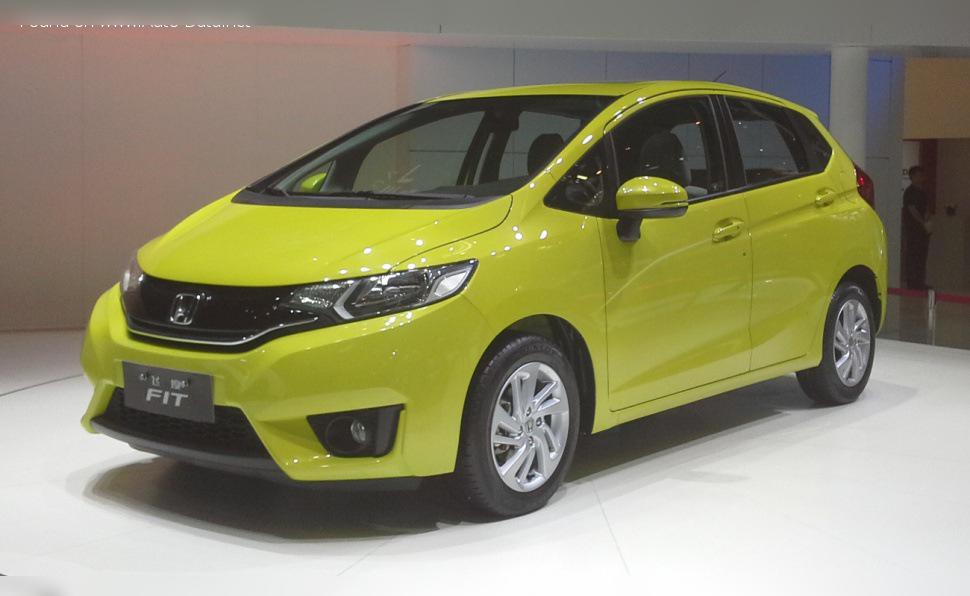
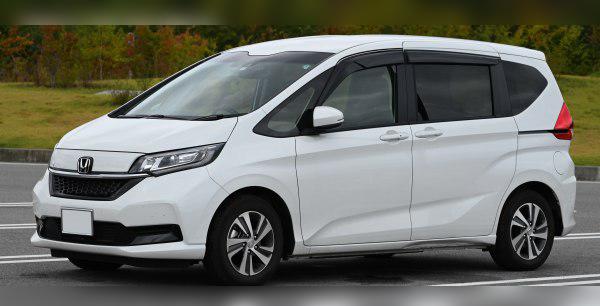
# Vehicles powered by this engine


Key points in short (TL;DR)
- Excellent fuel economy: As a hybrid, this engine is a city-driving champion with exceptionally low fuel consumption.
- Reliable engine: The petrol engine itself (LEB-H1) is mechanically very durable, uses a timing chain and rarely suffers catastrophic failures.
- Achilles' heel – Transmission: The i-DCD (Dual Clutch) transmission is technically complex and requires strict maintenance. Early models had recalls; the facelift (after 2017) is significantly better.
- Parts: Consumables are available, but specific parts of the hybrid system or transmission can be expensive and harder to obtain outside authorized dealers (depends on the market).
- Not a racer: Although it has decent power for its class, this drivetrain is optimized for efficiency, not sporty driving.
- Recommendation: Buy only cars with a fully documented and verifiable transmission service history.
Contents
Honda LEB-H1 1.5 i-VTEC Hybrid: Experiences, issues and maintenance
The engine designated as LEB-H1 is the heart of Honda’s hybrid system known as i-DCD (Intelligent Dual Clutch Drive). Unlike older Honda hybrids (IMA), which were “mild hybrids”, or newer ones (i-MMD), which operate as electric vehicles with a petrol generator, this system uses a more conventional approach with a single electric motor integrated into a dual-clutch transmission.
This engine is most commonly found in Japanese versions of the Honda Fit (Jazz), Freed and Shuttle models. It is important to note that these models often reached Europe as grey imports or are specific to certain markets (Cyprus, the United Kingdom, Russia), so parts availability can sometimes be more challenging than for the standard European Jazz.
Technical specifications
| Parameter | Value |
|---|---|
| Engine code | LEB-H1 (Part of the i-DCD system) |
| Displacement | 1496 cc (1.5 L) |
| Power (Petrol engine) | 81 kW (110 hp) |
| Power (System/Hybrid) | Approx. 101 kW (137 hp) – Depends on model |
| Torque (Petrol) | 134 Nm |
| Injection type | Direct Injection or PGM-FI (depending on variant) |
| Induction | Naturally aspirated |
| Valve train | DOHC i-VTEC, Chain |
| Hybrid battery | Lithium-ion (Li-Ion) |
Reliability and Maintenance
Timing system: Chain or belt?
The Honda LEB-H1 engine uses a timing chain for valve timing. This is great news for owners because the chain is designed to last as long as the engine itself. It does not require regular replacement like a timing belt. Still, you should listen to the engine on cold start – any rattling or metallic noise may indicate a stretched chain or an issue with the hydraulic tensioner, which usually appears only at high mileages (over 200,000 km).
Most common engine issues
The petrol engine itself is very reliable, but as part of a hybrid system it has its own specifics:
- Carbon buildup: Since most of these engines use direct injection and run in an Atkinson cycle with frequent shutdowns (start-stop), carbon deposits can build up on the intake valves. Symptoms include rough idle and a slight loss of power.
- Ignition system (Coil packs): Coil packs are wear items. If the engine starts to misfire or the “Check Engine” light comes on, it is often due to a failed coil.
- EGR system: Due to the nature of hybrids (often running under low load), the EGR valve and passages can clog, which leads to the engine feeling choked.
Service intervals and oil
Minor service is recommended every 10,000 km or once a year. Do not follow extended interval recommendations (“Long Life” at 30,000 km) because hybrids have many cold starts, which degrades the oil faster than you might think.
- Oil capacity: The engine takes approximately 3.3 to 3.6 litres of oil (with filter).
- Viscosity: Honda strictly recommends 0W-20. This thin oil is crucial for hybrid system efficiency and lubrication during cold starts. In warmer climates, 5W-30 can be used, but 0W-20 is the “gold standard” for this engine.
Oil consumption and spark plugs
This engine should not consume oil in any significant quantity. Consumption up to 0.5 litres per 10,000 km can be tolerated on older cars, but anything above that points to issues with piston rings or valve stem seals. Unlike some European competitors, Honda does not have a systemic problem here.
As for the spark plugs, only iridium spark plugs (NGK or Denso) are used. Their replacement interval is long, usually around 100,000 km. Do not experiment with standard plugs, as that can over-stress the coil packs.
Specific Parts (Costs)
Dual-mass flywheel and Injection
Yes, this system essentially uses a dual-mass flywheel, which serves to dampen vibrations between the engine and the DCT transmission. Replacing it is expensive (depends on the market, but expect a serious bill) and is usually done together with clutch service.
The injection system is modern and the injectors are generally long-lasting. They are not as problematic as on older diesels, but they are sensitive to poor fuel quality. Occasional use of fuel system cleaning additives is good preventive maintenance.
Turbo, DPF and EGR
- Turbocharger: The engine is naturally aspirated, so it does not have a turbocharger. This is a big plus for reliability – one expensive component less to fail.
- DPF/GPF: As a petrol engine, it has no DPF (which is for diesels). However, newer models (2018+ for the European market) may have a GPF (Gasoline Particulate Filter) to meet Euro 6d standards. GPFs rarely clog because exhaust gas temperatures on petrol engines are higher.
- EGR valve: It does have an EGR valve. As mentioned, it often gets dirty. Symptoms are jerking under light throttle and a check engine light. Cleaning is possible and not too expensive.
- AdBlue: None. This is a petrol engine.
Fuel Economy and Performance
Real-world fuel consumption
This is the strongest selling point of the LEB-H1 engine. Paired with the electric motor:
- City driving: Expect between 4.0 and 5.5 l/100 km. In heavy traffic, the hybrid system shines because the petrol engine often shuts off.
- Country roads: Fuel consumption can drop below 4.5 l/100 km if you are gentle with the throttle.
- Motorway (130 km/h): Here the hybrid loses its advantage. Fuel consumption rises to around 6.5 to 7.5 l/100 km.
Is it “sluggish”?
Absolutely not. With a combined 137 hp (as many Fit/Shuttle models have) and the instant torque of the electric motor, this car is very lively for its class. Off-the-line acceleration (0–60 km/h) is convincing, while in-gear acceleration is decent.
On the motorway at 130 km/h, the engine revs a bit higher than a diesel, but the 7-speed transmission keeps noise under control. Cruising is comfortable, but during hard overtakes at 120+ km/h you will feel that it is still a 1.5 naturally aspirated engine.
Additional Options and Modifications
LPG conversion
Not recommended. Although it is physically possible, converting this hybrid engine to LPG is complicated due to:
- Direct injection (requires a more expensive system).
- Lack of space (the spare wheel well is often occupied by the hybrid battery).
- Complex electronics managing the transitions between petrol and electric drive.
Given the already low petrol consumption, the payback period would be too long.
Remapping (Stage 1)
Since this is a naturally aspirated engine, remapping (chip tuning) makes little sense. The gain would be negligible (maybe 3–5 hp), and you risk upsetting the fine calibration of the hybrid system and transmission behaviour. The factory map is the best option.
Transmission: i-DCD (Dual Clutch Transmission)
This is the most important section. With the LEB-H1 engine in these models, a 7-speed dual-clutch automatic transmission (DCT) comes exclusively. There is no manual gearbox in the hybrid version.
Issues and Reliability
Honda’s i-DCD transmission had a rough start. Models produced between 2013 and 2015 had several recalls due to software issues and clutch overheating in stop-and-go traffic. Symptoms include jerks when setting off, hesitation when changing gears or complete loss of drive.
Facelift models (2017+ and 2019+) you mentioned in the specs have a revised transmission that is significantly more reliable and smoother. Still, it is not indestructible.
Transmission maintenance
The transmission requires fluid changes (for the gearbox and actuators) every 40,000 km to 60,000 km. Always use original Honda ATF DW-1 or the specific oil for Honda DCT transmissions (check the manual, as a mistake here can be fatal). Replacing the clutch pack is a very expensive job (often over 1000 EUR, depending on the market) and requires special tools and calibration.
Buying Used and Conclusion
What to check before buying?
- Transmission behaviour: The test drive must include stop-and-go traffic and uphill driving. Any jerking, banging or slipping is a sign to walk away from that car.
- Hybrid battery: Although Honda batteries are durable, check whether the system charges and discharges normally. Battery replacement is expensive (often in the range of the price of a used car).
- Service history: Has the transmission oil been changed? If there is no proof, that is a major risk.
- Vehicle origin: If the car was imported from Japan (JDM), check whether the headlights are adjusted for right-hand traffic (beam pattern) and whether the radio/navigation works on local frequencies.
Verdict
The Honda LEB-H1 combined with the i-DCD system is a technological gem that offers fantastic fuel economy and solid performance. It is ideal for urban drivers who want something a bit more spirited than a Toyota Yaris Hybrid.
However, it is strongly recommended to buy facelift models (2017+) due to the resolved transmission issues. If you find a well-maintained example and continue with regular transmission and engine servicing, this car will serve you for hundreds of thousands of kilometres with minimal fuel costs.
Was this content useful to you?
Your opinion helps us to improve the quality of the content.