L15A7 Engine
- Engine
- 1497 cm3
- Aspiration
- Naturally aspirated engine
- Fuel
- Petrol (Gasoline)
- Fuel injection system
- Multi-port manifold injection
- Power
- 117 hp @ 6600 rpm
- Torque
- 144 Nm @ 4800 rpm
- Cylinders
- 4
- Valves
- 16, 4 per cylinder
- Cylinders position
- Inline
- Max engine speed
- 6800 rpm
- Valvetrain
- SOHC, i-VTEC
- Oil capacity
- 3.6 l
- Coolant
- 4.9 l
# Vehicles powered by this engine
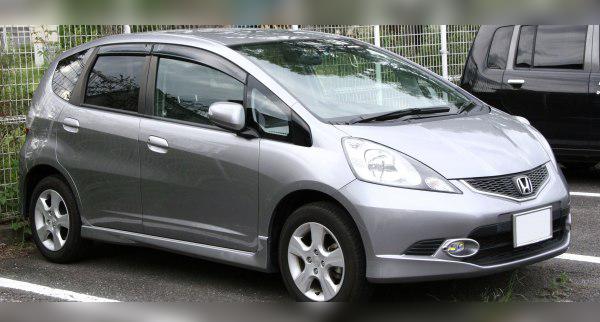
Honda L15A7 (1.5 i-VTEC) – Experiences, issues, fuel consumption and used-buying tips
Key points in short (TL;DR)
- Outstanding reliability: The L15A7 is considered one of the most reliable small petrol engines on the market.
- Timing chain: Uses a chain designed to last as long as the engine itself, with regular maintenance.
- Fuel consumption: Very economical for its power, ideal for city driving.
- Performance: A “lively” engine thanks to i-VTEC technology, it likes high revs.
- Valve maintenance: Requires mechanical valve clearance adjustment at specific intervals – it is not self-adjusting.
- Gearboxes: Excellent manual gearboxes; automatics are reliable but require regular oil changes.
- Recommendation: Highly recommended, especially for those who want worry-free ownership.
Contents
Introduction
The engine with the code L15A7 is the heart of the second generation Honda Fit (known in Europe as the Honda Jazz). This is a 1.5-liter four-cylinder that belongs to Honda’s well-known “L-series” of engines. Unlike the smaller units (1.2 or 1.3), this engine offers that necessary extra power which turns a small city car into a capable vehicle for highway use and even some fun driving. It was primarily installed in “Sport” models, offering a balance between legendary Japanese reliability and solid performance.
Technical specifications
| Parameter | Value |
|---|---|
| Engine displacement | 1497 cc (1.5 L) |
| Power | 87 kW (117 hp) @ 6600 rpm |
| Torque | 144 Nm @ 4800 rpm |
| Engine code | L15A7 |
| Injection type | PGM-FI (multi-point indirect injection) |
| Valve configuration | SOHC (single camshaft), 16 valves, i-VTEC |
| Aspiration | Naturally aspirated |
Reliability and maintenance
Timing system: chain or belt?
This engine uses a timing chain instead of a timing belt. Honda chains on L-series engines have proven to be extremely durable. In practice, the chain often lasts over 250,000 or 300,000 km without needing replacement, provided the oil is changed regularly. There is no scheduled replacement interval; it is only replaced if rattling appears or the chain stretches (which will trigger the “Check Engine” light).
Most common failures and issues
The L15A7 is a “bulletproof” engine, but it is not immune to aging:
- Ignition coils: This is the most common weak point. Symptoms include rough idle, hesitation under acceleration or stalling at idle. They often fail one after another, so it is recommended to replace (or at least check) all four.
- Valve adjustment: The engine does not have hydraulic lifters. This means valve clearances must be adjusted mechanically. If you hear a “ticking” or “sewing machine” noise from under the hood while the engine is running, it is time for an adjustment. Neglected valves can lead to loss of compression or burnt valves.
- EGR passages: Sometimes the EGR valve passages clog with carbon deposits, which leads to poor idle quality.
Service intervals and oil
Minor service: Recommended every 10,000 km up to a maximum of 15,000 km (or once a year). Although some manufacturers specify longer intervals, stick to shorter ones if you want the chain to last.
Oil quantity and type: The engine takes approximately 3.6 to 4.0 liters of oil (with filter). Honda primarily recommends 0W-20 for this engine for fuel economy, but in warmer climates or on higher-mileage engines, 5W-30 is also safely used. Always use fully synthetic oil.
Oil consumption: The L15A7 is not known as a heavy oil burner. Between services, it is normal for the level to drop by a few millimeters on the dipstick, but needing to top up more than 0.5–1 liter per 10,000 km may indicate stuck piston rings or gasket leaks, which is not typical behavior for this engine.
Spark plugs
Since this is a petrol engine, spark plugs are crucial. It comes from the factory with iridium spark plugs (NGK or Denso). Their replacement interval is long, usually around 100,000 to 120,000 km. Do not experiment with cheap copper plugs; this engine likes a strong, high-quality spark.
Specific parts (costs)
Dual-mass flywheel and clutch
Good news: This engine does not have a dual-mass flywheel. It uses a classic solid flywheel that practically never needs replacement. The clutch kit (pressure plate, disc, release bearing) is relatively affordable and lasts a long time because the engine does not produce huge torque that would wear it out quickly.
Fuel injection system and injectors
The L15A7 uses conventional, indirect multi-point injection (PGM-FI). This is great news for used-car owners because these injectors are much cheaper, more robust and less sensitive to fuel quality compared to modern direct injection (GDI). Injector problems are extremely rare. There is no high-pressure fuel pump to cause trouble.
Turbo, DPF, EGR, AdBlue
- Turbo: None. This is a naturally aspirated engine, which means one expensive component less to worry about.
- DPF / AdBlue: None. This is a petrol engine, so there is no particulate filter (no GPF on this version) and no AdBlue system.
- EGR valve: It does have an EGR valve. As mentioned, it can get dirty, but it is often successfully cleaned without needing replacement.
Fuel consumption and performance
Real-world fuel consumption
This is one of the most economical 1.5 engines on the market.
- City driving: Expect between 7.0 and 8.5 l/100 km. In heavy traffic it can reach around 9 liters, but rarely more.
- Highway / open road: This is where the engine shines, with consumption of 5.0 to 6.0 l/100 km with moderate driving.
Is the engine “lazy”?
With 117 hp in the lightweight Honda Fit/Jazz body, this engine is far from lazy. On the contrary, it is considered very eager and “lively”. Up to 3000 rpm it is tame and quiet, but when the i-VTEC system “comes on” at higher revs, the engine happily pulls into the red and delivers perfectly adequate acceleration for its class. 0–100 km/h takes about 9–10 seconds (depending on the gearbox), which is more than enough for city driving and overtaking.
Behavior on the motorway
The L15A7 copes well with motorway driving, but keep in mind this is a small-displacement engine usually paired with a 5-speed gearbox. At 130 km/h the engine spins at relatively high revs, usually around 3000–3500 rpm (depending on whether it is automatic or manual). This can create some cabin noise, but the engine itself has no problem with it.
Additional options and modifications
LPG (autogas) conversion
It is possible, but with great caution. Honda engines have relatively “soft” valve seats. If you plan to install LPG, a valve protection system (valve saver) or electronically controlled additive dosing is mandatory. Also, the valve clearance inspection interval must be halved (every 20,000–30,000 km). Without this, you risk expensive cylinder head damage. If you do not cover huge mileage, it is better to stay on petrol.
Chiptuning (Stage 1)
On naturally aspirated petrol engines, chiptuning is mostly a waste of money. The gain is negligible (maybe 3–5 hp) and you will not feel a real difference in everyday driving. It is better to invest that money in quality tires or regular maintenance.
Gearbox
Gearbox variants
With the L15A7 in the second-generation Honda Fit, you will most often find three options:
- 5-speed manual gearbox: Precise, with a short throw, a real joy to use.
- 5-speed automatic gearbox (traditional torque converter): Most common in “Sport” models on the US market. It also has paddle shifters on the steering wheel.
- CVT gearbox: More common on the Japanese domestic market and some European markets.
Failures and maintenance
- Manual gearbox: Extremely reliable. Failures are rare. Gearbox oil should be changed every 60,000–80,000 km (use Honda MTF oil only).
- 5-speed automatic gearbox: Very robust. No dual-mass flywheel. Its biggest enemy is old oil. The oil (Honda ATF-Z1 or newer DW-1) must be changed using the “drain and fill” method every 60,000 km. Power flushing under pressure is not recommended.
- Costs: Clutch replacement on the manual gearbox is not expensive (depends on the market), while automatic gearbox repairs can be very costly if neglected. Regular oil changes are the cheapest insurance.
Buying used and conclusion
When buying a Honda with the L15A7 engine, pay attention to the following:
- Cold engine noise: Listen for chain rattling (sign of stretch) or metallic ticking from the top of the engine (valves out of adjustment).
- Idle speed: The engine should idle smoothly. Fluctuating revs may indicate a dirty throttle body, EGR valve issues or the need for a valve adjustment.
- Air conditioning: On this model (Fit/Jazz) the A/C compressor is a known weak point. Check whether the A/C cools properly and whether the compressor makes strange noises when engaged.
- Rust: The engine is excellent, but Honda bodywork can be prone to corrosion (wheel arches, sills, underbody).
Conclusion: The Honda L15A7 is a fantastic engine. If you are looking for a used car that will serve you for years with minimal investment, and at the same time is not boring to drive, this is the right choice. It is ideal for drivers who appreciate Japanese engineering precision and do not want complications with turbos, DPFs and expensive failures. Just change the oil regularly and adjust the valves on time – and this engine will likely outlive the car’s body itself.
Was this content useful to you?
Your opinion helps us to improve the quality of the content.