LEB-H5 Engine
- Engine
- 1496 cm3
- Aspiration
- Naturally aspirated engine
- Fuel
- Petrol (Gasoline)
- Fuel injection system
- Direct injection
- Power
- 106 hp
- Torque
- 127 Nm
- Cylinders
- 4
- Valves
- 16, 4 per cylinder
- Cylinders position
- Inline
- Valvetrain
- DOHC, i-VTEC
- Systems
- Start & Stop System
# Vehicles powered by this engine
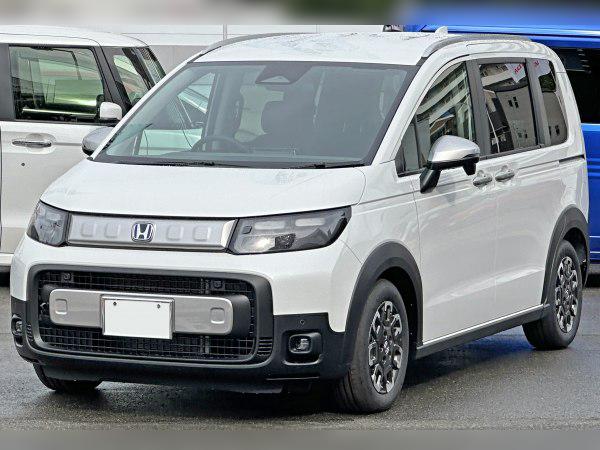
Honda 1.5 LEB-H5 (e:HEV): Experience, issues, fuel consumption and maintenance
Key points (TL;DR)
- Reliability: Extremely high. Honda has refined this hybrid system, and the petrol engine itself is not heavily stressed.
- Technology: This is an engine that runs on the Atkinson cycle – the focus is on efficiency, not on the raw power of the petrol unit.
- Maintenance: The drivetrain uses a timing chain. There is no conventional gearbox, no belts in a CVT, no alternator or starter in the traditional sense.
- Main drawback: Noise at full throttle (the “slipping clutch” effect) due to the e-CVT operating principle.
- Fuel consumption: Ridiculously low in the city (often below 4.5 l/100 km), but higher on the motorway.
- Recommendation: Ideal for families and city driving. It’s not a sports car, but it’s “indestructible” if properly maintained.
Contents
- Introduction and applications
- Technical specifications
- Reliability and maintenance
- Specific components and systems
- Fuel consumption and performance
- Additional options and modifications
- Transmission (e-CVT)
- Buying used and conclusion
Introduction: The heart of Honda’s e:HEV system
The engine designated LEB-H5 is not an ordinary petrol unit. It is a 1.5‑liter four‑cylinder that forms a key part of Honda’s advanced e:HEV (Intelligent Multi-Mode Drive) system. It is installed in the latest generation of the MPV model Honda Freed III.
Unlike conventional cars, here the petrol engine most of the time does not drive the wheels directly. Its primary role is to drive a generator that produces electricity for the electric motor (which actually turns the wheels) or charges the battery. Only at higher speeds (usually above 80 km/h) does the clutch lock up and the petrol engine take over direct drive. Because of this, the engine operates in a very specific mode, under less stress than in conventional vehicles.
Technical specifications
| Parameter | Value |
|---|---|
| Engine code | LEB-H5 (L-Series Hybrid) |
| Displacement | 1496 cc (1.5 L) |
| Power (petrol engine) | 78 kW (106 hp) |
| Power (system/electric) | 90 kW (123 hp) – combined |
| Torque (petrol) | 127 Nm |
| Torque (electric) | 253 Nm (available instantly) |
| Aspiration | Naturally aspirated |
| Injection type | PGM-FI (indirect/multipoint or direct depending on market, most often port injection for e:HEV) |
| Operating cycle | Atkinson cycle |
Reliability and maintenance
Does this engine have a timing belt or a chain?
The LEB-H5 engine uses a timing chain. Honda’s chains on L‑series engines have proven to be very durable and reliable. In practice, the chain often lasts as long as the engine itself, provided that the oil is changed regularly. There is no scheduled replacement interval; it is replaced only if you hear a characteristic “rattling” noise (usually at very high mileage, over 250,000 km).
What are the most common issues with this engine?
This is one of the most reliable powertrains on the market, but it has its specifics:
- Noise at high revs: This is not a fault, but a characteristic. When you floor the throttle, the engine revs high to generate electricity, which sounds like a “slipping clutch”. Drivers often think the gearbox is broken.
- 12V battery: Although it’s a hybrid, the small 12V battery often fails because the system does not charge it aggressively enough if the car is driven on short trips. The symptom is that the car will not “start” (the system won’t power up).
- GPF filter (on newer models): With frequent city driving where the engine is constantly turning on and off, the GPF filter can clog because it does not reach the operating temperature needed for regeneration.
At what mileage is the “major service” done?
Since it has a chain, there is no classic “major service” in the sense of belt replacement. However, the serpentine belt (auxiliary belt) that drives the water pump (if it is not electric) and other accessories should be checked every 100,000 km or every 5–6 years. Most modern Honda hybrids have an electric water pump and A/C compressor, which means this engine may not even have a serpentine belt (depending on the specific version for the Freed III), which drastically reduces maintenance costs.
Oil: quantity and grade
Honda is a pioneer in the use of low-viscosity oils.
Recommendation: Exclusively 0W-20 (or even 0W-16 for newer models such as the Freed III).
Quantity: The engine takes about 3.6 to 4.0 liters (always check the dipstick or the owner’s manual, as the oil filter is included). Minor services are done every 10,000 km or once a year. Do not extend intervals to 20–30k km, because hybrid engines have many cold starts.
Oil consumption
These engines generally do not consume oil in worrying amounts. Consumption of up to 0.5 liters per 10,000 km is acceptable and often goes unnoticed. If it consumes more, this may indicate an issue with the piston rings (rare) or the PCV valve, but most often it is the result of using the wrong, overly thick oil.
Spark plugs
Iridium spark plugs are used (NGK or Denso). Replacement intervals are long, usually 100,000 to 120,000 km. Do not skimp on them; cheap copper plugs can overload the ignition coils.
Specific components (costs)
Does the engine have a dual-mass flywheel?
No, not in the conventional sense. The e:HEV system uses a flywheel with a vibration damper, but it is not subject to wear like a dual‑mass flywheel on diesels with a manual gearbox. There is no clutch disc that wears out. This is a major saving in long‑term maintenance.
Fuel injection system and injectors
Honda LEB engines in hybrids often use port injection (indirect injection) or a combination. This is great news because it prevents carbon buildup on intake valves, which is a common problem on direct‑injection engines. The injectors are very reliable and rarely cause issues before 200,000 km. If problems do occur, symptoms include rough idle (when the engine is running to charge the battery).
Turbocharger, DPF, EGR, AdBlue
- Turbo: None. This is a naturally aspirated engine. Fewer parts that can fail.
- EGR: It has an EGR valve. Due to the Atkinson cycle and frequent shutdowns, it can get dirty, but this is solved by cleaning.
- DPF/GPF: As a modern petrol engine (Euro 6d/Euro 7 standards), the Freed III likely has a GPF (Gasoline Particulate Filter). It is sensitive to short trips in winter.
- AdBlue: None. That’s a system for diesel engines.
Fuel consumption and performance
Real-world city consumption
This is where this engine shines. In heavy city traffic, the Honda Freed e:HEV will use between 3.8 and 5.0 l/100 km. The heavier the traffic, the more efficient the system becomes, as it uses regenerative braking and drives on electricity.
Is the engine “sluggish”?
On paper, 106 hp for an MPV sounds modest. In practice, however, it is not sluggish. Why? Because the wheels are driven by an electric motor with 253 Nm of torque available IMMEDIATELY (from 0 rpm). Starts from traffic lights are brisk, and in‑gear acceleration up to 80 km/h is surprisingly good. The feeling of “sluggishness” appears only at full throttle on climbs due to engine noise, but the speedometer still climbs at a decent rate.
Behaviour on the motorway
This is the only real “weak” point. At speeds above 120–130 km/h, the system locks the petrol engine directly to the wheels (because this is more efficient than converting petrol–electricity–wheels).
Fuel consumption then rises to around 6.5 to 7.5 l/100 km. At 130 km/h the engine runs at fixed revs (because there are no gears, just a single ratio), which can be noisy if you hit an incline. It’s not ideal for “autobahn” blasting, but for normal cruising it is perfectly adequate.
Additional options and modifications
LPG (autogas) conversion
Absolutely NOT recommended.
Reasons:
1. The engine runs on a specific Atkinson cycle with complex injection electronics.
2. It turns on and off frequently (hundreds of times during a drive), which LPG systems struggle to follow without jerking or mapping issues.
3. You lose the warranty, and the savings are minimal because the car already uses very little fuel.
4. In the Freed model there is practically nowhere to mount the tank (the batteries are at the rear or under the seats).
Remapping (Stage 1)
Pointless. This is a naturally aspirated engine optimised for efficiency, not performance. The gain would be 2–3 hp, which is imperceptible. Also, power at the wheels depends on the electric motor and battery, which the engine ECU cannot magically boost without risking damage to the inverter.
Transmission: e-CVT
Which gearbox is used?
Only the e-CVT is used.
It is important to understand: this is not a conventional CVT with a belt and pulleys (the type people often fear). It is a fixed‑ratio transmission that uses two electric motors (one generator, one drive motor) and a set of gears with a clutch for direct drive.
Most common issues and gearbox maintenance
This gearbox is mechanically simpler than a manual and far more reliable than DSG or conventional CVT gearboxes. There are no friction elements that wear out (apart from the lock‑up clutch, which is rarely used under heavy load).
Maintenance: Changing the gearbox oil (Honda HCF‑2 or specific e:HEV oil) is mandatory every 40,000 to 60,000 km. The cost is relatively low (just oil and labour), and it is crucial for cooling the electric motors inside the housing. If the oil is not changed, the windings of the electric motor can overheat.
Buying used and conclusion
Before buying a used Honda Freed with this engine, make sure to check:
- Service history: Has the oil been changed on time? Hybrids are sensitive to poor‑quality or old oil.
- Condition of the hybrid battery: Although Honda’s batteries are durable, diagnostics must confirm that the cells are balanced.
- Battery cooling: Check the air intake for battery cooling (usually near the rear seats) – if it is clogged with pet hair or dust, the battery may have been overheating.
- Accident damage: Has the car been hit at the front? That’s where the expensive electronics (inverter) are located.
Conclusion: The 1.5 LEB-H5 engine combined with the e:HEV system is a technological gem for a family‑oriented driver. It offers old‑school reliability (chain, no turbo) with modern‑era efficiency. If you don’t mind the specific engine sound under acceleration and you’re not racing on the motorway, this is one of the most cost‑effective powertrains to own today. Maintenance is cheaper than on a diesel, and city fuel consumption is lower.
Was this content useful to you?
Your opinion helps us to improve the quality of the content.