N16A3 Engine
- Engine
- 1597 cm3
- Aspiration
- Turbocharger, Intercooler
- Fuel
- Diesel
- Fuel injection system
- Diesel Commonrail
- Power
- 120 hp @ 4000 rpm
- Torque
- 300 Nm @ 2000 rpm
- Cylinders
- 4
- Valves
- 16, 4 per cylinder
- Cylinders position
- Inline
- Valvetrain
- DOHC
- Oil capacity
- 4.7 l
- Coolant
- 4.46 l
- Systems
- Particulate filter
# Vehicles powered by this engine
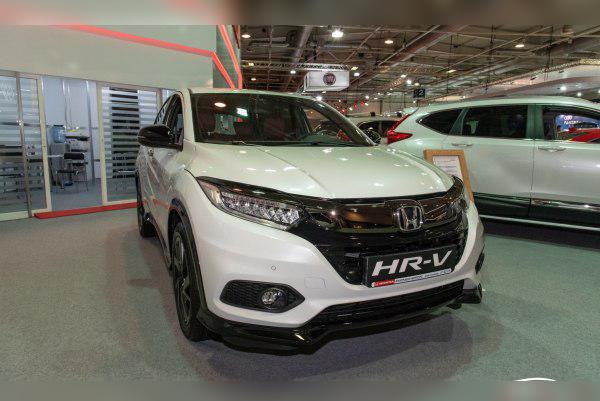
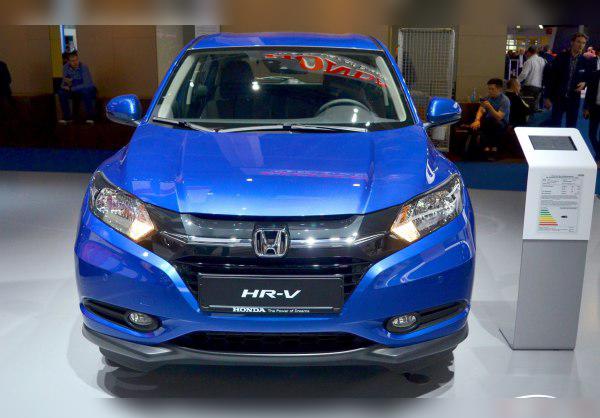
Honda 1.6 i-DTEC (N16A3) – Experiences, issues, fuel consumption and maintenance
Key points in short (TL;DR)
- Exceptional efficiency: This is one of the most economical diesels in its class, with real-world consumption often below 5 l/100 km.
- Reliable timing chain: Uses a timing chain that has proven to be very durable, unlike some competitors (e.g. BMW N47).
- No AdBlue (most models): Honda’s engineering achievement made it possible to meet Euro 6 standards without a complex AdBlue system in most HR-V models (check model year).
- Sensitive to city driving: The DPF filter can cause problems if the car is driven exclusively on short urban trips.
- Expensive OEM parts: Honda parts are traditionally more expensive than those of European rivals, especially the clutch kit with dual-mass flywheel.
- Recommendation: An excellent choice for drivers who cover more than 15,000 km per year, an ideal balance of power and fuel consumption for the HR-V body.
Contents
Introduction and applications
The engine with the code N16A3, better known as 1.6 i-DTEC, is Honda’s answer to the European “downsizing” trend. As part of the Earth Dreams Technology series, this unit replaced the legendary but heavy 2.2 i-DTEC engine.
The main characteristic of this engine is its construction – the block is made of aluminum with an open-deck design, which makes it one of the lightest diesel engines in its class (it is about 47 kg lighter than the previous 2.2). In the Honda HR-V, this engine provides a perfect balance: enough torque for an SUV body, with fuel consumption at the level of a small city car. Although the Japanese are slowly abandoning diesels, this engine is proof that they knew how to build a top-notch “oil-burner”.
Technical specifications
| Feature | Data |
|---|---|
| Engine displacement | 1597 cc |
| Power | 88 kW (120 hp) at 4000 rpm |
| Torque | 300 Nm at 2000 rpm |
| Engine code | N16A3 |
| Injection type | Common Rail (Bosch solenoid/piezo) |
| Charging system | Variable-geometry turbocharger (VGT) + intercooler |
| Configuration | Inline 4-cylinder, DOHC, 16 valves |
Reliability and maintenance
Does this engine have a timing belt or a chain?
Honda’s 1.6 i-DTEC engine uses a timing chain for valve timing. This is great news for owners because the chain is designed to last for the entire service life of the engine (“maintenance free”). In practice, the chain has proven to be very reliable and it rarely stretches before 200,000–250,000 km, provided the oil has been changed regularly. There is no preventive replacement like with a belt; it is replaced only if you hear rattling during a cold start.
What are the most common failures on this engine?
Although the engine is generally “bulletproof” compared to the competition, there are some weak points:
1. Mass air flow sensor (MAF): Can provide incorrect readings, which leads to jerking while driving or the check-engine light coming on.
2. DPF filter: On cars driven exclusively in the city, regeneration does not complete successfully, which leads to clogging and the car going into “safe mode”.
3. Ground (earth) oxidation: On older examples, issues with poor engine grounding have been observed, which can cause various electronic faults.
At what mileage is the “major service” due?
Since the engine has a chain, a classic “major service” (timing belt replacement) does not exist. However, the serpentine belt that drives the alternator and A/C should be inspected every 100,000 km and replaced as needed (usually around 120,000 km or every 6–8 years). The water pump is also replaced when it shows signs of weakness; it is not tied to a timing kit in the same critical way as on belt-driven engines.
How many liters of oil does this engine take and which grade is recommended?
The sump holds approximately 4.7 liters of engine oil (with filter). Honda is very strict here: it recommends only 0W-20 or 0W-30 grades that meet ACEA C2/C3 standards. This thin oil is crucial for proper lubrication of the turbo and chain, as well as for low fuel consumption. Using thicker oil (e.g. 5W-40) can, in the long run, damage the DPF and turbo. The minor service (oil and filter change) is done every 10,000 km up to a maximum of 15,000 km.
Does it consume oil between services?
This engine is known for its precise manufacturing and tight tolerances. A healthy 1.6 i-DTEC should not consume oil between services, or the consumption should be negligible (below 0.5 liters per 10,000 km). If you notice significant oil consumption, this usually points to a problem with the turbo or piston rings (which is rare at lower mileage).
How long do the injectors last and how reliable are they?
The injection system uses Bosch components with operating pressure up to 1800 bar. The injectors are generally long-lasting and easily exceed 200,000+ km with good-quality fuel. Symptoms of bad injectors include rough idle (fluctuating revs), increased smoke under acceleration and harder starting. They are sensitive to poor-quality diesel, so it is recommended to refuel at reputable stations.
Specific parts (costs)
Does the engine have a dual-mass flywheel?
Yes, it has a dual-mass flywheel (DMF). Considering the torque of 300 Nm, it is necessary to neutralize diesel engine vibrations. The flywheel is a wear item and usually lasts between 150,000 and 200,000 km, depending on driving style. Replacement is expensive (falls into the “expensive” to “very expensive” category, depending on the market), and it is recommended to replace it together with the clutch kit.
Does the engine have a turbocharger and what is its lifespan?
The N16A3 engine uses a single fourth-generation Garrett turbocharger with variable geometry (VGT). The turbo is electronically controlled for precise throttle response. Its lifespan is very long, often over 250,000 km, provided 0W-30/0W-20 oil is used and the engine is not switched off immediately after hard highway driving. Turbo whine is the first sign of wear.
Does this model have a DPF filter or an EGR valve that often clogs?
Yes, it has both a DPF (diesel particulate filter) and an EGR valve. On the Honda, the DPF is mounted very close to the engine so that it heats up quickly and performs passive regeneration. Still, city driving is its enemy. If the DPF warning light comes on, you need to take the car out on an open road and drive at a constant speed above 60 km/h (around 2000–2500 rpm) for at least 20 minutes. EGR clogging is less common but possible, and it manifests as a loss of power.
Does this engine have AdBlue?
This is one of the biggest advantages of this engine. Most 1.6 i-DTEC (120 hp) versions in the Honda HR-V (especially pre-facelift and early facelift models) DO NOT have an AdBlue system. Honda used an advanced LNT (Lean NOx Trap) catalyst to meet Euro 6 standards. This means lower maintenance costs and fewer potential failures (AdBlue heaters, pumps, etc.) that plague the competition.
Note: Check the specific car by VIN, because the very latest iterations (Euro 6d-TEMP) towards the end of production may have introduced changes depending on the market, but in general – the HR-V 1.6 diesel is known for the absence of AdBlue fluid.
Fuel consumption and performance
What is the real fuel consumption in city driving?
In heavy city traffic, real-world consumption is between 5.5 and 6.5 liters per 100 km. This is an excellent result for an SUV. The start-stop system (if working properly and the battery is in good condition) further helps reduce consumption at traffic lights.
Is this engine “lazy” for the weight of the body it’s installed in?
Absolutely not. With 300 Nm of torque available from just 2000 rpm, the HR-V “pulls strongly” in in-gear acceleration. The car feels lively, overtaking is safe and there is no sense that the engine is struggling, even when the car is fully loaded. Subjectively, it feels like it has more than 120 hp.
How does the engine behave on the highway and at what rpm does it cruise at 130 km/h?
On the highway, the engine is in its element. Fuel consumption at 120–130 km/h is around 4.5 to 5.2 l/100 km. The gearbox has long ratios in 6th gear, so at 130 km/h the engine runs at a comfortable 2200–2400 rpm (depending on tire size). Cabin noise is minimal, which makes it an excellent long-distance cruiser.
Additional options and modifications
How far can this engine be safely “chipped” (Stage 1)?
The engine has power reserves, but the limiting factors are the clutch and DPF. A safe Stage 1 remap raises power to about 145–150 hp and torque to 340–360 Nm.
Warning: Increasing torque drastically shortens the lifespan of the dual-mass flywheel and clutch on this model. If you decide to remap, be prepared for an earlier clutch kit replacement.
Gearbox and drivetrain
Which manual and automatic gearboxes are paired with this engine?
With the 1.6 i-DTEC in the HR-V, by far the most common (and on many markets almost the only) option is the 6-speed manual gearbox. This gearbox is fantastic – short throws, precise (a “click-clack” feel) and a real pleasure to use.
There were CVT automatic versions, but only with petrol engines. The diesel HR-V did not come with the 9-speed automatic (which was used in the CR-V), so you are basically limited to the manual shifter – which, in Honda’s case, is actually an advantage.
What are the most common failures of the manual gearbox?
The gearbox itself is mechanically very robust. There are no systemic issues with gears or synchros. The only recurring problem is related to the clutch kit. Due to the high torque, if the car is driven aggressively or often starts uphill, the clutch may start to slip earlier than expected.
Does this model have a dual-mass flywheel and how much does clutch replacement cost?
As mentioned, it does have a dual-mass flywheel. Replacing the complete set (clutch disc + pressure plate + release bearing + dual-mass flywheel) is a costly investment. Genuine Honda parts are expensive, and high-quality aftermarket parts (LuK or Sachs) are also not cheap. (Depending on the market, expect anywhere from 600 to 1000+ EUR including labor.)
At what mileage should the gearbox be serviced and the oil changed?
Honda recommends changing the oil in the manual gearbox (MTF-3 oil) every 60,000 to 80,000 km or if you feel that the gearbox is harder to shift when cold. This is a relatively inexpensive job (it takes about 2 liters of oil) that significantly extends gearbox life.
Buying used and conclusion
When buying a used Honda HR-V with this engine, pay attention to the following:
- Cold start: Listen for metallic chain rattling during the first 3–5 seconds of operation. If it lasts longer, the chain tensioner is weak.
- Clutch: Shift into a higher gear (e.g. 4th or 5th) at low revs and floor the throttle. If the revs jump but the speed does not increase proportionally, the clutch is slipping.
- Turbo noise: A loud siren-like whine indicates a problem with the turbo.
- Air conditioning: Check whether the A/C compressor works, as this is a common and expensive repair on HR-V models (not directly related to the engine, but to the model itself).
Conclusion: The Honda HR-V 1.6 i-DTEC is one of the best compact crossovers of its generation if you are looking for a diesel. The engine is a technological gem – quiet, incredibly economical and sufficiently powerful. Maintenance is somewhat more expensive than with French or Italian rivals, but this pays off through reliability. It is ideal for those who drive a lot and want a car that is a joy to drive yet doesn’t visit the fuel station too often.
Was this content useful to you?
Your opinion helps us to improve the quality of the content.