L15BY Engine
- Engine
- 1498 cm3
- Aspiration
- Naturally aspirated engine
- Fuel
- Petrol (Gasoline)
- Fuel injection system
- Direct injection
- Power
- 130 hp @ 6600 rpm
- Torque
- 155 Nm @ 4600 rpm
- Cylinders
- 4
- Valves
- 16, 4 per cylinder
- Cylinders position
- Inline
- Valvetrain
- DOHC
- Oil capacity
- 3.6 l
- Coolant
- 3.63 l
# Vehicles powered by this engine
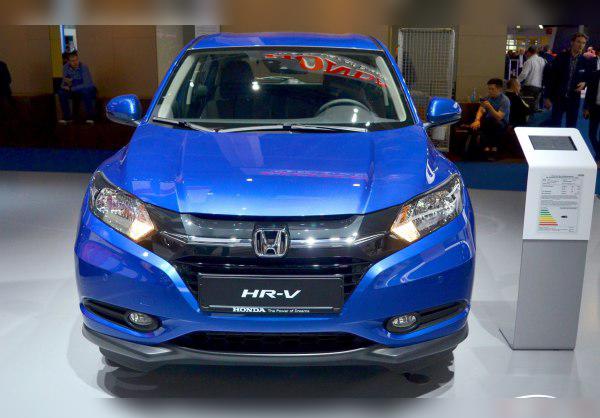
Honda 1.5 i-VTEC (L15BY) – Experiences, problems, fuel consumption and used car buying guide
If you’re looking for the “last of the Mohicans” among naturally aspirated petrol engines in the compact crossover (SUV) class, the Honda HR-V with the L15BY engine is probably at the top of the list. In an era where everyone has switched to small turbo three-cylinders, Honda has kept the philosophy of a high-revving naturally aspirated engine, but modernized it with direct injection (Earth Dreams technology).
Is this an engine that will last forever, or does modern injection technology bring expensive headaches? Below is a detailed analysis.
Key points in short (TL;DR)
- Reliability: Extremely high. This is one of the most reliable modern petrol engines on the market.
- Performance: The engine needs high revs. It feels “lazy” at low revs due to the lack of a turbocharger and modest torque.
- Gearbox: Available with a precise 6-speed manual gearbox or a CVT automatic (which requires regular maintenance).
- Fuel consumption: Surprisingly economical for a naturally aspirated engine, thanks to direct injection.
- Maintenance: No turbo, no dual-mass flywheel (on most versions), timing chain is long-lasting.
- LPG (Autogas): Due to direct injection, LPG installation is expensive and complicated (not cost-effective for the average driver).
Contents
- Technical specifications
- Reliability and Maintenance
- Specific Parts and Costs
- Fuel Consumption and Performance
- Additional Options and Modifications
- Gearbox (Manual vs CVT)
- Buying Used and Conclusion
Technical specifications
| Parameter | Value |
|---|---|
| Engine displacement | 1498 cc (1.5 litres) |
| Power | 96 kW (130 hp) at 6600 rpm |
| Torque | 155 Nm at 4600 rpm |
| Engine code | L15BY |
| Injection type | Direct injection (GDI / Earth Dreams) |
| Aspiration | Naturally aspirated – No turbo |
| Number of cylinders/valves | 4 cylinders / 16 valves (i-VTEC) |
Reliability and Maintenance
This unit belongs to Honda’s L-series engines, which are globally known for their durability. However, the L15BY differs from older Honda engines because it uses direct fuel injection for higher efficiency and to meet emissions standards.
Does this engine have a timing belt or a chain?
The L15BY engine uses a timing chain. Honda chains are famously long-lasting and, with regular oil changes, are designed to last as long as the engine itself. There is no need for preventive replacement at a specific mileage as with belts; it is replaced only if symptoms appear (rattling at cold start or a camshaft sensor error), which is rare before 200,000–250,000 km.
What are the most common failures on this engine?
The list of failures is very short, but there are some specifics:
- Carbon buildup: Due to direct injection, fuel does not “wash” the intake valves. Over time (at higher mileage), carbon deposits can form on the intake valves, which may cause rough idle or a slight loss of power. This is solved by mechanical cleaning (so-called walnut blasting) or chemical treatments.
- VTC actuator: Sometimes you can hear a short rattling noise (1–2 seconds) at cold start. This points to a problem with the VTC actuator (variable valve timing control). It’s not a catastrophic failure, but it’s annoying and should be addressed.
- Fuel dilution of engine oil: With short trips in winter, a small amount of petrol can end up in the sump. This is more common on turbo versions of this engine (in the Civic), but can happen here as well. The solution is more frequent oil changes.
Service intervals and oil
Minor service is done every 10,000 to 15,000 km or once a year. Avoid extended intervals of 30,000 km if you want the engine to last. The engine takes approximately 3.3 to 3.6 litres of oil (with filter). Honda strictly recommends 0W-20 due to tight tolerances and the VTEC system, although in warmer climates 5W-30 can also be used (check the vehicle’s owner’s manual).
Oil consumption and spark plugs
In general, the L15BY does not consume oil in worrying amounts. Consumption up to 0.5 litres per 10,000 km is considered acceptable, but most owners do not need to top up between services. The spark plugs are iridium and are replaced every 100,000 to 120,000 km (depends on the market and fuel quality, but they are long-lasting).
Specific Parts (Costs)
Maintaining this engine falls into the category of affordable to moderately expensive. It doesn’t have the most expensive parts that plague modern diesels or turbo petrol engines.
- Dual-mass flywheel: Versions with a manual gearbox mostly use a conventional (solid) flywheel or a very simple dual-mass system that is much cheaper and more durable than those on diesels. Versions with a CVT gearbox do not have a conventional flywheel.
- Fuel injection system: This is the most expensive part of the engine. It uses a high-pressure pump and injectors for direct injection. Injectors are sensitive to poor-quality fuel, but are not known as a widespread problem. The price of a single injector is significantly higher than on old MPI engines (very expensive if it fails).
- Turbocharger: This engine does not have a turbocharger. That means zero costs for turbo overhauls, intercoolers or pressurised hoses. A big plus when buying used.
- GPF / EGR: The engine has an EGR valve. Models produced after 2018 (Euro 6d-TEMP and newer) are often equipped with a GPF filter (Gasoline Particulate Filter). Unlike a diesel DPF, a GPF regenerates much more easily and passively while driving and rarely causes problems.
- AdBlue: No, this is a petrol engine and does not have an AdBlue system.
Fuel Consumption and Performance
This is where drivers either love or hate this engine. Its character is typically Japanese “old school”.
Is the engine “lazy”?
Yes and no. If you’re used to a turbo diesel that pulls strongly from 1500 rpm, this engine will feel like it’s broken. With only 155 Nm of torque available high up at 4600 rpm, the HR-V with this engine feels sluggish in city driving at low revs.
However, Honda engines are made to rev. If you want power, you have to press the throttle and go above 4000 rpm. That’s when i-VTEC kicks in, the sound changes and the car accelerates decently. For overtaking you need to drop two gears down (if you’re driving a manual).
Real-world fuel consumption
- City driving: Expect between 7.5 and 9.0 l/100 km. The start-stop system helps in heavy traffic.
- Country roads: This is where it shines, consumption drops to 5.0–6.0 l/100 km.
- Motorway (130 km/h): Fuel consumption is around 6.5–7.5 l/100 km.
Behaviour on the motorway
At 130 km/h, the engine combined with the manual gearbox runs at relatively high revs (around 3500 rpm), which can create noise in the cabin. The CVT keeps revs lower when cruising, which is quieter, but any throttle input causes a sudden jump in revs and noise (the “vacuum cleaner effect”).
Additional Options and Modifications
Is it suitable for LPG?
Not recommended. Due to direct fuel injection, LPG installation is expensive (it requires a system that also injects petrol to cool the injectors, or an expensive liquid LPG injection system). The installation cost is high (very expensive), and the payback is questionable unless you cover very high mileage.
Remapping (Stage 1)
This is a naturally aspirated engine. A remap will give you almost nothing (maybe 3–5 hp), which is imperceptible in real driving. A waste of money.
Gearbox: Manual vs CVT
The Honda HR-V 1.5 comes with two transmission options:
- 6-speed manual gearbox:
Honda’s manual gearboxes are probably the best in the world in this class. Short throws, precise “click-clack” feel. Failures are extremely rare. Replacing the clutch kit is a standard expense and not excessively expensive (depends on the market). Gearbox oil is changed every 60,000–80,000 km.
- CVT automatic gearbox:
This is a continuously variable transmission. It has no fixed gears (although it simulates 7 ratios in sport mode). The advantage is smoothness in the city and lower fuel consumption. The downside is the slipping sensation under acceleration.
CVT maintenance is CRITICAL: The oil in the CVT (HCF-2 fluid) must be changed every 40,000 km (or every 2 years). If you’re buying a used car with a CVT and there is no proof of regular CVT oil changes – avoid it. CVT failures are expensive (belt failure, pump failure), and are most often caused by old oil.
Buying Used and Conclusion
When buying a Honda HR-V with the 1.5 i-VTEC engine, pay attention to:
- Cold start: Listen for any rattling from the chain or VTC actuator in the first few seconds after starting.
- CVT behaviour: If it’s an automatic, the car should start moving as soon as you release the brake, without jerks or hesitation. While driving, there should be no strange noises (whining) from the gearbox.
- Service history: Check whether 0W-20 oil has been used and whether the CVT oil has been changed.
Conclusion: The L15BY is an engine for a rational buyer. It’s not a racer, it won’t pin you to the seat, and it can be noisy on the motorway. However, it offers something that is rare today: mechanical simplicity, absence of expensive turbo-related failures, and excellent everyday usability. It is ideal for city and suburban driving, and with the manual gearbox it can even be fun to drive if you like to “rev out” an engine.
Was this content useful to you?
Your opinion helps us to improve the quality of the content.