D16W1, D16W2 Engine
- Engine
- 1590 cm3
- Aspiration
- Naturally aspirated engine
- Fuel
- Petrol (Gasoline)
- Fuel injection system
- Multi-port manifold injection
- Power
- 105 hp @ 6200 rpm
- Torque
- 135 Nm @ 3500 rpm
- Cylinders
- 4
- Valves
- 16, 4 per cylinder
- Cylinders position
- Inline
- Valvetrain
- OHC
- Oil capacity
- 3.6 l
- Coolant
- 2.8 l
# Vehicles powered by this engine
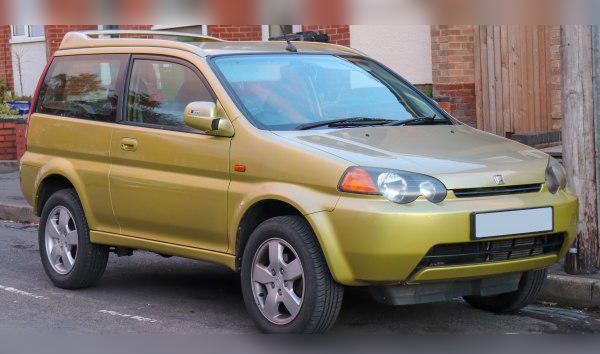
Honda 1.6 D16W1 / D16W2 (105 HP) – experiences, problems, fuel consumption and buying tips
Key points (TL;DR)
- Old school: This is a simple, naturally aspirated engine that is extremely reliable if regularly maintained. No turbo, no direct injection, no dual-mass flywheel.
- Timing belt: The engine uses a timing belt, not a chain. Replacement is crucial to avoid catastrophic failure.
- Mechanical valves: The engine has no hydraulic lifters. Mechanical valve adjustment is mandatory every 40,000 km (more often if you run LPG).
- Transmissions: The manual gearbox is excellent, while the CVT (automatic) in these model years is a risky purchase and requires specific maintenance.
- Performance: The engine likes high revs. At low revs it feels “sleepy”, and on the highway it is noisy due to short gearing.
- Corrosion and leaks: Pay attention to oil leaks at the crankshaft seal and distributor, as well as corrosion of the oil pan.
Contents
- Technical specifications
- Reliability and maintenance
- Specific parts (costs)
- Fuel consumption and performance
- Additional options and modifications (LPG & tuning)
- Gearbox (manual vs CVT)
- Used car buying guide and conclusion
Introduction and technical specifications
The Honda D16W1 and D16W2 are engines from Honda’s legendary D-series, known for durability and simplicity. These units were primarily used in the first generation of the Honda HR-V (the so‑called “Joy Machine”). Although they share their base with Civic engines, they were adapted for an SUV body with a focus on slightly better mid‑range torque, though they are still typical “Japanese” engines that like to rev.
The difference between the D16W1 and D16W2 is minimal and mostly related to markets and small changes in fuel maps to meet emission standards. For the end user, maintenance and behavior are identical.
| Specification | Data |
|---|---|
| Displacement | 1590 cc (1.6 liters) |
| Power | 77 kW (105 HP) at 6200 rpm |
| Torque | 135 Nm at 3400 rpm |
| Engine codes | D16W1, D16W2 |
| Configuration | Inline 4‑cylinder, SOHC (single camshaft), 16 valves |
| Injection type | MPI (Multipoint Indirect Injection) |
| Induction | Naturally aspirated (no turbo) |
| VTEC system | No (this 105 HP version usually has no VTEC, unlike the more powerful 124 HP version) |
Reliability and maintenance
This engine is considered a real “workhorse”. If it has oil and coolant, it will run almost forever, but there are specifics that European drivers used to German cars often overlook.
Timing belt or chain?
The D16W1/W2 uses a timing belt. This is not a chain‑driven engine. It is very important to respect replacement intervals because this is an interference engine – if the belt snaps, the pistons will hit the valves and cause severe damage (bent valves, damaged head). The major service is recommended every 100,000 km or 5 to 7 years, whichever comes first. When replacing the belt, the tensioner and water pump must also be replaced.
Most common failures
Although reliable, age takes its toll:
- Distributor: This is a weak point of older Hondas. Symptoms are hard starting, stalling while driving or rough running. Often the ignition coil inside the distributor or the igniter fails. Also, the O‑ring on the distributor often hardens and oil starts leaking down the engine.
- IACV (idle air control valve): The idle control valve gets dirty from oil vapors and soot. Symptoms are fluctuating idle (revving up and down) or stalling when you stop at a traffic light. Cleaning usually solves the problem.
- Main fuel pump relay: A known issue where, due to cold solder joints, the car won’t start when the cabin is hot (in summer).
- Oil leaks: Besides the distributor, oil often leaks from the valve cover gasket and the crankshaft seal (between engine and gearbox).
- Oil pan corrosion: The steel oil pans on these Hondas tend to rust from the outside until they start leaking.
Oil: capacity and consumption
The engine takes approximately 3.3 to 3.6 liters of oil (including the filter). The recommended grade is 5W‑30 or 5W‑40, although for high‑mileage engines in warmer climates (or in summer) 10W‑40 semi‑synthetic works perfectly fine.
Oil consumption: A healthy D16 should not consume significant amounts of oil. However, on engines with more than 200,000 km, valve stem seals often fail. The symptom is bluish smoke at first cold start in the morning or after idling for a longer time. Consumption up to 0.5 liters per 1000 km is often tolerated on older engines, but anything above that requires intervention (rings or valve stem seals).
Spark plugs and valves
Spark plugs should be replaced every 20,000 to 30,000 km if you use standard copper plugs (which are cheap and recommended). Iridium plugs last longer (up to 60,000 km), but are not necessary for this engine.
VERY IMPORTANT: This engine requires valve adjustment. It does not have self‑adjusting hydraulic lifters. Valve clearance should be checked and adjusted every 40,000 km. If you hear a “ticking” noise from the engine, the valves are probably out of adjustment. If they are too tight (quiet), that is even more dangerous because they can burn (especially exhaust valves).
Specific parts (costs)
- Dual‑mass flywheel: The D16W1/W2 DOES NOT have a dual‑mass flywheel. It uses a conventional solid flywheel, which significantly reduces clutch replacement costs. This is a big advantage for used‑car owners.
- Fuel injection system: It uses a classic multipoint system. The injectors are extremely durable and rarely cause problems. If they do, ultrasonic cleaning is usually enough. Used ones are not expensive either.
- Turbocharger: The engine HAS NO turbocharger. That means one worry less (no turbo rebuilds, intercooler issues, or boost hoses bursting).
- EGR and DPF: Being a petrol engine, it has no DPF filter. There is an EGR valve on some markets, but it rarely clogs. If it does, cleaning is straightforward. There is a catalytic converter, but of simple construction.
- AdBlue: This engine was designed before the AdBlue era, so it does not have it.
Fuel consumption and performance
Owners often expect low fuel consumption because it’s a 1.6, but you have to keep in mind the HR‑V’s aerodynamics (like a brick) and the often present 4WD system.
Real‑world fuel consumption
- City driving: Expect between 9 and 11 l/100 km. In winter or heavy traffic it can go up to 12 l/100 km.
- Open road (up to 90 km/h): This is where it’s most economical, using about 6.5 – 7.5 l/100 km.
- Highway (130 km/h): Due to poor aerodynamics and high revs, consumption jumps to around 8.5 – 9.5 l/100 km.
Is the engine “lazy”?
To be honest – it is somewhat lazy at low revs. The 135 Nm of torque is only available at 3400 rpm, and maximum power comes at a high 6200 rpm. In town it’s agile enough thanks to short gearing, but overtaking on country roads requires dropping a gear (often from 5th to 3rd) and full throttle. It’s not a sports car, but it gets the job done if you’re not afraid to rev it.
Highway driving
At 130 km/h in fifth gear, the engine spins at a fairly high 3800 to 4000 rpm (depending on tyre size and gearbox). This means the cabin is quite noisy. The engine doesn’t mind (Hondas love revs), but it can be tiring for passengers on long trips.
Additional options and modifications
LPG conversion
Is it suitable? Conditionally YES. Honda engines have somewhat more sensitive (softer) valve seats. If you install LPG, you must:
- Use a quality sequential system with a precise map.
- Install a valve lubrication system (“drip” or electronic Flashlube).
- Adjust valves more frequently: Check clearances every 20,000 km. If you neglect this, the valves will “sink” into the head, you’ll lose compression and face an expensive cylinder head rebuild.
Chiptuning (Stage 1)
On this naturally aspirated petrol engine, chiptuning is not worth it. The gain is negligible (maybe 3 to 5 HP), which you won’t feel in real driving. It’s better to invest in quality spark plugs, leads and clean filters – that will restore more of the factory power than any remap.
Gearbox
With the D16W1/W2 engines in the HR‑V you get two options:
1. Manual gearbox (5‑speed)
Recommended. Very precise, easy to shift and reliable. The most common failure (which occurs at high mileage) is the input shaft bearing. The symptom is a grinding or whining noise while in neutral that disappears when you press the clutch. Clutch kit replacement is not expensive (depends on the market, but it’s in the cheaper parts category).
The oil in the manual gearbox (Honda MTF) should be changed every 60,000 – 80,000 km.
2. Automatic gearbox (CVT)
Caution! Honda used early versions of its CVT gearboxes (Multimatic). They are fantastic to drive when healthy (smooth, keeping the engine in the ideal rev range), but are very sensitive.
Problems arise due to lack of maintenance or using the wrong oil. This gearbox requires ONLY Honda CVT (HMMF) fluid.
Failure symptoms: Shuddering when taking off from a standstill, slipping or fluctuating revs at constant speed. Repairs are expensive and often not cost‑effective compared to the value of the car.
All‑wheel drive (Real Time 4WD)
The system engages automatically when the front wheels slip. There is no electronics, it’s all hydraulic (Dual Pump System).
Maintenance: The oil in the rear differential (Honda DPS‑F) should be changed every 40,000 km. If you hear grinding or groaning from the rear when turning the steering wheel to full lock (tight U‑turns), it’s a sign that the oil is old and degraded. An urgent oil change (sometimes twice in a row to flush) usually solves the problem.
Used car buying guide and conclusion
Before buying a used car with this engine, pay attention to:
- Cold start: Watch the exhaust. Blue smoke = burning oil. White smoke after warming up = head gasket.
- Idle: Once warm, it should idle smoothly at around 750 rpm. If it “hunts” for revs, the IACV is dirty or there is an air leak.
- Service history: When were the valves last adjusted? When was the timing belt changed?
- Gearbox (if CVT): Test uphill take‑off without throttle. If the car shudders or won’t move, walk away.
- Rust: Wheel arches, sills and the underside are critical areas on HR‑V models.
Conclusion:
The Honda D16W1/W2 is an engine for people who want low running costs and reliability, and are willing to sacrifice performance and cabin quietness. It is ideal for city driving, suburbs and light off‑road (trips into nature). It is not a good choice for sales reps who spend hours on the motorway at 140 km/h. If you find a car with a manual gearbox and solid bodywork – buy it, it will serve you faithfully with minimal investment.
Was this content useful to you?
Your opinion helps us to improve the quality of the content.