LDA3 Engine
- Engine
- 1339 cm3
- Aspiration
- Naturally aspirated engine
- Fuel
- Petrol (Gasoline)
- Fuel injection system
- Multi-port manifold injection
- Power
- 88 hp @ 5800 rpm
- Torque
- 121 Nm @ 4500 rpm
- Cylinders
- 4
- Valves
- 8, 2 per cylinder
- Cylinders position
- Inline
- Valvetrain
- SOHC
- Oil capacity
- 3.2 l
- Coolant
- 4.55 l
# Vehicles powered by this engine
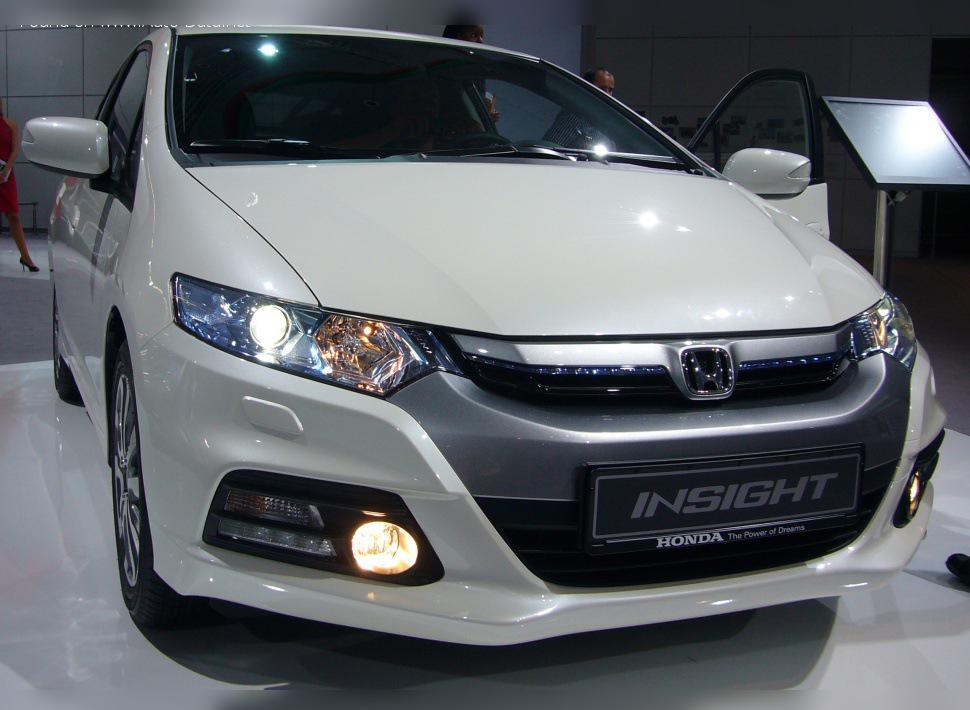
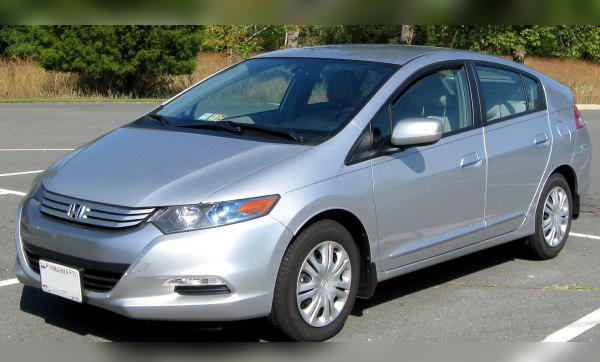
Honda LDA3 1.3 i-VTEC IMA Hybrid – Experiences, issues, fuel consumption and maintenance
Honda has always had its own unique engineering approach, and the LDA3 engine is the heart of their hybridization strategy that was meant to rival the Toyota Prius. It is a 1.3-liter petrol engine paired with Honda’s IMA (Integrated Motor Assist) system. Unlike some modern hybrids, this is a mild hybrid system where the electric motor assists the petrol engine, but rarely drives the car on its own.
This engine is primarily found in the second generation of the Honda Insight. If you are considering buying this car, it is crucial to understand that you are buying a technology package that requires specific, but not necessarily expensive, maintenance.
Key points in short (TL;DR)
- Timing chain: The engine uses a timing chain which is extremely durable and rarely needs replacement.
- 8 spark plugs: Although it is a four-cylinder, this engine uses 8 spark plugs (two per cylinder), which makes the major service more expensive.
- IMA battery: The biggest potential cost. Service life is around 10–15 years, after which capacity declines.
- CVT gearbox: Requires regular oil changes every 40,000–60,000 km. Neglect leads to costly failures.
- Low fuel consumption: Brilliant in the city, but on the open road at higher speeds it loses the hybrid advantage.
- Reliability: Mechanically (pistons, head, block) this is one of the most reliable engines on the market.
Contents
- Technical specifications
- Reliability and maintenance
- Specific parts and costs
- Fuel consumption and performance
- Additional options and modifications
- Gearbox (CVT)
- Used car buying guide and conclusion
Technical specifications
| Feature | Data |
|---|---|
| Engine displacement | 1339 ccm |
| Power (petrol engine) | 65 kW (88 hp) at 5800 rpm |
| Power (electric motor) | 10 kW (14 hp) – Assist system |
| Torque (petrol) | 121 Nm at 4500 rpm |
| Engine code | LDA3 |
| Injection type | Multipoint (indirect injection) |
| Aspiration | Naturally aspirated |
| Valvetrain | SOHC, i-VTEC (8 valves in economy mode, 16 in full power) |
Reliability and maintenance
Honda has built its reputation on indestructible petrol engines, and the LDA3 is no exception. The mechanical base of this engine is very robust. The key piece of information for owners is that this engine uses a timing chain, not a belt. The chain is designed to last as long as the engine itself and it rarely stretches before 250,000 or 300,000 km, provided the oil has been changed regularly.
Oil and service intervals
Hybrid engines are frequently switched on and off (start-stop system), which puts special stress on the oil. It is recommended to use low-viscosity oil, ideally 0W-20 (Honda’s recommended “Green Oil”), as it allows the easiest start and the least friction. In warmer climates or on high-mileage engines, 5W-30 can also be used. The engine takes approximately 3.6 liters of oil (with filter).
As for oil consumption, LDA3 engines are generally “dry” (they consume very little). However, due to the thin piston rings used to reduce friction, consumption of about 0.5 liters per 10,000 km is possible on examples with over 200,000 km, which is considered completely normal. If it uses a liter per 1,000 km, the most likely problem is stuck oil control rings.
Spark plugs and coils – A specific feature of this engine
This is where we come to the “trick question”. Although this is a small 1.3 engine, it uses 8 spark plugs (dual-spark system – i-DSI technology integrated with the i-VTEC system). Two spark plugs per cylinder provide more efficient combustion. This means that replacing the spark plugs is twice as expensive as on a regular car. Only iridium spark plugs (NGK or Denso) are used, and the replacement interval is usually at 100,000 km to 120,000 km. It often happens that careless mechanics replace only the front 4 plugs because the rear 4 are harder to reach, which leads to jerking while driving (a symptom similar to a failing ignition coil).
Specific parts and costs
Maintenance of hybrids scares many drivers, but with the second-generation Honda Insight the situation is not dramatic.
- Dual-mass flywheel: This model does not have a conventional dual-mass flywheel like the one found on diesels. Instead, between the engine and the CVT gearbox there is a torsional vibration damper (drive plate), which is significantly cheaper and fails less often.
- Turbocharger: The engine is naturally aspirated, it does not have a turbocharger, which is one less thing to worry about. No intercooler, no oil leaks from a turbo.
- Injectors: The injection system is a classic multipoint setup. The injectors are very reliable and rarely cause problems. They are not as sensitive as those in direct injection (GDI) or diesel engines.
- EGR valve: Yes, it has an EGR valve. Due to the way the hybrid operates and frequent exhaust gas recirculation to heat up the catalytic converter, EGR passages can clog with soot at around 150,000 km. Symptoms are hesitation under light throttle. Cleaning solves the problem and is not expensive (depends on the market).
- DPF and AdBlue: As a petrol engine, this unit does not have a DPF filter and does not use AdBlue. It has a catalytic converter which is durable, but can be a target for thieves due to the precious metals inside.
Hybrid battery (IMA)
This is the most expensive “consumable” part. The nickel-metal hydride (NiMH) batteries in the Insight usually last between 10 and 15 years. End-of-life symptoms are: the “IMA” warning light on the dashboard, the engine running constantly (it does not switch off at traffic lights) and lack of power during acceleration. Refurbishment (cell replacement) is possible and moderately priced (expensive, but cheaper than a new one), while a brand-new battery is very expensive (depends on the market).
Fuel consumption and performance
Is a 1.3 engine with 88 hp enough for the Insight’s body? In the city – absolutely yes. The electric motor adds the necessary torque when setting off, so the car feels livelier than the numbers on paper suggest. However, on the open road the situation is different.
Real-world fuel consumption:
- City driving: This is where the Honda shines. Expect between 5.0 and 6.0 l/100 km. If you are extremely gentle, it is possible to go below 5 liters. The start-stop system saves the most here.
- Motorway: Aerodynamics are excellent, but the engine has to run at higher revs. At 130 km/h, consumption rises to around 6.0 to 7.0 l/100 km. This is not dramatic, but modern diesels will use less in these conditions.
On the motorway, at 130 km/h, the engine spins at about 2500–3000 rpm (depending on the incline, as the CVT changes the ratio). Under full throttle the engine can become noisy due to the “vacuum cleaner effect” created by the CVT (revs jump up while speed increases linearly), which some drivers find annoying.
Additional options and modifications
LPG conversion:
Technically, since the engine has indirect injection, installing LPG is possible and relatively straightforward. HOWEVER, it is not recommended for two reasons:
1. The boot is already shallow because of the hybrid battery, so there is nowhere to put a toroidal tank (often there is no space for a spare wheel either).
2. The hybrid already uses very little fuel. The savings from LPG would only pay off after a huge mileage, and you risk overheating the valves because Honda uses mechanical valve clearance adjustment, which would have to be done much more frequently on LPG.
Remapping (Stage 1):
On naturally aspirated engines without a turbo, remapping is a waste of money. The gain would be maybe 3–5 hp, which you will not feel. The factory map is already optimized for maximum efficiency in cooperation with the hybrid system.
Gearbox (CVT)
This engine in the Insight comes exclusively with a CVT automatic gearbox. A manual gearbox was not an option.
CVT reliability:
Honda’s CVT gearboxes are generally more reliable than Nissan’s (Jatco), but they require strict discipline. The most common failures are caused by old oil. Symptoms of problems are shuddering when setting off (so-called “start clutch judder”) or slipping during acceleration.
Gearbox maintenance:
The oil in the gearbox should be changed every 40,000 km (severe conditions, city driving) and at most every 60,000 km. Always use genuine Honda oil (CVTF or HMMF), as these gearboxes are extremely sensitive to universal fluids. The cost of replacement is not high (about 4 liters of oil), and it is crucial for longevity.
There is no clutch replacement as with a manual gearbox, but there is a “start clutch” inside the gearbox that can wear out if the car is driven aggressively, and refurbishment is expensive (depends on the market).
Used car buying guide and conclusion
If you are looking at a Honda Insight with the LDA3 engine, here is a short checklist:
- Battery test: Drive the car. Charge the battery by braking (regeneration), then accelerate hard. If the battery charge gauge drops suddenly from full to empty, the battery is near the end of its life.
- CVT test: Start gently uphill without using the throttle (the car should not roll back or jerk) and then accelerate smoothly. There should be no “shuddering”.
- Start-stop: When the engine is warm, it should switch off when you stop at a traffic light (provided the A/C is not set to maximum). If it does not switch off, the 12V auxiliary battery may be weak or the IMA system may have a fault.
- Chain noise: Listen to a cold start. Rattling for the first 2–3 seconds is acceptable, but constant rattling means a problem with the chain or tensioner.
Conclusion:
The LDA3 engine is an engineering gem for those who want cheap transport from point A to point B, primarily in urban environments. It is not a racer, the gearbox takes some getting used to in terms of sound, but reliability is top-notch. It is an ideal purchase for taxi drivers, couriers or small families who want to cut fuel costs without the complications that come with modern diesels (DPF, dual-mass flywheel, injectors). Just make sure to check the condition of the hybrid battery before buying.
Was this content useful to you?
Your opinion helps us to improve the quality of the content.