J32A2 Engine
- Engine
- 3210 cm3
- Aspiration
- Naturally aspirated engine
- Fuel
- Petrol (Gasoline)
- Fuel injection system
- Multi-port manifold injection
- Power
- 260 hp @ 6100 rpm
- Torque
- 294 Nm @ 4500 rpm
- Cylinders
- 6
- Valves
- 24, 4 per cylinder
- Cylinders position
- V-engine
- Valvetrain
- SOHC
- Oil capacity
- 4.4 l
# Vehicles powered by this engine
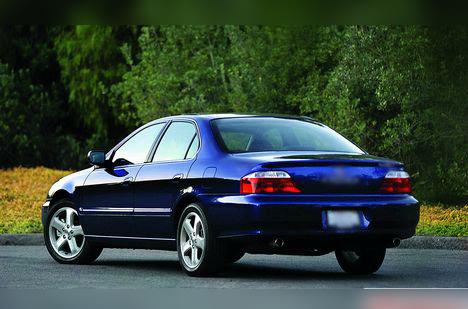
Honda J32A2 (3.2 VTEC): Experiences, issues, fuel consumption and maintenance
Key points in short (TL;DR)
- Outstanding performance: With 260 hp and the legendary VTEC sound, this is one of Honda’s best V6 engines from that era.
- Timing belt: The engine uses a timing belt, not a chain. Replacement is critical and not cheap (it includes the water pump).
- Automatic transmission is the weak point: While the engine is “bulletproof”, the 5-speed automatic is known for overheating and failures if not maintained meticulously.
- Fuel consumption: In the city it’s quite thirsty (expect double-digit numbers), but on the highway it’s surprisingly economical.
- VTEC solenoid and oil leaks: Pay attention to the gaskets around the VTEC solenoid and valve covers; these are standard leak points.
- EGR passages: They often get clogged with carbon, which leads to rough running and a “Check Engine” light.
- Conclusion: A fantastic engine for enthusiasts who want sound and power, but it requires an owner who won’t skimp on transmission maintenance.
Contents
Introduction and applications
The J32A2 engine belongs to Honda’s famous J-series V6 family and represents a true piece of engineering art from the early 2000s. Unlike the standard J32A1, the A2 version is a high-performance variant (often badged as Type-S in the US or used in Inspire/Saber models in Japan). Its main trump card is the two-stage intake and a more aggressive cam profile on the VTEC system, which allows it to rev high and deliver power linearly, with a sound many compare to a racing engine.
This engine was primarily installed in the Honda Inspire III (UA5) and its American siblings (Acura TL/CL Type-S). Although the sedan it powers is heavy and luxurious, the J32A2 gives it a sporty character that few would expect in that class.
Technical specifications
| Specification | Data |
|---|---|
| Engine code | J32A2 |
| Displacement | 3210 cc (3.2 L) |
| Configuration | V6, SOHC VTEC, 24 valves |
| Power | 191 kW (260 hp) at 6100 rpm |
| Torque | 294 Nm at 3500–5500 rpm |
| Injection type | PGM-FI (Multi-Point Indirect Injection) |
| Aspiration | Naturally aspirated |
| Compression ratio | 10.5:1 |
Reliability and maintenance
Timing system: belt or chain?
The Honda J32A2 uses a timing belt for the valvetrain. This is very important to know because the engine is an interference design – if the belt snaps, the pistons will hit the valves and cause catastrophic damage.
The major service is recommended every 100,000 to 120,000 km or every 7 years, whichever comes first. When replacing the belt, the hydraulic tensioner (which can fail even before the interval) and the water pump must also be replaced, as the pump is driven by the timing system. The cost of this service falls into the “expensive” category (depends on the market), but it is unavoidable.
Oil and consumption
This engine takes about 4.3 to 4.6 liters of oil (with filter). The most commonly recommended grade is 5W-30 (or 5W-20 for some markets, but given the age and mileage, 5W-30 or 5W-40 are a better choice for protection).
Does it burn oil? Yes, the J32A2 tends to “drink” a bit of oil, especially if driven in VTEC mode (above 4800 rpm). Consumption of about 0.5 liters per 3,000–5,000 km can be considered acceptable for an older engine. However, it’s often not about burning but leaking. The most common leak points are the valve cover gaskets and the VTEC solenoid gasket.
Spark plugs and coils
The engine uses 6 spark plugs, and only iridium or platinum plugs (NGK or Denso) are recommended. The replacement interval for such plugs is around 100,000 km. Since the rear three plugs are harder to access (they’re up against the firewall), mechanics often charge a bit more for labor. The coils are generally reliable but can fail individually at higher mileages.
Most common issues
Besides oil leaks, issue number one with J-series engines is the EGR valve and intake passages. The passages in the intake manifold get clogged with carbon, which leads to rough idle and jerking under light throttle. Cleaning solves the problem. Also, the engine mounts (especially the front and side ones) are hydraulic and often fail due to the high torque, which you feel as a strong thump when shifting the transmission from P to D or R.
Specific parts (costs)
Injection system and injectors
The system is a classic multi-point setup (PGM-FI). The injectors are extremely reliable and rarely cause problems. They are not as sensitive as on modern direct-injection engines. If an issue does occur, it’s usually due to poor fuel quality or dirt, and ultrasonic cleaning typically solves it cheaply.
Turbo, DPF, EGR, AdBlue?
Good news for your wallet:
- Turbo: None. This is a pure naturally aspirated engine.
- DPF: None (this is a petrol engine).
- AdBlue: None.
- Dual-mass flywheel: Since most of these engines are paired with an automatic transmission, they don’t have a conventional dual-mass flywheel but use a torque converter and a flexplate instead. If you come across a rare manual conversion (CL Type-S gearbox), it may have a dual-mass flywheel, but that’s an exotic setup.
Fuel consumption and performance
Is the engine “lazy”?
Absolutely not. With 260 hp and almost 300 Nm, this engine turns a heavy sedan (such as the Inspire) into a serious machine. Throttle response is instant. Up to 4000 rpm it’s smooth and refined, and when the VTEC cam on the intake kicks in, the engine changes its sound and pulls aggressively to the redline (around 6800–7000 rpm). There is more than enough power for overtaking at any speed.
Real-world fuel consumption
- City driving: Expect around 13 to 16 l/100 km. In heavy traffic and winter conditions, it can go even higher. The large displacement and older-style automatic take their toll.
- Open road (up to 100 km/h): This is where the engine shines and can get down to about 8–9 l/100 km.
- Highway (130 km/h): It cruises relaxed, usually below 3000 rpm (depending on the gearbox, the 5-speed automatic keeps revs low). Consumption is around 9–10 l/100 km.
Additional options and modifications
LPG conversion
The engine is suitable for LPG, but with one major caveat: valve adjustment. The J32A2 does not have hydraulic lifters; valve clearance is adjusted mechanically (screw and locknut). LPG burns at a higher temperature, which can lead to valve seat recession if clearances are not checked regularly. It’s recommended to check valve clearances every 30,000–40,000 km if you run LPG. You also need a quality sequential LPG system that can keep up with the engine’s power and VTEC operation.
ECU remap (Stage 1)
On naturally aspirated engines, remapping (chip tuning) does not bring dramatic gains as it does on turbo engines. You can realistically expect an increase of about 10–15 hp and slightly better throttle response, but don’t expect miracles. Bigger gains come from installing a quality intake (cold air intake) and aftermarket exhaust headers, which “free up” the engine to breathe more easily at high rpm.
Transmission: manual and automatic
In the Honda Inspire III, the J32A2 was offered exclusively with an automatic transmission (usually a 5-speed with SportShift option).
Automatic transmission issues
This is the Achilles’ heel of this drivetrain. Honda’s 5-speed automatics from that period (late 90s, early 2000s) are known for failures.
- Symptoms: Slipping between 2nd and 3rd gear, harsh shifts, delay when engaging “D” or “R”, overheating.
- Cause: A design flaw in the lubrication of certain clutch packs (especially 2nd and 3rd gear) and an internal filter that clogs and cannot be replaced without disassembling the transmission.
- Maintenance: The transmission fluid should be changed more often than the factory interval – ideally every 30,000 km. Use only genuine Honda ATF-Z1 or the newer DW-1 fluid. Many owners install an additional transmission oil cooler to extend its lifespan.
Manual gearbox (6-speed): Although it was not fitted to the Inspire, the J32A2 engine was offered in the US (Acura CL Type-S) with a 6-speed manual transmission. That gearbox is fantastic, precise and reliable, but extremely rare. If you’re doing a conversion (swap), keep in mind that it is an expensive project.
Buying used and conclusion
When buying a car with a J32A2 engine, focus on the following:
- Test the transmission: This is the most expensive component. The gearbox must shift smoothly, both when cold and hot. Any hesitation or slipping is a red flag.
- When was the major service done? If there is no proof of timing belt replacement, immediately factor that cost (very expensive) into the car’s price.
- Engine sound: The engine should run smoothly. A slight ticking when cold can indicate that valve adjustment is needed (which is regular maintenance), but loud metallic noises are a bad sign.
- EGR system: If the car idles unevenly, the EGR passages are likely clogged.
Conclusion
The Honda J32A2 is a gem of an engine trapped in the body of a family sedan. It offers a fantastic blend of refinement, sound and raw power. The core mechanicals (block and head) are extremely reliable, but it requires careful maintenance of the ancillary components and, above all, gentle treatment and regular servicing of the automatic transmission. It is aimed at enthusiasts who want the JDM feel and the sound of a V6 VTEC, and who are willing to accept somewhat higher fuel consumption and preventive maintenance costs.
Was this content useful to you?
Your opinion helps us to improve the quality of the content.