B18B1 Engine
- Engine
- 1834 cm3
- Aspiration
- Naturally aspirated engine
- Fuel
- Petrol (Gasoline)
- Fuel injection system
- Multi-port manifold injection
- Power
- 142 hp @ 6300 rpm
- Torque
- 172 Nm @ 5200 rpm
- Cylinders
- 4
- Valves
- 16, 4 per cylinder
- Cylinders position
- Inline
- Valvetrain
- DOHC
- Oil capacity
- 3.8 l
- Coolant
- 4.7 l
# Vehicles powered by this engine
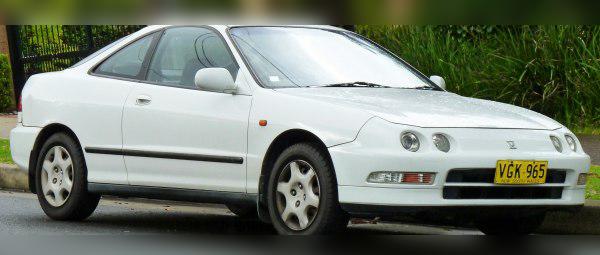
Honda B18B1 (1.8i) – Experiences, problems, fuel consumption and buying used
Key points in short (TL;DR)
- “Old school” reliability: This is one of the most durable engines Honda has ever made. If properly maintained, it can easily exceed 400,000+ km without being opened.
- No VTEC system: Unlike its more famous brother B18C, this engine has no VTEC. That means more linear power delivery, but less excitement at high revs.
- Maintenance is cheap: No dual-mass flywheel, no turbo, no complicated electronics. Parts are available and affordable.
- Achilles’ heel – Distributor: The most common reason this engine dies is failure of the ignition module inside the distributor.
- Timing belt: This engine does not use a chain. A snapped belt will cause serious engine damage, so regular replacement is essential.
- Oil consumption: On older units, oil leaks from gaskets are more common than actual oil burning inside the cylinders.
- Recommendation: An ideal engine for those who want a classic Japanese coupé (Integra DC2) as a daily driver, not a track-only car.
Contents
Introduction: What kind of engine is this?
The B18B1 engine belongs to Honda’s legendary B-series, which in the 1990s defined the idea of a sporty compact. Although it was installed in the third-generation Honda Integra (DC2), this engine often remains in the shadow of the more powerful VTEC versions (such as the Type R models). However, that’s not really fair.
The B18B1 is the “workhorse” of this series. It’s a DOHC (dual overhead cam) engine without a VTEC system, designed to offer more torque at lower revs than typical Honda engines of that era. It wasn’t built to rev to 8,500 rpm, but to be a reliable partner in everyday driving, offering an excellent balance between performance and longevity. For many enthusiasts, it’s a perfect base for a daily driver or, with modifications, a serious turbo project.
Technical specifications
| Specification | Value |
|---|---|
| Engine displacement | 1834 cc (1.8 L) |
| Power | 106 kW (142 hp) @ 6300 rpm |
| Torque | 172 Nm @ 5200 rpm |
| Engine code | B18B1 |
| Configuration | Inline 4-cylinder, DOHC, 16 valves |
| Injection type | PGM-FI (Multi-point injection) |
| Aspiration | Naturally aspirated |
Reliability and maintenance
Timing belt or chain?
The B18B1 engine uses a timing belt. This is a critical maintenance point because it’s an interference engine – which means that if the belt snaps, the pistons will hit the valves and cause catastrophic damage.
Major service (replacement of belt, tensioner and water pump) is recommended every 100,000 km or every 5 to 7 years, whichever comes first. Don’t take risks with cheap parts; use quality kits (e.g. Gates, Continental, OEM Honda).
Most common failures
Although the engine is extremely reliable, time takes its toll. Here’s what most often causes problems:
- Distributor: This is the weakest point. The ignition module (ignitor) or the coil inside it often fail. The symptom is that the engine cranks but won’t start, or it stalls while driving once it gets hot.
- Oil leaks: The most common leak is from the valve cover gasket (cam seals at the ends of the camshafts; although there is no VTEC solenoid, there are plugs at the end of the cam). The crankshaft seal can also start leaking with age.
- Main relay: Not a failure of the engine itself, but related to its operation. The solder joints in the fuel pump relay crack with age. Symptom: The car won’t start when the cabin is hot (in summer), but starts once it cools down.
- Thermostat and radiator: Plastic parts of the radiator become brittle and crack. Overheating is deadly for this engine’s aluminum head.
Oil and spark plugs
This engine takes approximately 3.8 to 4.0 liters of oil (with filter). The recommended viscosity is 5W-30 or 10W-40 (more commonly used in Europe for older engines).
As for oil consumption, these engines are known to stay “dry” as long as the seals are in good condition. However, on units with more than 200,000 km, consumption of up to 0.5 liters per 1,000 km can be tolerated, often due to worn valve stem seals or piston rings if the engine has been driven aggressively (bounced off the rev limiter).
Spark plugs are standard (NGK or Denso are a must for Honda). They are replaced every 20,000–30,000 km if copper, or up to 100,000 km if you use iridium plugs.
Specific parts and costs
Dual-mass flywheel: Fortunately, this engine does not have a dual-mass flywheel. It uses a classic solid flywheel that is practically indestructible. Clutch kit replacement costs are therefore low (not expensive).
Fuel injection system: It uses Honda’s proven PGM-FI system. Injectors are extremely durable and rarely cause problems. If an issue does appear, it’s usually dirt build-up that can be solved with ultrasonic cleaning rather than replacement.
Turbo and emissions systems:
The engine does not have a turbocharger. It’s a classic naturally aspirated petrol engine.
Also, as an older-generation engine, it has no DPF filter, no AdBlue system, and the EGR valve (if fitted on versions for certain markets) is a simple mechanical unit that is easy to clean if it clogs (symptoms are rough idle). Maintenance of emissions-related systems is minimal here.
Fuel consumption and performance
Real-world fuel consumption
Don’t expect miracles from a 1.8-liter engine from the 1990s.
- City driving: Expect between 9 and 11 l/100 km. In winter or heavy traffic it can go up to 12 liters.
- Highway / open road: Here it’s more economical, around 6.5 to 7.5 l/100 km with moderate driving.
Performance and “sluggishness”
Is the engine sluggish? No. The Honda Integra (DC2) is a relatively light car (around 1100–1200 kg). With 142 hp and, more importantly, 172 Nm of torque, the B18B1 offers perfectly decent performance.
In fact, in city driving (up to 4000 rpm), this engine feels more “alive” and flexible than smaller 1.6 VTEC engines because of its larger displacement. It doesn’t have that explosive high-rpm “kick” like the Type R, but it’s more than adequate for overtaking.
Behavior on the motorway
This is perhaps its biggest drawback by modern standards. The gearbox is geared quite short. At a speed of 130 km/h in fifth gear, the engine spins at around 3,500 to 4,000 rpm (depending on the gearbox). This means noticeable engine noise in the cabin. It’s not unbearable, but it’s not a quiet cruiser either.
Additional options and modifications
LPG (autogas)
Yes, this engine is suitable for LPG conversion. The intake manifold is metal and the electronics are simple. However, Honda engines use mechanical valve adjustment (no hydraulic lifters).
Important warning: If you run it on LPG, you must check valve clearances more often (every 20,000–30,000 km), because LPG can cause valves to “sink” into the valve seats faster. With regular adjustment and, optionally, a valve lubrication system (“valve saver” drip), the engine runs well on LPG.
Remapping (Stage 1)
On a naturally aspirated petrol engine without a turbo, Stage 1 remapping is a waste of money. You might gain 3–5 hp, which is barely noticeable.
However, in the tuning world the B18B1 is known as a perfect base for a turbo conversion. Its pistons and rods are robust, and the lower compression ratio makes it ideal for forced induction, where 250+ hp can be achieved without opening the engine.
Gearbox
Types of gearboxes
The following are most commonly paired with this engine:
- 5-speed manual (S80/Y80): Hydraulic clutch. Precise, with short throws, that typical “Honda feel”.
- 4-speed automatic: Older design with a torque converter.
Failures and maintenance
Manual gearbox: Very durable. The most common issue on older cars is grinding when shifting into third gear at high revs (worn synchro). The oil in the manual gearbox should be changed every 40,000–60,000 km. You should use only Honda MTF (Manual Transmission Fluid) or, in an emergency, 10W-40 engine oil (according to older specs), but MTF is recommended.
Automatic gearbox: Reliable if the oil is changed regularly (every 60,000 km), but it kills the engine’s performance and increases fuel consumption. It’s not as expensive to repair as modern DSG gearboxes, but parts are becoming harder to find.
As mentioned, there is no dual-mass flywheel, so replacing the clutch kit is a relatively affordable job (depends on the market, but it falls into the cheaper category).
Buying used and conclusion
When buying an Integra with the B18B1 engine, pay attention to:
- Cold start: Does the oil warning light go out immediately? Is there any blue smoke from the exhaust (sign of oil consumption)?
- Checking for leaks: Inspect the engine from underneath and around the distributor area.
- Idle speed: Once warm, idle should be stable (around 750 rpm). If it fluctuates up and down (“hunting idle”), the problem is probably the IACV (idle air control valve) or an intake air leak.
- Service history: When was the timing belt last replaced? This is the most important question.
Conclusion:
The Honda B18B1 is an engine for drivers who value simplicity and mechanical reliability over outright power. It doesn’t have the prestige of the VTEC models, but it is much cheaper to own, tolerates high mileage and provides enough fun in the Integra’s light body. If you find a car that isn’t rotten with rust and whose engine runs smoothly – buy it. Engines like this are no longer being made.
Was this content useful to you?
Your opinion helps us to improve the quality of the content.