B18C Engine
- Engine
- 1797 cm3
- Aspiration
- Naturally aspirated engine
- Fuel
- Petrol (Gasoline)
- Fuel injection system
- Multi-port manifold injection
- Power
- 180 hp @ 7600 rpm
- Torque
- 175 Nm @ 6200 rpm
- Cylinders
- 4
- Valves
- 16, 4 per cylinder
- Cylinders position
- Inline
- Valvetrain
- DOHC
- Oil capacity
- 4 l
- Coolant
- 4.7 l
# Vehicles powered by this engine
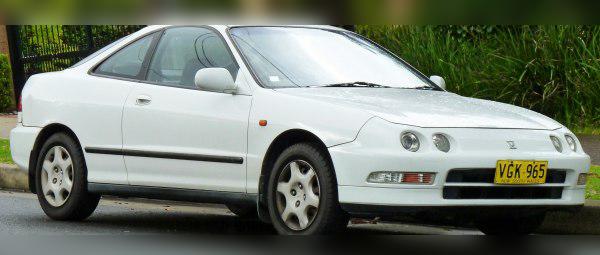
Honda B18C (Integra DC2) – experiences, problems, fuel consumption and used-buying tips
Key points (TL;DR)
- Legendary reliability: If maintained properly, this engine easily goes over 300,000+ km with regular “abuse” at high RPM.
- Oil consumption: This is not a fault, it’s a characteristic. In VTEC mode (above 5,500 rpm) the engine “drinks” oil. Regular level checks are a must.
- Timing belt: The engine uses a timing belt whose failure leads to catastrophic damage (interference engine). Don’t play games with replacement intervals.
- Distributor: The Achilles’ heel of older Hondas. If the car cranks but won’t start, it’s probably the distributor or the igniter inside it.
- Performance: The engine really “wakes up” only above 5,000 rpm. Below that it’s a tame city car, above that a race machine.
- Valve adjustment: No hydraulic lifters. Valves must be adjusted manually every 40,000 km.
Contents
- Technical specifications
- Reliability and maintenance
- Specific parts and costs
- Fuel consumption and performance
- Additional options and modifications
- Gearbox and drivetrain
- Buying used and conclusion
The B18C engine (especially the 180 hp black valve cover version found in JDM Integra Si-VTEC models, or related Type R units) is the holy grail of Honda’s 1990s engineering. This is the powerplant that defined a generation and set the standard for naturally aspirated engines.
It was primarily installed in the Honda Integra III (DC2). Its main feature is the VTEC system, which changes the camshaft profile at high RPM, allowing the engine to behave civilized in the city and brutal on the track. Although it may seem archaic today compared to modern turbo engines, the throttle response and sound of the B18C are still unmatched.
Technical specifications
| Parameter | Value |
|---|---|
| Displacement | 1797 cc (1.8 L) |
| Power | 132 kW (180 hp) @ 7600 rpm |
| Torque | 175 Nm @ 6200 rpm |
| Engine code | B18C (JDM), B18C4/C6 (Euro variations) |
| Injection type | PGM-FI (Multipoint injection) |
| Aspiration | Naturally aspirated with VTEC |
| Valvetrain | 16v, DOHC (dual overhead cam) |
Reliability and maintenance
Timing belt or chain?
This engine uses a timing belt. This is a critical maintenance item. The B18C is an interference engine, which means that if the belt snaps, the pistons will hit the valves and cause catastrophic damage (bent valves, damaged cylinder head). The recommended replacement interval is usually around 100,000 km or 5 years, whichever comes first. The tensioner and water pump must always be replaced together with the belt.
Most common failures
Although extremely reliable, age takes its toll:
- Distributor: The most common issue on B-series engines. The bearing in the distributor can seize, or the electronics (igniter/coil inside the distributor) can fail due to heat. Symptoms include stalling while driving or a no-start condition.
- Oil leaks: Most often from the VTEC solenoid (hardened gasket), camshaft seal (near the distributor) and oil pan gasket.
- LMA (Lost Motion Assembly) springs: On older models, the springs that hold the VTEC rocker when it’s not engaged can weaken, causing a characteristic “clicking” noise from the cylinder head.
- Radiator cracking: The plastic top tank of the radiator often cracks with age and repeated heat cycles.
Major service
As mentioned, the major service is done every 100,000 km or 5 years. Given that these are now old cars, if you don’t have written service history, do a full major service immediately after purchase.
Oil: capacity, grade and consumption
The engine takes approximately 4.0 liters of oil (with filter). Honda originally recommended 5W-30 or 10W-30, but considering the age and often aggressive driving, most owners and experienced mechanics recommend a quality fully synthetic 5W-40 or 10W-40 (especially in summer). 10W-60 is used only for track-only cars.
Does it burn oil? YES. This is a high-revving engine. Consumption of 0.5L to 1L per 1,000 km under aggressive VTEC driving is not unusual, and Honda considered this acceptable in their manuals for Type R models. In normal city driving, consumption should be minimal. If it blows blue smoke at idle or during engine braking, the valve stem seals are worn. If it smokes at full throttle in VTEC, it’s usually the oil control rings.
Spark plugs
For standard copper plugs, replacement is every 20,000 - 30,000 km. If you use Iridium or Platinum plugs (e.g. NGK BKR7EIX for more spirited driving), they can last up to 60,000 - 80,000 km. NGK or Denso are always recommended.
Specific parts (costs)
Dual-mass flywheel
Fortunately, B18C engines DO NOT have a dual-mass flywheel. They use a conventional solid flywheel. This significantly reduces clutch replacement costs. Installing a lighter solid flywheel is even recommended for quicker throttle response.
Fuel injection system
The system is Honda’s PGM-FI (port injection). The injectors are extremely durable and rarely cause problems. There are no complex high-pressure pumps like on modern direct injection systems. Ultrasonic injector cleaning after 20 years is not a bad idea, but failures are rare.
Turbo, DPF, EGR, AdBlue
- Turbo: None. This is a pure naturally aspirated engine. Its long lifespan is largely due to the absence of turbo-related thermal stress.
- DPF: None.
- AdBlue: None.
- EGR valve: Most performance-oriented B18C engines (such as Type R or Si-VTEC) do not have an EGR valve because it would hurt performance. That’s one less thing to worry about. If some specific “Swiss” version does have one, it rarely clogs because these engines are driven at high RPM where soot gets burned off.
Fuel consumption and performance
Real-world fuel consumption
The B18C has a dual personality:
- City driving (normal): 10 - 12 l/100km. If you keep it below the VTEC point (below 4,500 rpm), it consumes like an ordinary 1.8 petrol.
- City driving (aggressive): 13 - 16 l/100km.
- Highway / open road: 7 - 8 l/100km (at 90-100 km/h).
Is the engine “lazy”?
It depends on what you expect. The engine has only 175 Nm of torque, which is low by modern diesel standards. Below 4,000 rpm, the engine can feel “flat” and requires a lower gear for sudden overtakes. However, the Integra DC2 is a light car (around 1,100 kg), so the engine is not underpowered, but to feel the full 180 hp, you must rev it above 5,500 rpm. That’s not a flaw, that’s the design philosophy.
Highway driving
This is perhaps its biggest drawback in terms of comfort. Due to the short gearbox ratios (for better acceleration), at 130 km/h the engine spins at a fairly high 4,000 to 4,200 rpm (in fifth gear). This means the cabin is noisy on longer trips. The engine doesn’t mind – it’s built to rev – but it can be tiring for passengers.
Additional options and modifications
LPG conversion
Technically, it’s possible to install a sequential LPG system. Should you do it? Absolutely NOT. This is a high-performance engine with relatively “soft” valve seats. Running LPG at high RPM significantly increases combustion temperatures and you risk damaging the cylinder head (receding valves). If you absolutely must, a valve lubrication system is mandatory, but that defeats the whole point of owning an Integra with this engine.
ECU remap (Stage 1)
On naturally aspirated engines, a typical “Stage 1” (software only) brings very little, almost imperceptible improvement (maybe 5-8 hp). Much more important are changes to the VTEC crossover point and rev limiter, but that only makes sense if you’ve already installed a better intake and a full exhaust system (header, piping, muffler). Real gains come only with mechanical modifications.
Gearbox
Gearbox types
With this engine (180 hp version) you almost exclusively get a 5-speed manual gearbox. The best-known codes are S80 (often with a Torsen limited-slip differential – LSD) or Y80. There were automatic versions in some JDM models (Integra SiR-G), but they choke this engine’s potential and are rare in Europe.
Most common gearbox issues
- Synchros: Due to the nature of driving (fast shifting at 8,000+ rpm), 2nd and 3rd gear synchros are often worn. The symptom is grinding when shifting quickly into gear.
- Bearings: A whining noise that disappears when you press the clutch pedal points to the input shaft bearing.
Gearbox service and clutch
Gearbox oil should be changed every 40,000 - 60,000 km. Only Honda MTF-3 (Manual Transmission Fluid) is recommended. Do not use generic 75W-90 gear oil, as it can damage the synchros and make shifting harder when cold.
The cost of clutch replacement is moderate to mid-range (depending on the market), since there is no dual-mass flywheel. A quality clutch kit (Exedy or OEM Honda) is priced similarly to standard cars in this class.
Buying used and conclusion
When buying an Integra with a B18C engine, pay attention to the following:
- Exhaust smoke: Have someone drive behind you during the test drive. Under sudden full throttle and when VTEC engages, a bit of black smoke is OK (rich mixture). Blue smoke means the engine is burning a lot of oil (rings or valve stem seals) – this is an expensive repair (partial rebuild).
- Idle: The engine should idle smoothly. Rough idle can indicate poorly adjusted valves or an issue with the IACV (Idle Air Control Valve).
- Gearbox: Try fast shifts from 1st to 2nd and 2nd to 3rd at high RPM. It should not grind.
- Rust: Although not engine-related, the DC2 Integra body is prone to rust on the rear arches.
Conclusion: The B18C is an enthusiast’s engine. It’s not for someone who just wants to “fill up and drive” without ever opening the hood. It demands attention, good oil and regular fluid checks. In return, it offers one of the best driving experiences in automotive history. If you find a good example, buy it – their value is only going up.
Was this content useful to you?
Your opinion helps us to improve the quality of the content.