R18Z6 Engine
- Engine
- 1798 cm3
- Aspiration
- Naturally aspirated engine
- Fuel
- Petrol (Gasoline)
- Power
- 141 hp @ 6500 rpm
- Torque
- 174 Nm @ 4300 rpm
- Cylinders
- 4
- Valves
- 16, 4 per cylinder
- Cylinders position
- Inline
- Valvetrain
- SOHC, i-VTEC
# Vehicles powered by this engine
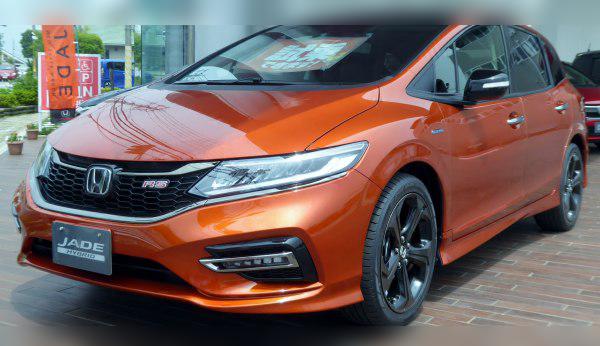
Honda R18Z6 (1.8 i-VTEC) Experiences, Problems, Fuel Consumption and Used Car Buying Guide
Key points (TL;DR)
- Reliability: This is one of the most reliable petrol engines of the modern era. Extremely robust and simple.
- Timing drive: Uses a chain instead of a belt, designed to last as long as the engine.
- Performance: Naturally aspirated engine that loves high revs. It doesn’t give that “kick in the back” like turbo engines, so it can feel lazy when overtaking if you don’t rev it.
- LPG (Autogas): An ideal candidate for LPG conversion thanks to indirect injection, but requires regular valve clearance checks.
- Gearbox: In the Honda Jade it usually comes with a CVT gearbox that requires regular oil changes.
- Maintenance: Routine maintenance costs are reasonable, but genuine Honda parts can be more expensive (depends on the market).
- Recommendation: An excellent choice for drivers who value relaxed driving and want to avoid expensive failures of turbochargers, dual-mass flywheels and DPFs.
Contents
- Introduction and models
- Technical specifications
- Reliability and maintenance
- Specific parts and costs
- Fuel consumption and performance
- Additional options and LPG
- Gearbox
- Buying used and conclusion
Introduction
The engine designated R18Z6 belongs to Honda’s renowned R-series, which replaced the legendary D-series. This is an “old-school” engine in the best possible sense of the word. In an era when all manufacturers were switching to small turbo engines (downsizing), Honda kept the naturally aspirated philosophy with this 1.8-litre unit, but combined it with advanced i-VTEC technology.
In practice, the R18Z6 variant is most commonly found in the Honda Jade (especially after the 2017 facelift). Its main purpose is not sporty driving, but efficiency, longevity and reduced internal friction. For a used-car buyer, this is a “gold mine” because it offers modern emissions compliance without complicated systems that tend to fail.
Technical specifications
| Parameter | Data |
|---|---|
| Engine code | R18Z6 |
| Displacement | 1798 cc (1.8 L) |
| Power | 104 kW (141 hp) at 6500 rpm |
| Torque | 174 Nm at 4300 rpm |
| Configuration | Inline 4-cylinder, SOHC (single camshaft), 16 valves |
| Fuel injection system | PGM-FI (multi-point indirect injection) |
| Induction | Naturally aspirated – no turbo |
| Timing drive | Chain |
Reliability and maintenance
Timing system
This engine uses a timing chain (silent chain) for valve timing, not a timing belt. On the R-series engines the chain is extremely durable and, on properly maintained examples, it’s not uncommon for it to last over 300,000 km without replacement. There is no scheduled replacement interval; it’s only replaced if it becomes noisy (rattling on cold start) or if it stretches, which will trigger the “Check Engine” light. This is a major saving compared to belt-driven engines.
Most common issues
Although the engine is “bulletproof”, there are a few minor things to watch out for:
- Auxiliary belt tensioner (idler pulley): It often starts to whine or develop play. The symptom is an unpleasant squealing or whining noise from the engine bay. It’s not an expensive repair.
- Engine mounts: Hydraulic engine mounts can wear out over time, resulting in increased vibrations in the cabin, especially when the car is stationary with the gearbox in “D”.
- Valve adjustment: This is not a failure, but a requirement. The engine does not have hydraulic lifters. Valve clearance must be checked and adjusted mechanically every 40,000 to 100,000 km (more often if running on LPG). If this is neglected, the valves can burn.
Service intervals and oil
There is no “major service” in the classic sense (timing belt replacement) here. However, the auxiliary drive service (alternator/AC belt, tensioners and water pump) is usually done at around 100,000–120,000 km or as needed.
The engine takes approximately 3.7 to 4.0 litres of oil (with filter). Honda recommends low-viscosity oils for this engine to improve fuel economy, most commonly 0W-20 or 5W-30. Fully synthetic oil is recommended.
Oil consumption and spark plugs
R18Z6 engines are known for not consuming oil to any significant degree. Consumption of up to 0.5 litres per 10,000 km is considered acceptable, but most owners don’t need to top up between services. If it consumes more than that, the usual culprits are the oil control rings (rare, and typically only on neglected engines) or the PCV valve.
The spark plugs are iridium and have a long replacement interval – usually at 100,000 to 120,000 km. Don’t skimp on spark plugs; use only NGK or Denso to spec, as cheap copies can damage the ignition coils.
Specific parts (costs)
Dual-mass flywheel: Since the Honda Jade 1.8 is paired with an automatic (CVT) gearbox, this setup does not use a conventional dual-mass flywheel, which is a nightmare on many diesels. The role of damping vibrations is taken over by the torque converter, which is an extremely durable component.
Fuel injection system: The R18Z6 uses the proven PGM-FI system with indirect injection into the intake manifold. The injectors are extremely reliable, tolerant of poorer fuel quality and inexpensive to clean or replace. This is a major advantage over GDI direct-injection engines, which suffer from carbon build-up on the valves.
Turbo, DPF, EGR, AdBlue:
- Turbo: None. One less thing to worry about.
- DPF and AdBlue: None. This is a petrol engine.
- EGR valve: Present. It can get dirty from city driving; symptoms are jerking at low revs or uneven running. Cleaning is straightforward and solves the problem in 90% of cases.
Fuel consumption and performance
City driving: Although this is a 1.8 engine, advanced electronics and the CVT gearbox keep fuel consumption under control. Real-world city consumption is between 8.5 and 10.5 l/100 km, depending on traffic and how heavy your right foot is. In winter it can go up to around 11 litres.
Is the engine “lazy”? With 174 Nm of torque available only at 4300 rpm, this engine takes some getting used to if you’re coming from a turbo diesel. At low revs it feels sluggish. For brisk acceleration you have to floor the throttle, at which point the CVT raises the revs into the “red” and keeps them there. For the Honda Jade’s MPV body, the engine is adequate but not sporty. When the car is fully loaded with passengers and luggage, the lack of low-end torque is noticeable on uphill sections.
Motorway: On the open road the engine is in its element. At 130 km/h it cruises calmly, and thanks to the CVT gearbox the revs are usually around 2500–2800 rpm (varies with load and gradient). Highway consumption can drop to 6.5–7.5 l/100 km.
Additional options and modifications
LPG conversion: This is an excellent engine for LPG. Due to indirect injection, installation is standard and relatively affordable (exact price depends on the market). However, there is one critical note: since the engine has no hydraulic lifters and LPG burns at a higher temperature, valve clearance checks are mandatory every 30,000–40,000 km. If you install LPG, a valve lubrication system (so-called valve saver) is recommended, although not strictly necessary if you adjust the valves regularly.
Remapping (Stage 1): On a naturally aspirated petrol engine, remapping is basically a waste of money. The gain is in the range of 3–5 hp, which you won’t feel in everyday driving. You’re better off investing that money in quality tyres or fresh oil for the gearbox.
Gearbox
The Honda Jade 1.8 (R18Z6) is almost exclusively fitted with a CVT automatic gearbox. This is not a conventional automatic with gear sets, but a continuously variable transmission using a belt and pulleys.
Gearbox maintenance and failures
Honda CVT gearboxes are more reliable than, for example, Nissan’s, but they have one weak point: they are sensitive to old oil.
When to change the oil? The oil in the CVT gearbox (only Honda HCF-2 specification) must be changed every 40,000 to 60,000 km.
Failure symptoms: If you feel “shuddering” when setting off, jerking under acceleration, or if the revs fluctuate at a constant speed, that’s a sign of trouble. Often, changing the oil and filter solves the issue, but if the belt inside the gearbox is damaged, repairs are very expensive.
There is no clutch replacement cost because there is no friction clutch; a torque converter is used instead. However, a full CVT overhaul can cost almost half the value of the vehicle.
Buying used and conclusion
When buying a Honda Jade with this engine, pay attention to the following:
- Chain noise on cold start: The engine must be completely cold. If you hear metallic rattling for the first 2–3 seconds, the chain or tensioner needs replacing.
- Gearbox operation: The CVT must operate smoothly, without jolts when shifting from P to D or R. While driving there should be no “slipping” accompanied by strange noises.
- Service history: Check when the valves were last adjusted and when the gearbox oil was last changed.
- Vibrations: Check the engine mounts.
Conclusion: The Honda R18Z6 is an engine for those who want peace of mind. It’s not a racer and doesn’t offer the excitement of modern turbo engines, but it does offer something that’s rare today – simplicity and extreme durability. It’s ideal as a family car for both city and long-distance driving, with minimal maintenance costs, provided you change the oil in the engine and gearbox regularly.
Was this content useful to you?
Your opinion helps us to improve the quality of the content.