L15BF Engine
- Engine
- 1498 cm3
- Aspiration
- Turbocharger, Intercooler
- Fuel
- Petrol (Gasoline)
- Fuel injection system
- Direct injection
- Power
- 156 hp @ 5500 rpm
- Torque
- 203 Nm
- Cylinders
- 4
- Valves
- 16, 4 per cylinder
- Cylinders position
- Inline
- Valvetrain
- i-VTEC
- Oil capacity
- 3.5 l
- Coolant
- 6.21 l
# Vehicles powered by this engine
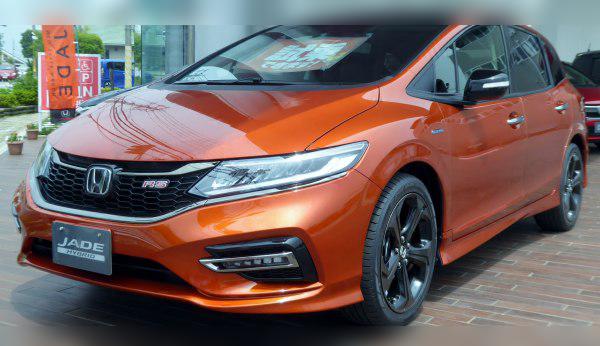
Honda L15BF 1.5 VTEC Turbo: Experiences, issues, fuel consumption and used car buying guide
Key points in short (TL;DR)
- Engine: Modern “Earth Dreams” unit with direct injection and turbo – excellent performance for its displacement.
- Timing: Uses a chain, which is generally reliable with regular oil changes.
- Main drawback: Well-known “oil and fuel mixing” issue (Oil Dilution) with cold starts and short trips.
- Gearbox: In the Jade it comes with a CVT that requires specific fluid and regular maintenance.
- Fuel consumption: Very economical on the open road, but sensitive to driving style in the city.
- Maintenance: Requires strict adherence to service intervals and 0W-20 oil; this is not an engine for careless owners.
- Conclusion: A technological gem that offers fun and efficiency, but demands meticulous maintenance.
Contents
- Introduction and applications
- Technical specifications
- Reliability and maintenance
- Specific parts and costs
- Fuel consumption and performance
- Additional options and modifications
- Gearbox (CVT)
- Buying used and conclusion
Introduction and applications
The engine designated as L15BF belongs to Honda’s famous “L” series of engines, specifically the “Earth Dreams” generation. This is not a classic 90s Honda engine that revs to 8,000 rpm, but a modern downsized masterpiece with an added turbocharger. This particular 156 hp variant is specially tuned for the Honda Jade (facelift), an MPV that combines practicality with a sporty character.
This engine is important because it represents Honda’s transition into the turbo era in mass production. It replaced larger naturally aspirated engines (2.0 and 2.4 liters), offering similar or better power with lower fuel consumption and emissions.
Technical specifications
| Specification | Value |
|---|---|
| Engine displacement | 1498 cc (1.5 liters) |
| Power | 115 kW / 156 hp |
| Torque | 203 Nm |
| Engine code | L15BF |
| Injection type | Direct injection (GDI) |
| Induction | Turbocharger (mono-scroll) + intercooler |
| Fuel | Petrol |
Reliability and maintenance
Does this engine have a timing belt or chain?
The L15BF uses a timing chain (silent chain). Honda did a good job here and the chain is designed to last the entire service life of the engine, provided the oil is changed regularly. There is no fixed replacement interval; it is only replaced if characteristic rattling appears or if the chain stretches, which is rare before 200,000 km with proper maintenance.
What are the most common failures on this engine?
Although Honda is synonymous with reliability, the 1.5 Turbo engines have a few specific issues you need to be aware of:
- Oil dilution (fuel in the oil): This is the most famous problem of “Earth Dreams” engines. Due to direct injection and efficient cooling, the engine warms up slowly. In cold climates and with short city trips, unburnt fuel runs down the cylinder walls into the sump. Symptoms: Oil level rises above the maximum mark and the oil smells of petrol. The solution is more frequent oil changes and avoiding short trips in winter.
- Carbon build-up on intake valves: Since the fuel goes directly into the cylinder, it does not “wash” the intake valves. Over time, soot builds up and can reduce airflow. Symptoms: Rough idle and a slight loss of power.
- Valve cover gasket leaks: Occasionally oil leaks appear on the gaskets; this is not an expensive repair, but it should be monitored.
At what mileage is the “major service” done?
Since the engine has a chain, a classic “major service” (belt and tensioner replacement) does not exist in the traditional sense. However, at around 100,000 to 120,000 km a thorough inspection of the system is recommended: chain check, auxiliary belt replacement, water pump inspection and coolant replacement. (Cost: Moderately expensive, depending on the market).
How many liters of oil does this engine take and which grade is recommended?
The engine takes approximately 3.5 to 3.7 liters of oil (with filter). Honda strictly recommends 0W-20 grade. Because of the turbocharger and the aforementioned oil dilution issue, do not experiment with thicker oils. High-quality synthetic oil is a must.
Does it consume oil between services?
Paradoxically, this engine more often “produces” oil (level increases due to fuel) than consumes it. Still, normal oil consumption under more aggressive driving can be up to 0.5 liters per 5,000 km. If the oil level is rising, that is a sign you need an immediate oil change, because diluted oil loses its lubricating properties.
At what mileage should the spark plugs be replaced?
The factory interval for iridium spark plugs is often 100,000 km. However, for the 1.5 Turbo, experienced mechanics recommend replacement at 60,000 to 80,000 km. Worn spark plugs can cause poor combustion (knocking), which is disastrous for turbo engines.
Specific parts (costs)
Does this engine have a dual-mass flywheel?
In the Honda Jade with a CVT gearbox, there is no classic dual-mass flywheel as in diesels with a manual gearbox. There is a flexplate (automatic transmission flywheel) and a torque converter. These parts are extremely durable and rarely fail. So there is no expensive flywheel replacement at 150,000 km.
What kind of injection system does it have and are the injectors problematic?
The system is high-pressure direct injection. The injectors are precise and generally reliable, but sensitive to poor fuel quality. Replacing a full set of injectors is very expensive (depends on the market, but expect a high amount). Using fuel system cleaning additives once a year is good preventive maintenance.
Does the engine have a turbocharger and what is its lifespan?
It has a single Mitsubishi (MHI) TD03 turbocharger with an electronic wastegate. The turbo is small (low inertia) for quicker response. It is very reliable and usually lasts as long as the engine (over 200,000 km) with regular oil changes and allowing the engine to cool down after hard driving.
Does this model have a DPF filter or EGR valve?
Being a petrol engine, it does not have a DPF (Diesel Particulate Filter). However, newer models (depending on year and market, especially Euro 6d-TEMP) may have a GPF (Gasoline Particulate Filter), which works on a similar principle but regenerates much more easily and rarely causes issues. An EGR valve is present and can get dirty, but this is not as common a failure as on diesels.
Fuel consumption and performance
What is the real-world city fuel consumption?
Although the factory promises low figures, the real-world city consumption is between 8.5 and 10 l/100 km, depending on traffic and how heavy your right foot is. The CVT helps with economy if you drive gently, but the turbo “likes to drink” when pushed.
Is this engine “lazy” for the weight of the car?
Absolutely not. With 156 hp and, more importantly, 203 Nm of torque available from low revs (from around 1,600–1,700 rpm), the L15BF has no trouble moving the Honda Jade’s body. In-gear acceleration is excellent and it feels like you’re driving a larger-displacement engine.
How does the engine perform on the motorway?
The engine is in its element on the motorway. Thanks to the CVT, which keeps the revs in the optimal range, at 130 km/h the engine spins at about 2,200 to 2,500 rpm (depending on gradient and wind). This results in quiet cruising and fuel consumption of about 6.5–7.5 l/100 km.
Additional options and modifications
Is this engine suitable for LPG conversion?
It is not an ideal candidate. Due to direct injection, an expensive system is required (systems that inject liquid LPG or mix petrol and LPG to cool the injectors). Installation is very expensive (1000+ EUR, depending on the market) and the cost-effectiveness is questionable unless you cover huge mileages. You also risk injector problems.
How far can this engine be safely tuned (Stage 1)?
The 1.5 Turbo engines have great potential. A Stage 1 remap can raise power to around 175–185 hp and torque to 240+ Nm. However, in the Jade, the CVT gearbox is the limiting factor. Too much torque can cause belt slip in the transmission. The recommendation is a mild remap or staying with stock settings for the sake of gearbox longevity.
Gearbox
Which gearbox is fitted?
With the L15BF in the Honda Jade (facelift), Honda’s CVT (Continuously Variable Transmission) from the “Earth Dreams” series is primarily used. This gearbox simulates 7 gear steps to avoid the “scooter” effect and provide a more natural driving feel.
What are the most common gearbox issues?
Honda CVTs are better than Nissan’s (Jatco), but they are not indestructible.
Symptoms of problems: Hesitation when setting off, jerking during “gear changes”, whining noise from the gearbox.
Cause: The most common cause of failure is old fluid. If the fluid is not changed, metal shavings can clog the fine channels in the valve body or damage the belt.
At what mileage should the gearbox be serviced?
This is crucial: The fluid in the CVT (only Honda HCF-2 fluid is to be used) should be changed every 40,000 km (severe conditions, city driving) or at most every 60,000 km. Neglecting this leads to gearbox failure, and repairs are very expensive.
Buying used and conclusion
Before buying a Honda Jade with this engine, pay attention to:
- Oil level: Pull out the dipstick. If the level is above the maximum and the oil smells of petrol, be cautious.
- Gearbox service history: Ask for proof of CVT fluid changes. If the car has 150,000 km and the fluid has never been changed – walk away.
- Cold start noise: Rattling during the first 2–3 seconds is acceptable (VTC actuator), but constant chain rattling is a red flag.
Conclusion: The L15BF is a fantastic engine that offers an excellent balance between performance and economy. It is ideal for drivers who want a modern, quiet and lively car. However, it requires an owner who is willing to pay for quality maintenance and more frequent oil changes. If you are looking for a “fill up and drive” car without opening the bonnet for 20,000 km, this is not the engine for you.
Was this content useful to you?
Your opinion helps us to improve the quality of the content.