LEB8 Engine
- Engine
- 1498 cm3
- Aspiration
- Naturally aspirated engine
- Fuel
- Petrol (Gasoline)
- Fuel injection system
- Multi-port manifold injection
- Power
- 107 hp
- Torque
- 131 Nm
- Cylinders
- 4
- Valves
- 16, 4 per cylinder
- Cylinders position
- Inline
- Valvetrain
- DOHC, i-VTEC
- Oil capacity
- 4.3 l
- Coolant
- 5 l
- Systems
- Start & Stop System, Particulate filter
# Vehicles powered by this engine
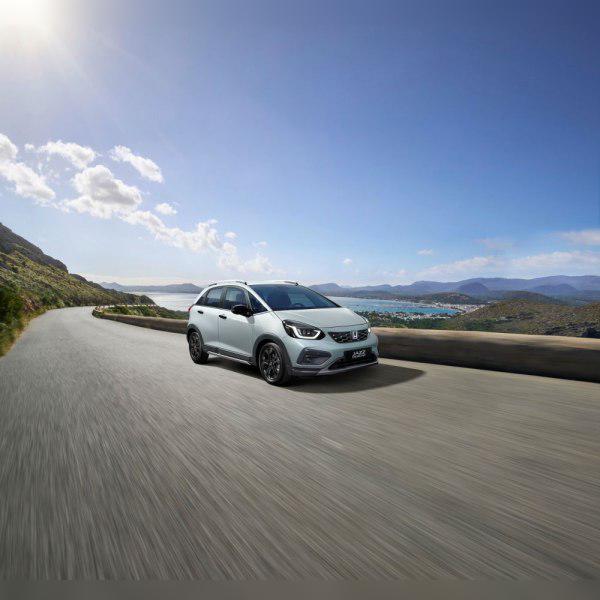

Honda 1.5 i-MMD (LEB8) e:HEV – Experiences, issues, fuel consumption and used-buying tips
Key points (TL;DR)
- Hybrid concept: This is not a conventional engine that drives the wheels all the time. The LEB8 primarily works as a generator that produces electricity for the electric motor.
- Reliability: Extremely high. The engine operates in an optimal rev range (Atkinson cycle), which reduces wear.
- Timing drive: Uses a timing chain, which is durable and does not require frequent replacement.
- Transmission: There is no conventional gearbox (neither manual nor standard belt CVT), but an e-CVT direct drive system.
- Fuel consumption: Extremely low in the city (below 4 l/100 km), higher on open roads.
- GPF filter: 2023+ facelift models have a gasoline particulate filter (GPF), so occasional longer drives are recommended.
Contents
- Introduction and applications
- Technical specifications
- Reliability and maintenance
- Specific components (costs)
- Fuel consumption and performance
- Additional options and modifications
- Transmission (e-CVT)
- Buying used and conclusion
Introduction and applications
The LEB8 engine is the heart of Honda’s advanced e:HEV hybrid system. It is a 1.5‑liter naturally aspirated petrol engine operating on the Atkinson cycle. Unlike conventional engines, its primary role in city driving is not to turn the wheels, but to drive a generator that produces electricity for the traction motor.
This specific model (2023 facelift) brings a slight increase in total hybrid system power to 122 hp, while the petrol engine itself delivers 107 hp. It is installed in the Honda Jazz IV and Jazz Crosstar, models known for their spaciousness and practicality. Because of its complex role in the hybrid system, understanding how this engine works is crucial for proper maintenance.
Technical specifications
| Displacement | 1498 cc (1.5 L) |
| Power (petrol engine) | 79 kW (107 hp) |
| System power (e:HEV) | 90 kW (122 hp) |
| Torque (petrol) | 131 Nm |
| Torque (electric motor) | 253 Nm (this is what the driver actually feels) |
| Engine code | LEB8 |
| Injection type | Multipoint (indirect) / PGM-FI |
| Induction | Naturally aspirated (no turbo) |
Reliability and maintenance
Timing system (belt or chain?)
The LEB8 uses a timing chain. Honda’s chains on 1.5 engines have proven to be very reliable. Since this engine often runs at a steady load (as a generator) and does not see sudden rev spikes as in spirited driving, the chain is under less stress. Expected chain life is usually over 250,000 km with regular oil changes.
Most common issues
This is one of the most reliable powertrains on the market, but there are a few minor points:
- Oil dilution with fuel: With frequent cold starts and short trips in winter, petrol can end up in the sump because the engine does not reach operating temperature quickly enough (it often shuts off and restarts). This is less common than on 1.5 Turbo engines, but the oil level should be monitored.
- GPF filter (sensors): On newer models (2023+), pressure sensors on the particulate filter can throw an error if the car is driven exclusively in stop‑and‑go traffic for months without going on an open road.
- 12V battery: Although not part of the engine itself, the small 12V battery often fails because the hybrid system does not charge it sufficiently on short trips, which can prevent the system from starting.
Major and minor service
Minor service: Recommended every 10,000 km or one year (whichever comes first). Due to hybrid operation, the oil is more prone to degradation because of frequent start/stop cycles.
Major service: Since the engine has a chain, there is no classic major service involving a timing belt replacement. The chain and tensioner are usually inspected at around 150,000 km. However, the auxiliary (serpentine) belt for ancillaries must be replaced according to the manual, typically around 100,000 km.
Oil: quantity and grade
The engine takes approximately 3.5 to 3.8 liters of oil (depending on whether the filter is replaced). The recommended grade is strictly 0W‑20. This thin oil is crucial for an Atkinson engine, which must have minimal friction and fast lubrication on cold start. Using thicker oil (e.g. 5W‑40) can increase fuel consumption and damage the variable valve timing system.
Oil consumption
Honda’s naturally aspirated engines generally do not consume oil in worrying amounts. Consumption up to 0.5 liters per 10,000 km is acceptable, but most owners do not notice any drop in level between services.
Spark plugs
Iridium spark plugs are used (NGK or Denso). Replacement interval is long, usually at 100,000 to 120,000 km. Do not experiment with cheap copper plugs, as access can be more difficult and combustion efficiency must be perfect for hybrid operation.
Specific components (costs)
Dual‑mass flywheel
This engine does not have a conventional dual‑mass flywheel, which is a nightmare on many diesels. Since there is no classic gearbox, there is a torsional damper between the engine and generator, but it very rarely fails and is nowhere near as expensive as a diesel DMF.
Fuel injection system
The LEB8 uses Honda’s proven PGM‑FI system with indirect injection (into the intake manifold) in most Jazz applications. This is excellent news because it means there are no issues with carbon buildup on intake valves, which is common on direct‑injection engines. Injectors are long‑lasting and not prone to failure.
Turbocharger
The engine is naturally aspirated. There is no turbocharger, no intercooler, and no oil‑leak issues on a turbo. One less thing to worry about.
DPF / GPF and EGR
2023 model‑year cars (Euro 6d‑ISC‑FCM or newer standards) are equipped with a GPF (Gasoline Particulate Filter). It works similarly to a diesel DPF, but regenerates much more easily and quickly thanks to the higher exhaust temperatures of a petrol engine. Problems are rare unless the car literally never goes faster than 40 km/h. An EGR valve is present and is key to the Atkinson cycle, but it rarely clogs thanks to cleaner petrol combustion.
AdBlue
No, this is a petrol engine and does not use AdBlue fluid.
Fuel consumption and performance
Real‑world city consumption
This is where this engine (combined with the e:HEV system) really shines. In heavy city traffic, the Jazz e:HEV uses between 3.5 and 4.5 liters per 100 km. The heavier the traffic, the more efficient the system, as it often relies solely on the battery and energy recuperation.
Is the engine “sluggish”?
Although the petrol engine itself has 107 hp, the car is driven by an electric motor with 122 hp and 253 Nm of torque available instantly (from 0 rpm). Because of this, the car feels surprisingly lively and quick off the line in the city (0–60 km/h). It is not sluggish for a Jazz‑sized body. The feeling is similar to driving a pure electric vehicle.
Behavior on the motorway
This is the only mode where the LEB8 is directly connected to the wheels via a special clutch (lock‑up mode), usually at speeds above 80 km/h. At 130 km/h the engine runs at around 2500–3000 rpm (depending on load and gradient). Fuel consumption then rises to about 6.0–7.0 l/100 km. The engine can be noisier during overtakes on the motorway because the transmission simulates gear changes by raising the revs, which creates a “rubber band” effect (engine sound does not follow acceleration linearly).
Additional options and modifications
LPG conversion
Although the engine has indirect injection, which technically makes LPG installation easier, it is absolutely not recommended for the e:HEV system. The ECU precisely controls engine start and stop in fractions of a second to charge the battery. An LPG system would confuse this logic, likely trigger hybrid system errors (Check Hybrid System) and void the factory warranty. There is also no space for a tank, as the hybrid battery or its space is located under the boot floor.
Remapping (Stage 1)
This engine cannot and should not be remapped. First, it is naturally aspirated, so gains would be negligible (2–3 hp). Second, the car’s performance is limited by the output of the battery and electric motor, not the petrol engine itself. Any tampering with the map would likely upset the delicate calibration between petrol and electric drive.
Transmission (e-CVT)
Type of transmission
The LEB8 in the Jazz comes exclusively with an e‑CVT. It is important to understand: this is not a conventional belt‑and‑pulley CVT (notorious for failures). It is actually a gearset with two electric machines and a single fixed gear ratio for higher speeds. Technically, it is a “fixed‑gear transmission”.
Transmission failures and maintenance
This system is mechanically simpler than a manual gearbox. Failures are extremely rare. There are no clutches to wear out, no belt to snap.
- Oil change: The transmission uses a special Honda fluid (often labeled Honda HCF‑2 or a specific e:HEV fluid; check the owner’s manual). It is recommended to change it every 40,000 to 60,000 km. This is crucial because the oil cools the electric motors inside the housing.
- Clutch replacement: There is no conventional clutch. There is only a lock‑up clutch for higher speeds, which is oil‑cooled and designed to last the life of the car. Clutch replacement cost practically does not exist as regular maintenance.
Buying used and conclusion
When buying a used Honda Jazz with the LEB8 engine, focus on the following:
- Service history: Check whether the oil was changed on time (0W‑20) and whether the transmission has been serviced if the car has more than 40,000 km. This is also important for the validity of the hybrid battery warranty (Honda often offers extended coverage up to 10 years if serviced at an authorized dealer).
- Cold start: The engine should run smoothly. Chain rattle on startup is a sign of poor maintenance (very rare at low mileage).
- Test drive: Listen to the transition from electric to petrol. It should be almost imperceptible, without jerks. A strong jerk may indicate an issue with engine mounts or the damper in the transmission.
- Bodywork: Japanese cars have thinner paint; check for stone chips and any corrosion on the underside (especially if the car was imported from colder regions).
Conclusion: The LEB8 engine combined with the e:HEV system is an engineering gem for urban driving. It is not intended for racers or those who spend 90% of their time on the German autobahn at 150 km/h. It is aimed at drivers who want maximum reliability, minimal fuel consumption and quietness in city conditions. Maintenance is inexpensive (no turbo, no dual‑mass flywheel, no conventional alternator or starter), and parts are mid‑priced (depending on the market), but rarely needed.
Was this content useful to you?
Your opinion helps us to improve the quality of the content.