L15B3 Engine
- Engine
- 1498 cm3
- Aspiration
- Naturally aspirated engine
- Fuel
- Petrol (Gasoline)
- Fuel injection system
- Direct injection
- Power
- 130 hp @ 6600 rpm
- Torque
- 155 Nm @ 4600 rpm
- Cylinders
- 4
- Valves
- 16, 4 per cylinder
- Cylinders position
- Inline
- Valvetrain
- DOHC
- Oil capacity
- 3.6 l
- Coolant
- 3.35 l
# Vehicles powered by this engine
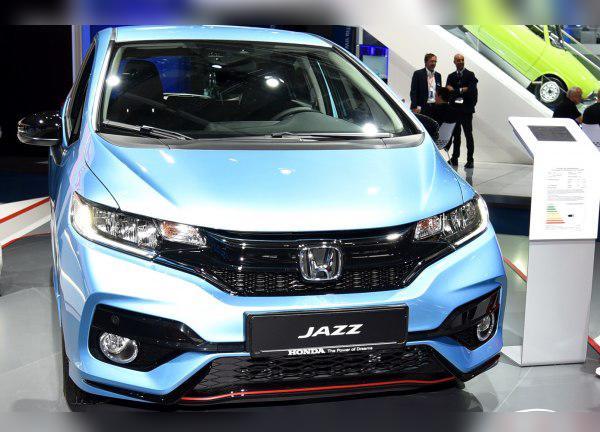
Honda 1.5 i-VTEC (L15B3) – Experiences, problems, fuel consumption and used car buying guide
The L15B3 engine is Honda’s answer to the downsizing trend that almost all competitors have followed. While others were installing small 1.0 turbo three-cylinder engines, Honda put this excellent 1.5-liter naturally aspirated four-cylinder into the third-generation Jazz (facelift). It is part of the "Earth Dreams Technology" series, which means it is focused on efficiency and ecology, but with 130 horsepower in a light body it also offers something rare in this class – driving fun.
Key points in short (TL;DR)
- Performance: Excellent power-to-weight ratio. This is not a "lazy" city car, but a very lively model.
- Timing chain: Uses a chain for timing, which reduces regular maintenance costs.
- Direct injection: Unlike older Honda petrol engines, this one uses direct fuel injection, which brings better efficiency but also a risk of carbon buildup.
- Transmissions: Available with a precise manual gearbox or a CVT automatic that requires regular fluid changes.
- Reliability: Traditionally high Honda reliability, provided that quality low-viscosity oil is used.
- LPG (Autogas): Not an ideal candidate for a cheap conversion due to the injection system.
Contents
- Technical specifications
- Reliability and maintenance
- Specific parts and costs
- Fuel consumption and performance
- Additional options and modifications
- Transmission (Manual and CVT)
- Used car buying and conclusion
Technical specifications
| Feature | Value |
|---|---|
| Engine code | L15B3 (i-VTEC Earth Dreams) |
| Displacement | 1498 cc (1.5 L) |
| Power | 96 kW (130 hp) at 6600 rpm |
| Torque | 155 Nm at 4600 rpm |
| Aspiration | Naturally aspirated |
| Injection type | Direct injection (GDI) |
| Number of cylinders/valves | 4 / 16 |
Reliability and maintenance
Honda L-series petrol engines are considered among the most reliable on the market, and the L15B3 is no exception, although it brings more modern technologies that require more careful maintenance than older engines from the 90s.
Does this engine have a timing belt or a chain?
The L15B3 engine uses a timing chain. This is great news for owners because the chain on this engine usually lasts as long as the engine itself, provided that the oil is changed regularly. There is no scheduled replacement interval; it is replaced only if symptoms of stretching appear (rattling at cold start or camshaft/crankshaft sensor error), which is rare before 200,000 km.
What are the most common issues with this engine?
Although it is very reliable, there are some specifics:
- Carbon buildup: Due to direct injection, fuel does not wash the intake valves. Over time, carbon deposits can form on the valves, leading to rough idle or power loss. This is solved by cleaning (walnut shell blasting or chemical treatment).
- Oil dilution with fuel: With short trips in cold conditions, a small amount of petrol can end up in the sump. You will notice a petrol smell on the dipstick. The solution is more frequent oil changes and occasional longer drives on open roads so that the oil reaches operating temperature and the fuel evaporates.
- VTC actuator: Sometimes you can hear a short rattle (1–2 seconds) during the first cold start in the morning. This points to an issue with the VTC actuator (variable valve timing control), which is a known weak point of newer Honda engines.
Service intervals and oil
A minor service is recommended every 10,000 to 12,000 km or once a year. Do not follow extended "long-life" intervals of 20,000+ km, especially because of the sensitivity of the chain and the direct injection system.
The engine takes about 3.3 to 3.5 liters of oil (with filter). Honda strictly recommends 0W-20 grade. This thin oil is crucial for proper VTEC operation and low fuel consumption. In warmer climates 5W-30 is also allowed, but 0W-20 is the factory standard.
Oil consumption and spark plugs
Modern Honda engines are more tolerant, but consumption of up to 0.5 liters per 5,000 km can be considered acceptable, especially if driven aggressively (VTEC zone). They generally do not burn oil in alarming amounts, but the level should be checked at least once a month.
The spark plugs are iridium and more expensive than standard ones. The factory replacement interval is often 100,000 km or 120,000 km, but in practice it is better to inspect and, if necessary, replace them at 60,000 to 80,000 km to protect the ignition coils.
Specific parts (Costs)
Dual-mass flywheel: Versions with a manual gearbox in the Jazz usually do not have a dual-mass flywheel, but a conventional solid one, which significantly reduces clutch kit replacement costs. Models with a CVT gearbox have a torque converter.
Injection system: The engine uses high-pressure injectors for direct injection. They are much more expensive than regular injectors and more sensitive to poor fuel quality. If they fail, the cost is (very high) (depends on the market).
Turbo and EGR/DPF:
Turbo: None. This is a naturally aspirated engine, which eliminates potentially expensive failures of the turbocharger, intercooler and hoses.
DPF/EGR: There is no DPF (that’s for diesels), but there is a GPF (Gasoline Particulate Filter) on models produced from 2018 onwards (Euro 6d-TEMP standard). GPFs rarely clog on petrol engines due to higher exhaust gas temperatures. There is an EGR valve and it is generally reliable, although it can get dirty from city driving.
AdBlue: None.
Fuel consumption and performance
Is the engine "lazy"?
Absolutely not. With 130 hp in a car the size of a Honda Jazz, this is a very lively engine. 0–100 km/h takes less than 9 seconds (manual gearbox). The engine loves high revs – the real power comes alive only above 4000 rpm, which is characteristic of i-VTEC. At low revs it is smooth and obedient, but not as punchy as turbo engines.
Real-world fuel consumption
- City driving: Expect between 6.5 and 7.5 l/100 km. The start-stop system helps in traffic jams.
- Country roads: It can go down to an impressive 4.5–5.5 l/100 km.
- Motorway (130 km/h): Consumption is around 6.0–6.5 l/100 km.
At 130 km/h in sixth gear (manual gearbox), the engine spins at about 3200–3400 rpm. This is a bit higher than on turbo diesels, so it can be noisier, but sound insulation in the facelift model has been improved.
Additional options and modifications
LPG (Autogas) conversion
Due to direct injection, LPG conversion is complicated and expensive. A special system is required that either injects liquid gas directly through the petrol injectors (very expensive) or a system that uses a mixture of gas and petrol (to cool the petrol injectors). Considering the low petrol consumption, the cost-effectiveness of LPG conversion on this engine is questionable unless you drive very high mileages (over 30,000 km per year).
Remapping (Stage 1)
Since this is a naturally aspirated engine, a remap does not bring significant gains. The increase is in the range of 3 to 6 hp, which is barely noticeable in real driving. It is better to invest the money in quality tyres and regular maintenance.
Transmission
With this engine in the Jazz you get two options:
- 6-speed manual gearbox: A fantastic gearbox. Short throws, precise ("click-clack" feel), easy to use. Failures are extremely rare. Replacing the clutch kit is (not expensive) (depends on the market) because there is no dual-mass flywheel. The gearbox oil (MTF) should be changed every 60,000–80,000 km.
- CVT (Continuously Variable Transmission): Honda’s CVT is one of the better ones on the market. In "S" mode or under heavy throttle it simulates 7 gears to avoid the "scooter" effect.
CVT maintenance: This is critical! The oil in the CVT (Honda HCF-2 fluid) must be changed every 2 years or 40,000 km (whichever comes first). If this is neglected, the transmission can start to shudder, whine or the belt can slip, and repair is (very expensive).
Used car buying and conclusion
Before buying a Honda Jazz with the L15B3 engine, pay attention to the following:
- Cold start: Insist on starting the car when the engine is completely cold. Listen for any chain rattle or VTC actuator grinding in the first few seconds.
- Idle: Once the engine is warm, the idle speed must be stable. Fluctuations may indicate dirty valves (carbon buildup) or injector problems.
- CVT service history: If you are buying an automatic, proof of transmission fluid changes is mandatory. Without it, you risk a major expense.
- Rust check: Although newer models have better protection, Honda paint is thin. Check the wheel arches and underbody if the car is an import (Austria, Germany).
Conclusion: The 1.5 i-VTEC 130 hp engine is a gem in the small city car class. It offers smile-inducing performance with lighter fuel consumption. It is an ideal purchase for those who want a reliable, practical car but do not want to give up good motorway performance and safe overtaking. If you change the oil regularly and take care of the CVT (if you choose it), this engine will serve you for hundreds of thousands of kilometres.
Was this content useful to you?
Your opinion helps us to improve the quality of the content.