L13A5 Engine
- Engine
- 1339 cm3
- Aspiration
- Naturally aspirated engine
- Fuel
- Petrol (Gasoline)
- Fuel injection system
- Multi-port manifold injection
- Power
- 83 hp @ 5700 rpm
- Torque
- 119 Nm @ 2800 rpm
- Cylinders
- 4
- Valves
- 8, 2 per cylinder
- Cylinders position
- Inline
- Valvetrain
- OHC
- Oil capacity
- 3.6 l
- Coolant
- 3.9 l
# Vehicles powered by this engine
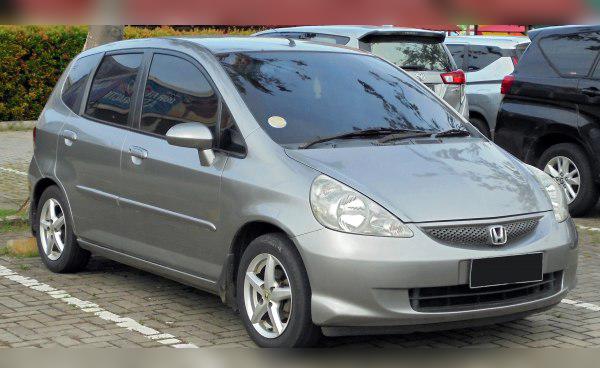
Honda L13A5 (1.4 i-DSI) – Experiences, problems, fuel consumption and buying tips
If you’re looking for a reliable city car, you’ve probably come across the first generation Honda Jazz and its famous 1.4 engine. Although it’s badged as a 1.4, it’s actually a 1.3-liter unit (engine code L13A5) that’s specific for its i-DSI technology. This is an engine mechanics love because it rarely breaks down, but owners often neglect one key maintenance item that later chokes it.
Key points in short (TL;DR)
- Two spark plugs per cylinder: This engine has a total of 8 spark plugs. It often happens that only the front 4 are replaced, while the rear ones stay in there for years, which causes jerking.
- Timing chain: The engine uses a timing chain, which is extremely durable and rarely needs replacement.
- EGR valve: The most common cause of “flat spots” and jerking under light throttle. Cleaning usually solves the problem.
- CVT gearbox: If you’re buying an automatic, pay attention to shuddering when taking off. It requires only genuine Honda CVT oil.
- Fuel consumption: Extremely economical in the city, but noisy and thirstier on the motorway at speeds over 120 km/h.
- Recommendation: An ideal engine for city and suburban driving, one of the most reliable petrol engines of its time.
Contents
- Technical specifications
- Reliability and maintenance
- Specific parts and costs
- Fuel consumption and performance
- Additional options and modifications (LPG)
- Gearbox (Manual and CVT)
- Buying used and conclusion
Technical specifications
| Feature | Data |
|---|---|
| Engine displacement | 1339 cc (sold as 1.4) |
| Power | 61 kW (83 hp) |
| Torque | 119 Nm at 2800 rpm |
| Engine code | L13A5 (L-series) |
| Injection type | Multipoint (i-DSI technology) |
| Aspiration | Naturally aspirated (No turbo) |
| Number of valves/cylinders | 8 valves / 4 cylinders (SOHC) |
Reliability and maintenance
The Honda L13A5 is considered an “indestructible” engine if basic maintenance rules are followed. Its simplicity is its greatest strength.
Does this engine have a timing belt or a chain?
The L13A5 engine uses a timing chain. That’s great news for owners because the chain on this engine is not prone to stretching or snapping. It’s designed to last as long as the engine itself. There is no scheduled replacement interval; it is replaced only if it starts making noise (rattling on a cold start), which in practice happens extremely rarely, usually only at mileages over 300,000 km with poor maintenance.
What are the most common failures on this engine?
Although robust, the engine has a few specific “weak spots”:
- EGR valve (Exhaust Gas Recirculation valve): This is problem number 1. The EGR channels get clogged with soot, which leads to jerking under light throttle (usually between 1500 and 2000 rpm). The solution is to remove and thoroughly clean the valve and intake manifold.
- Coil packs (ignition coils): Since the engine has 8 spark plugs, it has 4 or 8 coils (depending on design). The rear row of coils is exposed to heat and often fails, which also causes rough running.
- Valves: This is not a failure, but a maintenance requirement. The engine does not have hydraulic lifters, so valve clearance adjustment is necessary. If this is neglected, the engine becomes noisy, loses power and valve seats can be damaged.
At what mileage is the major service done?
Since the engine has a chain, a classic “major service” (replacement of belt, tensioners, water pump) is not done preventively at fixed mileages as with European rivals. The water pump is replaced only if it starts leaking or becomes noisy. The auxiliary (serpentine) belt and its rollers are checked at every minor service and replaced as needed, usually every 100,000 km.
Oil: quantity and grade
The sump holds about 3.6 to 3.8 liters of oil (including the filter). The recommended grade for most European climates is 5W-30 or 5W-40. For colder regions or maximum efficiency, Honda also recommends 0W-20, but on older, higher-mileage engines, 5W-40 has proven to be the best choice for protection.
Oil consumption
L13A5 engines are known for not consuming oil. If the engine is healthy, the level on the dipstick should not change significantly between two services (10,000 km). Consumption of up to 0.5 liters per 10,000 km is considered completely acceptable, but anything above that points to worn piston rings or valve stem seals, which is rare before 300,000 km.
Spark plugs – i-DSI system specifics
This is the most important point. The engine uses the i-DSI (Intelligent Dual & Sequential Ignition) system, which means it has two spark plugs per cylinder – 8 in total! It often happens that uninformed mechanics (or penny-pinching owners) replace only the front 4 spark plugs that are easy to reach, while the rear 4 are forgotten for years. This drastically affects performance and fuel consumption. Spark plugs are replaced every 40,000 km (standard nickel) or up to 100,000 km (iridium). Always replace all 8 at once.
Specific parts (Costs)
Does the engine have a dual-mass flywheel?
No. The L13A5 in the Honda Jazz uses a classic solid flywheel. This is a big financial relief because a clutch kit costs much less than on diesels or modern turbo petrol engines. The cost of clutch replacement is relatively low (not expensive).
Fuel injection system and injectors
It uses standard multipoint fuel injection. The injectors are very reliable and rarely cause problems, even with lower-quality fuel. They are not as sensitive as on direct injection systems (GDI/FSI).
Turbocharger
The engine is naturally aspirated, it does not have a turbocharger. This means there are no expensive failures related to the turbo, intercooler or high-pressure hoses.
DPF filter and EGR valve
As a petrol engine from that period, this engine does not have a DPF filter (which is reserved for diesels). However, it does have an EGR valve which, as mentioned, often gets dirty. Fortunately, cleaning is cheap and you can often do it yourself with the help of online guides.
AdBlue
No, this engine does not use AdBlue fluid.
Fuel consumption and performance
What is the real fuel consumption in city driving?
The Honda Jazz with this engine is a champion of economy. In city driving you can expect consumption between 6.5 and 7.5 liters/100 km, depending on traffic and how heavy your right foot is. In winter this figure can rise to around 8 liters. On open roads (single carriageway), consumption easily drops to 5 liters.
Is this engine “lazy”?
With 83 hp and a specific torque curve available at lower revs (thanks to the i-DSI system), the engine is very lively in the city. Throttle response is instant. However, when the car is loaded with passengers and luggage, the lack of power on inclines becomes noticeable, and you’ll have to shift down frequently.
What is the engine like on the motorway?
This is not where the L13A5 shines. Due to the short gear ratios (especially on the manual), at 130 km/h the engine spins at about 3800–4000 rpm. This results in increased cabin noise and somewhat higher fuel consumption (around 7.5–8 liters). Overtaking on the motorway requires planning and dropping into fourth, or even third gear.
Additional options and modifications
Is this engine suitable for LPG conversion?
Yes, the L13A5 handles LPG well, BUT under one important condition: regular valve clearance adjustment. On LPG the valve clearances close up faster, so they must be checked more often, ideally every 20,000–30,000 km. Installing a valve lubrication system (“valve saver”) is also recommended. If this is followed, the engine can cover hundreds of thousands of kilometers on LPG.
Remapping (Stage 1)
It’s not worth it. On small-displacement naturally aspirated petrol engines, a remap yields a negligible power increase (maybe 2–3 hp), which you won’t feel in real driving. You’re better off investing that money in quality spark plugs and tyres.
Gearbox
Which gearboxes are fitted?
With the L13A5 in the first-generation Honda Jazz you get two options:
- Manual gearbox (5-speed): Precise, with a short-throw lever (a “click-click” feel).
- CVT automatic gearbox (Multimatic S): Continuously variable transmission with the option of manually selecting 7 predefined “gears” on the steering wheel.
Most common gearbox issues
Manual: Generally reliable, but a common issue is the input shaft bearing. The symptom is a grinding or rustling noise while the car is idling in neutral, which disappears when you press the clutch. Repair requires removing and opening the gearbox.
CVT automatic: This is where you need to be careful. The biggest problem is shuddering (judder) when taking off from a standstill. This happens due to a dirty start clutch or old oil. If the problem is ignored, the gearbox can be damaged. The solution is often just flushing the gearbox and changing the oil, but sometimes the start clutch pack has to be replaced.
Gearbox maintenance
- Manual: Oil change (Honda MTF recommended) every 60,000–80,000 km.
- CVT: Oil changes are CRITICAL. It must be changed every 40,000 km (or 2 years). This gearbox must use ONLY Honda CVT-F / HMMF oil. Using universal ATF will destroy the gearbox very quickly.
Buying used and conclusion
Before buying a Honda Jazz with this engine, pay attention to the following:
- Chain noise: Listen to a cold start. If you hear metallic rattling that doesn’t disappear after a few seconds, the chain needs replacing (rare, but possible).
- Jerking while driving: Test drive the car under light throttle (1500–2000 rpm). Jerking indicates a dirty EGR valve or (more often) faulty coils/spark plugs.
- CVT test: If it’s an automatic, stop on an incline, release the brake and gently apply throttle. The car should move off smoothly. Any vibration or jolts are a sign of trouble.
- Service history: Ask the owner when the spark plugs were last changed and whether they replaced 4 or all 8. This will tell you a lot about how the car has been maintained.
- Rust: Although not engine-related, this generation of Jazz is prone to rust on the rear wheel arches and door bottoms. Be sure to check.
Conclusion: The Honda L13A5 (1.4 i-DSI) is a fantastic piece of engineering. It’s not a racer, but it’s a champion in space efficiency and reliability. It’s aimed at drivers who want a “fill up and drive” car with minimal maintenance costs, provided they don’t neglect those 8 spark plugs and gearbox oil changes. If you find a well-maintained example, it will serve you for years.
Was this content useful to you?
Your opinion helps us to improve the quality of the content.