L12A1 Engine
- Engine
- 1243 cm3
- Aspiration
- Naturally aspirated engine
- Fuel
- Petrol (Gasoline)
- Fuel injection system
- Multi-port manifold injection
- Power
- 78 hp @ 5700 rpm
- Torque
- 110 Nm @ 2800 rpm
- Cylinders
- 4
- Valves
- 8, 2 per cylinder
- Cylinders position
- Inline
- Oil capacity
- 3.6 l
- Coolant
- 3.9 l
# Vehicles powered by this engine
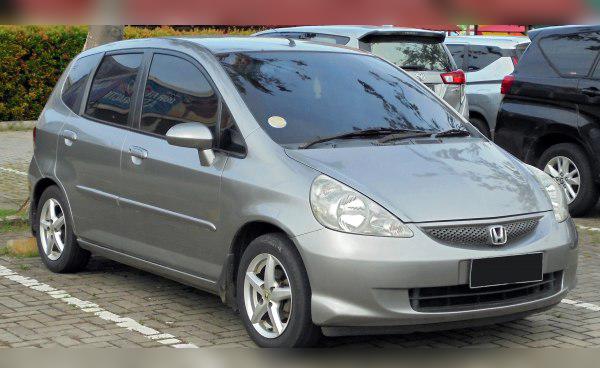
Honda 1.2 i-DSI (L12A1): Experiences, problems, fuel consumption and buying used
Key points (TL;DR)
- Reliability: Extremely reliable Japanese engine, one of the best small petrol units of its era.
- Ignition system: Specific i-DSI system with 8 spark plugs (two per cylinder) – more expensive minor service, but better combustion.
- Timing: Uses a chain which is durable and rarely needs replacement.
- City driving: Its ideal environment. The engine is flexible at low revs, but runs out of breath on the motorway.
- Failures: The main headaches are usually caused by the EGR valve and dirty ignition coils (there are 8 of them).
- Maintenance: Parts prices are reasonable, but it requires regular (mechanical) valve adjustment.
- Recommendation: A perfect choice for drivers who want maximum practicality and minimal costs in the city.
Contents
Introduction: A small giant in the Honda Jazz
The engine with the code L12A1 is the entry ticket into the world of the first-generation Honda Jazz (sold in Europe from 2002 to 2008). Although the 1.2‑liter displacement doesn’t promise racing performance, this engine is an engineering gem of its time. Honda focused here on compactness and efficiency.
What sets it apart from the competition is the i-DSI (Intelligent Dual & Sequential Ignition) technology. This means the engine has two spark plugs per cylinder that ignite the mixture at different moments depending on engine speed. The result is an extremely linear power delivery at low revs, which is crucial for city driving.
Technical specifications
| Feature | Data |
|---|---|
| Engine code | L12A1 |
| Displacement | 1243 cc |
| Power | 57 kW (78 hp) at 5700 rpm |
| Torque | 110 Nm at 2800 rpm |
| Configuration | Inline 4-cylinder, SOHC (single camshaft), 8 valves |
| Injection system | Multipoint (MPFI) |
| Induction type | Naturally aspirated |
| Camshaft drive | Chain |
Reliability and maintenance
Timing system: Chain or belt?
The good news for your wallet is that the L12A1 engine uses a timing chain. This chain is very high quality and rarely causes problems. It is not prone to stretching like on some European competitors from the same period. Chain replacement is usually not needed during the entire service life of the engine, unless you hear a characteristic rattling (typically only at mileages over 250,000–300,000 km with poor maintenance). A classic “major service” (timing belt replacement) does not exist; it comes down to checking and, if needed, replacing the auxiliary (serpentine) belt and the water pump.
Oil and service intervals
This engine takes a relatively small amount of oil, about 3.6 to 3.8 liters (with filter). Honda recommends viscosity 5W-30 or 0W-20 (for colder markets), while on older, higher‑mileage engines 5W-40 can also be used.
The engine is not known for oil consumption. If the engine is healthy, between two services (10,000–15,000 km) you shouldn’t need to top up more than 0.5 liters. Increased oil consumption usually points to clogged oil control rings due to irregular oil changes or the use of low‑quality oil.
Spark plug specifics (i-DSI)
This is the most important point that uninformed owners tend to forget. Since the engine has 8 spark plugs (4 at the front, 4 at the back), it often happens that mechanics replace only the front 4 because they are accessible, and leave the rear ones in place for years. This leads to misfiring and failure of the rear ignition coils.
Replacement interval: Standard nickel plugs are replaced every 40,000 km. Iridium plugs can last up to 100,000 km, but for this engine standard ones (NGK or Denso) are more commonly recommended due to price. A set of 8 plugs is more expensive than on an average four‑cylinder, but still not prohibitively so (depends on the market).
Most common issues
Although this engine is a real “workhorse”, there are some typical problems:
- EGR valve: The most common cause of hesitation under acceleration (usually between 1500 and 2000 rpm). Often it’s enough just to clean the passages and the valve, but sometimes replacement is required.
- Ignition coils: Because of 8 spark plugs, there are also 8 coils. The rear row of coils is exposed to heat and often fails, especially if spark plugs are not replaced on time. Symptoms are running on 3 cylinders, loss of power and a lit “Check Engine” light.
- Valve adjustment: This engine has no hydraulic lifters. Valve clearance must be mechanically adjusted every 40,000–60,000 km. If this is neglected, the engine becomes noisy (you hear a “ticking” sound) or loses compression.
Specific parts (costs)
Dual‑mass flywheel, turbo, DPF?
This is where the beauty of this engine lies – simplicity.
- Dual‑mass flywheel: NO. It uses a classic solid flywheel that practically never needs replacement.
- Turbocharger: NO. The engine is naturally aspirated, which means one (expensive) worry less.
- DPF / AdBlue: NO. As a petrol engine (and of older design), it doesn’t have these exhaust after‑treatment systems. It only has a catalytic converter.
Injection system
It uses a standard electronic multipoint injection system. Petrol injectors are very durable and rarely cause problems. Clogging can appear at high mileages, but they are easily and cheaply cleaned with ultrasound. Compared to diesel injectors, they are not expensive to replace (used or aftermarket).
Fuel consumption and performance
Is 78 hp enough?
The first‑generation Honda Jazz is a light car (around 1000 kg). Because of that, this engine is not sluggish in city conditions. Maximum torque is available low down (at 2800 rpm), which makes it lively off the line at traffic lights. However, if you load the car with passengers and luggage, you will feel the lack of power on climbs, where you’ll often have to shift down.
Behaviour on the motorway
This is not the natural habitat of the L12A1 engine. The gearbox has short ratios, so at 130 km/h the engine spins at about 4000 rpm (depending on gearbox and tyres). This creates cabin noise and increases fuel consumption. Cruising is comfortable up to 110–120 km/h. Overtaking on the motorway requires planning and a “run‑up”.
Real‑world fuel consumption
- City driving: Expect between 6.5 and 7.5 l/100 km. With very careful driving it can be lower, but in winter it goes up to about 8 l.
- Open road (rural / B‑roads): This is where it shines. Consumption drops to 4.5 to 5.5 l/100 km.
- Motorway (130 km/h): Due to high revs, consumption rises to around 7.0 l/100 km.
Extras and modifications
Should you install LPG?
This engine handles LPG well, but with one big caveat: valve adjustment. Since Honda uses relatively “soft” valve seats and has no hydraulic lifters, valve clearance decreases faster when running on gas.
If you install LPG, you must check valve clearances every 20,000 to 30,000 km. Also, because of the 8 spark plugs and specific ignition, you need a quality sequential LPG system and an experienced installer who knows how to map an i‑DSI system. If this is done properly, running costs are very low.
Remapping (tuning)
It makes absolutely no sense to do a Stage 1 remap on a naturally aspirated 1.2‑liter petrol. The gain would be negligible (maybe 2–3 hp), and the money wasted. You’re better off investing that money in good tyres or refreshing the brakes.
Gearbox
Manual gearbox (5‑speed)
This is the most common option with the 1.2 engine. The gearbox is precise, the throws are short (typical for Honda) and it is a real pleasure to use.
Most common issue: Input shaft bearing (“mainshaft bearing”). The symptom is a humming or rustling noise while the car is idling in neutral, which disappears when you press the clutch. The repair requires removing and opening the gearbox, which is labour‑intensive, but the parts themselves are not very expensive.
Clutch kit: Since there is no dual‑mass flywheel, replacing the clutch kit (pressure plate, disc, release bearing) falls into the category of “affordable” maintenance (depends on the market, but is generally cheap).
Automatic gearbox (CVT)
With the 1.2 engine, the CVT gearbox is less common (it’s more frequent on 1.4 models), but it does exist in some markets. Honda’s CVT from this generation requires only genuine Honda CVT fluid and regular changes (every 40,000 km).
Problems: The “start clutch” inside the CVT can shudder when setting off. The repair can be expensive. If you are buying an automatic, test hill starts without using the throttle – the car must not shudder or roll backwards.
Buying used and conclusion
When buying a Honda Jazz with the L12A1 engine, pay attention to the following:
- Check for hesitation: Drive the car in second or third gear on light throttle (around 1500 rpm) and then floor it. If the car hesitates, it is most likely the EGR valve or failing coils.
- Gearbox noise: Listen to the gearbox in neutral. If you hear a grinding or rumbling that disappears when you press the clutch, the bearings need replacing.
- Service history: Ask the owner when the spark plugs (all 8!) were last replaced and when the valves were adjusted. Answers like “I don’t know” or “you don’t touch that” are a red flag.
- Rust: The engine is good, but the Jazz bodywork (arches, sills, bottom of the doors) is prone to rust. That is a bigger problem than the engine itself.
Final verdict
The Honda Jazz 1.2 i-DSI is a champion of rationality. It’s not a car for racing, nor for daily long‑distance motorway trips. But as a city car, student transport, or a second family car, this engine is almost unbeatable. It offers the space of a much larger car with running costs close to those of a lighter. If you find an example with solid bodywork and a well‑maintained engine (spark plugs/oil), you can buy it without overthinking.
Was this content useful to you?
Your opinion helps us to improve the quality of the content.