J35A8 Engine
- Engine
- 3471 cm3
- Aspiration
- Naturally aspirated engine
- Fuel
- Petrol (Gasoline)
- Fuel injection system
- Direct injection
- Power
- 295 hp @ 6200 rpm
- Torque
- 351 Nm @ 5000 rpm
- Cylinders
- 6
- Valves
- 24, 4 per cylinder
- Cylinders position
- V-engine
- Oil capacity
- 4.3 l
- Coolant
- 6 l
# Vehicles powered by this engine
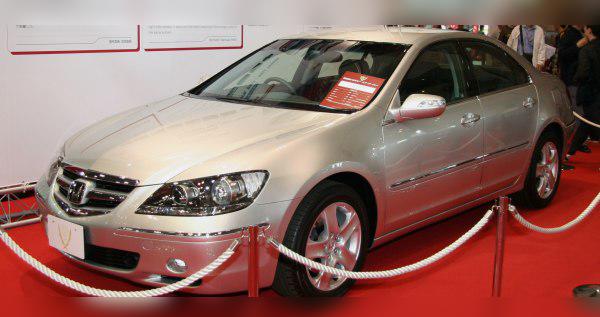
Honda J35A8 3.5 V6 VTEC: Experiences, issues, fuel consumption and buying used
Key points in short (TL;DR)
- Performance and refinement: This is one of the best V6 engines Honda has ever made. Extremely smooth operation, linear power delivery and the distinctive VTEC sound at high revs.
- Drivetrain and transmission: It comes exclusively with SH-AWD all-wheel drive, which is a technological masterpiece, but requires strict maintenance (special fluids).
- Fuel consumption: Be prepared for high numbers. In city traffic this engine easily “swallows” more than 15 liters of petrol.
- Valve adjustment: Unlike many modern engines, this one does not have hydraulic lifters. Valve adjustment is mandatory at specific intervals.
- Timing service: The engine uses a timing belt, not a chain. Replacement is expensive but necessary to prevent catastrophic failure.
- Recommendation: An ideal engine for comfort and tech enthusiasts who can afford regular, high-quality maintenance and don’t care too much about fuel consumption.
Contents
- Technical specifications
- Reliability and Maintenance
- Specific Parts and Systems
- Fuel Consumption and Performance
- Additional Options and Modifications (LPG & Tuning)
- Transmission and Drivetrain
- Buying used and Conclusion
The J35A8 engine represents the pinnacle of Honda’s engineering in the mid‑2000s in the class of naturally aspirated V6 units. It was primarily installed in the luxury sedan Honda Legend IV (chassis KB1), which at the time served as the brand’s technology demonstrator. With almost 300 horsepower, this engine is not just a cruiser, but a serious machine which, in combination with the SH-AWD (Super Handling All-Wheel Drive) system, offers driving dynamics that defy the physics of a heavy sedan. Although reliability is a Honda virtue, the complexity of this system requires an owner who understands mechanics and does not skimp on maintenance.
Technical specifications
| Characteristic | Data |
|---|---|
| Engine code | J35A8 |
| Configuration | V6 (6 cylinders in V layout) |
| Displacement | 3471 cc (3.5 L) |
| Power | 217 kW / 295 hp |
| Torque | 351 Nm |
| Fuel injection system | PGM-FI (multi-point indirect injection) |
| Induction type | Naturally aspirated |
| Valve train | SOHC VTEC (timing belt) |
Reliability and Maintenance
Honda’s J-series engines are considered one of the most reliable V6 designs in the world, but that doesn’t mean they are immune to owner neglect.
Timing belt or chain?
The J35A8 engine uses a timing belt for valve timing. This is crucial information for every buyer. A snapped belt leads to piston-to-valve contact, which means complete engine destruction. It is recommended to use only original or high-quality replacement kits (e.g. Japanese OEM manufacturers).
Major service and intervals
The major timing service is done at intervals of 100,000 to 120,000 km or every 5 to 7 years, whichever comes first. In addition to the timing belt, tensioners, idler pulleys and the water pump must be replaced. Since the pump is driven by the belt, the risk of leakage or pump seizure (which would snap the belt) is not worth the savings. It is also recommended to replace the hydraulic belt tensioner.
Oil: quantity, grade and consumption
The sump holds approximately 4.3 to 4.5 liters of oil (with filter). Honda recommends grades 5W-30 or 0W-30 (depending on climate), and for higher-mileage engines 5W-40 is a common choice in Europe. As for oil consumption, the J35A8 is generally a “dry” engine, but it is normal to use 0.5 to 1 liter per 10,000 km if driven often in VTEC mode (high revs). If it consumes more than that, first check the VTEC valve (solenoid) gaskets, which are a common source of leaks, before suspecting piston rings.
Spark plugs and coils
The spark plugs are iridium and have a long replacement interval – usually around 100,000 km. However, due to the specifics of a V6 engine, replacing the rear three cylinders (towards the cabin) is a bit more difficult because of access, so mechanics often charge more labor. The coils (one per cylinder) are long-lasting, but failure of one can cause rough running and a “Check Engine” light.
Most common issues
In addition to regular maintenance, pay attention to:
- Valve adjustment: The J-series does not have hydraulic lifters. The valves must be adjusted mechanically every 40,000–60,000 km (more often if running on LPG). Symptoms of out-of-adjustment valves include a characteristic “ticking” when the engine is cold, or power loss/unstable idle if the valves are over-tightened.
- Engine mounts: Due to the high torque and weight, the hydraulic engine mounts (especially front and rear) often fail. Symptoms are strong vibrations in the cabin when shifting into “D” or “R”. These mounts are active (electronically controlled) and very expensive to replace.
- Oil leaks: The valve cover gasket and the gasket of the oil filter housing/VTEC valve are standard leak points at higher mileage.
Specific Parts (Costs)
Maintaining a Honda Legend is not cheap, not so much because of frequent failures, but because of the price of specific parts that are rare on the aftermarket.
Dual-mass flywheel and clutch
In the Legend KB1 this engine comes exclusively with an automatic transmission, which means there is no dual-mass flywheel and no clutch kit in the usual sense. Instead, it uses a torque converter. This eliminates one of the most expensive failure points common on modern diesels.
Fuel injection system and injectors
The engine uses classic PGM-FI indirect injection into the intake manifold. Petrol injectors are extremely reliable and rarely cause problems. They are not as sensitive to fuel quality as injectors in direct-injection engines (GDI/FSI), which is a big plus for longevity.
Turbo, DPF, EGR, AdBlue
Good news for fans of simplicity:
- Turbo: None. The engine is naturally aspirated, which means linear power and fewer potential failure points.
- DPF and AdBlue: None. This is an old-school petrol engine.
- EGR valve: Present. EGR passages in the intake manifold can clog with soot over time, leading to poor idle and warning lights on the dash. Cleaning the intake manifold passages is occasionally necessary (around every 150,000 km).
Fuel Consumption and Performance
Real-world fuel consumption
No sugarcoating here. The Honda Legend with this engine and all-wheel drive weighs close to 1.9 tons.
City driving: Expect between 13 and 17 l/100 km, depending on traffic and how heavy your right foot is. In winter it can go even higher.
Highway / open road: This is where the engine shines, with consumption dropping to 8 to 10 l/100 km at normal speeds.
Is the engine “lazy”?
Absolutely not. With 295 hp and 351 Nm, the engine handles the body with ease. 0–100 km/h takes about 7.3 seconds, which is respectable. The VTEC system gives the engine two characters: calm and quiet at low revs, and aggressive, “racy” behavior above 4,500 rpm. Throttle response is instant because there is no turbo lag.
Motorway driving
This is the natural habitat of this model. At 130 km/h the engine runs relaxed, usually below 2,500 rpm (thanks to long gear ratios in the transmission). Sound insulation is excellent and the engine is barely audible. Overtaking is safe, although the gearbox sometimes has to drop two gears to deliver full power.
Additional Options and Modifications
LPG conversion
Yes, this engine is suitable for LPG. Thanks to indirect injection, the conversion is relatively straightforward. However, there are two critical conditions:
1. Quality system: You must install an LPG system that can handle the high power and rapid changes in operation (VTEC transition). Do not skimp on the vaporizer and injectors.
2. Valve adjustment: If you run on LPG, the valve clearance inspection interval must be halved (every 30,000–40,000 km). Ignoring this leads to burnt valves (an expensive cylinder head repair).
ECU remap (Stage 1)
On naturally aspirated petrol engines, “chipping” (remap) brings minimal gains. You can expect maybe 5 to 10 hp more and slightly better throttle response, but it is generally not worth the money. The engine is already tuned from the factory to extract close to its maximum.
Transmission
Type of transmission
With the J35A8 in the Legend KB1 you get exclusively a 5-speed automatic transmission with a manual shift option (often via paddles on the steering wheel). It is a classic Honda automatic that is robust, but technically a bit behind modern gearboxes in terms of shift speed.
Transmission issues and maintenance
Honda automatic transmissions are specific because in their construction they resemble manual gearboxes with hydraulic control more than classic planetary automatics.
Most common problems: Jerking when shifting (especially from 1st to 2nd gear) or torque converter slip are usually signs of old oil or dirty solenoids.
Service: Transmission fluid change is mandatory every 60,000 km (or more often).
Important: This transmission requires ONLY original Honda fluid (ATF-DW1 or the older ATF-Z1 standard). Using universal ATF often leads to improper operation and transmission failure.
SH-AWD differential (important note)
Although not part of the gearbox itself, the rear differential is crucial. It has its own clutches and pumps. It requires Honda DPS-F fluid. If you hear grinding or shuddering when turning at full lock, it is probably time for an urgent differential fluid change (often done as a “flush”, i.e. double change).
Buying used and Conclusion
When buying a Honda Legend with the J35A8 engine, make sure to check:
- Warning lights on the dash: Is the “Check Engine” or “SH-AWD” light on? Drivetrain issues are expensive (depending on the market, repairs can be very costly).
- Engine sound: Listen to a cold start. If you hear rattling that does not disappear after a few minutes, the valves are due for adjustment or, more rarely, the camshaft may be damaged.
- Transmission: It must shift smoothly, without harsh engagements, especially when the transmission is fully warmed up.
- Leaks: Inspect the VTEC valve (near the oil filter) and the valve covers.
- Proof of timing service: If there is no documentation showing when the timing belt was replaced, immediately factor that cost into the price (it is expensive).
Conclusion: The J35A8 is a “gentleman’s” engine. It offers exceptional reliability and performance, but demands a meticulous owner. It is not intended for those who want to save on fuel or parts. It is aimed at drivers who appreciate Japanese engineering precision, the sound of a naturally aspirated V6 and top-class comfort, and who are willing to pay the price in the form of somewhat higher fuel consumption and specific maintenance.
Was this content useful to you?
Your opinion helps us to improve the quality of the content.