S07A Engine
- Engine
- 658 cm3
- Aspiration
- Naturally aspirated engine
- Fuel
- Petrol (Gasoline)
- Fuel injection system
- Multi-port manifold injection
- Power
- 58 hp @ 7300 rpm
- Torque
- 65 Nm @ 3500 rpm
- Cylinders
- 3
- Valves
- 12, 4 per cylinder
- Cylinders position
- Inline
- Valvetrain
- DOHC
- Oil capacity
- 2.6 l
- Coolant
- 2.89 l
# Vehicles powered by this engine
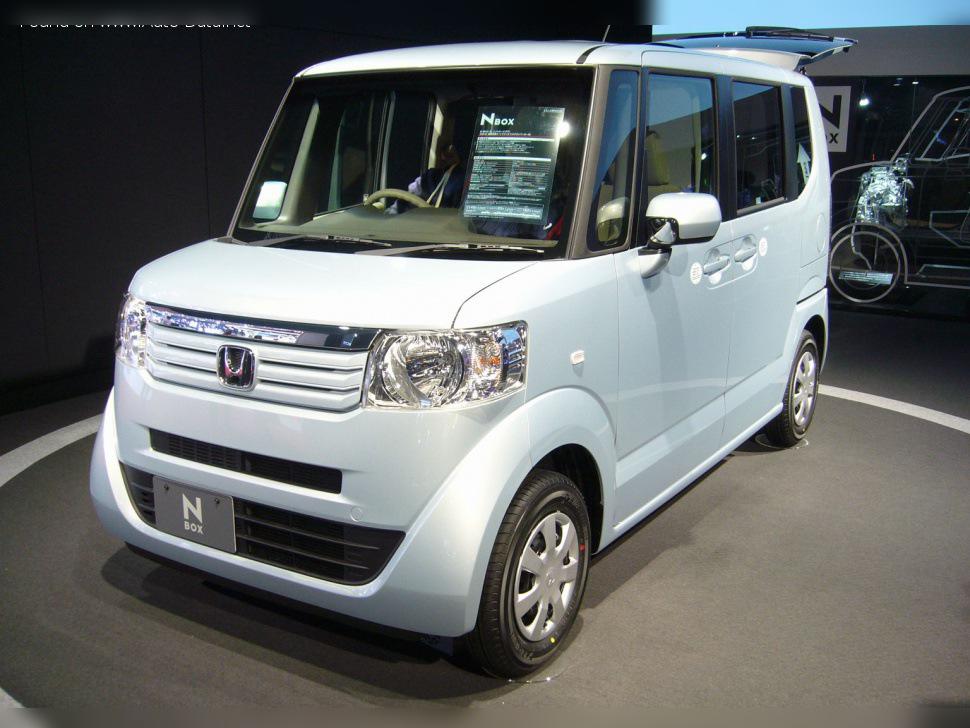
Honda S07A (0.7i) – Experiences, problems, fuel consumption and buying tips
Key points (TL;DR)
- Reliability: Extremely reliable small engine, typical for Honda, provided it is regularly maintained.
- Purpose: Ideal for narrow city streets (stop-and-go driving), but struggles on open roads and highways.
- Timing drive: Uses a chain, which reduces regular maintenance costs.
- Transmission: Almost exclusively paired with a CVT transmission that requires specific and regular oil changes.
- Parts: Wear parts are available, but specific body or engine parts can be harder to source in Europe (depends on the market) because this is primarily a JDM (Japanese Domestic Market) engine.
- Fuel consumption: Very low in the city, but rises drastically at speeds above 90 km/h.
Contents
- Introduction and engine application
- Technical specifications
- Reliability and maintenance
- Specific parts and systems
- Fuel consumption and performance
- Additional options (LPG and tuning)
- Transmission (CVT)
- Used car buying guide and conclusion
Introduction and engine application
The engine with the code S07A is the heart of Honda’s modern Kei-class cars. This power unit was designed with a single goal – maximum efficiency in minimal space. It debuted in the Honda N-Box, a model that is an absolute bestseller in Japan, while in Europe it mostly arrives via individual imports or specific dealers.
It is a three-cylinder petrol engine with a displacement of 658 cc. Although it looks weak on paper, this engine is a technological marvel of miniaturization, with a DOHC design (dual overhead camshafts) and an advanced valve control system. For a European buyer, this engine is something of an exotic option that offers incredible practicality in the city, but also brings certain logistical challenges when it comes to parts.
Technical specifications
| Parameter | Value |
|---|---|
| Engine code | S07A |
| Displacement | 658 cc (0.66 L) |
| Configuration | Inline, 3 cylinders, DOHC |
| Power | 43 kW (58 hp) at 7300 rpm |
| Torque | 65 Nm at 4700 rpm |
| Induction | Naturally aspirated |
| Fuel injection | PGM-FI (multipoint injection) |
Reliability and maintenance
Timing system: Chain or belt?
The good news for owners is that the Honda S07A uses a timing chain. This means there is no need for an expensive timing belt replacement every 5–6 years. The chain is designed to last as long as the engine itself, but under one condition – regular oil changes. If the oil is not changed on time, the hydraulic chain tensioner can fail, which leads to chain stretch and a characteristic rattling noise.
Most common failures
Although Honda is synonymous with quality, the S07A has its weak points, mostly related to harsh operating conditions:
- Start-stop system (Idling Stop): These engines are often equipped with a stop-start system for traffic lights. This significantly stresses the starter motor and the battery. Premature starter failure is quite common.
- Carbon buildup: Although it is not direct injection, city driving at low revs can lead to carbon deposits on the valves and in the intake manifold, which manifests as rough idling.
- PCV valve: The crankcase ventilation valve can clog, which leads to increased pressure in the engine and potential oil leaks at the seals.
Service intervals and oil
Small engines are under heavy thermal load because they rev higher than larger engines.
Minor service: Recommended every 10,000 km or once a year. In severe urban conditions (delivery, short trips), shorten this to 7,500 km.
Oil quantity and type: The engine holds a very small amount of oil, usually around 2.6 to 2.8 liters (with filter). It is recommended to use only fully synthetic 0W-20 (or 5W-30 for hotter climates) that meets Honda’s specifications.
Oil consumption and spark plugs
This engine should not consume noticeable amounts of oil between services. If it uses more than 0.3–0.5 liters per 10,000 km, this may indicate stuck piston rings (a consequence of poor maintenance) or a problem with the PCV valve.
Spark plugs: Being a petrol engine, it uses iridium spark plugs. They are replaced at 100,000 km. However, due to fuel quality, it is advisable to inspect them at 60,000 km.
Specific parts (costs)
Fuel injection system and turbo
The 58 hp version is naturally aspirated, which means it does not have a turbocharger. This is a big advantage for reliability, as there is no turbo that can fail, no intercooler and no complex pressurized piping.
The fuel injection system is Honda’s classic PGM-FI (indirect injection). The injectors are extremely durable and rarely cause problems, unless very poor quality fuel is used. They are not expensive to clean or replace (depends on the market).
Dual-mass flywheel and emissions equipment
This engine does not have a dual-mass flywheel. Since it is paired with a CVT transmission, it uses a torque converter or a simple flywheel, which eliminates one of the most expensive failures on modern cars.
EGR valve: Yes, it does have an EGR valve. In city driving it tends to clog with soot, which can trigger the check engine light. Cleaning is usually sufficient.
DPF/AdBlue: As a petrol engine, it does not have a DPF filter nor does it use AdBlue fluid. It has a conventional catalytic converter which is long-lasting.
Fuel consumption and performance
City driving and “sluggishness”
In the city, the Honda N-Box with the S07A engine is in its element. Real-world city fuel consumption is between 5.5 and 7 liters per 100 km, depending on how heavy your right foot is and how often you use the air conditioning.
Is the engine sluggish? Up to speeds of 60 km/h – absolutely not. The transmission and engine are tuned so that the car “jumps” off the line, making it very agile in traffic. The body weight (around 900–1000 kg) is not excessive for this type of drivetrain in urban conditions.
Highway and cruising
This is where the story changes. This is not a highway engine. Although it can reach 130 km/h, it does so with great effort.
At 130 km/h the engine is spinning at very high revs (often over 4,500–5,000 rpm), cabin noise is significant, and fuel consumption jumps to over 8–9 liters, because the “boxy” N-Box shape creates huge aerodynamic drag. Overtaking on country roads requires serious planning.
Additional options and modifications
LPG conversion
Technically, LPG installation is possible because the engine has indirect injection. However, there are two issues:
1. Space: The N-Box has no spare wheel well where the tank is usually fitted, and the boot is already small.
2. Valves: Honda’s small-displacement engines often have “softer” valve seats. An LPG conversion would require a mandatory valve lubrication system, and even then the risk of valve seat recession is real after 50–60,000 km on gas. Recommendation: Not worth it.
Chip tuning (Stage 1)
On a naturally aspirated 658 cc engine, chip tuning is a waste of money. The maximum gain would be 2–3 hp, which is imperceptible in real driving. The factory map is already optimized for the best balance of fuel economy and longevity.
Transmission
Type of transmission and maintenance
With this engine (especially in the N-Box model) you almost exclusively get a CVT (Continuously Variable Transmission). Manual gearboxes are rare in this class of modern Kei cars.
CVT maintenance: This is the key point. The oil in the CVT must be changed every 40,000 km or 2 years. Use only genuine Honda CVT fluid (HMMF or CVTF depending on model year). Universal fluids can permanently damage the transmission.
Transmission failures
If the oil is not changed, a so-called “shudder” when moving off from a standstill appears. This is a sign that the starting clutch packs in the transmission are dirty or worn. Also, a “whining” noise at higher speeds may indicate worn bearings inside the transmission. CVT repair is usually expensive (depends on the market) and it is often more cost-effective to source a used transmission.
Used car buying guide and conclusion
When buying a Honda with the S07A engine, pay attention to the following:
- Cold start: Listen for any chain rattling in the first 3–5 seconds after start-up. If you hear it, the tensioner or the chain itself is due for replacement.
- Test drive: The transmission must operate smoothly, with no jerks when moving off and no sudden rpm flares at a constant speed.
- Service history: Because of the small oil capacity, skipping services is disastrous. If there is no proof of regular oil changes, walk away from the purchase.
Final verdict
The Honda S07A engine is a fantastic example of Japanese engineering for its specific purpose. If you need a car for city deliveries, grocery runs or squeezing through heavy traffic, this engine will serve you for years with minimal running costs. However, if you plan frequent long-distance trips or live in hilly areas, the lack of torque and power will quickly become frustrating.
Was this content useful to you?
Your opinion helps us to improve the quality of the content.