C32B2 Engine
- Engine
- 3179 cm3
- Aspiration
- Naturally aspirated engine
- Fuel
- Petrol (Gasoline)
- Fuel injection system
- Multi-port manifold injection
- Power
- 280 hp @ 7300 rpm
- Torque
- 298 Nm @ 5300 rpm
- Cylinders
- 6
- Valves
- 24, 4 per cylinder
- Cylinders position
- V-engine
- Valvetrain
- DOHC
- Oil capacity
- 5 l
- Coolant
- 16 l
# Vehicles powered by this engine
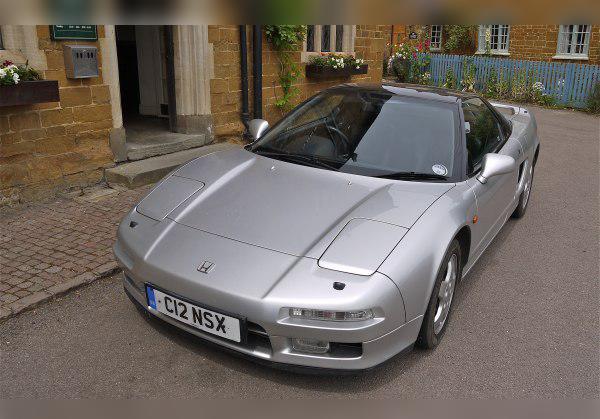
Honda C32B2 (3.2 V6 VTEC): Experiences, Problems, Maintenance and Buying a Legend
Key points (TL;DR)
- Performance and character: Naturally aspirated V6 that revs up to 8000 rpm. It’s not a low‑end torque champion, but throttle response is instant and brutal in the VTEC zone.
- Reliability: Mechanically extremely robust (“bulletproof”), provided it’s regularly maintained. Sensitive to overheating.
- Gearbox: This 3.2L engine comes exclusively with a 6‑speed manual gearbox. Automatics were only paired with the older 3.0L engine.
- Maintenance: Even though it’s a Honda, this is a supercar. Parts are very expensive and often have long lead times. Major services are financially demanding.
- Specifics: Uses FRM (Fiber Reinforced Metal) cylinder liners, which means the block cannot be machined in the usual way.
- Recommendation: One of the best V6 engines ever made. Only buy examples with a fully documented service history.
Contents
- Introduction: Heart of a Samurai
- Technical Specifications
- Reliability and Maintenance
- Specific Parts and Costs
- Fuel Consumption and Performance
- Additional Options and Modifications
- Gearbox and Drivetrain
- Buying Used and Conclusion
Introduction: Heart of a Samurai
The Honda C32B2 is an evolution of the legendary C30A engine that made the first‑generation NSX famous. Installed in the facelifted models (NA2 chassis) from 1997 until the end of production, this engine represents the pinnacle of Honda’s naturally aspirated technology of the nineties. By increasing displacement from 3.0 to 3.2 liters, engineers managed to extract more power and, more importantly, better torque.
This is not a regular Accord engine; this is a hand‑assembled unit with titanium connecting rods, designed to rival Ferrari of that era. Its main traits are linear power delivery and the distinctive “scream” when the VTEC system switches cam profiles. For driving enthusiasts, this is the holy grail.
Technical Specifications
| Parameter | Data |
|---|---|
| Displacement | 3179 cc (3.2 L) |
| Configuration | V6, DOHC, VTEC |
| Power | 206 kW (280 hp) @ 7300 rpm |
| Torque | 298 Nm @ 5300 rpm |
| Engine code | C32B2 |
| Injection type | PGM-FI (multi‑point indirect) |
| Induction | Naturally aspirated |
Reliability and Maintenance
Timing belt or chain?
The C32B2 engine uses a timing belt for valve timing. This is a key maintenance item. Since this is an interference engine (pistons and valves share the same space at different times), a snapped belt leads to catastrophic engine failure, bent valves and damaged pistons.
Most common failures and symptoms
Although the engine is extremely reliable, age takes its toll:
- LMA (Lost Motion Assembly): Even though the C32B received improved springs compared to the older C30A, you can still hear a characteristic “ticking” from the cylinder head when the engine is cold. It’s not harmful, but it’s annoying.
- Oil leaks at VTEC spool valves and camshaft seals: Rubber hardens over time due to the high temperatures this engine is exposed to. Symptoms include the smell of burning oil or oily residue on the block.
- Cooling system: This is the Achilles’ heel of older NSXs. The coolant hoses are long (mid‑engine, radiator up front) and there are many of them (over 20). A burst old hose leads to instant overheating, which is fatal for this aluminum block.
- Main relay: A well‑known Honda issue from that era. If the car cranks but won’t start (no fuel) or stalls when hot, the problem is usually cracked solder joints in the fuel pump relay.
Major service
The recommended interval for timing belt replacement is 100,000 km or 7 years (whichever comes first). Given the age of these cars, the time interval is much more important. Along with the belt, you must replace the tensioner and water pump, and it’s advisable to replace the camshaft and crankshaft seals, since access to the engine is difficult and expensive (an “engine‑out” service is often easier for the mechanic than working with the engine in the car).
Oil: Capacity and consumption
The engine takes about 5.0 to 6.0 liters of oil (depending on whether the filter is replaced and how much old oil is drained – the oil pan is specific). The recommended grade is 5W‑30 or 5W‑40, strictly high‑quality full synthetic (e.g. Motul 300V or similar).
As for oil consumption, the C32B2 is a high‑performance engine. Some oil consumption is normal if you drive in the VTEC range (above 5800 rpm). Expect to top up 0.5 to 1 liter every 3000–5000 km if driven aggressively. If it burns a liter per 1000 km under normal driving, that points to worn piston rings or valve stem seals.
Spark plugs
It uses iridium spark plugs (NGK or Denso). The factory interval is long (up to 100,000 km), but enthusiasts and owners of such cars usually replace them every 40,000 to 50,000 km for optimal performance.
Specific Parts (Costs)
Dual‑mass flywheel
Yes, the manual version (the only one paired with the 3.2 engine) uses a dual‑mass flywheel. Its role is to reduce vibrations and gearbox noise (“gear chatter”). The price is very high (varies by market, but expect a serious expense). Many owners switch to a lighter single‑mass flywheel during replacement for better throttle response, but this increases gearbox noise at idle.
Fuel injection system
It uses Honda’s classic PGM‑FI system with port injection. The injectors are extremely durable and rarely cause issues. If a problem does occur, ultrasonic cleaning and new seals are usually all that’s needed. They are not “consumables” like on modern diesels or GDI engines.
Turbo, DPF, EGR, AdBlue
This engine is pure mechanics.
- Turbo: None. The engine is naturally aspirated. As a result, service life is longer because there is no turbo thermal stress.
- DPF / AdBlue: None. This is a petrol engine from the pre‑Euro 5/6 era.
- EGR: There is an exhaust gas recirculation system, but on petrol engines of this type it rarely clogs to the point of causing problems, as petrol doesn’t produce soot like diesel.
The key parts peculiarity lies in the FRM liners. The engine block is neither a classic iron block nor a regular aluminum block with steel liners. The cylinder walls are reinforced with fibers. This means that if a cylinder wall is damaged, you cannot simply “overbore” it at a local machine shop. You either need a replacement block or very specialized (and expensive) machining.
Fuel Consumption and Performance
Real‑world fuel consumption
- City driving: Expect between 13 and 17 l/100 km. In heavy stop‑and‑go traffic, it can easily go higher.
- Highway / open road: With moderate driving it can drop to around 9–10 l/100 km.
- Combined: A realistic average is about 12–13 l/100 km.
Is the engine “lazy”?
Absolutely not. With 280 hp pushing around 1300–1400 kg (thanks to the aluminum chassis), the car is very fast. However, like every VTEC Honda, torque lives higher in the rev range. If you expect a shove in the back at 1500 rpm like with a turbo diesel, you’ll be disappointed. This engine needs to be kept above 5000 rpm to show its teeth. That’s when it turns into a race car.
Behavior on the motorway
Thanks to the 6‑speed gearbox (introduced with the 3.2 engine), cruising is more comfortable than in older 5‑speed models. At 130 km/h the engine spins at acceptable revs (around 3000–3200 rpm, depending on gearing and tire size), but sound insulation is weaker because the engine is practically right behind your head. It’s part of the charm, but it can be tiring on long journeys.
Additional Options and Modifications
LPG conversion
Technically, it’s possible to install a sequential LPG system, but this is considered sacrilege on a car like this. The intake manifold is complex, space is tight, and the engine’s high revs require extremely precise LPG mapping to avoid overheating the valves. Recommendation: Don’t do it. This is a collector’s car.
ECU remap (Stage 1)
On a naturally aspirated engine, a “Stage 1” remap brings negligible gains (maybe 5–10 hp), mostly by shifting the VTEC engagement point and rev limiter. For serious power, owners opt for a supercharger, as the C32B is an excellent base for it, but that costs several thousand euros.
Gearbox
Types of gearboxes
This is the key difference:
- The 3.2 (C32B) engine ONLY comes with a 6‑speed manual gearbox.
- If you see an automatic gearbox (4‑speed F‑Matic) in an NA2‑generation NSX, it is paired with the older and weaker 3.0 (C30A) engine (256 hp).
Gearbox failures
The 6‑speed manual gearbox is an engineering masterpiece: precise with a short throw. However:
- Synchros: With aggressive driving and fast shifting, the second‑gear synchro can wear out. The symptom is grinding when engaging second at high rpm.
- Snap ring: This was an issue on early 5‑speed gearboxes. On the 6‑speed units paired with the C32B, this problem was fixed from the factory and is nothing to worry about.
Clutch replacement
The clutch kit (pressure plate, disc, release bearing) is expensive. As mentioned, the flywheel is dual‑mass. Replacement requires many labor hours because access from below is limited, so the entire drivetrain is often dropped. The cost is “very high” (varies by market, but parts + labor are a significant investment).
Gearbox service
The oil in the manual gearbox (Honda MTF) should be changed every 40,000 to 60,000 km or every 3–4 years. Fresh oil significantly improves shift feel.
Buying Used and Conclusion
Before buying a Honda NSX with the C32B2 engine, a thorough inspection is mandatory:
- Chassis and engine numbers: Check if they match (“matching numbers”), as this drastically affects the car’s value.
- Exhaust smoke: Blue smoke at the “VTEC crossover” (around 5800 rpm) indicates oil consumption. Black smoke means an overly rich mixture.
- Timing belt service history: If there is no proof of replacement in the last 5–6 years, immediately factor in the cost of a major service (which is high).
- Coolant condition: Check for traces of oil or exhaust gases in the expansion tank (CO2 test). An overheated C32 block is a financial disaster.
Conclusion: The Honda C32B2 is not an engine for everyday commuting, but a collectible gem. It’s intended for true driving enthusiasts who understand what a mid‑mounted naturally aspirated engine means. Maintenance is expensive, parts are rare, but in return you get one of the most reliable and most exciting supercars ever made. If you have the budget for purchase and proper maintenance – buy one before prices go even further through the roof.
Was this content useful to you?
Your opinion helps us to improve the quality of the content.