J35Z8 Engine
- Engine
- 3471 cm3
- Aspiration
- Naturally aspirated engine
- Fuel
- Petrol (Gasoline)
- Fuel injection system
- Multi-port manifold injection
- Power
- 248 hp @ 5700 rpm
- Torque
- 339 Nm @ 4800 rpm
- Cylinders
- 6
- Valves
- 24, 4 per cylinder
- Cylinders position
- V-engine
- Max engine speed
- 6300 rpm
- Valvetrain
- SOHC, i-VTEC
- Oil capacity
- 4.3 l
- Coolant
- 7.3 l
- Systems
- Cylinder deactivation system
# Vehicles powered by this engine
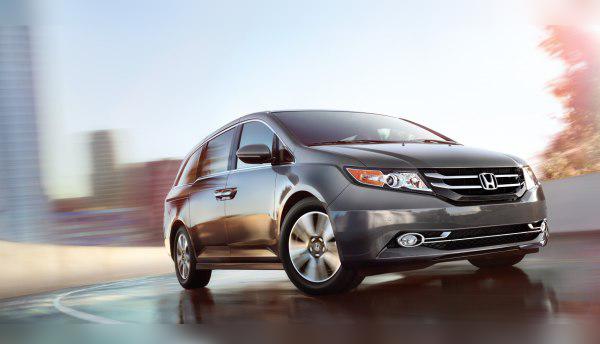
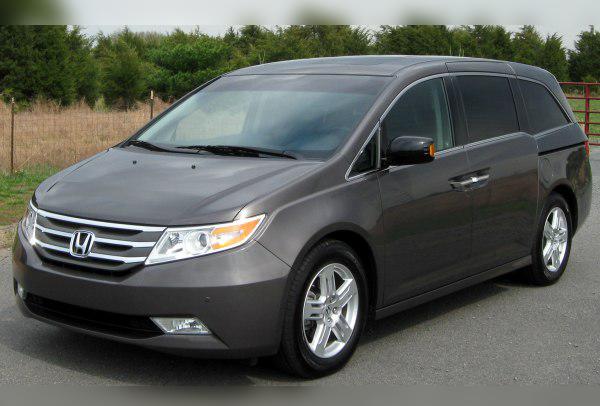
Honda 3.5 V6 (J35Z8) – experiences, issues, fuel consumption and buying tips
Key points in short (TL;DR)
- VCM System: The cylinder deactivation system (Variable Cylinder Management) is the main technical peculiarity, but also a potential source of problems (oil consumption, vibrations).
- Timing belt: This engine does not use a chain. The major service is mandatory and must not be postponed (a snapped belt leads to engine failure).
- Transmission: The automatic transmission is reliable only with regular oil changes. There is no such thing as “lifetime” oil with Honda.
- Engine mounts: Due to cylinder deactivation, the engine uses expensive active mounts that wear out faster than standard ones.
- Fuel consumption: On the open road it is surprisingly economical for this displacement, but in the city you should expect high consumption.
- Valve maintenance: It requires periodic mechanical valve adjustment (it does not have hydraulic lifters).
- Recommendation: An extremely refined and powerful cruiser, ideal for long family trips, provided the previous owner changed the oil on time.
Contents
- Introduction and applications
- Technical specifications
- Reliability and maintenance
- Specific parts and costs
- Fuel consumption and performance
- Additional options (LPG and tuning)
- Transmission
- Buying used and conclusion
Introduction and applications
The engine designated as J35Z8 belongs to Honda’s legendary J-series of V6 engines. This is the powerplant that defines the “American Honda” – a large, powerful, naturally aspirated petrol engine that offers exceptional smoothness. It was primarily installed in the fourth-generation Honda Odyssey (especially after the facelift and in Touring trims), a vehicle considered one of the best minivans in the world.
What sets this engine apart is the VCM (Variable Cylinder Management) technology, which allows the engine to run on 3, 4 or all 6 cylinders depending on load, in order to save fuel. While this looks great on paper, in practice it brings certain challenges that we will discuss in detail. By European standards, this is a “large-displacement exotic”, but for owners who want uncompromising comfort, the J35Z8 is the real deal.
Technical specifications
| Parameter | Value |
| Engine displacement | 3471 cc (3.5 L) |
| Configuration | V6 (SOHC VTEC) |
| Power | 185 kW (248 hp) @ 5700 rpm |
| Torque | 339 Nm @ 4800 rpm |
| Engine code | J35Z8 |
| Injection type | Multipoint (indirect injection) |
| Aspiration | Naturally aspirated |
| Valves per cylinder | 4 (24 in total) |
Reliability and maintenance
Timing belt or chain?
This is a key piece of information: the Honda J35Z8 uses a timing belt, not a chain. This is an interference engine, which means that if the belt snaps, the pistons will hit the valves and the engine will suffer catastrophic damage. It is very important to use genuine parts or parts from reputable Japanese manufacturers (such as Mitsuboshi, Koyo, Aisin) when replacing it.
Major service
The factory recommendation for timing belt replacement is usually around 100,000 to 120,000 kilometers or every 7 years (whichever comes first). Along with the belt, the tensioner, idler pulleys and the water pump must be replaced. Experienced mechanics also recommend checking the hydraulic belt tensioner during the same service, as it can weaken and cause “rattling” before the belt is actually worn out.
Most common issues: VCM-related problems
The majority of complaints about this engine are related to the VCM system. When the system deactivates cylinders to save fuel, temperatures in those cylinders drop, which can cause the piston rings to contract and let a small amount of oil into the combustion chamber. When the cylinder is reactivated, that oil burns. In the long run, this leads to:
- Fouled spark plugs: Oil creates deposits on the spark plugs in certain cylinders, which leads to misfires and the “Check Engine” light coming on.
- Oil consumption: Some units may consume more oil than usual.
- Vibrations: Running on 3 cylinders creates an imbalance, which Honda counters with active engine mounts. These mounts wear out faster and are very expensive to replace.
Many owners solve this problem by installing a device (the so‑called “VCM Muzzler”) that disables VCM activation, making the engine run as a V6 all the time – fuel consumption increases slightly, but reliability improves dramatically.
Oil and spark plugs
The engine takes about 4.3 to 4.5 liters of oil (always check the dipstick). The recommended grade is strictly 0W-20. This thin oil is crucial for proper VTEC and VCM operation. Do not experiment with thicker oils (such as 10W-40) unless you have a very strong reason and a recommendation from a Honda specialist.
As for oil consumption, due to the aforementioned VCM, consumption of 0.5 L to 0.8 L per 10,000 km can be considered acceptable, but anything over 1 L indicates stuck rings or an issue with the VCM system (more frequent level checks are recommended).
Spark plugs are iridium (NGK Laser Iridium or Denso). Replacement interval is 100,000 km. However, because of VCM issues, it is recommended to inspect them at 50–60,000 km. If they are “oily” or black, this is a sign of ring problems caused by cylinder deactivation.
Specific parts and costs
Fuel injection system and injectors
The J35Z8 uses classic multipoint (MPI) injection into the intake manifold. This is excellent news. The injectors are very durable, rarely fail and are not as sensitive as those on direct-injection engines. Also, this engine does not suffer from carbon buildup on the intake valves, which is a common issue on modern direct-injection petrol engines.
Turbo, DPF, EGR, AdBlue
- Turbo: None. The engine is naturally aspirated, which means fewer parts that can fail (no turbocharger, intercooler, high-pressure hoses).
- Dual-mass flywheel: Since this engine in the Odyssey comes exclusively with an automatic transmission, it does not have a conventional dual-mass flywheel like diesel engines with manual gearboxes. It has a torque converter, which is part of the transmission.
- DPF and AdBlue: None. This is a petrol engine, so you are spared all the hassle of DPF regeneration and AdBlue refills.
- EGR valve: It does have an EGR valve. It can get dirty over time (symptoms: rough idle, weaker response), but cleaning it is relatively simple and cheap compared to diesels.
Valve adjustment
One peculiarity of Honda’s J engines is that they do not have hydraulic lifters. This means they require mechanical valve adjustment. It is recommended to check the valve clearance every 40,000 to 50,000 km (especially if you run LPG), or at least during the major service at 100,000 km. Symptoms of out-of-adjustment valves are characteristic “ticking” when the engine is cold, or loss of compression if they are too tight.
Fuel consumption and performance
Real-world fuel consumption
Let’s be realistic – this is a 3.5 V6 engine in a heavy vehicle (the Odyssey weighs around 2 tons).
- City driving: Expect between 13 and 16 liters/100 km. In traffic jams and stop‑and‑go driving, this is not a frugal car.
- Open road: This is where the VCM system and the (for a van) decent aerodynamics come into play. At cruising speeds, consumption can drop to 8.5 to 10 liters/100 km, which is an excellent result for this power level.
Is the engine “lazy”?
Absolutely not. With 248 hp and linear power delivery, the J35Z8 moves the Odyssey’s body with ease. Acceleration is convincing, and overtaking on country roads is safe. The engine is very flexible, pulls strongly from low revs, and has that recognizable “VTEC sound” above 5000 rpm.
Highway driving
This is the natural habitat of this engine. At 130 km/h the engine runs relaxed, usually below 2500 rpm (depending on the gearbox), quiet and smooth. There is always plenty of power in reserve without the need for dramatic downshifts.
Additional options and modifications
LPG conversion
Yes, this engine is suitable for LPG conversion because it has indirect injection. However, there are two conditions:
- The system must be of top quality and properly mapped to follow VCM operating modes (cylinder deactivation). If the LPG ECU does not recognize cylinder deactivation, it will keep injecting gas into cylinders that are not firing.
- Valve adjustment: Honda cylinder heads are more sensitive to LPG than European ones. Valve clearance must be checked more frequently (every 30,000–40,000 km) to prevent valve seat recession and cylinder head damage. Installing a valve lubrication system (“valve saver”) is recommended.
Remapping (Stage 1)
On naturally aspirated petrol engines, remapping rarely brings significant gains. You can expect an increase of about 10 hp and a slightly better throttle response, but given the cost of a quality remap (not cheap), the investment rarely pays off. It is better to invest the money in quality maintenance or sorting out the VCM system.
Transmission
Which transmission comes with this engine?
The Honda Odyssey with the J35Z8 engine (2014 facelift and Touring models) comes paired with a 6‑speed automatic transmission (Honda designation usually associated with BYKA or similar codes, but the important thing is that it is a conventional automatic, not a CVT, not a DSG). Earlier models or lower trims had a 5‑speed automatic, but the 248 hp facelift version generally comes with 6 speeds.
Transmission issues and maintenance
Honda automatic transmissions were problematic in the past (early 2000s), but the 6‑speed in this model is much more robust. Still, it requires regular maintenance.
- Fluid change: Transmission fluid should be changed every 40,000 to 60,000 km. Use ONLY genuine Honda ATF DW‑1 fluid. Universal fluids often cause operating issues.
- Failure symptoms: If you notice hesitation when shifting, jolts when engaging “D” or “R”, or shuddering at constant speed (this can also be due to the torque converter), change the fluid immediately. Sometimes a triple drain‑and‑fill is needed, because you cannot drain all the fluid from the torque converter at once.
- Transmission cooler: For heavy use (towing, mountain roads), installing an additional transmission oil cooler is recommended, as overheating kills these gearboxes.
Buying used and conclusion
When buying a used Honda with the J35Z8 engine, pay attention to the following:
- Timing belt service history: If there is no proof it has been replaced, count that as an immediate expense (very costly – depends on the market, but parts + labor are a significant item).
- Vibrations while driving: Test‑drive the car on an open road at 80–100 km/h. If you feel strange vibrations when the engine is under light load, this may be faulty active engine mounts (a consequence of VCM). The mounts are expensive.
- Transmission fluid color: Pull the transmission dipstick (if accessible) or have the color checked. The fluid must be reddish and clear. If it is black or smells burnt, walk away from that car.
- Oil leaks: Check the valve cover gaskets and the VTEC/VCM solenoid (the so‑called “spool valve”). Leaks here can destroy the alternator, which sits directly underneath.
Conclusion: The Honda J35Z8 is a fantastic old‑school engine. It offers a level of refinement that diesels will never have and power that puts a smile on your face. Although the VCM system and automatic transmission require specific attention, with proper maintenance (regular oil changes, major service, valve adjustment), this engine can easily exceed 400,000 km without being opened. It is aimed at family‑oriented drivers who want reliability and comfort and are willing to pay a bit more for fuel in city driving.
Was this content useful to you?
Your opinion helps us to improve the quality of the content.