F22B8 Engine
- Engine
- 2155 cm3
- Aspiration
- Naturally aspirated engine
- Fuel
- Petrol (Gasoline)
- Fuel injection system
- Multi-port manifold injection
- Power
- 150 hp @ 5900 rpm
- Torque
- 198 Nm @ 5000 rpm
- Cylinders
- 4
- Valves
- 16, 4 per cylinder
- Cylinders position
- Inline
- Valvetrain
- OHC
- Oil capacity
- 3.8 l
- Coolant
- 7.8 l
# Vehicles powered by this engine
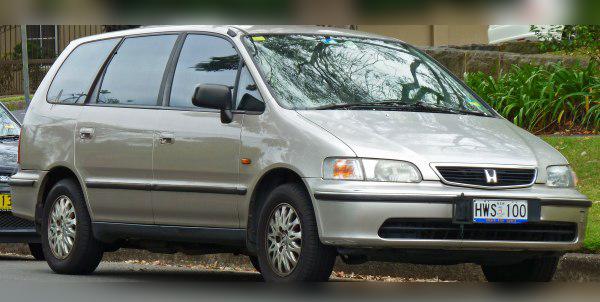
Honda F22B8 (2.2i) 150 HP: Owner Experiences, Issues, Fuel Consumption and Buying Used
During the 1990s Honda built a reputation for being “indestructible”, and the F-series engines are one of the main reasons for that. The F22B8 is the engine that powers the first generation of the popular minivan Honda Odyssey (in Europe better known as the Honda Shuttle in similar variants). This is a classic naturally aspirated petrol engine that doesn’t offer explosive performance, but does offer smooth operation and longevity, provided that certain Honda-specific maintenance rules are followed.
Although it’s considered “old school” today, this engine is still relevant for youngtimer enthusiasts or those looking for a cheap but spacious older family car. Below you’ll find everything you need to know before buying or servicing one.
Key points in short (TL;DR)
- Durability: Mechanically extremely robust engine (with “million mile engine” potential) if the oil is changed regularly.
- Timing service: Uses a timing belt. A snapped belt will destroy the engine.
- Gearbox: Automatic transmissions from this era are the “Achilles’ heel”. They require specific Honda fluid and regular changes.
- Fuel consumption: High. Expect double-digit consumption in city driving.
- LPG: Handles LPG very well, but requires mechanical valve adjustment every 20,000–30,000 km.
- Oil leaks: Often leaks from the distributor and valve cover (cheap repair).
- Recommendation: Buy only if the bodywork is solid and the gearbox doesn’t “jerk”.
Contents
- Technical Specifications
- Reliability and Maintenance
- Specific Parts (Costs)
- Fuel Consumption and Performance
- Additional Options and Modifications
- Transmission
- Buying Used and Conclusion
Technical Specifications
| Parameter | Value |
|---|---|
| Engine code | F22B8 |
| Displacement | 2155 cc (2.2 L) |
| Power | 110 kW (150 HP) @ 5600 rpm |
| Torque | 198 Nm @ 4600 rpm |
| Configuration | Inline-4, SOHC |
| Induction | Naturally aspirated |
| Fuel injection | PGM-FI (multi-point injection) |
| Valves | 16 valves (4 per cylinder) |
Reliability and Maintenance
Timing belt or chain?
The F22B8 uses a timing belt. This is a key maintenance item. In addition to the main timing belt, this engine also has a smaller balance shaft belt. It is very important to replace both belts at the same time, along with the tensioners and water pump.
Warning: This is an interference engine. If the belt snaps, the pistons will hit the valves and cause severe damage (bent valves, damaged cylinder head).
Major service and intervals
It’s recommended to do the full timing service every 80,000 to 100,000 km or every 5 to 7 years (whichever comes first). Due to the age of these cars, don’t risk extended intervals. A timing kit for this engine is not very expensive (depends on the market), but labor can be a significant cost because access in the Odyssey (Shuttle) engine bay is sometimes tight.
Oil: capacity, grade and consumption
The engine takes approximately 4.3 to 4.5 liters of oil (with filter). The recommended grade is usually 5W-30 or 10W-30 (in warmer climates 10W-40 is acceptable for older engines).
Oil consumption: Honda engines from this period are known to “drink” a bit of oil in the VTEC zone (high rpm), but the F22B8 is generally stable. Consumption up to 0.5 L per 1000 km can be tolerated on engines with over 300,000 km, but anything above that indicates a problem.
The main causes of oil loss are not burning, but leaks: 1. Distributor O-ring. 2. VTEC solenoid gasket (if that version has VTEC). 3. Crankshaft and camshaft seals.
Spark plugs and ignition system
Since it’s a petrol engine, spark plugs need to be replaced regularly.
If you use standard (copper) plugs (NGK ZFR5F-11), they are replaced every 20,000–30,000 km.
If you use iridium plugs, they can last up to 100,000 km.
Symptoms of bad plugs/wires: Rough idle, hesitation when you press the throttle, and increased fuel consumption.
Most common issues
- EGR valve: The ports in the intake manifold clog up with soot. Symptoms are jerking at light throttle and a “Check Engine” light. Cleaning solves the problem.
- Main relay: A classic Honda 90s issue. Solder joints crack from heat. Symptom: the engine cranks but won’t start when the cabin is hot (e.g. in summer).
- Distributor: The distributor bearing or the internal ignition coil can fail.
- Radiator: The plastic top tank of the radiator cracks with age.
Specific Parts (Costs)
Dual-mass flywheel and clutch
This model came with an automatic transmission in 99% of cases, so it uses a torque converter rather than a conventional clutch kit and dual-mass flywheel. If you happen to find a manual version (often the result of a later conversion), it uses a solid flywheel which is practically lifetime.
Turbo and injectors
The engine does not have a turbocharger. This is an old-school naturally aspirated engine, which significantly reduces maintenance costs because there is no turbo, intercooler or high-pressure hoses that can burst.
Injectors: They are very reliable and rarely cause problems. If they do, ultrasonic cleaning is usually enough.
DPF, EGR and AdBlue
Since this is an older-generation petrol engine:
DPF: NONE.
AdBlue: NONE.
EGR: PRESENT. As mentioned, the EGR valve and its passages clog up. This is not an expensive repair, but it does take time to remove the intake manifold and clean everything manually.
Fuel Consumption and Performance
Real-world fuel consumption
Let’s be honest – this is not an economical car by today’s standards.
City driving: Expect between 12 and 15 liters per 100 km, depending on traffic and how heavy your right foot is. In winter, even more.
Open road: At 90 km/h it can drop to around 8–9 liters.
Motorway (130 km/h): Around 10–11 liters.
Is the engine “lazy”?
With 150 HP and 198 Nm, the engine is adequate but not fast. The first-gen Honda Odyssey is a heavy car. In city driving it feels perfectly fine thanks to good throttle response. However, on uphill sections with a full load of passengers and luggage, the lack of torque becomes noticeable, so the gearbox has to downshift frequently to maintain speed.
Behaviour on the motorway
The engine is relatively noisy at speeds above 120 km/h. Because the automatic gearbox has only 4 gears, at 130 km/h the engine spins at around 3000 to 3500 rpm (depending on the exact final drive). This contributes to higher noise and fuel consumption.
Additional Options and Modifications
LPG conversion
Yes, the F22B8 is an excellent candidate for LPG. The metal intake manifold and simple design make installation easy.
VERY IMPORTANT: This engine does not have hydraulic lifters. Valve clearances must be adjusted manually. When running on petrol, this is done every 40,000 km. When running on LPG, you must check/adjust the valves every 20,000 km! If you ignore this, the valves will recess, burn and you will destroy the cylinder head. This is the key point for LPG owners.
ECU remap (Stage 1)
Not worth it. This is a naturally aspirated petrol engine. An ECU remap will give you practically nothing (maybe 3–5 HP which you won’t feel), and you’ll just waste money. It’s better to invest that money in quality spark plugs, leads and injector cleaning to restore factory power.
Transmission
Automatic transmission (most common option)
With the F22B8 in the Odyssey you almost exclusively get a 4-speed automatic transmission.
Reliability: This is the most sensitive part of the car. Honda automatics from this era are prone to overheating and clutch pack wear if the fluid is not changed regularly.
Failure symptoms:
1. Jerking when shifting from P to D or R.
2. “Slipping” (revs rise but the car doesn’t accelerate) when shifting from 2nd to 3rd gear.
3. Burnt smell on the transmission dipstick.
Transmission maintenance
Change the transmission fluid every 40,000 to 60,000 km.
STRICT RECOMMENDATION: Use only genuine Honda fluid (formerly ATF-Z1, now replaced by ATF DW-1). Do not use universal ATF fluids, as Honda transmissions rely on different friction characteristics and universal fluids can destroy them. Also, do not perform “power flushing” on an old transmission; only do simple drain & fill.
Buying Used and Conclusion
What to check before buying?
- Transmission: Warm the car up thoroughly. The gearbox should shift smoothly and almost imperceptibly. If you feel a strong jolt or delay when changing gears, walk away from that car. A rebuild is very expensive (often more than the value of the vehicle).
- Exhaust smoke: Bluish smoke at startup or under sudden acceleration means worn valve stem seals or piston rings (oil consumption).
- Main relay: Switch the car off and start it several times while it’s hot. It should start instantly every time.
- Rust: The Odyssey from that period doesn’t have great rust protection. Check the rear wheel arches and sills.
Final verdict
The F22B8 is an old-school workhorse. It wasn’t built to impress you with speed, but to cover hundreds of thousands of kilometers with minimal demands. It’s ideal for families who need a cheap “cargo hauler” or Honda brand enthusiasts.
If you find a car with a healthy automatic transmission and documented timing belt service, it’s a recommended buy. Otherwise, the cost of bringing it into proper condition can quickly exceed the value of the car itself.
Was this content useful to you?
Your opinion helps us to improve the quality of the content.