J35Z4 Engine
- Engine
- 3471 cm3
- Aspiration
- Naturally aspirated engine
- Fuel
- Petrol (Gasoline)
- Fuel injection system
- Multi-port manifold injection
- Power
- 253 hp @ 5700 rpm
- Torque
- 343 Nm @ 4800 rpm
- Cylinders
- 6
- Valves
- 24, 4 per cylinder
- Cylinders position
- V-engine
- Max engine speed
- 6300 rpm
- Valvetrain
- SOHC i-VTEC
- Oil capacity
- 4.3 l
- Coolant
- 7.5 l
# Vehicles powered by this engine

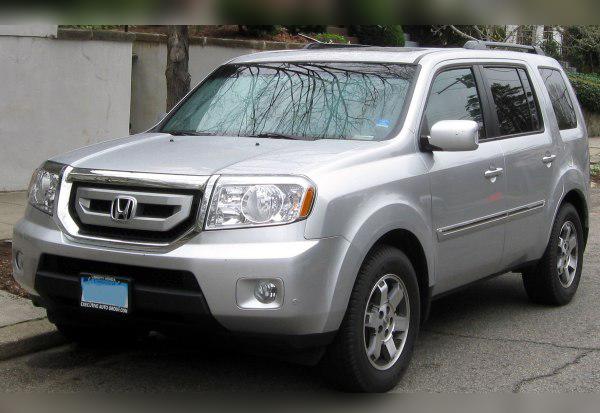
Honda J35Z4 3.5 V6 i-VTEC – Experiences, Issues, Fuel Consumption and Maintenance
Most important in short (TL;DR)
- Camshaft drive: Uses a timing belt that must be replaced on time (interference engine).
- VCM system: The cylinder deactivation system is its biggest “weak point” – it causes vibrations, oil consumption and engine mount wear.
- Durability: Mechanically a very robust engine that can cover huge mileage with regular maintenance.
- Fuel consumption: Not for those on a tight budget; in the city it easily exceeds 15 l/100 km.
- Transmission: Reliable 5-speed automatic, requires regular fluid changes.
- Maintenance: Requires valve adjustment (mechanical), there are no hydraulic lifters.
- Recommendation: Ideal for long trips and towing, less suitable for pure city driving.
Contents
Introduction and applications
The J35Z4 engine belongs to Honda’s legendary J-series of V6 engines. This is an “old-school” powerplant with a modern twist in the form of cylinder deactivation for fuel savings. It was primarily installed in the second generation of the Honda Pilot (including the 2012+ facelift models). It represents a classic American approach to engines – large displacement, naturally aspirated and a relaxed driving character. Although primarily designed for the North American market, this engine is often seen in Europe through grey imports or models intended for specific markets (e.g. Russia, Ukraine, Middle East). Its main characteristic is smooth operation (when VCM is not active) and linear power delivery.
Technical specifications
| Parameter | Value |
|---|---|
| Engine code | J35Z4 |
| Displacement | 3471 cc (3.5 L) |
| Configuration | V6, SOHC, VTEC |
| Power | 186 kW (253 hp) @ 5700 rpm |
| Torque | 343 Nm @ 4800 rpm |
| Fuel type | Petrol (naturally aspirated) |
| Fuel injection | PGM-FI (multi-point indirect) |
| Valve system | 24 valves (4 per cylinder), belt-driven |
Reliability and maintenance
The J35Z4 is generally a very reliable engine that can easily exceed 400,000 km, but it has a few specific “issues” related to emissions systems that you need to be aware of.
Timing belt or chain?
This engine uses a timing belt. This is a critical maintenance item. Honda J-series engines are interference engines, which means that if the belt snaps, the pistons will hit the valves and the engine will suffer catastrophic damage. When replacing the belt, you must also replace the tensioner, idler pulleys and water pump.
Most common failures and symptoms
The biggest enemy of this engine is the VCM (Variable Cylinder Management) system. This system shuts down 2 or 3 cylinders under light load to save fuel.
- Oil consumption and fouled spark plugs: When cylinders are deactivated, a vacuum is created in the combustion chamber that can draw oil past the rings. This leads to fouling of the spark plugs on those specific cylinders and premature oil consumption.
- Vibrations and engine mounts: Running on 3 or 4 cylinders creates imbalance. Honda uses expensive, active hydraulic engine mounts to compensate for this. These mounts wear out quickly and their replacement is very expensive (depends on the market, but expect a serious amount per mount).
- Oil leak at the VTEC/spool valve: A common issue where oil leaks directly onto the alternator, which can lead to alternator failure. Symptoms are a burning smell and oily traces above the alternator.
Service intervals
Major service: Recommended every 100,000 to 120,000 km or 7 years, whichever comes first. Do not take risks with this interval.
Valve adjustment: J35 engines do not have hydraulic lifters. The valves must be adjusted mechanically. It is recommended to do this at every major service or if you hear a characteristic “ticking” from a cold engine.
Oil: quantity and consumption
The engine takes about 4.3 to 4.5 litres of oil (with filter). The recommended viscosity is 0W-20 or 5W-20. Honda insists on thin oil due to tight tolerances and the VCM system.
Oil consumption: Due to the VCM system, consumption of 0.5 to 1 litre per 5,000 km is often considered “normal” by the manufacturer, even though owners dislike it. Regular level checks (every 1,000 km) are mandatory.
Spark plugs
Iridium spark plugs are used (NGK or Denso). The factory interval is around 100,000 km. However, due to the aforementioned VCM issue, the plugs on the deactivated cylinders can fail earlier (already at 50–60k km). Symptoms are rough running and a “Check Engine” light.
Specific parts (costs)
Maintaining a Honda Pilot with this engine is not cheap in Europe, primarily because parts availability is limited and they often have to be ordered as genuine parts.
- Dual-mass flywheel: This engine comes exclusively with an automatic transmission, so there is no dual-mass flywheel in the sense of manual gearboxes. It has a torque converter, which is reliable.
- Fuel injection system: Uses a classic PGM-FI (multi-point) system. Injectors are extremely durable and rarely cause problems. It is not as sensitive to fuel quality as engines with direct injection.
- Turbocharger: The engine is naturally aspirated, there is no turbocharger. That’s one less thing to worry about (no turbo rebuilds, no intercooler issues).
- DPF and EGR: Petrol engine, so no DPF filter. It does have an EGR valve that can get clogged with soot (especially if the engine burns oil); symptoms are unstable idle and diagnostic trouble codes. Cleaning usually solves the problem.
- AdBlue: No AdBlue system.
Fuel consumption and performance
Let’s be honest – this is a 3.5 V6 engine in a heavy, boxy SUV. The aerodynamics of a brick and large displacement mean high fuel consumption.
- City driving: Real-world city consumption ranges from 14 to 17 l/100 km. In heavy traffic and in winter, it can go up to 20 litres. VCM helps a bit here, but the vehicle’s mass (over 2 tons) takes its toll.
- Performance and “sluggishness”: The engine is not sluggish. With 253 hp and good torque, the Pilot accelerates surprisingly briskly for its size. Acceleration is linear and strong, especially when overtaking. It’s not a sports car, but you will never feel a lack of power on climbs.
- Highway: This is the natural habitat of this engine. At 130 km/h the engine spins at a low 2,000–2,200 rpm (thanks to long gearing). At that point, fuel consumption is at its lowest, around 10–11 l/100 km, and cabin noise is minimal.
Additional options and modifications
LPG conversion
Yes, this engine is suitable for LPG conversion because it has indirect injection. However, there are two key points:
- You must install a high-quality system (OBD connection is mandatory) and regularly perform valve adjustment (every 30–40k km instead of 100k), because Honda cylinder heads can be sensitive to the high temperatures of LPG.
- The VCM system can cause issues when running on LPG (jerking when switching cylinder operation modes). It is recommended to disable VCM, either via software or hardware, if you drive on LPG.
Chip tuning (Stage 1)
On naturally aspirated petrol engines, “Stage 1” chip tuning brings negligible power gains (maybe 10–15 hp), which are barely noticeable in real driving. The best “modification” for this engine is a device or software to disable the VCM system (the so‑called VCM Muzzler). Although fuel consumption will increase slightly (0.5–1 litre), the engine will run smoother, the mounts will last longer, and oil consumption will be drastically reduced.
Transmission
The J35Z4 in the second-generation Honda Pilot comes exclusively with a 5-speed automatic transmission. A manual gearbox was not an option.
- Automatic reliability: The transmission is generally robust, but “old-school”. It is not as fast as modern ZF gearboxes, but it is comfortable.
- Most common issues: “Shudder” or vibration under light acceleration (often related to the torque converter or old fluid). Also, overheating of the transmission if you frequently tow heavy trailers without an additional transmission oil cooler.
- Maintenance: Fluid changes are mandatory every 40,000 to 60,000 km. Use only genuine Honda fluid (ATF-DW1). Do not perform high-pressure machine flushing; instead, use the simple “drain and fill” method 3 times to replace the full amount.
Buying used and conclusion
If you are looking at a Honda Pilot with this engine, focus on the following during inspection:
- Proof of timing belt replacement: If there is no documentation, immediately factor in the cost of a major service (parts + labour: expensive).
- Vibrations: Test the car on a flat road at a constant speed (e.g. 70–80 km/h) when the “ECO” light comes on (indicating that VCM is active). If you feel strong vibrations in the steering wheel or seat, the engine mounts are likely worn out.
- Oil around the alternator: Check whether the alternator is oily.
- Transmission: Check the colour of the transmission fluid on the dipstick. It must be reddish/pink, never brown or smelling burnt.
Conclusion: The Honda J35Z4 is an engine for those who want reliability and comfort and are not counting every litre of fuel. It is perfect for large families and long trips. If you can accept higher fuel consumption and potential investment in disabling the VCM system, this engine will serve you for hundreds of thousands of kilometres with just regular maintenance.
Was this content useful to you?
Your opinion helps us to improve the quality of the content.