J35A6 Engine
- Engine
- 3471 cm3
- Aspiration
- Naturally aspirated engine
- Fuel
- Petrol (Gasoline)
- Fuel injection system
- Multi-port manifold injection
- Power
- 258 hp @ 5600 rpm
- Torque
- 339 Nm @ 4500 rpm
- Cylinders
- 6
- Valves
- 24, 4 per cylinder
- Cylinders position
- V-engine
- Max engine speed
- 6300 rpm
- Valvetrain
- SOHC, VTEC
- Oil capacity
- 4.3 l
- Coolant
- 7.2 l
# Vehicles powered by this engine
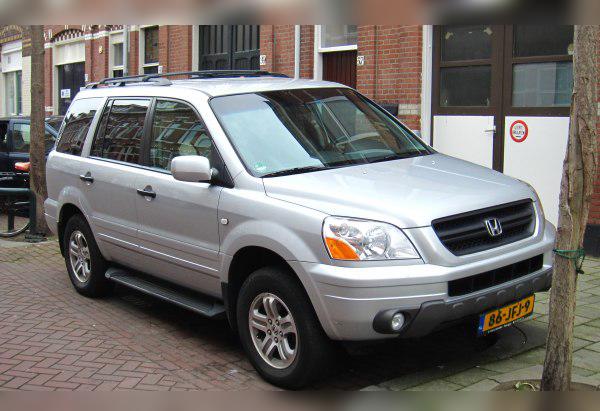
Honda J35A6 3.5 V6 VTEC: Experiences, Issues, Fuel Consumption and Maintenance
Key points in short (TL;DR)
- Reliability: One of the most reliable V6 engines Honda has ever made, known for its longevity.
- Major service: The engine uses a timing belt, not a chain. Replacement is mandatory and expensive, but critical for the engine’s life.
- Transmission: The automatic transmission requires regular fluid changes; neglect leads to costly failures.
- Fuel consumption: Expect high fuel consumption, especially in the city. This is not an economical engine.
- LPG (Autogas): Handles LPG very well, but requires more frequent valve clearance checks.
- Recommendation: Ideal for drivers who want power and comfort and are willing to pay higher registration and fuel costs for that “American-style” driving feel.
Contents
- Introduction and Applications
- Technical Specifications
- Reliability and Maintenance
- Specific Components (Costs)
- Fuel Consumption and Performance
- Additional Options and LPG
- Transmission
- Buying Used and Conclusion
Introduction and Applications
The engine with the code J35A6 belongs to Honda’s renowned J-series of V6 engines. This powerplant defines the “old-school” quality approach – large displacement, naturally aspirated, and very refined operation. This particular variant was installed in the first-generation Honda Pilot (facelift models from 2005 to 2008).
Unlike some newer J-series variants that use cylinder deactivation (VCM) for fuel savings, the J35A6 is in most applications a “purebred” V6 that always runs on all cylinders. This makes it mechanically simpler and, in the opinion of many mechanics, more durable. It is designed for heavy vehicles and all-wheel drive (AWD), delivering torque where it’s needed most – in the low and mid rev range.
Technical Specifications
| Displacement | 3471 cc (3.5 L) |
| Power | 190 kW (258 hp) at 5750 rpm |
| Torque | 339 Nm at 4500 rpm |
| Engine code | J35A6 |
| Configuration | V6, SOHC VTEC, 24 valves |
| Injection type | Multi-point (Port fuel injection) |
| Aspiration | Naturally aspirated |
Reliability and Maintenance
Does this engine have a timing belt or a chain?
This engine uses a timing belt. This is crucial information for every owner. Honda J-series engines are interference engines, meaning that if the belt snaps, pistons and valves will collide, causing catastrophic damage. The timing kit (belt, tensioners, water pump) must be of top quality (OEM or reputable Japanese aftermarket brands).
What are the most common issues with this engine?
Although very reliable, the J35A6 has a few specific weak points:
- Oil leak at the VTEC spool valve: The sealing gaskets on the oil filter housing/VTEC solenoid harden over time and oil starts leaking directly onto the alternator, which can destroy it.
- Valve adjustment: This is not a failure but a maintenance requirement. The engine does not have hydraulic lifters, only mechanical ones. If you hear “ticking” when the engine is cold or warm, valve clearance adjustment is needed. Neglected valves can burn.
- Power steering pump: The O-ring seals on the power steering pump lines often lose their seal, causing the pump to draw in air. This manifests as a whining noise from the steering when starting from cold.
At what mileage should the major service be done?
The factory recommendation is usually around 100,000 to 120,000 km or every 7 years, whichever comes first. Considering the age of these vehicles, the time interval is often more important than mileage. Along with the belt, the hydraulic tensioner should always be replaced, as it is known to weaken.
How many liters of oil does this engine take and which viscosity is recommended?
The engine takes approximately 4.3 to 4.5 liters of oil (with filter). For this model year, Honda often recommends 5W-20 for fuel economy, but in European climate conditions and for higher-mileage engines, 5W-30 has proven to be an excellent choice for better protection at higher temperatures.
Does it consume oil between services?
The J35A6 is generally not known as a heavy oil consumer if the piston rings are in good condition. Consumption up to 0.5 liters per 10,000 km is acceptable. If it uses more, the issue is usually external leaks (crankshaft seals, valve cover gasket) or a clogged PCV valve, rather than the engine itself being worn out.
At what mileage should the spark plugs be replaced?
This engine uses iridium spark plugs. The replacement interval is long, usually around 100,000 km. Access to the rear three cylinders (towards the cabin) is a bit more difficult, so some mechanics only replace the front three – make sure all six have been replaced when buying the car.
Specific Components (Costs)
Does this engine have a dual-mass flywheel?
Not in the conventional sense. Since it comes exclusively with an automatic transmission, this engine uses a torque converter and a flexplate. There is no dual-mass flywheel like on manual diesel cars, which is prone to failure. This is a major saving in maintenance costs.
What type of fuel injection does it have and are the injectors problematic?
It uses classic port fuel injection (MPI). The petrol injectors on this engine are extremely durable and rarely cause problems. They are not as sensitive to fuel quality as modern direct injectors (GDI/FSI).
Does the engine have a turbocharger?
No. This is a large-displacement naturally aspirated engine. There is no turbocharger, no intercooler, and no expensive boost hoses that can burst under pressure. This significantly reduces potential repair costs.
Does it have a DPF filter or an EGR valve?
There is no DPF filter (it’s a petrol engine). It does have an EGR valve. The EGR passages in the intake manifold on J-series engines can get clogged with carbon deposits over time, which triggers the “Check Engine” light and causes rough running. Cleaning is relatively simple and inexpensive (depending on the market).
Does it use AdBlue?
No, this system is not present on this engine.
Fuel Consumption and Performance
What is the real-world fuel consumption in city driving?
Let’s be brutally honest here: the Honda Pilot with this engine is a heavy SUV with permanent all-wheel drive. In stop-and-go city traffic, real-world consumption is between 14 and 18 liters of petrol per 100 km. In winter it can be even higher.
Is this engine “lazy” for the weight of the vehicle?
Absolutely not. With 258 hp and, more importantly, 339 Nm of torque, the engine handles the Pilot’s weight (over 2 tons) with ease. Throttle response is linear and confident. It’s not a sports car, but overtaking is safe and reasonably quick.
How does the engine behave on the highway and at what rpm does it cruise at 130 km/h?
This is the engine’s natural habitat. On the highway it is extremely quiet and refined. At 130 km/h it spins at relatively low revs (around 2,200–2,500 rpm, depending on the transmission and gradient), thanks to the tall gearing of the automatic transmission.
Additional Options and Modifications
Is this engine suitable for LPG (autogas) conversion?
Yes, it is an excellent candidate. Due to port fuel injection, installation is straightforward and the system pays for itself quickly because of the high petrol consumption. However, Honda engines have valves that are somewhat “softer”. If you run on LPG, the valve clearance inspection interval should be halved (every 30,000–40,000 km), and if necessary a valve lubrication system (“valve saver”) can be installed, although regular valve adjustment is the key factor.
How much power can safely be gained with a “Stage 1” remap?
Naturally aspirated petrol engines don’t have much headroom for software-only power gains. A “Stage 1” remap might give you 5 to 10 hp, which in practice is barely noticeable. The only real improvement you may feel is in throttle response, so investing in remapping this engine is generally not worthwhile.
Transmission
Which transmissions are fitted?
With the J35A6 in the first-generation Honda Pilot you only get a 5-speed automatic transmission. This is a classic hydraulic automatic developed by Honda.
What are the most common transmission issues?
Honda automatics from the early 2000s had a poor reputation. By the time the J35A6 arrived (2005/2006), most of the issues had been resolved, but the transmission is still the weakest point. The most common problem is overheating of the fluid due to heavy use (towing, mountain driving), which leads to clutch pack slippage inside the transmission. Also, the pressure switches for 3rd and 4th gear are known to fail.
Clutch replacement cost?
Since it’s an automatic, there is no conventional clutch disc. A full automatic transmission overhaul (if it fails) is very expensive (often over 1500–2000 EUR, depending on the market). That’s why preventive maintenance is crucial.
At what mileage should the transmission be serviced?
The transmission fluid (Honda original ATF-Z1 or the newer ATF DW-1) should be changed more frequently than the factory interval. The recommendation is a “drain and fill” (about 3 liters are replaced) every 40,000 km. Never perform a power flush on older Honda automatics, as this can kill them. Only use gravity drain-and-fill.
Buying Used and Conclusion
Before buying a Honda Pilot with the J35A6 engine, make sure to check:
- When was the major service done? (Ask for a sticker or invoice; if there is no proof, negotiate the price down by the cost of the service).
- Color and smell of the transmission fluid: Pull out the transmission dipstick. The fluid should be reddish or pink. If it’s black or smells burnt, walk away from that car.
- Engine noise: Listen to a cold start. A sharp metallic noise may indicate that the valves are out of adjustment or that the timing belt tensioner is failing.
Conclusion: The Honda J35A6 is a “gem” of an engine – powerful, smooth, and capable of covering 500,000+ km with basic maintenance. Its biggest drawback is fuel consumption, which does not suit European petrol prices. If that (or an LPG conversion) doesn’t bother you, you’ll get an engine that offers top-notch comfort and safety, with a minimal chance of leaving you stranded.
Was this content useful to you?
Your opinion helps us to improve the quality of the content.