H22A5, H22A8 Engine
- Engine
- 2157 cm3
- Aspiration
- Naturally aspirated engine
- Fuel
- Petrol (Gasoline)
- Fuel injection system
- Multi-port manifold injection
- Power
- 185 hp @ 7000 rpm
- Torque
- 206 Nm @ 5300 rpm
- Cylinders
- 4
- Valves
- 16, 4 per cylinder
- Cylinders position
- Inline
- Valvetrain
- DOHC
- Oil capacity
- 4.8 l
- Coolant
- 6.9 l
# Vehicles powered by this engine
In short (TL;DR)
- Legendary VTEC character: This is an engine that truly comes alive at high RPM. Below 5000 rpm it’s tame, above that it turns into a real beast.
- FRM liners: The engine block uses a specific alloy (Fiber Reinforced Metal). This means it can’t just be “rebored” by any local machinist if damage occurs.
- Oil consumption: These engines are known for “liking to drink” oil, especially in VTEC mode. Regular level checks are a must.
- Major service is complicated: Besides the timing belt, the engine also has a balance shaft belt. If the balance belt snaps, it can get under the timing belt and destroy the engine.
- Automatic gearbox is a weak point: If you’re choosing a Prelude with this engine, the manual gearbox is by far the more reliable option.
- Fun vs. Economy: It’s not a city fuel-economy champion, but it offers one of the best driving experiences of the 90s.
Contents
Introduction: The last mid-class samurai – Honda H22A5 / H22A8 ownership experience
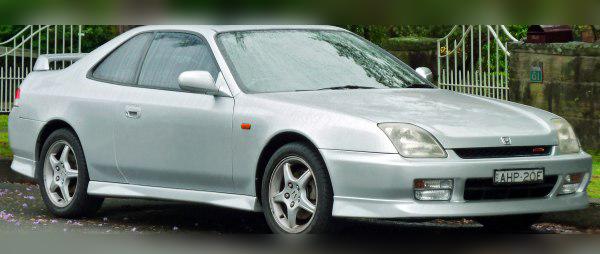
Honda’s H22 engine series represents one of the highlights of 90s engineering when it comes to naturally aspirated four-cylinder engines. Specifically, the H22A5 and H22A8 variants are the beating hearts of European 5th generation Honda Prelude (BB6/BB8) models. This is not an engine for a quick run to the grocery store; it’s a powerplant designed for drivers who understand both the “curse” and the “blessing” of high revs.
While the H22A5 is the standard 185 hp version (often called the “Black Top” because of its black valve cover), the H22A8 is an evolution used in later years or in specific “Type S” / VTi-S variants (often with a red cover), offering slightly improved performance and compression. Still, both engines share the same DNA: DOHC VTEC technology that changes the car’s character with a press of the accelerator pedal.
Technical specifications
| Specification | Data |
|---|---|
| Engine displacement | 2157 cc (2.2 L) |
| Power | 136 kW (185 hp) – H22A5 / up to 147 kW (200 hp) – H22A8 |
| Torque | 206 Nm – 212 Nm |
| Configuration | Inline 4-cylinder, 16 valves, DOHC VTEC |
| Engine codes | H22A5, H22A8 |
| Injection type | PGM-FI (Multi-point injection) |
| Aspiration | Naturally aspirated |
| Engine block | Aluminum with FRM liners |
Reliability and Maintenance
Timing belt or chain?
This engine uses a timing belt. However, the system is more complex than in an average car. In addition to the main timing belt that drives the camshafts, there is a smaller balance shaft belt. Its role is to reduce vibrations from the large four-cylinder.
Danger: If the balance belt snaps, it often slips under the main timing belt, causing the main belt to jump or break, which leads to piston-to-valve contact (catastrophic failure).
Major service and intervals
Considering the age of these cars and the quality of today’s parts, it’s recommended to do a major service every 80,000 to 100,000 km at most, or every 5 years.
You must replace: the main belt, balance belt, both tensioners, water pump, and crankshaft and camshaft oil seals.
Important: H22 engines use an automatic hydraulic timing belt tensioner. It’s known as a weak point because it can lose tension over time. Many enthusiasts proactively replace it with a mechanical (manual) tensioner for safety.
Oil: Consumption and recommendations
The H22 engine takes about 4.8 to 5.0 liters of oil (with filter). Recommended viscosity for European climates is 5W-40 or 10W-40 (quality synthetic or semi-synthetic).
Does it burn oil? Yes. This is a characteristic, not necessarily a fault, as long as it’s within reason. Due to the VTEC system, high revs, and specific FRM liners, consumption of 0.5L to 1L per 1,000–2,000 km under aggressive driving is not unusual. If you drive gently, consumption should be negligible. If it blows blue smoke from the exhaust when you rev it (not just in VTEC), that points to worn piston rings or valve stem seals.
Spark plugs and injectors
Spark plugs should be replaced every 40,000 km (for standard copper/nickel) or up to 100,000 km if you use Iridium/Platinum types (NGK or Denso are strongly recommended for Honda). Injectors are extremely reliable and rarely cause issues, unless the car has been sitting for a long time or has been run on very poor-quality fuel.
Most common failures
Besides oil consumption and the sensitive belt tensioner, common issues include:
- Oil leaks: From the distributor shaft seal, VTEC solenoid, and oil cooler (the O-ring hardens).
- Distributor: Contacts can corrode or the ignition module can fail, causing misfires or a no-start condition.
- EGR passages: Clogged passages in the intake manifold can cause rough running.
- Rust: Although not part of the engine, the Prelude BB6/8 suffers from corrosion on the rear arches, which can be expensive to repair.
Specific Parts (Costs)
Flywheel and clutch
Fortunately, H22 engines in the Prelude come from the factory with a solid (single-mass) flywheel. That means no expensive dual-mass flywheel replacements. The clutch kit is a wear item and the price depends on the manufacturer (Exedy is OEM and recommended), but it falls into the category of moderately expensive parts (depending on the market).
Turbo, DPF, AdBlue?
This is “old school”. The engine has no turbocharger (it makes power from revs), no DPF filter, and of course no AdBlue system.
EGR valve
It does have an EGR valve. It doesn’t often fail mechanically, but the passages through which exhaust gases recirculate in the intake manifold clog up with soot. Symptoms are a “flat spot” when accelerating at low revs or the “Check Engine” light coming on. Cleaning the intake (“carbon cleaning”) solves the problem.
Fuel Consumption and Performance
Real-world consumption
Don’t expect miracles. This is a 2.2L engine of older design.
- City driving: Expect between 11 and 14 liters per 100 km, depending on how heavy your right foot is. In winter and heavy traffic it can go even higher.
- Highway / open road: Here it does better, around 7.5 to 9 liters per 100 km.
Is the engine “lazy”?
Yes and no. Up to about 5,200 rpm, the engine behaves like a regular 2.2 petrol – it has enough torque for normal driving, but it doesn’t “pin you to the seat”. It’s not lazy, just linear.
The magic happens after 5,200 rpm when VTEC engages (the cams switch to a more aggressive profile). Then the engine changes its sound, becomes aggressive, and pulls hard all the way to the redline (around 7,500 rpm). For overtaking on country roads it’s excellent, but you have to shift down (into third or fourth).
Driving on the motorway
At 130 km/h in 5th gear (manual gearbox), the engine spins at about 3,500–3,800 rpm (depending on the exact gearbox ratio). This means there is a certain amount of engine noise in the cabin, but power is instantly available for acceleration without needing to downshift.
Additional Options and Modifications
LPG installation
It’s possible, but with caution. Honda engines from this era have relatively “soft” valve seats. Long-term LPG use without valve protection additives (so-called “drip system” or Flashlube) can lead to valve seat recession.
Also, the LPG map must be tuned perfectly, especially at the moment when VTEC engages. If the mixture stays lean at high revs, the engine will overheat and melt the pistons.
Conclusion: It’s recommended only with a top-quality sequential LPG system, a valve saver kit, and regular valve clearance checks (they are adjusted manually with a screwdriver and spanner, there are no hydraulic lifters).
Chipping (Stage 1)
On naturally aspirated petrol engines, “Stage 1” chipping is basically a waste of money. You might gain 3–5 hp, which you won’t even feel. Proper tuning of this engine involves upgrading the intake, exhaust manifold (4-2-1), and full exhaust system, and only then doing a dyno remap. That way you can get a noticeable difference and lower the VTEC engagement point.
Gearbox: Manual vs Automatic
Which gearboxes were fitted?
With H22 engines you could get:
- Manual: 5-speed gearbox (codes M2V5, M2P4, etc.).
- Automatic: 4-speed sequential automatic known as SportShift.
Gearbox issues
Manual: Very robust and precise. The most common issue is grinding when shifting into 5th gear or reverse (worn synchros) if the car has been driven hard. Repair is not cheap because it requires opening the gearbox, but used gearboxes can be found. Gearbox oil should be changed every 60,000 km (exclusively with genuine Honda MTF oil).
Automatic (SportShift): AVOID AT ALL COSTS. These gearboxes are known as the Achilles’ heel of the Prelude. They are very prone to overheating, clutch pack slippage inside the gearbox, and complete failure as early as 150,000–200,000 km. Rebuilds are very expensive (often more than the car is worth), and good used units are rare.
Buying used and Conclusion
What to check before buying?
- Cold start: Watch the exhaust. Blue smoke immediately on startup = valve stem seals. Blue smoke when revving = oil control rings (FRM liners may be damaged, which requires re-sleeving with steel liners and different pistons – a very expensive job).
- VTEC test: Once the engine is warm, get onto an open road. In second or third gear, full throttle. At around 5,200 rpm you must feel and hear the change (the “kick”). If acceleration is linear with no “step”, VTEC isn’t working (often just a dirty solenoid or low oil level, but it can also be a bigger issue).
- 4WS (4 Wheel Steering): Many 2.2 models have four-wheel steering. Check if the “4WS” light is on in the cluster. If it’s lit, the system isn’t working (often due to cold solder joints in the 4WS ECU).
- Rust: Be sure to check the rear arches, the area around the trunk, and the floor.
Conclusion
The Honda Prelude with the H22A5/A8 engine is a fantastic youngtimer. It’s aimed at enthusiasts who want an authentic 90s sports-car feel, direct steering, and an engine note that gets the adrenaline going.
It’s not for those who just want a cheap way to get from A to B. Maintenance requires quality parts and a mechanic who knows Hondas. If you find a car with a manual gearbox and a healthy engine (good compression), buy it – their value is only going up.
Was this content useful to you?
Your opinion helps us to improve the quality of the content.