F20A4 Engine
- Engine
- 1996 cm3
- Aspiration
- Naturally aspirated engine
- Fuel
- Petrol (Gasoline)
- Fuel injection system
- Multi-port manifold injection
- Power
- 133 hp @ 5300 rpm
- Torque
- 179 Nm @ 5000 rpm
- Cylinders
- 4
- Valves
- 16, 4 per cylinder
- Cylinders position
- Inline
- Valvetrain
- OHC
- Oil capacity
- 3.8 l
- Coolant
- 6.9 l
# Vehicles powered by this engine
Honda F20A4 2.0 16V: Experiences, problems, fuel consumption and buying tips
Key points in short (TL;DR)
- Durability: This is an old-school Honda engine – with regular maintenance it easily goes over 300,000+ km without being opened.
- Timing belt: The engine uses a timing belt, but ATTENTION – there is also a small balance shaft belt. If it snaps, it can cause serious damage.
- Electronics: The most common issues are related to the distributor and the Main Relay, not the engine’s mechanical parts.
- Oil consumption: On older units, oil consumption is common due to valve stem seals or piston rings, but the engine tolerates it well.
- Performance: With 133 hp it’s not a sports car engine, but a reliable cruiser. Don’t expect H22 VTEC performance.
- Maintenance: Generally cheap and simple, without expensive modern systems (no dual-mass flywheel, no turbo, no DPF).
Contents
Introduction: F20A4 in the Honda Prelude
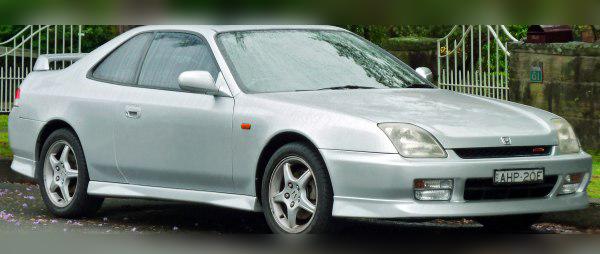
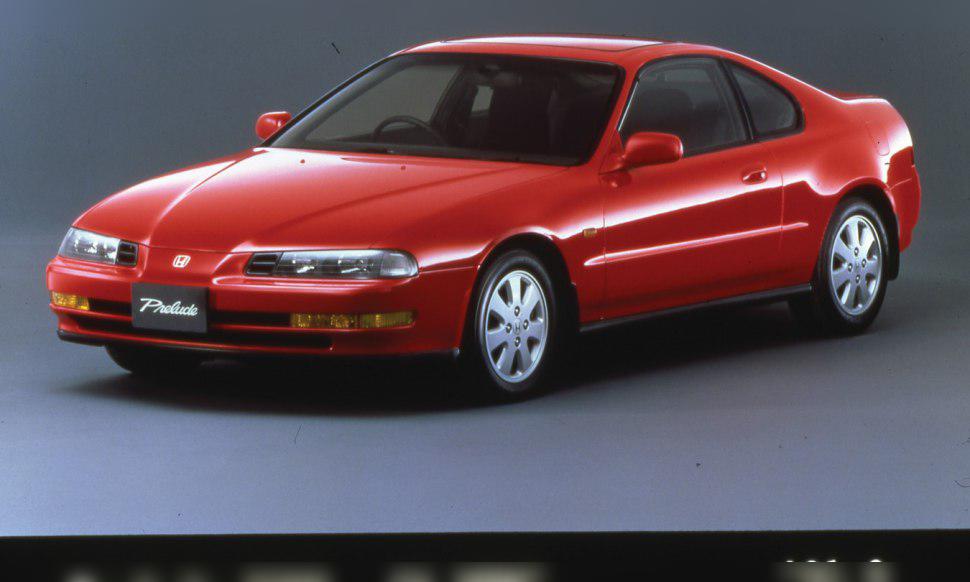
The engine with the code F20A4 is the base power unit for the European versions of the legendary Honda Prelude IV (1991–1996 generation) and Prelude V (1996–2001 generation). Although enthusiasts usually focus on the more powerful H22 VTEC engines, the F20A4 was the rational choice – it offered decent power, lower registration costs and Honda’s legendary reliability.
This is a SOHC (single overhead cam) engine with 16 valves. It has no VTEC system, which makes it mechanically simpler but also less exciting at high revs. However, its role is not to break lap records, but to provide longevity and smooth operation typical of Japanese petrol engines from the 1990s.
Technical specifications
| Parameter | Value |
|---|---|
| Engine code | F20A4 |
| Displacement | 1996 cc (2.0 L) |
| Power | 98 kW (133 hp) @ 5300–5500 rpm |
| Torque | 179 Nm @ 5000 rpm |
| Engine type | Inline 4-cylinder, SOHC, 16v |
| Aspiration | Naturally aspirated |
| Fuel injection | PGM-FI (multi-point injection) |
| Camshaft drive | Timing belt (belt + balance shaft belt) |
Reliability and maintenance
Timing belt or chain?
This engine uses a timing belt. However, here lies one of the most important technical specifics of Honda’s F and H series engines. In addition to the main timing belt, the engine also has a smaller balance shaft belt.
Important warning: Many inexperienced mechanics ignore the small belt. If the balance shaft belt snaps, it often gets caught under the main timing belt, which leads to the belt jumping teeth and pistons hitting the valves. That’s why it is crucial to replace both belts, both tensioners and the water pump at every major service.
Service intervals and oil
Major service: Recommended every 80,000 to 100,000 km or every 5 years (whichever comes first). Considering the age of these cars, it’s wise to shorten the interval to 80,000 km for safety.
Engine oil: This engine takes about 3.8 to 4.0 liters of oil (with filter). The best grade for our climate and the engine’s age is semi-synthetic 10W-40. If the engine is in factory condition (after a full rebuild), you can use 5W-40 as well, but 10W-40 is the “golden standard” for the F20A4.
Oil consumption: Yes, these engines tend to consume oil, especially if driven at high revs (even though this one has no VTEC, high rpm still means more oil consumption). Usage of 0.5 to 1.0 liter per 5,000 km is considered acceptable for an engine of this age. The most common cause of higher consumption are hardened valve stem seals or stuck oil control rings.
Spark plugs and ignition
Spark plugs should be replaced every 20,000–30,000 km if you use standard copper/nickel plugs (NGK ZFR6F-11 is a common recommendation). Iridium plugs last longer (up to 80,000 km).
Most common failures
- Distributor: This is the Achilles’ heel. The internal ignition module or coil often fails, which leads to the engine stalling or not starting at all. The whole distributor is often replaced.
- Main Relay: A classic issue on 90s Hondas. Cold solder joints in the relay crack, so the car won’t start when the cabin is hot (for example, after sitting in the sun in summer). The fix is to resolder the joints or replace the relay.
- Oil leaks: Expect leaks from the crankshaft seal, camshaft seal or valve cover gasket. Also, the VTEC solenoid (on H series) is not present here, but the block plugs can seep a bit.
- IACV (idle air control valve): A dirty idle valve causes fluctuating idle speed (revving up and down). Cleaning usually solves the problem.
Specific parts and costs
Fuel injection system and injectors
The engine uses the classic Honda PGM-FI multi-point system. Fuel injectors are extremely reliable and rarely cause issues. When they do, it’s usually due to dirty fuel, and the symptoms are rough running. Ultrasonic cleaning is an inexpensive fix. Overall, it’s a trouble-free system.
Dual-mass flywheel and clutch
Good news: This engine does NOT have a dual-mass flywheel. It uses a conventional solid flywheel. A clutch kit (pressure plate, disc, release bearing) is relatively cheap compared to modern cars. (Clutch kit price: Not expensive, depends on the market and brand, e.g. Exedy or Luk).
Turbo, DPF, EGR, AdBlue?
This is an engine from the “golden era” of simplicity:
- Turbo: None.
- DPF filter: None.
- AdBlue: None.
- EGR valve: Some versions (depending on the market, e.g. BB9) may have an EGR valve for exhaust gas recirculation. It can get clogged with soot, which causes hesitation under acceleration or a check engine light. Cleaning is straightforward.
Fuel consumption and performance
Real-world fuel consumption
Don’t expect miracles – this is a 2.0 petrol engine with 30-year-old technology.
- City driving: Expect between 10.5 and 12.5 l/100 km. In winter or heavy traffic it can go up to 14 liters.
- Open road (secondary roads): This is where it’s most economical, around 7–8 l/100 km.
- Highway (130 km/h): Due to shorter gearing (5-speed gearbox), at 130 km/h the engine spins at about 3500–3800 rpm (depending on the gearbox). Consumption is around 8.5–9.5 l/100 km.
Is the engine “lazy”?
By today’s standards, 133 hp for the Prelude’s weight (around 1250–1300 kg) is not impressive. Up to 3000 rpm the engine is quite tame and feels “sleepy”. To make it pull properly, you have to rev it above 4000 rpm. It’s not slow for everyday driving, but it lacks the “kick” of the stronger H22 model. For relaxed cruising, it’s more than adequate.
Additional options and modifications
Is it suitable for LPG?
Yes, the F20A4 handles LPG very well. The intake manifold is (usually) metal, and the fuel system is simple.
IMPORTANT LPG WARNING: Honda engines do not have hydraulic lifters. Valve clearances are adjusted mechanically. When running on LPG, exhaust valve clearances close up faster (valves “sink” into the seats). That’s why it is mandatory to adjust the valves every 15,000–20,000 km if you drive on LPG. If you ignore this, the valves will burn. Installing a valve saver system (Flashlube) is also recommended.
Chiptuning (Stage 1)
Not worth it. Since this is a naturally aspirated engine without a turbo, remapping (chiptuning) can give you at most 5–8 hp, which you won’t really feel in everyday driving. It’s better to invest that money in proper maintenance, good tyres or an exhaust system that lets the engine “breathe” better.
Gearbox
Manual gearbox (5-speed)
Honda’s manual gearboxes are among the best in the world – precise, with short throws and extremely durable.
- Failures: Almost none, as long as there is oil inside. At high mileage, the synchros (usually 2nd and 3rd gear) can wear out, which shows up as grinding during fast shifts.
- Maintenance: Change the gearbox oil (Honda MTF is recommended) every 60,000–80,000 km. Capacity is about 2 liters.
Automatic gearbox (4-speed)
A classic 4-speed automatic was fitted.
- Characteristics: Slow, robs the engine of power and increases fuel consumption by 1–2 liters. It makes the car feel more sluggish.
- Failures: Sensitive to overheating and old oil. They can jerk when changing gears (“kicking”).
- Maintenance: The oil must be changed more frequently, every 40,000–60,000 km (Honda ATF-Z1 or newer DW-1). If you’re buying an automatic, carefully check for slipping or jerking.
Buying used and conclusion
When buying a Honda Prelude with the F20A4 engine, pay attention to the following:
- Bodywork (rust): This is a bigger problem than the engine itself. Check the rear arches, sills and the boot floor.
- Cold start and idle: Start the car when it’s cold. If the revs are hunting up and down, the IACV or FITV valve is probably dirty.
- Exhaust smoke: Blue smoke when you press the throttle or after engine braking means worn valve stem seals or piston rings (an expensive repair).
- Main Relay: Ask the owner if there are any starting issues when the car is hot.
Final conclusion
The F20A4 engine is a “workhorse” in a sporty coupe body. It’s aimed at drivers who want the beautiful design of the Honda Prelude and everyday reliability, without being obsessed with drag racing at traffic lights. It’s cheaper to maintain than the more powerful 2.2 VTEC model and handles LPG better (with proper valve maintenance). If you find a car that doesn’t burn excessive oil and isn’t rusty, it’s a recommended buy.
Was this content useful to you?
Your opinion helps us to improve the quality of the content.