F22B Engine
- Engine
- 2157 cm3
- Aspiration
- Naturally aspirated engine
- Fuel
- Petrol (Gasoline)
- Fuel injection system
- Multi-port manifold injection
- Power
- 242 hp @ 7800 rpm
- Torque
- 221 Nm
- Cylinders
- 4
- Valves
- 16, 4 per cylinder
- Cylinders position
- Inline
- Max engine speed
- 8000 rpm
- Valvetrain
- DOHC, VTEC
- Oil capacity
- 4.8 l
- Coolant
- 6.5 l
# Vehicles powered by this engine
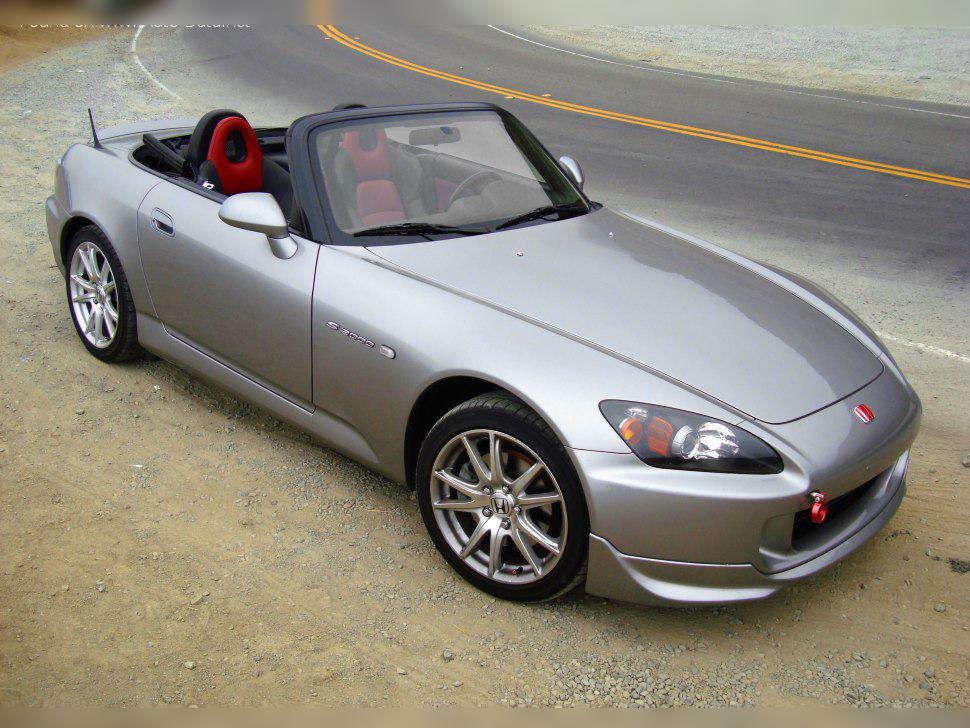
Honda S2000 2.2 (F22C1) – Experiences, issues, fuel consumption and buying tips
Key points in short (TL;DR)
- Performance: One of the best naturally aspirated engines ever made. Compared to its predecessor (2.0L), it offers more torque at lower revs.
- Timing drive: Uses a chain, which is durable, but the timing chain tensioner (TCT) is a common weak point.
- Oil consumption: Like every high‑revving Honda engine, it tends to drink oil, especially in VTEC mode. Regular checks are mandatory.
- Maintenance: Requires strict adherence to service intervals and quality parts. This is not an engine for “patchwork” fixes. Valves are adjusted mechanically.
- Gearbox: Comes exclusively with a 6‑speed manual gearbox, considered one of the most precise in the world.
- Conclusion: Extremely reliable if maintained properly, but expensive to repair if it fails due to owner negligence.
Contents
- Introduction: A legend in a bigger package
- Technical specifications
- Reliability and maintenance
- Specific parts and costs
- Fuel consumption and performance
- Additional options and tuning
- Gearbox and drivetrain
- Used‑car buying tips and conclusion
Introduction: A legend in a bigger package
The engine in question is known by the factory code F22C1 (often generalized as F22 in S2000 circles, although F22B is the code for older Accord engines; here we focus on the 2.2L unit from the Honda S2000 AP2). It was installed primarily in models for the North American market from 2004 onwards, and later also for the Japanese market, while Europe mostly kept the 2.0 variant until the end of production.
This engine was created as a response to criticism that the original 2.0L engine didn’t have enough power “down low” (at low revs). Honda increased the stroke, lowered the redline from 9,000 to 8,000 or 8,200 rpm (depending on model year and market) and thus obtained an engine that is more usable in everyday driving, while still providing an incredible sports‑car feel.
Technical specifications
| Parameter | Data |
|---|---|
| Displacement | 2157 cc |
| Configuration | Inline 4‑cylinder (I4) |
| Power | ~178 kW (242 hp) @ 7800 rpm |
| Torque | 221 Nm @ 6800 rpm |
| Engine code | F22C1 |
| Injection type | Multi‑point (port injection) |
| Induction | Naturally aspirated with VTEC system |
| Recommended fuel | 98/100 RON petrol (mandatory) |
Reliability and maintenance
Timing drive: Chain or belt?
The F22C1 engine uses a timing chain to drive the camshafts. The chain is generally very robust and designed to last as long as the engine itself. However, the Achilles’ heel of this system is not the chain, but the hydraulic timing chain tensioner (TCT – Timing Chain Tensioner). This is probably the most common “failure” on this engine.
Most common failures and symptoms
- Timing chain tensioner (TCT): The symptom is a characteristic “rattling” sound (similar to putting a playing card in bicycle spokes) when starting a warm engine or at idle. This does not destroy the engine immediately, but if ignored, the chain can jump a tooth. It is solved by replacing or refurbishing the TCT (sandblasting the worm inside the tensioner).
- Oil consumption: Although the F22C1 consumes less oil than its predecessor (F20C), it is still prone to consumption if driven often in the VTEC zone. The cause is a combination of high piston speeds and low‑friction ring design.
- MAP sensor: A dirty or faulty MAP sensor can cause hesitation under acceleration. Often it is enough to clean the contacts and passages, or to “reset” it (the old trick of tapping it with a screwdriver handle, although replacement is safer).
- Valve retainers: On the F22C1 they were improved compared to AP1 models, so they are less prone to cracking, but with aggressive driving and “missed shifts” (downshifting instead of upshifting at high rpm), they can develop cracks, which can eventually lead to a valve dropping into the cylinder.
Major and minor service
A classic “major service” (belt replacement) does not exist because of the chain. However, a thorough inspection of the chain, guides and water pump is recommended at around 200,000 km. Also, valve adjustment is mandatory. This is a mechanical engine without self‑adjusting lifters. It is recommended to check valve clearances every 40,000 km. Tight exhaust valves can burn without any audible warning.
Spark plugs: Only iridium plugs are used (NGK Laser Iridium are the factory recommendation). They are replaced every 80,000 – 100,000 km, although enthusiasts do it earlier (at 60,000 km) to preserve performance. It is very important that they are torqued correctly (with a torque wrench), as there have been cases of plugs backing out and damaging the threads in the head.
Oil: Quantity and grade
The engine takes approximately 4.8 to 5.1 liters of oil (with filter). The recommended grade is 5W‑40 or 10W‑30 (fully synthetic). For more aggressive summer driving, many owners use 5W‑40.
Oil consumption: Between two services (recommended oil change interval 7,000 – 8,000 km), consumption of 0.5 to 1 liter is considered acceptable if the car is driven hard. If you drive gently, consumption should be minimal. Anything over 1L per 1000 km points to worn oil control rings or valve stem seals.
Specific parts and costs
Dual‑mass flywheel: This engine does not have a dual‑mass flywheel. It uses a conventional solid flywheel. However, the clutch kit is specific and replacement is not cheap, not because of the part itself, but because of the pull‑type pressure plate system, which requires know‑how during installation.
Fuel injection system: Uses conventional port fuel injection (into the intake manifold). The injectors are extremely reliable and rarely cause problems. There are no complicated high‑pressure pumps as with direct injection.
Turbo and DPF/EGR:
- Turbo: None. This is a purebred naturally aspirated engine. Its service life is long precisely because there is no turbo, provided it is not overheated.
- DPF/AdBlue: None, this is a petrol engine.
- EGR valve: The F22C1 usually does not have a typical problematic EGR valve; exhaust gas recirculation is often handled via valve timing overlap (VTEC). Because of this, there are no clogging issues like on diesels.
Fuel consumption and performance
City driving: Real‑world city consumption is between 12 and 15 liters per 100 km. This is not an economical car. The short gearing and the need for revs keep consumption high.
Is the engine “lazy”? Unlike the 2.0L version, which was quite “dead” below 6000 rpm, the 2.2L (F22C1) is much better. The increased torque can be felt already from 3000–4000 rpm. It is not lazy for the S2000 body (which weighs around 1270–1300 kg), but don’t expect a “kick in the back” like with modern turbo engines at 2000 rpm. Power builds linearly.
Highway driving: Due to the short gearbox ratios, at 130 km/h in 6th gear, the engine spins at a high 4000–4200 rpm. This means the cabin is noisy and consumption is around 10–11 l/100 km. The engine doesn’t mind this – it’s built to rev – but it can be tiring for the driver on long trips.
Additional options and modifications
LPG (autogas) conversion: Technically possible, but strongly not recommended. Honda VTEC engines of this generation have cylinder heads that are sensitive to the high combustion temperatures of LPG. The valves would require very frequent adjustments (every 10–15 thousand km), and the risk of valve seat recession is huge. Also, “butchering” such an engineering gem with LPG drastically lowers the vehicle’s value.
Chipping (Stage 1): Naturally aspirated engines rarely gain much power from a remap alone. However, on the F22C1, with devices such as Hondata FlashPro, it is possible to lower the VTEC engagement point (e.g. from 6000 to 4500 or 5000 rpm). This drastically improves the “hole” in mid‑range power. You won’t gain much peak horsepower (maybe 5–10 hp), but the car will be much quicker and more drivable in the mid‑range.
Gearbox
Gearbox type: The F22C1 comes exclusively with a 6‑speed manual gearbox. There is no automatic in the S2000. This gearbox is considered one of the best ever made due to its short throw and mechanical “rifle bolt” feel.
Gearbox issues:
- 2nd‑gear synchros: The most common problem. Due to fast shifts from first to second at high rpm, the synchro wears out, which leads to grinding when engaging second.
- Whine: Gearbox bearings can become noisy at high mileage.
- Rear differential: This is the weakest link of the entire drivetrain. The differential is sensitive to hard launches (launch control). The housing or gears can crack easily if the car is abused.
Gearbox maintenance: Gearbox oil is changed every 2–3 engine services (approx. 20,000 – 30,000 km). The gearbox uses genuine Honda MTF‑3 oil (about 1.5 – 1.7 liters). The differential uses hypoid oil (SAE 90 GL‑5 or 75W‑90) and is changed at the same interval.
Clutch replacement cost: The clutch kit itself (OEM or quality aftermarket Exedy) is moderately expensive (depends on the market), but labor can be more costly because access is sometimes complicated, and replacement requires precision (lubricating the fork, correct torque on bolts).
Buying used and conclusion
Before buying a Honda S2000 with the F22C1 engine, make sure you do the following:
- Compression and leak‑down test: This is the most important step. It reveals whether the engine is healthy inside.
- Chain noise: Listen to the engine when it is hot. Rattling indicates a bad TCT.
- Over‑rev check: If possible, use diagnostics to check whether the engine has ever been over‑revved (e.g. a wrong shift from 3rd to 2nd instead of 4th at full throttle). This is a killer of these engines.
Conclusion: The F22C1 in the Honda S2000 is not an engine for everyone. It demands attention, quality oil and regular maintenance. In return, it offers reliability that few sports engines can match and a driving experience that modern turbo engines simply cannot replicate. If you are looking for a weekend car that will put a smile on your face every time the needle goes past 6000 rpm, and you don’t want to spend your time at the mechanic’s – this is the right choice.
Was this content useful to you?
Your opinion helps us to improve the quality of the content.