Engine 940B7000 (1.4 T‑Jet 120 HP): Ownership impressions, issues, fuel consumption and used‑car buying tips
Key points in short (TL;DR)
- Reliable old school: The base of this engine is the legendary FIRE block with conventional multipoint (MPI) fuel injection, without troublesome direct‑injection systems.
- Ideal for LPG: Thanks to its design, this engine works perfectly on autogas, and there are excellent factory LPG versions as well.
- Weak spot – exhaust manifold: Prone to cracking of the exhaust manifold due to high temperatures, which is one of the most common but solvable failures.
- Higher fuel consumption: In city driving it is quite thirsty; don’t expect the efficiency of modern three‑cylinder engines.
- Equipped with a dual‑mass flywheel: Although it’s a petrol engine, due to its high torque it comes with a dual‑mass flywheel that wears out over time.
- Cheap basic maintenance: Timing belt, water pump and filters are very affordable.
Contents
- Introduction: Old school on steroids
- Technical specifications
- Reliability and maintenance
- Specific parts and costs
- Fuel consumption and performance
- Additional options and modifications
- Gearbox and power delivery
- Buying used and conclusion
Introduction: Old school on steroids
The engine designated 940B7000, commercially better known as the 1.4 T‑Jet with 120 HP, is one of the most successful turbo‑petrol engines developed within the FCA (Fiat Chrysler Automobiles) group. This engine is an evolution of the famous FIRE (Fully Integrated Robotised Engine) family. Unlike the more complex MultiAir versions, the T‑Jet uses conventional camshafts and port fuel injection (MPI), with an IHI turbocharger added on top.
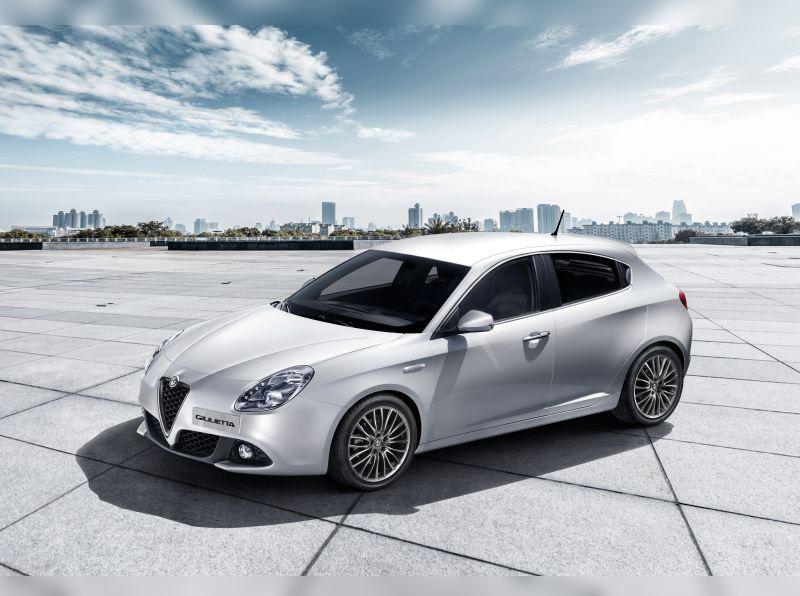
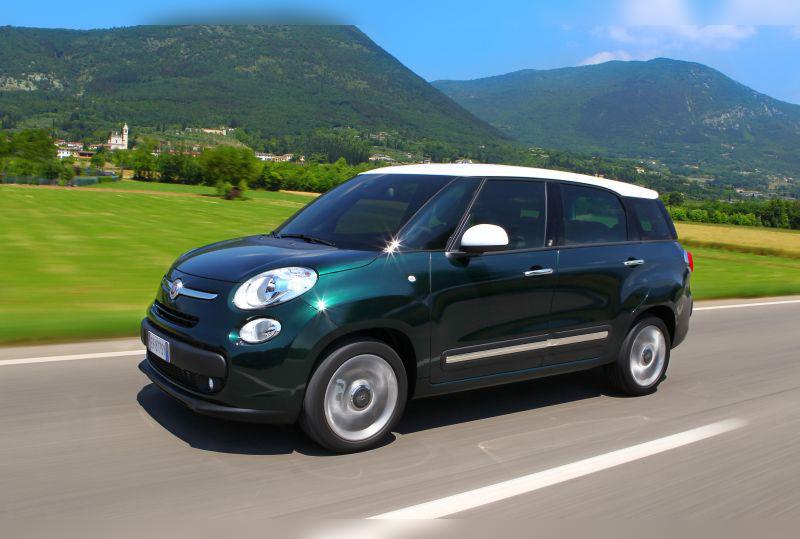
It was installed in a wide range of vehicles, from the sporty and elegant Alfa Romeo Giulietta (where it served as an excellent entry‑level engine), through family cruisers such as the Fiat 500L (including the heavier Trekking, Cross and Living versions), all the way to the robust and practical Fiat Tipo / Egea. Its popularity across Europe lies in a fantastic balance between ease of maintenance, perfectly decent performance and outstanding suitability for LPG use.
Technical specifications
| Specification | Data |
|---|---|
| Engine displacement | 1368 cc |
| Power | 88 kW (120 HP) |
| Torque | 215 Nm |
| Engine code | 940B7000 |
| Injection type | MPI (Multipoint / Port injection into the intake manifold) |
| Charging | Turbocharger + intercooler |
Reliability and maintenance
Timing belt or chain?
This engine uses a conventional timing belt to drive the valvetrain. That’s good news because the system is extremely simple and reliable. Unlike modern engines with stretch‑prone chains that require engine removal, belt replacement here is a routine job for any average mechanic.
Most common failures and symptoms
Although the mechanical side is generally robust, the 940B7000 engine has a few known quirks:
- Cracking exhaust manifold: This is the best‑known weakness. Due to large thermal cycles, the cast exhaust manifold can crack. Symptoms: When the engine is cold, you’ll hear a characteristic ticking or whistling sound under the bonnet, and you may notice exhaust fumes in the cabin. Once the manifold heats up and the material expands, the sound often disappears. Replacement or welding is necessary.
- Coolant leaks (antifreeze): Most often the thermostat housing (which is plastic and becomes brittle over time) or the water pump starts leaking. Symptoms: A sweet smell of vapour under the bonnet, puddles under the car and a drop in coolant level in the expansion tank. You must not ignore coolant loss, as overheating can seriously damage the cylinder head.
- Hoses and vacuum lines: Due to age and heat from the turbo, rubber hoses (especially the crankcase ventilation / breather hoses) tend to crack, which leads to oil vapours around the engine and unstable idle.
Service intervals and oil
The major service (replacement of timing belt, tensioner, idlers and water pump) is specified by the factory at 120,000 km, but experienced mechanics recommend doing it at around 90,000 to 100,000 km, or every 5 years. Parts for the major service fall into the category: not expensive (depends on the market).
The engine takes about 3.1 to 3.3 litres of oil (with filter change). The recommended grade is 5W‑40 (ACEA C3 specification is a must because of the turbo and catalytic converter; factory Selenia K Pure Energy is often used, but any quality brand will do the job). Do the minor service every 10,000–12,000 km. Don’t follow factory recommendations of 30,000‑km intervals – that’s a recipe for destroying the turbo.
Oil consumption: Yes, this engine can use some oil between services, especially if you drive it at higher revs or on the motorway. Consumption of 0.2 to 0.5 litres per 1,000 km is considered technically normal, although healthy examples in practice use about 1 litre over a full 10,000 km. Check the dipstick every couple of weeks!
Spark plugs and ignition
Since this is a turbo petrol engine operating under higher cylinder pressures, spark plug condition is critical. They should be replaced every 30,000 to 40,000 km (iridium plugs are often used). If you delay replacement, the increased resistance from worn electrodes leads to arcing and failure of the ignition coils. Symptoms of bad spark plugs: Hesitation on sudden throttle input and rough idle.
Specific parts (costs)
Dual‑mass flywheel
Many people are surprised, but yes, this petrol engine has a dual‑mass flywheel. Fiat fitted it to smooth out vibrations caused by delivering high torque (215 Nm) at relatively low revs. Its lifespan is usually longer than on diesels, often exceeding 150,000–200,000 km, depending on driving style. Replacement (as a kit with the clutch) is: expensive (depends on the market).
Fuel injection system
Unlike modern engines (TSI, GDI, PureTech) that use direct injection and suffer from carbon build‑up on the valves, the 1.4 T‑Jet has indirect (MPI) injection. The petrol injectors spray fuel over the intake valves, constantly “washing” them. The injectors are extremely reliable and their replacement or cleaning is: not expensive (depends on the market).
Turbocharger
The engine has a single turbocharger (most often IHI brand). Its service life is excellent provided that oil is changed on time and the engine is not switched off immediately after hard driving (it needs a couple of minutes at idle to cool the oil in the turbo). Sometimes you may get a rattling noise from the wastegate actuator rod, which mechanics can successfully fix. Turbocharger overhaul is: expensive (depends on the market).
DPF, EGR and AdBlue
Since this is an older‑architecture petrol engine, it has no DPF filter (nor the modern GPF filter, except perhaps in some very specific later versions after 2019 depending on the market, but the standard 940B7000 does not have it). It also has no AdBlue system, nor the problematic conventional EGR valve we see on diesels. This is a huge financial advantage in terms of maintenance.
Fuel consumption and performance
Real‑world fuel consumption
This is not a frugal engine. Its design and MPI injection take their toll at the fuel pump. In city stop‑and‑go driving, expect between 9 and 11 litres per 100 km. On the open road this drops to about 6.5–7 litres, but the overall average rarely goes below 8 l/100 km.
Is the engine “lazy”?
This depends heavily on the body it’s pulling. In the Alfa Romeo Giulietta and Fiat Tipo (Hatchback/Wagon), the engine feels surprisingly lively. Turbo lag is minimal, and 215 Nm of torque provides excellent in‑gear acceleration.
However, in the hefty Fiat 500L Living/Wagon (which can seat 7 passengers), when fully loaded and with the air‑conditioning on, the engine can feel a bit out of breath during uphill overtakes. In such vehicles you simply have to keep the revs higher.
Motorway and cruising
The engine performs very well on the motorway. With the six‑speed gearbox, at 130 km/h in sixth gear the crankshaft spins at a comfortable around 3,000 to 3,200 rpm (depending on the specific model’s gear ratios). There is no excessive engine noise in the cabin, and there is always enough power for overtaking without downshifting to fifth.
Additional options and modifications
LPG conversion
This engine is the holy grail for LPG use. Thanks to MPI injection, installing an aftermarket sequential LPG system is straightforward and not too expensive. Many models (especially the Fiat 500L and Tipo) came with factory‑fitted LPG. Factory versions often have reinforced valve seats, which makes them practically indestructible.
Note on factory LPG: Factory‑fitted LPG injectors (often Med/Landi Renzo) tend to get dirty due to poor‑quality gas at filling stations. Replacing these specific LPG injectors can be: expensive (depends on the market).
Remapping (Stage 1)
The engine responds very well to remapping. With a simple ECU remap (Stage 1), power can be safely raised from 120 HP to 145–150 HP, and torque up to around 260 Nm. The turbo and engine internals handle this without any issues, provided oil‑change intervals are respected.
Gearbox and power delivery
Types of gearboxes and failures
The vast majority of these engines are paired with a six‑speed manual gearbox (FPT C635). This gearbox is significantly more reliable than the older M32 unit, which suffered from bearing issues. With the C635 manual, the main complaint from drivers is slight notchiness when engaging first or second gear while the gearbox oil is still cold in winter.
In the Alfa Giulietta you can also find a dual‑clutch automatic (TCT). It offers quicker shifts, but potential mechatronics failures and replacement of the dual‑clutch pack are: very expensive (depends on the market).
Clutch and gearbox oil replacement
As mentioned, the manual gearbox uses a dual‑mass flywheel. If you feel vibrations when setting off, or knocking at idle that disappears when you press the clutch pedal, it’s time for replacement. The complete kit with labour is: expensive to very expensive (depends on the market).
As for oil in the manual gearbox, although manufacturers call it “lifetime” oil (never needs changing), in practice it should be replaced every 60,000 to 80,000 km to preserve the synchros and bearings.
Buying used and conclusion
What to check when buying?
- Cold start: Insist that the car be completely cold when you arrive. If you hear a ticking noise on first start‑up that disappears after a couple of minutes, the exhaust manifold is cracked.
- Smell of coolant: Open the bonnet and smell around the battery and thermostat area. Check the level in the expansion tank – if it’s low or you see dried pink/red traces on the hoses, the engine is losing coolant.
- Turbo noise: A slight whistle when cold is normal, but if the turbo wails like a police siren between 1,500 and 2,500 rpm, prepare for a rebuild.
- Diagnostics (misfire): Read fault codes via OBD. If you see codes such as “Random/Multiple Cylinder Misfire”, the seller probably hasn’t changed the spark plugs for years, which means you’ll soon have to replace the coils as well.
Conclusion
The 940B7000 (1.4 T‑Jet 120 HP) engine is one of the last “Mohicans” of the reliable car industry. It is ideal for used‑car buyers who want solid performance and simple mechanics, without the fear of expensive diesel DPF filters, sensitive sensors and clogged intake manifolds.
Its only real downside is higher fuel consumption in town, but for those who cover more mileage this problem is elegantly and cheaply solved by fitting an LPG system. Whether you’re buying a stylish Giulietta or a family 500L/Tipo, if you find an example whose owner has changed the oil regularly, this engine will serve you for many years with entirely reasonable running costs.