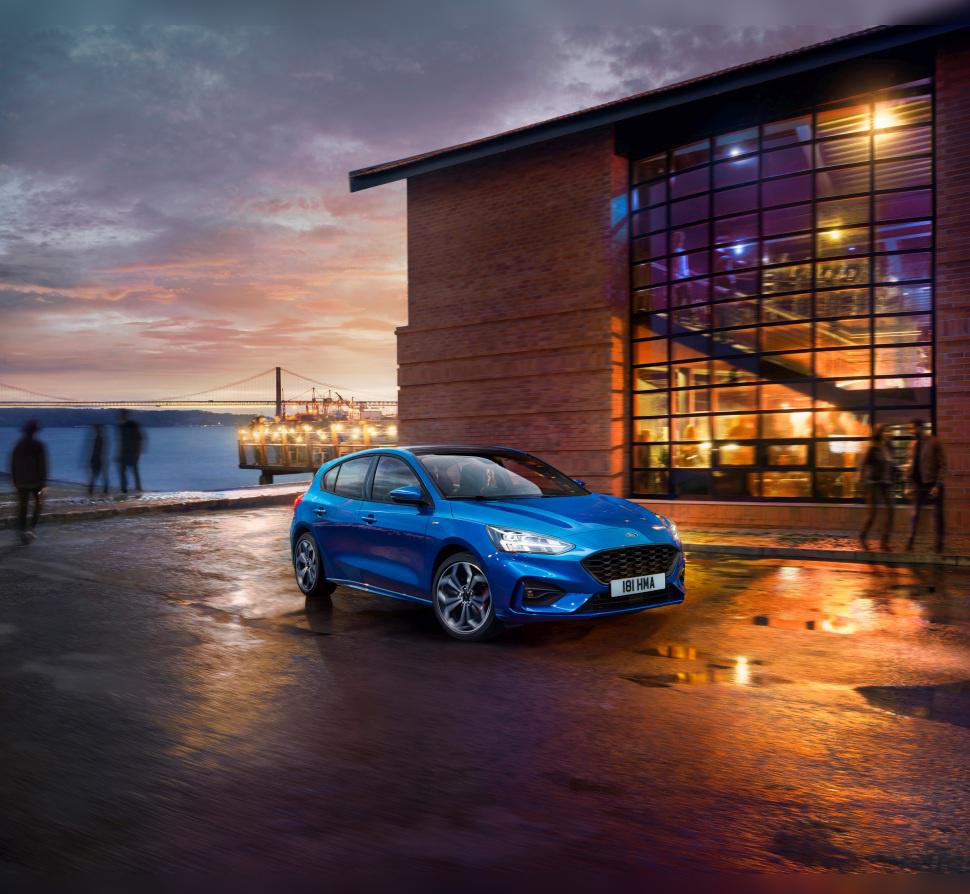
Ford 1.0 EcoBoost (B7DA) 125 HP: Experiences, problems, fuel consumption and used car buying tips
Key points (TL;DR)
- The B7DA engine is an improved generation of the 1.0 EcoBoost engine that uses a timing chain for the camshafts, but still has a “wet belt” for the oil pump, which requires strict adherence to the oil specification.
- The three-cylinder with 125 HP is optimal for the hatchback, but can feel slightly “lazy” in the loaded Wagon version on climbs.
- Real-world city fuel consumption is around 7 to 8.5 l/100 km, while on the motorway it rises sharply at speeds above 120 km/h.
- Biggest risk: Oil pressure drop due to disintegration of the oil pump belt, which can lead to complete engine failure.
- LPG (autogas) conversion is not worthwhile because of the direct injection system.
- Repairs and parts (such as the dual-mass flywheel) can be surprisingly expensive for such a small engine (depends on the market).
Contents
- Introduction: About the engine and models
- Technical specifications
- Reliability and maintenance
- Specific parts and costs
- Fuel consumption and performance
- Additional options and modifications
- Gearbox and drivetrain
- Buying used and conclusion
Introduction: About the engine and models
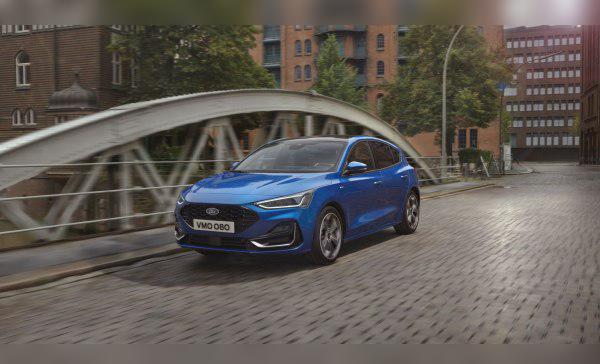
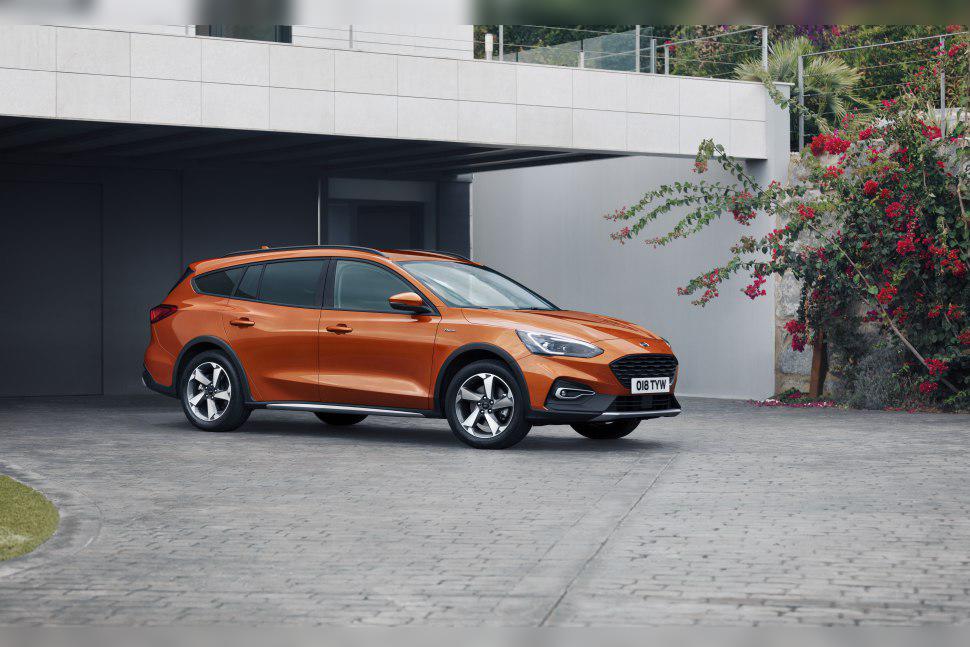
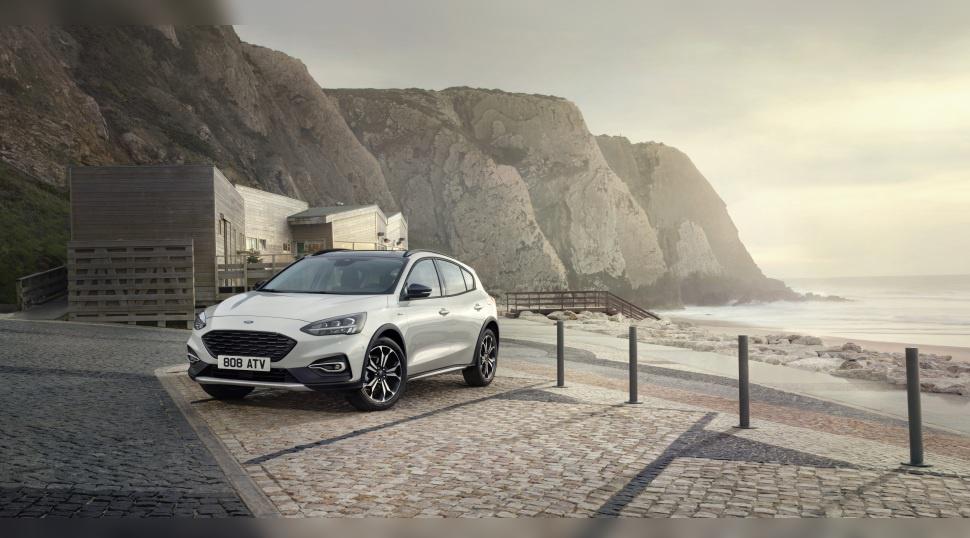
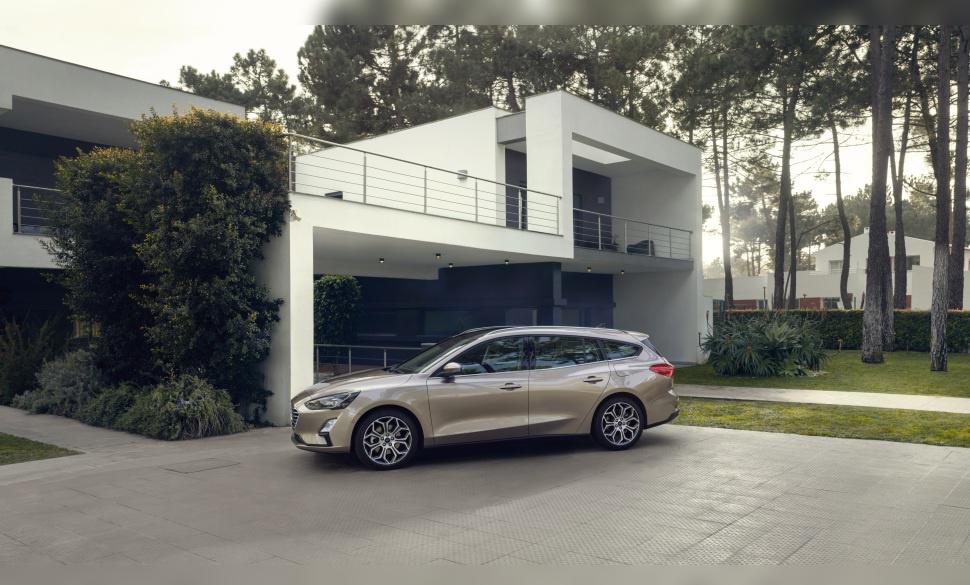
The B7DA engine is a modernized iteration of Ford’s well-known and multi-award-winning 1.0 EcoBoost unit. It is primarily installed in the fourth-generation Ford Focus (including the 2022 facelift models), covering a wide range of body styles: from the standard hatchback, through the spacious Wagon (estate), all the way to the popular Active versions with raised ground clearance. With this engine, Ford tried to fix the “childhood diseases” of earlier series (such as cracked cylinder heads and cooling issues), but kept a complex architecture that requires a mechanic who knows exactly what they are doing. This is not an engine where you can ignore oil change intervals.
Technical specifications
| Parameter | Specification |
|---|---|
| Engine displacement | 999 cc |
| Engine power | 92 kW (125 HP) |
| Torque | 170 Nm |
| Engine code | B7DA |
| Injection type | Direct injection (GDI) |
| Charging | Turbocharger with intercooler |
Reliability and maintenance
Timing belt or chain?
This is the key difference compared to older 1.0 EcoBoost engines. The B7DA engine uses a timing chain for the camshafts. However, pay close attention: this engine still has the so‑called “wet belt” (a belt running in engine oil) that drives the oil pump! This is vital information for every owner and mechanic.
Most common failures and symptoms
The biggest bogeyman of this engine is precisely that oil pump belt. If the wrong oil is used or the change intervals are extended, the belt material starts to crumble. Rubber particles then clog the oil pump strainer, which leads to a drop in oil pressure in the system. Symptoms: The oil pressure warning light comes on in the instrument cluster, and the engine changes its sound and becomes noisy. If this happens on the motorway, complete failure (crankshaft seizure) is only seconds away.
Another common issue is carbon build-up on the intake valves, which plagues all direct-injection engines. Symptoms include rough idle, hesitation under acceleration and loss of power. The cooling system is sensitive – plastic thermostat housings and coolant junctions can crack over time, resulting in coolant loss and a risk of overheating.
Major service, oil and spark plugs
The major service is usually planned at around 150,000 km. Although the timing chain can last longer, at this mileage it is mandatory to remove the oil pan, clean the strainer and replace the oil pump belt. The engine takes exactly 4.6 litres of oil. Ford strictly prescribes a 5W-20 grade with a specific approval (WSS-M2C948-B) precisely to protect that unfortunate belt running in oil. Any deviation is like playing Russian roulette with the engine.
Normal oil consumption exists but is minimal. Manufacturer tolerances go up to 0.5 l per 1000 km in extreme conditions, but in practice, a healthy engine will not need more than 0.5 to 1 litre between two services (which I recommend at a maximum of 10,000 to 15,000 km). As for the spark plugs, they are exposed to high temperatures and should be replaced every 60,000 km. If you drive too long on old spark plugs, the ignition coils will fail.
Specific parts and costs
Dual-mass flywheel
Many people are surprised to hear it, but yes, this engine has a dual-mass flywheel (with manual gearboxes). Due to the three-cylinder architecture, the engine naturally produces strong vibrations. The dual-mass flywheel serves as a shock absorber towards the gearbox. The cost of replacing the clutch kit and dual-mass flywheel is very high (depends on the market) and often disappoints buyers who expect “cheap petrol maintenance”.
Injection system and turbocharger
The injection is direct (fuel is sprayed under high pressure directly into the cylinder). The injectors themselves are not particularly failure-prone, but they are sensitive to poor-quality fuel. The engine has a single, extremely compact low-inertia turbocharger that spins at extremely high speeds. The turbo’s lifespan is around 150,000–200,000 km, depending on how the car is driven. If the owner switches off a hot engine immediately after motorway driving (without letting the turbo cool down), the turbo shaft and bearings will fail much earlier.
Cats and filters (GPF)
This petrol engine naturally does not have a DPF (Diesel Particulate Filter) or AdBlue system. However, to meet Euro 6d standards, it is equipped with a GPF filter (Gasoline Particulate Filter). Unlike diesels, petrol engines reach much higher exhaust gas temperatures, so the GPF rarely clogs, unless the car literally never leaves city traffic jams. There is an EGR valve, and it can get dirty from soot.
Fuel consumption and performance
City consumption and cruising
Ford promises low figures, but real-world city fuel consumption for the hatchback model is between 7.0 and 8.5 l/100 km, depending on how heavy your right foot is and whether the air conditioning is on. On country roads and highways (not motorways), the engine is extremely economical and can drop below 5.5 l/100 km.
On the motorway, at 130 km/h, the engine spins at around 2800–3000 rpm (depending on gearbox ratios). Under these conditions, consumption rises and easily reaches 7 to 7.5 litres, mainly because the small engine of just under one litre is then fighting air resistance.
Is the engine “lazy”?
Thanks to the small turbo and 170 Nm of torque available from just 1400 rpm, the engine feels very lively in town. In the Focus Hatchback model, 125 HP is perfectly adequate for the average driver. However, if you are buying a Focus Active Wagon (estate), load it up with family and luggage and head for a long uphill stretch – you will feel the lack of displacement. In those moments, the engine becomes noisy and demands frequent downshifts.
Additional options and modifications
LPG (autogas) conversion
Short answer: It is not recommended and does not pay off. Because of the direct injection, standard sequential LPG systems are not sufficient. You have to install a specialized system that injects a certain amount of petrol along with the gas in order to cool the petrol injectors (which are located inside the cylinder). The price of such systems is high, the savings are significantly smaller, and the risk of failures in the sensitive system increases.
Chip tuning (Stage 1)
This engine can basically handle a “Stage 1” remap, and the power can be safely raised from 125 HP to about 140 to 145 HP, with torque increasing to around 210 Nm. The car will feel noticeably quicker. However, keep in mind that this puts additional stress on the small clutch and the turbocharger, which is already working at the limit of its temperature tolerances.
Gearbox and drivetrain
Manual and automatic gearboxes
With the B7DA engine you get two options: a precise and high-quality 6-speed manual gearbox, and an 8-speed automatic gearbox.
Manual gearbox: Very reliable. The most common issues are not with the gearbox itself, but with wear of the aforementioned dual-mass flywheel and clutch disc. The oil in the manual gearbox should be changed at 100,000 km, even though Ford often claims it is “lifetime”.
Automatic gearbox (8-speed): The Focus Mk4 usually uses a conventional automatic with a torque converter. It offers extremely smooth driving, but can suffer from “jerks” or thumps when shifting from lower gears. The most common cause is old oil or a problem with the mechatronics (valve body). Automatic gearbox servicing: Mandatory oil change every 60,000 km. Ignoring this interval leads to very expensive overhauls.
Buying used and conclusion
What to check before buying?
- Sound on cold start: Let the car sit overnight. When you start it, listen carefully. A rattling or clattering sound from the chain during the first few seconds means the tensioner is weak.
- Oil warning light: Pay attention to how quickly the oil pressure light goes out after starting. Any delay is a warning sign of a clogged strainer and disintegrating oil pump “wet belt”.
- Coolant: Check the expansion tank. If you see traces of pink/red powder under it or around the thermostat, the system is losing coolant somewhere.
- Service history: Never buy a 1.0 EcoBoost without proof (invoices) that only the prescribed Ford oil has been used.
Conclusion
The Ford Focus 1.0 EcoBoost (B7DA) with 125 HP is a fantastic car to drive – it handles better than most competitors in the C segment and offers a great compromise between performance and economy. However, this is not an engine that tolerates owner neglect. It is intended for drivers who are meticulous about maintenance and who drive mainly in the city and on ordinary highways. If you are looking for a workhorse for hauling loads or for covering hundreds of motorway kilometres every day at 150 km/h, consider a larger-displacement engine or a diesel alternative.