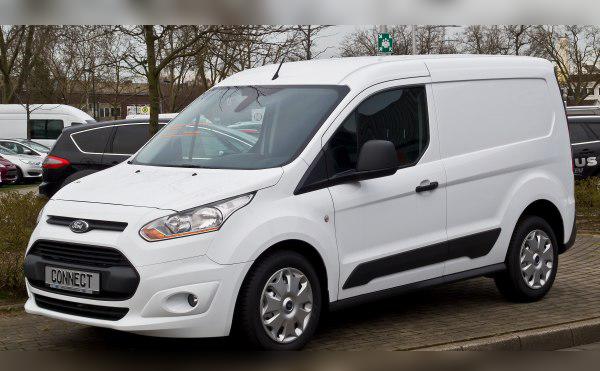
Ford 1.5 TDCi Duratorq (XUGA) 75 HP – Experiences, problems, fuel consumption and used van buying guide
Key points (TL;DR)
- Extremely durable: The engine block is robust, designed for heavy-duty use and courier services.
- Lack of power: With 55 kW (75 HP) the engine is quite sluggish when the van is fully loaded.
- Timing belt: Unlike some more modern solutions, it uses a standard timing belt whose replacement is routine.
- DPF and EGR issues: Due to predominantly city driving, clogging of emission systems is the most common reason for visiting the mechanic.
- Affordable maintenance: Minor and major services, as well as clutch replacement, are not in the “very expensive” category (Depends on the market).
- Excellent for city use: Low fuel consumption at low speeds, but it runs out of breath on the motorway.
Contents
- Introduction: A workhorse for local deliveries
- Technical specifications
- Reliability and maintenance
- Specific parts (Costs)
- Fuel consumption and performance
- Additional options and modifications
- Gearbox and clutch
- Buying used and conclusion
Introduction: A workhorse for local deliveries
The 1.5 TDCi engine with the code XUGA belongs to Ford’s Duratorq family, developed as an evolution of the famous (and often criticized) 1.6 TDCi engine created in cooperation with the PSA group. It went from 16 to 8 valves, which simplified the design and made it more reliable. The version with 75 HP and 220 Nm of torque is the base option, designed primarily for the Ford Transit Connect II in various configurations (Panel Van, Double Cab, Wagon). Its main role is not speed, but economical delivery of goods through narrow city streets. The Start-Stop system is a common addition that further reduces fuel consumption in traffic jams, but it also puts slightly more strain on the starter and battery.
Technical specifications
| Parameter | Specification |
|---|---|
| Engine displacement | 1499 cc |
| Power | 55 kW (75 HP) |
| Torque | 220 Nm |
| Engine code | XUGA (and related Duratorq variants) |
| Injection type | Common Rail (Direct) |
| Charging method | Turbocharger with intercooler |
| Fuel type | Diesel |
Reliability and maintenance
Timing belt or chain?
This 1.5 TDCi engine uses a timing belt. This is good news, because replacement costs are predictable and the system is reliable as long as factory intervals are respected. There is no complex and noisy chain system on the rear side of the engine that would require removing the whole unit from the vehicle.
Major and minor service – Intervals and oil
For commercial vehicles, Ford often specifies optimistic intervals for the timing belt (often over 160,000 km), but in practice it is best to replace the belt every 120,000 to 140,000 km. If the belt snaps, pistons and valves will collide, which means a full engine rebuild that is very expensive (Depends on the market).
The engine takes about 3.8 to 4.3 liters of engine oil (with filter), and the recommended grade is 0W-30 that meets the strict Ford specification WSS-M2C950-A. Due to the sensitivity of the turbo and DPF filter, do not under any circumstances use cheaper oils of older specifications. Do the minor service strictly every 15,000 km, regardless of the manufacturer’s “LongLife” recommendations.
Oil consumption
This unit is not known for high oil consumption. Usage of 0.5 to 1 liter between two services is considered completely normal. If the engine needs more than that, it is a sign that the turbo has started to leak oil or that the piston rings have worn out due to heavy use and poor maintenance.
Most common failures and injectors
Since this is a diesel, the Common Rail injectors are always under scrutiny. On this engine the injectors are quite durable and usually last over 200,000 to 250,000 km before the first issues appear. Symptoms of worn injectors are rough idle (engine “misfires”), increased black smoke when accelerating and difficult cold starts in winter. Fortunately, injector refurbishment is possible and not excessively expensive (Depends on the market).
Specific parts (Costs)
Does the engine have a dual-mass flywheel?
Since this is the weakest version with only 75 HP and 220 Nm, many models are equipped with a solid flywheel, which drastically reduces clutch replacement costs. However, in some versions (especially heavier Wagon models with Start-Stop system) you may find a dual-mass flywheel to reduce vibrations. As data varies depending on trim level, this must be checked by VIN before purchase.
Turbocharger and emissions (DPF, EGR, AdBlue)
The engine has a single turbocharger (most often with fixed geometry at this power level), whose lifespan is excellent if oil is changed regularly. When the turbo starts to fail, you will hear a distinctive whistling (siren-like sound) under acceleration and notice a loss of the already modest power.
The headache of every mechanic working on Transit Connect models are the DPF filter and EGR valve. Since these vehicles are most often driven on short stop-and-go city trips, the DPF does not have the conditions to perform passive regeneration. The EGR valve gets clogged with soot, sticks, and puts the engine into limp mode (reduced power safety mode). Cleaning the EGR and performing software-assisted DPF cleaning are common procedures in workshops.
Newer Euro 6 versions of this engine are equipped with an AdBlue (SCR) system. AdBlue tanks and pumps are sensitive to low temperatures; the heaters in the tank tend to fail in winter, which requires replacement of the entire module and can be quite expensive (Depends on the market).
Fuel consumption and performance
Real-world city fuel consumption
Thanks to the small displacement and conservative mapping, the XUGA engine is incredibly frugal. In pure city conditions, with an average load, real fuel consumption ranges from 6.0 to 7.0 l/100 km. On open country roads, consumption can drop below 5 liters.
Performance: Is the engine sluggish?
To be completely straightforward – yes, the engine is very sluggish. With 75 HP in a body weighing around 1.5 tons (before loading), every overtaking maneuver has to be carefully planned. The 220 Nm of torque saves the day when pulling away from a standstill, so at city speeds up to 60 km/h you won’t really feel a lack of power. The problem appears once you get onto faster roads.
Behaviour on the motorway
This engine simply wasn’t designed for motorway use. Besides taking ages to reach 130 km/h, it struggles to maintain that speed on inclines. Due to short gearbox ratios, at 130 km/h the engine runs at very high revs (often over 2800–3000 rpm in fifth gear), which means cabin noise becomes tiring and fuel consumption rises sharply, cancelling out all the economy it offers in the city.
Additional options and modifications
Remapping (Stage 1)
This is one of the most common questions from owners of the 75 HP version. Since this engine block is hardware-identical to the more powerful 100 HP versions, it is factory “detuned” only via software. Because of that, this engine can be safely and effectively remapped (Stage 1). A good tuner can easily raise power to around 105 to 115 HP and torque to almost 270 Nm without compromising the turbo or injectors. The difference in driving is dramatic, the van copes with load more easily, and overtaking becomes much safer.
Gearbox and clutch
Types of gearboxes and common failures
The vast majority of these models on the market are paired with a standard 5-speed manual gearbox (most often the MTX75 series). The gearbox itself is old-school mechanics, extremely robust. The most common gearbox failures are the result of abuse by couriers – fast and rough shifting from first to second gear, which over time damages the second-gear synchros. The symptom is grinding when shifting. Automatic gearboxes are extremely rare in this weakest configuration.
Gearbox maintenance
Replacing the clutch kit on versions with a solid flywheel is not expensive (Depends on the market). As for gearbox oil, although the manufacturer often states that the oil is “lifetime”, the golden rule of mechanics says that manual gearbox oil should be changed every 80,000 to 100,000 km. Regular replacement drastically extends the life of bearings and synchros.
Buying used and conclusion
What exactly to check before buying?
When buying a used Transit Connect with the 1.5 TDCi engine, pay attention to the following details:
- Bodywork and interior condition: Commercial vehicles often cover huge mileages in a short time. A worn steering wheel, collapsed clutch pedal rubber and damaged cargo area say more than what’s written on the odometer.
- Cold start: The engine should start “on half a turn” without harsh vibrations. If, on startup, it emits a cloud of bluish or black smoke that doesn’t disappear quickly, these are signs of injector or turbo problems.
- DPF diagnostics: Always connect the vehicle to professional diagnostics and check the pressure difference before and after the DPF filter, as well as when the last regeneration was performed. If the filter is clogged, you are looking at cleaning or replacement.
- Turbo noise: Test drive with the windows open. A slight whistle is normal, but if it sounds like a police siren whenever you press the throttle, the turbo is near the end of its life.
Final verdict
Ford’s 1.5 TDCi XUGA with 75 HP was not built to break speed records. It was made for tradespeople, plumbers, electricians and city couriers whose top priorities are low fuel and registration costs, not how fast they reach their destination. Maintenance is not expensive (Depends on the market), and the mechanicals are proven and reliable.
However, if you often need to drive on the motorway, or regularly load the van up to its maximum payload of one ton on intercity routes, this engine will disappoint you with its sluggishness. In that case, we recommend looking for the more powerful 100 HP version or investing in a proven Stage 1 remap. If you use it in its natural habitat – around town – it will serve you for a long time and be cost-effective.