Ford 1.6 Ti-VCT PNDA engine: Experiences, issues, fuel consumption and used-car buying tips
Key points in short (TL;DR)
- Old-school mechanics: Naturally aspirated petrol engine without turbo, DPF or troublesome emission systems, which means far fewer headaches.
- Variable valve timing: The biggest weakness is the VCT pulleys (variable camshaft) and their solenoids, which can make the engine sound like a diesel on a cold start.
- Fuel consumption: Not the most economical in the city (often up to 10 l/100 km), and on the highway the manual gearbox really misses a sixth gear.
- Beware of the automatic: Avoid the notorious Powershift automatic gearbox with dry clutches at all costs; repairs are extremely expensive.
- LPG (Autogas): Handles LPG conversion well, but requires a quality system and care due to more sensitive valves.
- Performance: Decent in a standard Focus, but quite sluggish and lethargic in heavier models like the Grand C-MAX.
Contents
- Introduction: The golden middle ground before the EcoBoost era
- Technical specifications
- Reliability and maintenance
- Specific parts and costs
- Fuel consumption and performance
- Extras, LPG and modifications
- Gearbox: Manual vs Powershift
- Buying used and conclusion
Introduction: The golden middle ground before the EcoBoost era
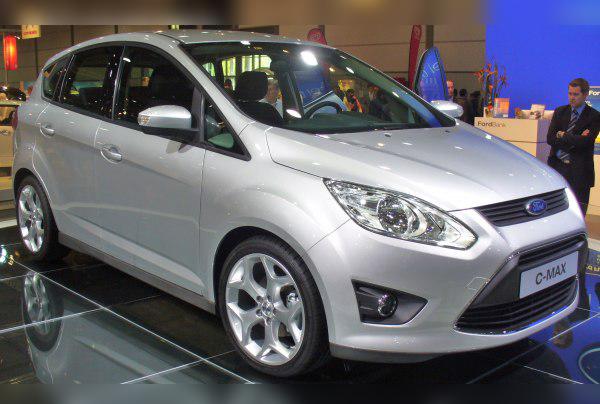
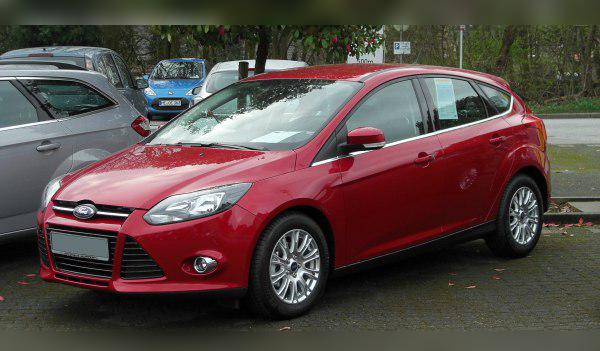
The engine with the code PNDA is one of the last iterations of Ford’s well-known 1.6 Duratec unit, but with the addition of the Ti-VCT (Twin Independent Variable Camshaft Timing) system. It was mostly installed from 2010 to 2015 in models such as the Ford Focus III (Hatchback, Sedan, Wagon), C-MAX II and Grand C-MAX. With 125 hp, it was the “sweet spot” for drivers who wanted decent performance but were wary of the then completely new and not yet proven EcoBoost turbo engines. Today this engine is highly sought after on the used market precisely because of its simplicity and the absence of expensive components.
Technical specifications
| Specification | Data |
|---|---|
| Engine code | PNDA |
| Engine displacement | 1596 cc |
| Power | 92 kW (125 hp) at 6300 rpm |
| Torque | 159 Nm at 4000 rpm |
| Injection type | Indirect (MPI - Multi Point Injection) |
| Aspiration | Naturally aspirated |
| Fuel type | Petrol (Gasoline) |
Reliability and maintenance
This unit uses a conventional timing belt. According to factory specifications, the interval for the major service is set at a rather optimistic 160,000 km or 8 years. However, any experienced mechanic will tell you not to play games with this – in our conditions the common practice is to do the major service (replacement of timing belt, tensioner, idler pulleys and water pump) at around 100,000 to a maximum of 120,000 km or every 5 to 6 years. A snapped belt leads to contact between valves and pistons, which results in catastrophic engine damage.
As for lubrication, the PNDA takes about 4.1 liters of oil (with filter change). The recommended grade is 5W-30 (Ford WSS-M2C913-C or newer standard). The engine usually does not consume oil in abnormal quantities. It is normal for the level on the dipstick to drop slightly between services (done every 10,000 to 15,000 km), so topping up by up to half a liter is considered completely acceptable. Still, if you notice higher consumption, the problem usually lies in hardened valve stem seals or, less often, worn piston rings due to irregular oil changes.
The most common and best-known issue with this engine is related to the aforementioned Ti-VCT system, specifically the variable camshaft pulleys and their electromagnetic valves (solenoids). When these pulleys wear out, you will hear a very loud rattling on a cold start – for the first few seconds the engine sounds exactly like a diesel. If the problem is ignored, the engine may start to lose power, trigger the “Check Engine” light and run unevenly at idle.
Since this is a petrol engine, regular spark plug replacement is mandatory. On this model, replacement is recommended every 40,000 to 60,000 km. Bad spark plugs put direct strain on the ignition coils (which are also prone to failure at higher mileage) and can cause engine jerking under acceleration.
Specific parts and costs
The main advantage of the PNDA engine is what it doesn’t have. This is a classic naturally aspirated engine, which means it doesn’t have a turbocharger. That automatically eliminates worries about turbo overhauls, actuator failures or intercooler leaks.
The injection system is conventional indirect (MPI). The injectors spray fuel into the intake manifold, before the intake valves. Because of this, petrol injectors are extremely durable and rarely cause problems. They are not exposed to the extreme temperatures and pressures seen in direct injection systems, and the fuel washes the intake valves, so there is no issue with carbon buildup on them. The cost of cleaning or replacing MPI injectors is very reasonable.
Since this is a petrol engine, it does not have a DPF filter, there is no complex EGR valve that constantly clogs up (the function of internal exhaust gas recirculation is handled by the VCT system itself by adjusting the valves), and of course there is no AdBlue system that gives owners of modern diesels so many headaches.
Fuel consumption and performance
One of the bigger drawbacks of this engine, by today’s standards, is fuel consumption. Although it looks economical on paper, reality is different. In city driving, you can expect consumption between 8.5 and 10 l/100 km, especially in stop-and-go traffic with the air conditioning on.
Is the engine “lazy”? With a maximum torque of only 159 Nm, available as high as 4000 rpm, the engine has to rev high to deliver performance. In a standard Ford Focus Hatchback, performance is perfectly adequate for everyday driving. However, if you buy it in a Ford Grand C-MAX or a fully loaded estate (Wagon), you will feel a serious lack of breath, especially when overtaking on country roads. In those situations the engine definitely struggles with the weight of the body.
On the motorway, at a speed of 130 km/h, with the five-speed manual gearbox, the crankshaft spins at a fairly high 3500 to 3800 rpm. Because of this, the engine becomes noisy in the cabin and fuel consumption easily exceeds 7.5 liters. It is simply crying out for a sixth cruising gear.
Extras, LPG and modifications
This is an engine with indirect injection, which means it is an excellent candidate for LPG (autogas) conversion. Installing a sequential system is relatively affordable. However, there is an important catch: Ford engines from this generation have somewhat softer valve seats. Therefore, it is recommended to install a quality LPG system with precise OBD mapping and to add a valve lubrication system (so-called Flashlube) to avoid premature cylinder head damage due to the higher combustion temperatures of LPG.
When it comes to remapping (Stage 1), the situation is clear – don’t waste your money. Since this is a naturally aspirated engine without a turbo, remapping the ECU might give you at best 5 to 7 horsepower, which in practice you will not feel at the accelerator pedal. This is not an engine for tuning experiments.
Gearbox: Manual vs Powershift
The PNDA engine comes paired with two completely different transmissions, and your choice here literally determines whether you’ll have a reliable car or a money pit.
Manual gearbox (IB5/MTX-75)
The five-speed manual gearbox is extremely robust, precise and practically indestructible. A dual-mass flywheel is generally not fitted on these versions (they use a classic solid flywheel), which means that replacing the clutch kit (pressure plate, disc, release bearing) is quite affordable. With this gearbox it is enough to check the oil level or replace it preventively at 100,000 km, although the manufacturer often states that the oil is “lifetime filled”.
Automatic gearbox (Powershift - DPS6)
Certain models, especially the Focus and C-MAX, were paired with the 6-speed Powershift gearbox with dual dry clutches. This should be avoided if at all possible. This gearbox has a bad reputation worldwide. The most common symptoms of failure are jerking when setting off, slipping, confused gear changes and oil leaks at the seals that contaminate the dry clutch. The transmission control module (TCM) often fails due to heat. If the clutch kit and TCM go, the repair is extremely expensive. For this gearbox, servicing and strict checks every 60,000 km are absolutely essential, but even that is no guarantee of longevity.
Buying used and conclusion
When you’re looking at a used Ford with the PNDA 1.6 Ti-VCT engine, your primary task is to ask the seller for a completely cold engine start. Listen carefully. If immediately after turning the key you hear a strong metallic rattle or a “cha-cha-cha” sound reminiscent of an old tractor that disappears after a few seconds, the VCT pulleys need replacing, which will significantly increase the cost of your first major service. In addition, check the level and color of the coolant, as well as the condition of the ignition coils and leads (if the car jerks at low revs under full throttle).
Who is this engine for?
This is a car for conservative buyers who want proven mechanics and plan to keep the vehicle long-term without fear of expensive failures of modern technology. It is ideal for a family Focus, regular maintenance is affordable, the suspension is excellently tuned and the ride is pleasant. However, if you mainly drive long distances on the motorway or you’re trying to hustle a heavy seven-seat Grand C-MAX, look for a 2.0 TDCi diesel, because the 1.6 Ti-VCT will really struggle in that role.