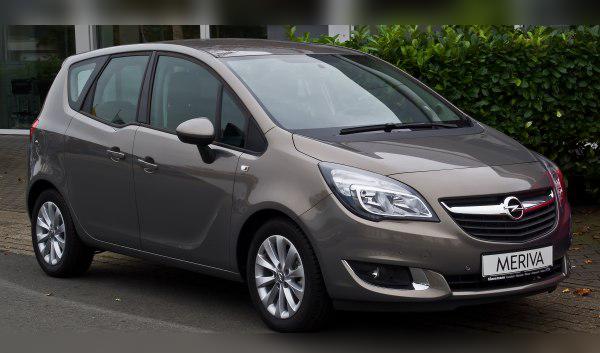
Opel 1.4 Turbo B14NEL (120 hp): Experiences, problems, fuel consumption and used-car buying tips
Key points in short (TL;DR)
- Timing chain drive: The engine uses a timing chain which is generally reliable, but needs replacement when rattling appears on cold start (usually between 150,000 and 200,000 km).
- Fuel injection system: It has indirect injection (MPI), which makes it an ideal candidate for LPG installation. There are no issues with carbon buildup on the valves.
- Most common issues: Integrated PCV valve in the valve cover (requires replacement of the entire cover), coolant leaks at the water pump and thermostat housing.
- Performance vs. weight: Due to the weight of the Zafira Tourer, 120 hp can feel somewhat “lazy”, while in the Meriva B it performs noticeably better.
- Gearbox: Paired with the notorious, but in this generation improved M32 manual gearbox. Regular gearbox oil changes are an absolute must.
- Expensive failures: Cracking of the turbo housing or damage to the wastegate valve may require a turbocharger overhaul.
Contents
- Introduction: Why is the B14NEL important?
- Technical specifications
- Reliability and maintenance
- Specific parts and costs
- Fuel consumption and performance
- Additional options and modifications
- Gearbox and power delivery
- Buying used and conclusion
Introduction: Why is the B14NEL important?
The engine designated B14NEL belongs to GM’s well-known “Family 0” engine series. Basically, it is mechanically identical to the more popular 140 hp unit (B14NET), with the difference that this one is software-limited to 120 hp (88 kW) for lower emissions, insurance and market positioning. It was primarily installed in Opel’s family MPVs – Meriva B (after the facelift) and Zafira Tourer C. As a Euro 6 engine, it is a mature product where many early teething problems of previous generations have been resolved, but it still requires specific attention if you want it to serve you faithfully. It is an excellent choice for families looking for a smooth petrol engine without too many complications that modern diesels bring.
Technical specifications
| Engine displacement | 1364 cc |
| Power | 88 kW (120 hp) |
| Torque | 200 Nm (from 1850 to 4200 rpm) |
| Engine codes | B14NEL (Euro 6), similar to the LUJ series |
| Injection type | Indirect (Multi-Point Injection - MPI) |
| Charging | Turbocharger with intercooler |
| Timing drive | Chain |
Reliability and maintenance
Timing belt or chain? Major service
This engine uses a timing chain, not a belt. In theory, the chain should last as long as the engine itself, but in practice it’s different. The major timing service does not have a fixed mileage interval. The condition of the chain is assessed by sound. If, on the first cold start in the morning, you hear a “metallic rattle” or scraping that lasts a few seconds until oil pressure builds up, it’s time to replace the timing chain kit (chain, sprockets, guides, tensioner). Depending on driving style and oil change intervals, this usually happens between 150,000 km and 200,000 km. The price of the kit with labour ranges from moderate to quite expensive (depends on the market).
Most common failures
The B14NEL is not overly problematic, but it has a few characteristic issues that every mechanic knows by heart:
- PCV valve (crankcase ventilation system): This is the most famous problem. The valve membrane tears, which leads to excess pressure in the engine, increased oil consumption, rough idle and a hissing sound under the bonnet. The problem is that the valve is integrated into the plastic valve cover, so the whole cover has to be replaced.
- Coolant leaks: The turbo cooling pipes tend to leak at the joints. The water pump and plastic thermostat housing are also prone to cracking and leaking due to thermal stress.
- Ignition coil pack: It often fails, especially if spark plug replacement is delayed too long. The engine then starts to jerk and lose power, with the “Check Engine” light coming on (showing misfire codes on the cylinders).
Engine oil and oil consumption
The engine takes approximately 4 litres of oil. You must use 5W-30 oil with Dexos 1 Gen 2 specification or the newer Gen 3. This is critically important to prevent LSPI (Low Speed Pre-Ignition) which can destroy the pistons. By design, the engine consumes a certain amount of oil, and the manufacturer’s tolerance allows up to 0.6 l / 1000 km, although in reality a healthy engine will use much less (around 0.1 to 0.2 l per 1000 km). If you notice increased consumption, first check the already mentioned PCV valve and valve cover before thinking about piston rings.
Spark plugs
As a turbo petrol engine, the B14NEL is very sensitive to spark quality. Spark plugs must be replaced strictly every 60,000 km. Exceeding this interval leads to overloading and inevitable failure of the ignition coil pack, whose replacement cost is quite high (depends on the market).
Specific parts and costs
Flywheel and clutch
Yes, even though this is a small-displacement petrol engine, versions with a manual gearbox have a dual-mass flywheel (DMF). Its job is to dampen vibrations and torque that the turbo produces at low revs. The lifespan of the DMF here is significantly longer than on diesels, often exceeding 200,000 km. Replacement of the complete set (flywheel, clutch disc, pressure plate, hydraulic release bearing) is expensive (depends on the market).
Fuel injection system
Unlike many modern engines that use direct injection (GDI), the B14NEL relies on proven indirect injection (MPI) into the intake manifold. This is fantastic news for owners! Injectors are very reliable, rarely fail, are cheap to replace and, most importantly – there is no carbon buildup on the intake valves, which is the Achilles’ heel of direct-injection engines.
Turbocharger
The engine has a single turbocharger, made by KKK (BorgWarner), which is physically integrated with the exhaust manifold. The rotor and bearings themselves are durable, but problems arise with the so-called wastegate valve (relief flap) and the exhaust manifold housing. Due to high temperatures, the housing can crack around the flap, which leads to “rattling” when you press the throttle and loss of boost pressure (weaker pull). In this case, an overhaul means replacing the entire cast housing with the manifold, which is moderately to very expensive (depends on the market).
Emissions equipment (DPF, EGR, AdBlue)
Since this is an MPI petrol engine, it does not have a DPF filter (not even a GPF, which started appearing on some later direct-injection petrols). It also absolutely does not have an AdBlue system, so you are spared the headaches with urea pumps, injectors and tank heaters that cause chaos on diesels. The engine has an EGR system for exhaust gas recirculation, but since there is no soot as with diesels, intake and EGR valve clogging is extremely rare.
Fuel consumption and performance
Real-world fuel consumption
Factory figures are, as usual, optimistic. Due to the weight of the vehicles it’s installed in (especially the Zafira Tourer), you can expect the following numbers:
- City driving (stop-and-go): Around 8.5 to 10.5 l/100 km. The Zafira can go over 11 litres in heavy traffic with the A/C on.
- Country roads: Around 6.0 to 7.0 l/100 km with a moderate right foot.
Performance relative to body style
With its 120 hp and 200 Nm, performance depends heavily on the model. In the Opel Meriva B, this engine is a great match and offers agile city driving and good in-gear acceleration. However, the Zafira Tourer C with 7 seats and a weight of over 1.6 tonnes is quite a big bite for this engine. In the Zafira, the engine feels “lazy”, especially when the car is loaded with luggage and passengers. Overtaking requires a run-up and shifting down.
Behaviour on the motorway
The engine is very smooth and quiet. With the 6-speed manual gearbox, at 130 km/h the crankshaft spins at about 2,800 to 3,000 rpm. This makes it pleasant for long journeys without intrusive cabin noise, with moderate fuel consumption of around 7.5 to 8.5 l/100 km on the motorway.
Additional options and modifications
LPG installation
This is one of the best modern turbo engines for conversion to LPG! Thanks to MPI injection, installation is standard, affordable and works flawlessly. In fact, Opel itself offered a version of this engine with a factory-fitted LPG system. When installing an aftermarket system, it is only important to choose a vaporiser with sufficient capacity for turbo engines and to replace spark plugs regularly.
Remapping (Stage 1)
Since the B14NEL is hardware-wise almost identical to the more powerful 140 hp version, the potential for chiptuning is huge. With a simple software remap (Stage 1), power can be safely raised from 120 hp to about 155 to 165 hp, and torque increases to an impressive 240 to 250 Nm. This is especially recommended for Zafira Tourer owners to neutralise the car’s “sluggish” feel, as after the remap the car feels completely transformed.
Gearbox
Manual gearbox (M32)
This engine is most commonly paired with the well-known 6-speed manual gearbox designated M32. This gearbox has a dark history due to bearing failure on the shaft for 5th and 6th gears. The good news is that the B14NEL was installed in later model years (after the facelift), where Opel revised the gearbox (larger bearings, better oil cooling channels). Still, failures are possible. Symptoms include whining in 5th and 6th gear and movement of the gear lever when applying/releasing the throttle in 1st gear.
Maintenance: Although the manufacturer claims that the gearbox oil is “lifetime fill”, experts recommend changing the oil every 60,000 to 80,000 km. Use only high-quality 75W-80 API GL-4 oil, and fill a slightly increased amount (around 2.2 to 2.4 litres instead of the factory 1.9) to better protect the bearings.
Automatic gearbox (6T40)
Automatic versions use a traditional torque-converter automatic gearbox, code 6T40. It’s not sporty-fast, but it is very smooth. Its main enemy is overheating of old oil. If, on a test drive, it jerks when shifting or when engaging “D” or “R”, the gearbox will need an expensive repair (depends on the market). There is no dual-mass flywheel. Servicing involves a machine-assisted oil change every 60,000 km.
Buying used and conclusion
What you must check before buying?
- Cold engine start: The seller must start the car in front of you only when the engine is completely cold. If you hear a tinny rattle lasting 2–3 seconds on the passenger side of the engine, prepare money for a chain replacement.
- Visual inspection under the bonnet: Look for traces of pink coolant around the water pump and the hoses going to the turbo.
- Gearbox test on the motorway: Shift into 5th and then 6th gear at about 90–100 km/h, lift off the throttle, then press it sharply. If you hear a sound similar to that of a bus or trolleybus gearbox, the M32 gearbox is due for a bearing overhaul.
- Crankcase/PCV check: With the engine idling, try to pull out the dipstick. If you feel a strong vacuum that makes it difficult to pull out and the engine starts to run unevenly when you remove it, the PCV valve in the cover has failed.
Conclusion
Opel’s 1.4 Turbo B14NEL (120 hp) is one of the few honest engines in an era of overcomplicated technology. The absence of direct injection, expensive injectors, DPF and AdBlue systems makes it very cost-effective for long-term use, with only a few characteristic weaknesses that are relatively easy to fix. Who is it for? If you’re buying a Meriva, you’ll enjoy flexible, effortless driving. If you’re buying the big Zafira, be prepared for a lack of power on climbs (or plan a Stage 1 remap right away). For drivers who cover high mileage in the city and on local roads, installing an LPG system will turn this engine into a real fuel saver, with noticeably lower running costs compared to a similar diesel.