D16SHJ 1.6 Turbo Engine (136 hp): Owner Experiences, Issues, Fuel Consumption and Used-Buying Tips
Key points in short (TL;DR)
- Timing drive: Uses a timing chain instead of a belt, generally reliable but requires attention at higher mileage.
- Vehicle weight: Since it’s fitted in heavy models like the Opel Zafira Tourer and Cascada, the 136 hp engine can feel slightly “sluggish” and needs more fuel in city driving.
- Direct injection (SIDI): Great for torque, but prone to carbon buildup on intake valves, which requires periodic de-carbonization.
- Engine oil: It’s crucial to use the specific oil (Dexos 1 Gen 2 / Gen 3) to prevent LSPI (Low Speed Pre-Ignition), which can destroy the pistons.
- Gearbox (Manual): The notorious M32 gearbox is present; regular oil changes are mandatory to avoid bearing failure.
- Tuning potential: Since this is a detuned version of a stronger block, Stage 1 remap delivers excellent and safe results.
Contents
- Introduction: About the engine and models
- Technical specifications
- Reliability and maintenance
- Specific parts and costs
- Fuel consumption and performance
- Additional options and modifications
- Gearbox and drivetrain
- Buying used and conclusion
Introduction: About the engine and models
The engine designated D16SHJ belongs to GM’s more modern generation of petrol engines with direct injection (SIDI - Spark Ignition Direct Injection). With its 100 kW (136 hp) and 240 Nm of torque, this is actually a deliberately “detuned” version of an otherwise more powerful 1.6 turbo block. Why was this done? Primarily to meet emissions standards, but also to provide a more even torque curve at lower revs.
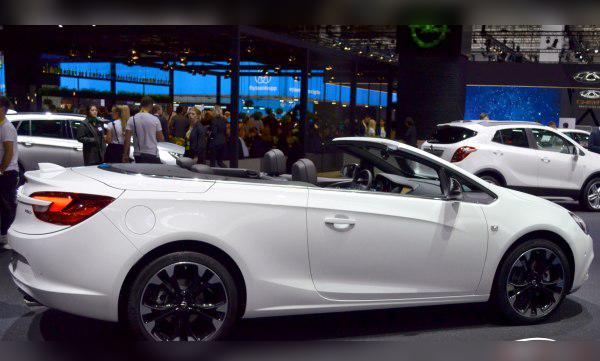
This unit is most commonly found in the heavyweights of Opel’s range – the Opel Cascada convertible and the family MPV Opel Zafira Tourer C (facelift from 2016). Although 136 hp looks perfectly decent on paper, the character of this engine is closely tied to the size and weight of the vehicles it powers, so it should be viewed primarily as a cruiser, not as a sports engine.
Technical specifications
| Specification | Data |
|---|---|
| Engine displacement | 1598 cc |
| Power | 100 kW (136 hp) |
| Torque | 240 Nm |
| Engine code | D16SHJ (MGE family) |
| Injection type | Direct injection (SIDI) |
| Charging | Turbocharger with intercooler |
| Fuel type | Petrol (Gasoline) |
Reliability and maintenance
One of the first questions any mechanic hears is: “Does it have a belt or a chain?” The D16SHJ uses a timing chain to drive the camshafts. The timing system is incomparably more reliable than on older generations of Opel petrol engines, but that doesn’t mean it lasts forever. A classic “major service” with a fixed replacement interval is not specified by the manufacturer, but in practice the timing set is replaced when you start hearing rattling on cold start (usually between 150,000 and 200,000 km). You must not ignore a stretched chain or a bad tensioner, because skipped timing will lead straight to catastrophic engine damage.
As for engine oil, the system holds a bit over 5 liters. Here we come to a critical point: you must not pour just anything. Only 5W-30 oil with the Dexos 1 Gen 2 (or newer Gen 3) approval is recommended. Why? These turbo direct-injection engines are extremely sensitive to LSPI (Low Speed Pre-Ignition) – a phenomenon where the mixture of fuel and oil vapors spontaneously ignites before the spark plug fires. This can literally shatter the rings and destroy the piston. The correct oil prevents this problem.
Some oil consumption between services is present, as this is the nature of modern turbo petrol engines with thinner oils. An amount of 0.3 to 0.5 liters per 5,000 km is considered completely normal. However, if the engine starts to “drink” oil, you should first suspect the PCV valve (crankcase ventilation system), then the turbocharger shaft or stuck piston rings.
Spark plugs must be replaced every 60,000 km. Since the engine operates under high pressures and temperatures, only iridium spark plugs are used. Worn plugs will first show up as hesitation when you floor the throttle, and they will additionally stress the ignition coils, which are not cheap to replace.
Specific parts and costs
Although it’s a petrol engine, due to the high low-end torque (by petrol standards), versions with a manual gearbox are fitted with a dual-mass flywheel. Its job is to dampen vibrations. If you hear a dull thud when switching the engine off, or you feel strong vibrations in the clutch pedal when it’s half pressed, prepare for a hefty bill for a new clutch and flywheel set.
The injection system is direct (SIDI), which means the injectors are located in the combustion chamber itself, and fuel is pushed at very high pressure by a high-pressure pump. The injectors are generally durable, but sensitive to dirty fuel. The biggest drawback of this system is that petrol does not wash the intake valves. Over time, a thick layer of carbon builds up on them, causing rough idle, loss of power and increased fuel consumption. The solution is mechanical cleaning (de-carbonization) of the intake ports every 80,000 to 100,000 km.
The engine has a single turbocharger. Its lifespan depends directly on oil quality and your driving style (do not switch off a hot engine immediately after highway driving; let it idle for a minute or two so the turbo can cool down). Turbo failures are rare before 200,000 km if maintenance has been meticulous.
Since this is a petrol engine, it does not have an AdBlue system (that’s reserved for diesels). It also doesn’t have a DPF filter, but depending on the exact production year and emissions standard, late-production models (Euro 6d-TEMP) may have a GPF (Gasoline Particulate Filter). An EGR valve is present and can get dirty over time from oil vapors, which leads to the infamous “Check Engine” light. The best way to check for the presence of a GPF on a specific car is by using the VIN in an authorized service center.
Fuel consumption and performance
To be realistic – the Zafira Tourer and Cascada are heavy cars, often weighing over 1.6 tons. Because of this, the 136 hp engine can feel a bit “lazy”, especially when the car is fully loaded with passengers and luggage. Getting off the line at traffic lights requires a slightly heavier right foot.
Real-world consumption in stop-and-go city traffic is around 9.5 to 11 liters per 100 km, depending on driving style and congestion. The Start/Stop system helps somewhat in lowering the average, but don’t expect diesel-like figures.
On the other hand, on the motorway this engine shines as an excellent cruiser. At 130 km/h in 6th gear it spins at a very relaxed ~2700–2800 rpm. The engine is then extremely quiet and smooth, and fuel consumption drops to a very reasonable 7 to 7.5 liters per 100 km.
Additional options and modifications
Due to direct fuel injection, installing LPG is very expensive and complex. Standard sequential systems are not suitable here. You need a system that injects liquid gas directly through the petrol injectors (so they don’t melt) or a system that constantly uses a certain percentage of petrol alongside LPG. Installing such a setup requires a highly skilled specialist, and the investment only pays off if you cover very high annual mileage.
However, if you want more power, there is good news. Since this D16SHJ is actually a detuned version of an engine that originally produces 170 hp, a Stage 1 remap is highly recommended. It can safely be raised to 170–175 hp and almost 280 Nm of torque. The Zafira and Cascada then become much more agile machines, overtaking is incomparably easier, and fuel consumption in normal driving remains the same or can even drop slightly.
Gearbox and drivetrain
This engine is paired with two types of gearboxes. The six-speed manual is the well-known (and often notorious) M32. Although revised versions were fitted to these newer models, the weakness with the input shaft bearings is still present. If, while driving in 5th or 6th gear, you hear a characteristic whine or the gear lever “twitches” when you press and release the throttle, the gearbox has to come out and the bearings must be replaced. Prevention? Regular gearbox oil changes every 60,000 km, even though the manufacturer often claims the oil is “lifetime”. As mentioned, the cost of replacing the clutch and dual-mass flywheel on manuals is quite high.
As for the automatic, a conventional GM/Aisin 6-speed gearbox (6T45 family) with a torque converter is used. This is a very reliable transmission if maintained properly. Signs of a problematic automatic are harsh shifts (jerking) and delay when engaging “D” or “R”. To keep it healthy, a full fluid change using a flushing machine is mandatory every 60,000 to 80,000 km to remove metal shavings and protect the valve body.
Buying used and conclusion
When looking at a used Zafira or Cascada with this engine, the most important points are:
- Listen to the engine when completely cold: Any scraping or rattling from the timing chain area means you’re immediately facing a serious expense for a new timing set.
- Ask for service history: Focus on the type of oil used. If Dexos 1 Gen 2 oil was not used at the specified intervals, there is a high risk of hidden piston damage due to LSPI.
- Test drive: Listen to the gearbox (M32) in higher gears on an open road. If it’s an automatic, make sure it shifts smoothly and doesn’t flare the revs between gears.
- Visual inspection and diagnostics: Listen to the idle. Rough idle can indicate dirty intake valves or worn spark plugs. A diagnostic scan is mandatory to check injector corrections. Don’t forget to inspect the underbody components on a lift; the suspension on heavy vehicles wears out faster than on small city cars.
Who is it for? The D16SHJ engine (136 hp) is aimed at calm, relaxed drivers. It’s an ideal purchase for family-oriented people (Zafira) or cruising enthusiasts (Cascada) who cover moderate mileage, mostly outside the city, and don’t want the hassle of modern diesel exhaust after-treatment systems. If you provide it with the correct oil and regular gearbox servicing, it will serve you long and reliably, and with a mild tune it can become surprisingly lively on the road.