GM 2.4 Ecotec LE5 (167 hp): Experiences, problems, fuel consumption and used car buying tips
Key points (TL;DR)
- Timing system: The engine uses a chain that is prone to stretching; mandatory to check when buying.
- Fuel consumption: High; in the city it easily exceeds 13 to 15 l/100 km due to the vehicle’s large weight.
- LPG: An ideal platform for LPG conversion because it uses conventional (MPI) fuel injection.
- Performance: A rather “lazy” engine for the heavy Chevrolet Captiva body; requires high revs for smooth overtaking.
- Automatic transmission: The GM 6T45 gearbox requires regular oil changes every 60,000 km; sensitive to overheating.
- Reliability: With regular maintenance and quality oil, the mechanics are robust, but issues with VVT sensors and oil consumption are common.
Contents
- Introduction: About the engine and models
- Technical specifications
- Reliability, maintenance and failures
- Specific parts and systems
- Fuel consumption and performance
- Extras: LPG and remapping
- Transmission and drivetrain
- Buying used and conclusion
Introduction: About the engine and models
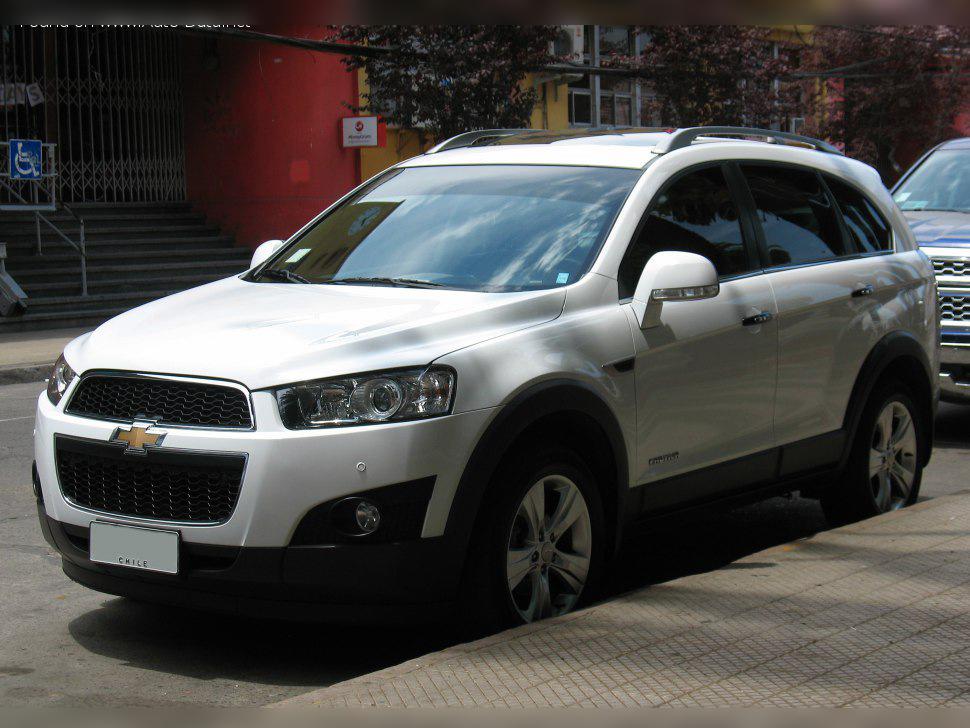
The engine with the code LE5 belongs to GM’s well-known Ecotec family of 2.4‑liter units. On the European and global market we most often saw it in heavy SUVs such as the first-generation Chevrolet Captiva (facelift from 2011 to 2015). It was conceived as a robust, simple naturally aspirated alternative to complex diesels, aimed at drivers who cover fewer kilometers or don’t want expensive repairs typical of modern turbo engines.
Although on paper 123 kW (167 hp) sounds decent, in practice this engine struggles with the Captiva’s high weight (almost two tons with AWD and passengers). Still, its simplicity and excellent tolerance of alternative fuels make it a frequent choice on the used market for a specific group of buyers.
Technical specifications
| Specification | Data |
|---|---|
| Displacement | 2384 cc |
| Power | 123 kW (167 hp) at 5600 rpm |
| Torque | 230 Nm at 4600 rpm |
| Engine code | LE5 (GM Ecotec 2.4) |
| Injection type | Port fuel injection (MPI/PFI) |
| Induction type | Naturally aspirated |
| Fuel | Petrol (Gasoline) |
Reliability, maintenance and failures
Timing system: Chain instead of belt
This Ecotec engine uses a timing chain to drive the camshafts. Although in theory a chain should last as long as the engine itself, that is not the case with GM’s 2.4 units. Due to long factory oil change intervals and a weaker tensioner design, the chain is prone to stretching. A major timing service (replacement of the complete chain, guides and tensioner set) is usually done between 150,000 and 200,000 km. Symptoms of a stretched chain include rough running when cold (rattling during the first few seconds after start-up), as well as the “Check Engine” light coming on due to mismatch between the crankshaft and camshaft sensors.
Most common failures
Besides the chain, the best-known weak point of this engine are the VVT (Variable Valve Timing) solenoids. These actuators get clogged by old oil, which results in jerking while driving, rough idle and loss of power. The fix is not expensive (depends on the market), but it requires prompt replacement. Also, cracking of the exhaust manifold due to large thermal cycles is not uncommon, which manifests itself as a sharp noise from the engine bay before the engine warms up.
Oil and regular servicing
The LE5 engine takes about 4.7 to 5.0 liters of engine oil. Fully synthetic oil with a viscosity grade of 5W-30 is recommended (preferably GM Dexos1 Gen2 or Gen3 specification). Oil change intervals should never exceed 10,000 to 12,000 km.
Oil consumption
Yes, this engine does consume oil. General Motors 2.4 Ecotec engines have a tolerance for oil consumption due to piston ring design. It is considered normal for the engine to use around 0.3 to 0.5 liters of oil per 1000 km. However, if consumption exceeds 1 liter per 1000 km, the problem lies in stuck piston rings or worn valve stem seals, which requires opening the engine.
Spark plugs
Since this is a conventional petrol engine, spark plug replacement is simple and inexpensive. Iridium spark plugs are recommended, with a replacement interval of 60,000 to 80,000 km. If you install an LPG system, halve the spark plug interval (to about 30,000 to 40,000 km), because the gas mixture requires a stronger and more stable spark.
Specific parts and systems
Fuel injection system
Unlike the newer LAF/LEA engines that use high-pressure direct injection, the LE5 uses proven port fuel injection (Multi-Point Injection – MPI) into the intake manifold. The injectors are extremely reliable, operate at low pressure, rarely fail and are not very sensitive to poorer fuel quality.
Flywheel and clutch
On versions with a manual gearbox, naturally aspirated petrol engines of this type in most cases do not have a dual-mass flywheel, but use a solid (single-mass) flywheel. This makes clutch kit replacement a very affordable job. However, due to variations in vehicle weight (AWD drivetrain on some versions), always check by VIN. In 95% of cases the cost is minimal and installation is cheap (depends on the market).
Eco systems: Turbo, DPF, EGR, AdBlue
Great news for fans of low running costs: this engine HAS NO turbocharger, NO DPF filter and NO AdBlue system. This eliminates the most expensive potential failures of modern cars. It does have an EGR valve (exhaust gas recirculation system), which can get clogged with soot over time, but it is easy to clean and rarely causes critical issues on petrol engines, unlike on diesels.
Fuel consumption and performance
Is the engine “lazy”?
To be completely honest: yes. The Chevrolet Captiva is a massive SUV, and the LE5 engine delivers only 230 Nm of torque, and only at a high 4600 rpm. To drive dynamically, you have to rev it high, which makes the engine quite noisy. It is adequate for relaxed family driving, but forget about sporty driving and quick overtakes.
Real-world fuel consumption
The vehicle’s high weight, all-wheel drive (AWD) and “fridge-like” aerodynamics take their toll. Real-world consumption in city traffic is between 13 and 15 l/100 km. If you choose the version with an automatic gearbox, expect the upper end of that range. On open roads, with smooth driving, consumption can drop to 8.5 to 9.5 liters.
Driving on the motorway
At 130 km/h on the motorway, aerodynamic drag is huge. Due to the somewhat shorter gear ratios, the engine spins at about 3000 to 3300 rpm (depending on gearbox type). At this speed the engine is audible in the cabin, and fuel consumption stabilizes at around 10 to 11.5 l/100 km.
Extras: LPG and remapping
LPG conversion
This is the LE5 engine’s strongest selling point. Thanks to its port MPI injection, installing a sequential LPG system is very straightforward, not expensive and works great in practice. The engine handles LPG very well, there is no need for costly liquid injection systems, and given the high petrol consumption, the investment pays off after as little as 15,000 km.
ECU remap (Stage 1)
Since this is a naturally aspirated engine, remapping is absolutely not worth it. By optimizing the ECU maps (Stage 1) you can gain at most 8 to 12 hp and a few Newton-meters of torque. In real driving, on a vehicle weighing almost 2 tons, you won’t even feel the difference. It’s much wiser to invest that money in proper maintenance.
Transmission and drivetrain
Transmission options
In the Captiva, the LE5 was paired with two types of gearboxes: a 6-speed manual and a 6-speed automatic (GM 6T45). There are also versions with front-wheel drive (FWD) only and with all-wheel drive (AWD).
Transmission failures and maintenance
Manual gearbox: Very reliable and robustly built. Failures are rare and mostly limited to replacement of wear items (clutch). The oil in the manual gearbox should be refreshed every 100,000 km.
Automatic gearbox (6T45): This is a conventional automatic (with a hydraulic torque converter) known for requiring a lot of care. The most common failures include wave plate cracking and problems with solenoids in the valve body, which lead to harsh shifting or loss of gears (e.g. reverse).
The key to longevity: The oil in the automatic transmission MUST be changed every 60,000 km using a full fluid-exchange machine in order for the gearbox to last over 200,000 km without overhaul.
Buying used and conclusion
What to check when buying?
- Cold start: The engine must be completely cold when you come to inspect the car. Listen carefully during the first 3 seconds after start-up. Any metallic rattling indicates a loose timing chain.
- Sensors: Bring an OBD scanner. Check for errors related to camshaft position (VVT solenoids).
- Blue smoke: Ask someone to drive behind you. Accelerate hard and then lift off the throttle (engine braking). If you notice bluish smoke from the exhaust, the engine is consuming excessive oil and is due for ring/seal replacement.
- Automatic gearbox: When shifting from P (Park) to R (Reverse) and D (Drive), the gearbox must not engage with a harsh jolt. While driving, shifts should be smooth without “flaring” of the revs.
Who is this car for?
The Chevrolet Captiva with the 2.4 LE5 engine is a vehicle for people who need a spacious and hefty family SUV and who also want to install LPG and cut running costs. It is an excellent choice if you are wary of injector issues, dual-mass flywheels, DPF filters and turbochargers, because this engine has none of those. On the other hand, if you hate slow cars, drive aggressively, spend a lot of time on the motorway or have no intention of fitting LPG, then skip this model, because its petrol consumption and lack of torque will frustrate you.